
Articles | Volume 17, issue 1
https://doi.org/10.5194/se-17-113-2026
© Author(s) 2026. This work is distributed under
the Creative Commons Attribution 4.0 License.
the Creative Commons Attribution 4.0 License.
https://doi.org/10.5194/se-17-113-2026
© Author(s) 2026. This work is distributed under
the Creative Commons Attribution 4.0 License.
the Creative Commons Attribution 4.0 License.
Research article
| 
21 Jan 2026
Research article |
| 21 Jan 2026
| 21 Jan 2026
A fracture rarely comes alone: associations of fractures and stylolites in analogue outcrops improve borehole image interpretations of fractured carbonate geothermal reservoirs
Department of Geoscience and Engineering, Delft University of Technology, Delft, the Netherlands
Pierre-Olivier Bruna
Department of Geoscience and Engineering, Delft University of Technology, Delft, the Netherlands
Giovanni Bertotti
Department of Geoscience and Engineering, Delft University of Technology, Delft, the Netherlands
Myrthe Doesburg
Department of Geoscience and Engineering, Delft University of Technology, Delft, the Netherlands
Andrea Moscariello
Department of Earth Sciences, University of Geneva, Geneva, Switzerland
Related authors
No articles found.
Annelotte Weert, Kei Ogata, Francesco Vinci, Coen Leo, Giovanni Bertotti, Jerome Amory, and Stefano Tavani
Solid Earth, 15, 121–141, https://doi.org/10.5194/se-15-121-2024, https://doi.org/10.5194/se-15-121-2024, 2024
Short summary
Short summary
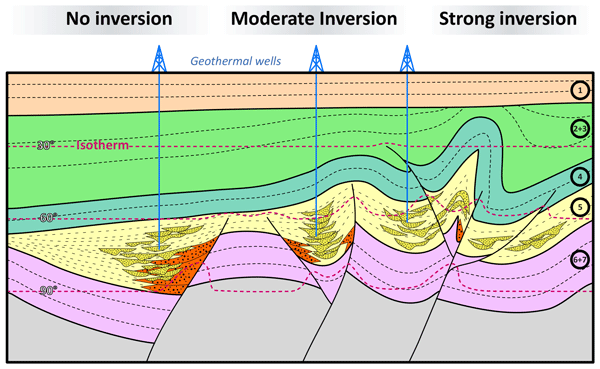
On the road to a sustainable planet, geothermal energy is considered one of the main substitutes when it comes to heating. The geological history of an area can have a major influence on the application of these geothermal systems, as demonstrated in the West Netherlands Basin. Here, multiple episodes of rifting and subsequent basin inversion have controlled the distribution of the reservoir rocks, thus influencing the locations where geothermal energy can be exploited.
Rahul Prabhakaran, Giovanni Bertotti, Janos Urai, and David Smeulders
Solid Earth, 12, 2159–2209, https://doi.org/10.5194/se-12-2159-2021, https://doi.org/10.5194/se-12-2159-2021, 2021
Short summary
Short summary
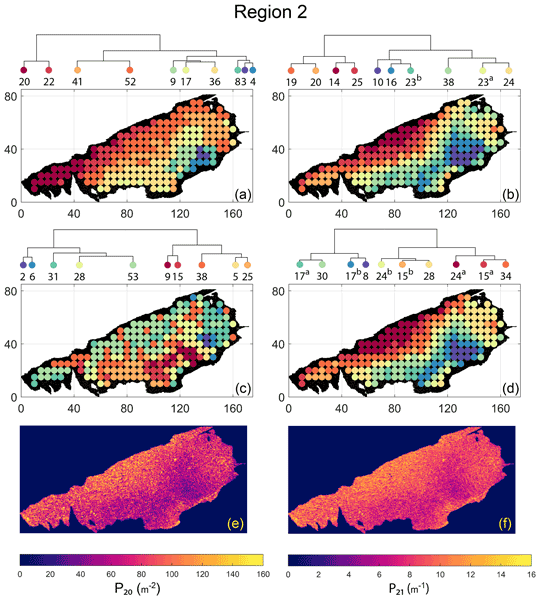
Rock fractures are organized as networks with spatially varying arrangements. Due to networks' influence on bulk rock behaviour, it is important to quantify network spatial variation. We utilize an approach where fracture networks are treated as spatial graphs. By combining graph similarity measures with clustering techniques, spatial clusters within large-scale fracture networks are identified and organized hierarchically. The method is validated on a dataset with nearly 300 000 fractures.
Cited articles
Agbaje, T. Q., Ghanbarian, B., and Hyman, J. D.: Effective Permeability in Fractured Reservoirs: Discrete Fracture Matrix Simulations and Percolation‐Based Effective‐Medium Approximation, Water Resources Research, 59, e2023WR036505, https://doi.org/10.1029/2023WR036505, 2023. a
Agosta, F., Alessandroni, M., Antonellini, M., Tondi, E., and Giorgioni, M.: From fractures to flow: A field-based quantitative analysis of an outcropping carbonate reservoir, Tectonophysics, 490, 197–213, https://doi.org/10.1016/j.tecto.2010.05.005, 2010. a
Anderson, E.: The Dynamics of Faulting, Transactions of the Edinburgh Geological Society, 8, 387–402, https://doi.org/10.1144/transed.8.3.387, 1905. a
Andrews, B. J., Roberts, J. J., Shipton, Z. K., Bigi, S., Tartarello, M. C., and Johnson, G.: How do we see fractures? Quantifying subjective bias in fracture data collection, Solid Earth, 10, 487–516, https://doi.org/10.5194/se-10-487-2019, 2019. a, b
Angelier, J.: Inversion of Field Data in Fault Tectonics to Obtain the Regional Stress-III, A New Rapid Direct Inversion Method by Analytical Means, Geophysical Journal International, 103, 363–376, https://doi.org/10.1111/j.1365-246X.1990.tb01777.x, 1990. a
Antunes, V., Planès, T., Zahradník, J., Obermann, A., Alvizuri, C., Carrier, A., and Lupi, M.: Seismotectonics and 1-D velocity model of the Greater Geneva Basin, France–Switzerland, Geophysical Journal International, 221, 2026–2047, https://doi.org/10.1093/gji/ggaa129, 2020. a
Atkinson, G. M., Eaton, D. W., and Igonin, N.: Developments in understanding seismicity triggered by hydraulic fracturing, Nature Reviews Earth and Environment, 1, 264–277, https://doi.org/10.1038/s43017-020-0049-7, 2020. a
Aubert, I., Lamarche, J., and Leonide, P.: Deciphering background fractures from damage fractures in fault zones and their effect on reservoir properties in microporous carbonates (Urgonian limestones, SE France), Petroleum Geoscience, 25, 443–453, https://doi.org/10.1144/petgeo2019-010, 2019. a
Bai, T. and Pollard, D. D.: Fracture spacing in layered rocks: a new explanation based on the stress transition, Journal of Structural Geology, 22, 43–57, https://doi.org/10.1016/S0191-8141(99)00137-6, 2000. a
Barbier, M., Leprêtre, R., Callot, J.-P., Gasparrini, M., Daniel, J.-M., Hamon, Y., Lacombe, O., and Floquet, M.: Impact of fracture stratigraphy on the paleo-hydrogeology of the Madison Limestone in two basement-involved folds in the Bighorn basin, Wyoming, USA, Tectonophysics, 576/577, 116–132, https://doi.org/10.1016/j.tecto.2012.06.048, 2012. a
Bauer, J. F., Krumbholz, M., Meier, S., and Tanner, D. C.: Predictability of properties of a fractured geothermal reservoir: the opportunities and limitations of an outcrop analogue study, Geothermal Energy, 5, 24, https://doi.org/10.1186/s40517-017-0081-0, 2017. a, b, c
Beach, A.: The Geometry of En-Echelon Vein Arrays, Tectonophysics, 28, 245–263, https://doi.org/10.1016/0040-1951(75)90040-2, 1975. a
Beaudoin, N., Lacombe, O., Bellahsen, N., and Emmanuel, L.: Contribution of Studies of Sub-Seismic Fracture Populations to Paleo-Hydrological Reconstructions (Bighorn Basin, USA), Procedia Earth and Planetary Science, 7, 57–60, https://doi.org/10.1016/j.proeps.2013.03.198, 2013. a
Beaudoin, N., Koehn, D., Lacombe, O., Lecouty, A., Billi, A., Aharonov, E., and Parlangeau, C.: Fingerprinting stress: Stylolite and calcite twinning paleopiezometry revealing the complexity of progressive stress patterns during folding – The case of the Monte Nero anticline in the Apennines, Italy, Tectonics, 35, 1687–1712, https://doi.org/10.1002/2016TC004128, 2016. a
Bellahsen, N., Mouthereau, F., Boutoux, A., Bellanger, M., Lacombe, O., Jolivet, L., and Rolland, Y.: Collision Kinematics in the Western External Alps: Kinematics of the Alpine Collision, Tectonics, 33, 1055–1088, https://doi.org/10.1002/2013TC003453, 2014. a, b
Bergbauer, S. and Pollard, D. D.: A new conceptual fold-fracture model including prefolding joints, based on the Emigrant Gap anticline, Wyoming, Geological Society of America Bulletin, 116, 294, https://doi.org/10.1130/B25225.1, 2004. a
Berio, L. R., Storti, F., Balsamo, F., Mittempergher, S., Bistacchi, A., and Meda, M.: Structural Evolution of the Parmelan Anticline (Bornes Massif, France): Recording the Role of Structural Inheritance and Stress Field Changes on the Finite Deformation Pattern, Tectonics, 40, e2021TC006913, https://doi.org/10.1029/2021TC006913, 2021. a, b, c, d, e
Berre, I., Doster, F., and Keilegavlen, E.: Flow in Fractured Porous Media: A Review of Conceptual Models and Discretization Approaches, Transport in Porous Media, 130, 215–236, https://doi.org/10.1007/s11242-018-1171-6, 2019. a, b
Bertotti, G., De Graaf, S., Bisdom, K., Oskam, B., B. Vonhof, H., H. R. Bezerra, F., J. G. Reijmer, J., and L. Cazarin, C.: Fracturing and Fluid-flow during Post-rift Subsidence in Carbonates of the Jandaíra Formation, Potiguar Basin, NE Brazil, Basin Research, 29, 836–853, https://doi.org/10.1111/bre.12246, 2017. a, b
Bisdom, K., Bertotti, G., and Nick, H. M.: A Geometrically Based Method for Predicting Stress-Induced Fracture Aperture and Flow in Discrete Fracture Networks, AAPG Bulletin, 100, 1075–1097, https://doi.org/10.1306/02111615127, 2016. a
Bond, C., Gibbs, A., Shipton, Z., and Jones, S.: What do you think this is? “Conceptual uncertainty” in geoscience interpretation, GSA Today, 17, 11, https://doi.org/10.1130/GSAT01711A.1, 2007. a
Brentini, M.: Impact d'une donnée géologique hétérogène dans la gestion des géo-ressources: analyse intégrée et valorisation de la stratigraphie à travers le bassin genevois (Suisse, France), Ph.D. thesis, Université de Genève, https://doi.org/10.13097/ARCHIVE-OUVERTE/UNIGE:103409, 2018. a
Bruna, P.-O., Lavenu, A. P., Matonti, C., and Bertotti, G.: Are stylolites fluid-flow efficient features?, Journal of Structural Geology, 125, 270–277, https://doi.org/10.1016/j.jsg.2018.05.018, 2019. a
Butler, R. W. H.: Hydrocarbon Maturation, Migration and Tectonic Loading in the Western Alpine Foreland Thrust Belt, Geological Society, London, Special Publications, 59, 227–244, https://doi.org/10.1144/GSL.SP.1991.059.01.15, 1991. a, b
Caine, J. S., Evans, J. P., and Forster, C. B.: Fault zone architecture and permeability structure, Geology, 24, 1025, https://doi.org/10.1130/0091-7613(1996)024<1025:FZAAPS>2.3.CO;2, 1996. a
Cao, M. and Sharma, M. M.: The impact of changes in natural fracture fluid pressure on the creation of fracture networks, Journal of Petroleum Science and Engineering, 216, 110783, https://doi.org/10.1016/j.petrol.2022.110783, 2022. a, b
Casini, G., Gillespie, P., Vergés, J., Romaire, I., Fernández, N., Casciello, E., Saura, E., Mehl, C., Homke, S., Embry, J.-C., Aghajari, L., and Hunt, D. W.: Sub-seismic fractures in foreland fold and thrust belts: insight from the Lurestan Province, Zagros Mountains, Iran, Petroleum Geoscience, 17, 263–282, https://doi.org/10.1144/1354-079310-043, 2011. a
Cederbom, C. E., Sinclair, H. D., Schlunegger, F., and Rahn, M. K.: Climate-Induced Rebound and Exhumation of the European Alps, Geology, 32, 709, https://doi.org/10.1130/G20491.1, 2004. a
Charollais, J., Mastrangelo, B., Strasser, A., Piuz, A., Granier, B., Monteil, E., Ruchat, C., and Savoy, L.: Lithostratigraphie, biostratigraphie, cartographie et géologie structurale du Mont Salève, entre l'Arve et les Usses (Haute Savoie, France), Revue de Paleobiologie, 42, 1–127, https://doi.org/10.5281/ZENODO.7446048, 2023. a
Chatterjee, S. and Mukherjee, S.: Review on drilling-induced fractures in drill cores, Marine and Petroleum Geology, 151, 106089, https://doi.org/10.1016/j.marpetgeo.2022.106089, 2023. a
Chemenda, A. I.: Bed thickness-dependent fracturing and inter-bed coupling define the nonlinear fracture spacing-bed thickness relationship in layered rocks: Numerical modeling, Journal of Structural Geology, 165, 104741, https://doi.org/10.1016/j.jsg.2022.104741, 2022. a
Clavel, B., Charollais, J., Conrad, M., Du Chêne, R. J., Busnardo, R., Gardin, S., Erba, E., Schroeder, R., Cherchi, A., Decrouez, D., Granier, B., Sauvagnat, J., and Weidmann, M.: Dating and Progradation of the Urgonian Limestone from the Swiss Jura to South-East France, Zeitschrift der Deutschen Gesellschaft für Geowissenschaften, 158, 1025–1062, https://doi.org/10.1127/1860-1804/2007/0158-1025, 2007. a
Clavel, B., Conrad, M. A., Busnardo, R., Charollais, J., and Granier, B.: Mapping the Rise and Demise of Urgonian Platforms (Late Hauterivian – Early Aptian) in Southeastern France and the Swiss Jura, Cretaceous Research, 39, 29–46, https://doi.org/10.1016/j.cretres.2012.02.009, 2013. a
Clerc, N. and Moscariello, A.: A Revised Structural Framework for the Geneva Basin and the Neighboring France Region as Revealed from 2D Seismic Data: Implications for Geothermal Exploration, Swiss Bulletin für angewandte Geologie, Swiss Bull. Appl. Geol., 25, 109–131, 2020. a
Crampton, S. and Allen, P.: Recognition of Forebulge Unconformities Associated with Early Stage Foreland Basin Development: Example from the North Alpine Foreland Basin, AAPG Bulletin, 79, 1495–1514, https://doi.org/10.1306/7834DA1C-1721-11D7-8645000102C1865D, 1995. a
Deville, E. and Sassi, W.: Contrasting Thermal Evolution of Thrust Systems: An Analytical and Modeling Approach in the Front of the Western Alps, AAPG Bulletin, 90, 887–907, https://doi.org/10.1306/01090605046, 2006. a
Doesburg, M.: Uncertainty Reduction in Image Log Fracture Interpretation, and Its Implications to the Geological History of the Geneva Basin, Switzerland, Master's thesis, TU Delft, Delft, https://resolver.tudelft.nl/uuid:a16d4d2b-d373-48a7-9e5c-b6f22d3045d0 (last access: 13 January 2025), 2023. a, b
Elliott, S. J., Forstner, S. R., Wang, Q., Corrêa, R., Shakiba, M., Fulcher, S. A., Hebel, N. J., Lee, B. T., Tirmizi, S. T., Hooker, J. N., Fall, A., Olson, J. E., and Laubach, S. E.: Diagenesis is key to unlocking outcrop fracture data suitable for quantitative extrapolation to geothermal targets, Frontiers in Earth Science, 13, 1545052, https://doi.org/10.3389/feart.2025.1545052, 2025. a, b, c
Engelder, T.: Loading paths to joint propagation during a tectonic cycle: an example from the Appalachian Plateau, USA, Journal of Structural Geology, 7, 459–476, https://doi.org/10.1016/0191-8141(85)90049-5, 1985. a
English, J. M.: Thermomechanical origin of regional fracture systems, AAPG Bulletin, 96, 1597–1625, https://doi.org/10.1306/01021211018, 2012. a
Eruteya, O. E., Crinière, A., and Moscariello, A.: Seismic expression of paleokarst morphologies and associated Siderolithic infill in the Geneva Basin, Switzerland: Implications for geothermal exploration, Geothermics, 117, 102868, https://doi.org/10.1016/j.geothermics.2023.102868, 2024. a
Fadel, M., Meneses Rioseco, E., Bruna, P.-O., and Moeck, I.: Pressure transient analysis to investigate a coupled fracture corridor and a fault damage zone causing an early thermal breakthrough in the North Alpine Foreland Basin, Geoenergy Science and Engineering, 229, 212072, https://doi.org/10.1016/j.geoen.2023.212072, 2023. a, b
Fernández-Ibáñez, F., DeGraff, J., and Ibrayev, F.: Integrating borehole image logs with core: A method to enhance subsurface fracture characterization, AAPG Bulletin, 102, 1067–1090, https://doi.org/10.1306/0726171609317002, 2018. a
Genter, A., Castaing, C., Dezayes, C., Tenzer, H., Traineau, H., and Villemin, T.: Comparative analysis of direct (core) and indirect (borehole imaging tools) collection of fracture data in the Hot Dry Rock Soultz reservoir (France), Journal of Geophysical Research: Solid Earth, 102, 15419–15431, https://doi.org/10.1029/97JB00626, 1997. a
Geological Map of Switzerland: Geological Institute (University of Bern) and Federal Office for Water und Geology, 1:500 000, https://www.swisstopo.admin.ch/en/geomaps-500-pixel (last access: 15 December 2022), 2005. a
Geothermies: https://www.geothermies.ch, last access: 26 August 2025.
Grare, A., Lacombe, O., Mercadier, J., Benedicto, A., Guilcher, M., Trave, A., Ledru, P., and Robbins, J.: Fault Zone Evolution and Development of a Structural and Hydrological Barrier: The Quartz Breccia in the Kiggavik Area (Nunavut, Canada) and Its Control on Uranium Mineralization, Minerals, 8, 319, https://doi.org/10.3390/min8080319, 2018. a
Groshong, R. H.: Strain, fractures, and pressure solution in natural single-layer folds, Geological Society of America Bulletin, 86, 1363, https://doi.org/10.1130/0016-7606(1975)86<1363:SFAPSI>2.0.CO;2, 1975. a
Guglielmetti, L. and Moscariello, A.: On the Use of Gravity Data in Delineating Geologic Features of Interest for Geothermal Exploration in the Geneva Basin (Switzerland): Prospects and Limitations, Swiss Journal of Geosciences, 114, 15, https://doi.org/10.1186/s00015-021-00392-8, 2021. a
Guglielmetti, L., Poletto, F., Corubolo, P., Bitri, A., Dezayes, C., Farina, B., Martin, F., Meneghini, F., Moscariello, A., Nawratil De Bono, C., and Schleifer, A.: Results of a Walk-above Vertical Seismic Profiling Survey Acquired at the Thônex-01 Geothermal Well (Switzerland) to Delineate Fractured Carbonate Formations for Geothermal Development, Geophysical Prospecting, 68, 1139–1153, https://doi.org/10.1111/1365-2478.12912, 2020. a
Guglielmetti, L., Houlié, N., de Bono, C. N., Martin, F., Coudroit, J., Oerlemans, P., and Cremer, H.: HEATSTORE D5.2: Monitoring Results for the Geneva HT-ATES Case-Study, HEATSTORE project report, 2021. a
Hancock, P.: Brittle Microtectonics: Principles and Practice, Journal of Structural Geology, 7, 437–457, https://doi.org/10.1016/0191-8141(85)90048-3, 1985. a, b
Hardebol, N. J., Maier, C., Nick, H., Geiger, S., Bertotti, G., and Boro, H.: Multiscale fracture network characterization and impact on flow: A case study on the Latemar carbonate platform, Journal of Geophysical Research: Solid Earth, 120, 8197–8222, https://doi.org/10.1002/2015JB011879, 2015. a
Heap, M. J., Baud, P., Reuschlé, T., and Meredith, P. G.: Stylolites in limestones: Barriers to fluid flow?, Geology, 42, 51–54, https://doi.org/10.1130/G34900.1, 2014. a
Homberg, C., Hu, J., Angelier, J., Bergerat, F., and Lacombe, O.: Characterization of stress perturbations near major fault zones: insights from 2-D distinct-element numerical modelling and field studies (Jura mountains), Journal of Structural Geology, 19, 703–718, https://doi.org/10.1016/S0191-8141(96)00104-6, 1997. a
Homberg, C., Lacombe, O., Angelier, J., and Bergerat, F.: New Constraints for Indentation Mechanisms in Arcuate Belts from the Jura Mountains, France, Geology, 27, 827, https://doi.org/10.1130/0091-7613(1999)027<0827:NCFIMI>2.3.CO;2, 1999. a, b
Homberg, C., Angelier, J., Bergerat, F., and Lacombe, O.: Using stress deflections to identify slip events in fault systems, Earth and Planetary Science Letters, 217, 409–424, https://doi.org/10.1016/S0012-821X(03)00586-7, 2004. a
Hooker, J. N., Gomez, L. A., Laubach, S. E., Gale, J. F. W., and Marrett, R.: Effects of diagenesis (cement precipitation) during fracture opening on fracture aperture-size scaling in carbonate rocks, Geological Society, London, Special Publications, 370, 187–206, https://doi.org/10.1144/SP370.9, 2012. a
Hosseinzadeh, S., Kadkhodaie, A., Wood, D. A., Rezaee, R., and Kadkhodaie, R.: Discrete fracture modeling by integrating image logs, seismic attributes, and production data: a case study from Ilam and Sarvak Formations, Danan Oilfield, southwest of Iran, Journal of Petroleum Exploration and Production Technology, 13, 1053–1083, https://doi.org/10.1007/s13202-022-01586-y, 2023. a
Hupkes, J., Bruna, P.-O., Bertotti, G., and Feliu, N.: Orthorectified Images for Circular Scanline Fracture Analysis, Parmelan, France, ResearchData [data set], https://doi.org/10.4121/8C78107E-E8AB-4EA6-A612-F3052E7F8FC3.V1, 2025. a
IGN: RGE ALTI® – Modèle numérique de terrain, résolution 5 m, Institut national de l'information géographique et forestière (IGN), France, https://geoservices.ign.fr/rgealti (last access: 30 June 2025), 2023. a
Jenny, J., Burri, J., Mural, R., Pugin, A., Schegg, R., and Ugemach, P.: Le Forage Geothermique de Thonex-01 (Canton de Geneve): Aspects Stratigraphiques, Tectoniques, Diagenetiques, Geophysiques et Hydrogeologiques, Eclogae Geologicae Helvetiae, 88, 265–396, 1995. a
Kalifi, A., Leloup, P. H., Sorrel, P., Galy, A., Demory, F., Spina, V., Huet, B., Quillévéré, F., Ricciardi, F., Michoux, D., Lecacheur, K., Grime, R., Pittet, B., and Rubino, J.-L.: Chronology of Thrust Propagation from an Updated Tectono-Sedimentary Framework of the Miocene Molasse (Western Alps), Solid Earth, 12, 2735–2771, https://doi.org/10.5194/se-12-2735-2021, 2021. a, b
Kamel Targhi, E., Bruna, P.-O., Daniilidis, A., Rongier, G., and Geiger, S.: From outcrop observations to dynamic simulations: an efficient workflow for generating ensembles of geologically plausible fracture networks and assessing their impact on flow and transport, Geoenergy, 3, geoenergy2025–028, https://doi.org/10.1144/geoenergy2025-028, 2025. a
Koehn, D., Rood, M., Beaudoin, N., Chung, P., Bons, P., and Gomez-Rivas, E.: A new stylolite classification scheme to estimate compaction and local permeability variations, Sedimentary Geology, 346, 60–71, https://doi.org/10.1016/j.sedgeo.2016.10.007, 2016. a
La Bruna, V., Lamarche, J., Agosta, F., Rustichelli, A., Giuffrida, A., Salardon, R., and Marié, L.: Structural diagenesis of shallow platform carbonates: Role of early embrittlement on fracture setting and distribution, case study of Monte Alpi (Southern Apennines, Italy), Journal of Structural Geology, 131, 103940, https://doi.org/10.1016/j.jsg.2019.103940, 2020. a, b
Lacombe, O., Bellahsen, N., and Mouthereau, F.: Fracture patterns in the Zagros Simply Folded Belt (Fars, Iran): constraints on early collisional tectonic history and role of basement faults, Geological Magazine, 148, 940–963, https://doi.org/10.1017/S001675681100029X, 2011. a
Lacombe, O., Beaudoin, N. E., Hoareau, G., Labeur, A., Pecheyran, C., and Callot, J.-P.: Dating folding beyond folding, from layer-parallel shortening to fold tightening, using mesostructures: lessons from the Apennines, Pyrenees, and Rocky Mountains, Solid Earth, 12, 2145–2157, https://doi.org/10.5194/se-12-2145-2021, 2021. a
Lamarche, J., Lavenu, A. P., Gauthier, B. D., Guglielmi, Y., and Jayet, O.: Relationships between fracture patterns, geodynamics and mechanical stratigraphy in Carbonates (South-East Basin, France), Tectonophysics, 581, 231–245, https://doi.org/10.1016/j.tecto.2012.06.042, 2012. a
Lander, R. H. and Laubach, S. E.: Insights into rates of fracture growth and sealing from a model for quartz cementation in fractured sandstones, Geological Society of America Bulletin, 127, 516–538, https://doi.org/10.1130/B31092.1, 2015. a
Laubach, S. E., Baumgardner, R. W., Monson, E. R., Hunt, E., and Meador, K. J.: Fracture Detection in Low-Permeability Reservoir Sandstone: A Comparison of BHTV and FMS Logs to Core, in: SPE Annual Technical Conference and Exhibition, SPE–18 119–MS, SPE, Houston, Texas, https://doi.org/10.2118/18119-MS, 1988. a
Laubach, S. E., Olson, J. E., and Gross, M. R.: Mechanical and fracture stratigraphy, AAPG Bulletin, 93, 1413–1426, https://doi.org/10.1306/07270909094, 2009. a
Laubach, S. E., Lander, R. H., Criscenti, L. J., Anovitz, L. M., Urai, J. L., Pollyea, R. M., Hooker, J. N., Narr, W., Evans, M. A., Kerisit, S. N., Olson, J. E., Dewers, T., Fisher, D., Bodnar, R., Evans, B., Dove, P., Bonnell, L. M., Marder, M. P., and Pyrak‐Nolte, L.: The Role of Chemistry in Fracture Pattern Development and Opportunities to Advance Interpretations of Geological Materials, Reviews of Geophysics, 57, 1065–1111, https://doi.org/10.1029/2019RG000671, 2019. a
Lavenu, A. P. and Lamarche, J.: What controls diffuse fractures in platform carbonates? Insights from Provence (France) and Apulia (Italy), Journal of Structural Geology, 108, 94–107, https://doi.org/10.1016/j.jsg.2017.05.011, 2018. a, b
Lee, S. H., Lough, M. F., and Jensen, C. L.: Hierarchical modeling of flow in naturally fractured formations with multiple length scales, Water Resources Research, 37, 443–455, https://doi.org/10.1029/2000WR900340, 2001. a
Lismonde, B.: Le réseau de la Diau, Karstologia : revue de karstologie et de spéléologie physique, 1, 9–18, https://doi.org/10.3406/karst.1983.2034, 1983. a
Looser, N., Madritsch, H., Guillong, M., Laurent, O., Wohlwend, S., and Bernasconi, S. M.: Absolute Age and Temperature Constraints on Deformation Along the Basal Décollement of the Jura Fold-and-Thrust Belt From Carbonate U-Pb Dating and Clumped Isotopes, Tectonics, 40, e2020TC006439, https://doi.org/10.1029/2020TC006439, 2021. a
Lorenz, J. C. and Cooper, S. P.: Atlas of Natural and Induced Fractures in Core, Wiley, 1st Edn., ISBN 978-1-119-16000-7 978-1-119-16001-4, https://doi.org/10.1002/9781119160014, 2017. a, b
Maerten, L., Maerten, F., Lejri, M., and Gillespie, P.: Geomechanical Paleostress Inversion Using Fracture Data, Journal of Structural Geology, 89, 197–213, https://doi.org/10.1016/j.jsg.2016.06.007, 2016. a, b, c
Marro, A., Hauvette, L., Borderie, S., and Mosar, J.: Tectonics of the Western Internal Jura Fold-and-Thrust Belt: 2D Kinematic Forward Modelling, Swiss Journal of Geosciences, 116, 10, https://doi.org/10.1186/s00015-023-00435-2, 2023. a, b
Masson, M.: Le karst du Parmelan, Haute-Savoie, relations fracturation-karstification, Karstologia : revue de karstologie et de spéléologie physique, 5, 3–8, https://doi.org/10.3406/karst.1985.2081, 1985. a
Mauldon, M., Dunne, W., and Rohrbaugh, M.: Circular Scanlines and Circular Windows: New Tools for Characterizing the Geometry of Fracture Traces, Journal of Structural Geology, 23, 247–258, https://doi.org/10.1016/S0191-8141(00)00094-8, 2001. a
Medici, G., Ling, F., and Shang, J.: Review of Discrete Fracture Network Characterization for Geothermal Energy Extraction, Frontiers in Earth Science, 11, 1328397, https://doi.org/10.3389/feart.2023.1328397, 2023. a
Moss, S.: Organic Maturation in the French Subalpine Chains: Regional Differences in Burial History and the Size of Tectonic Loads, Journal of the Geological Society, 149, 503–515, https://doi.org/10.1144/gsjgs.149.4.0503, 1992. a
Pascal, C.: Paleostress inversion techniques: Methods and applications for tectonics, Elsevier, ISBN: 978-0-12-811910-5, 2021. a
Peacock, D. C., Sanderson, D. J., Bastesen, E., Rotevatn, A., and Storstein, T. H.: Causes of Bias and Uncertainty in Fracture Network Analysis, Norwegian Journal of Geology, 99, 113–128, https://doi.org/10.17850/njg99-1-06, 2019. a
Peacock, D. C. P., Sanderson, D. J., and Leiss, B.: Use of Analogue Exposures of Fractured Rock for Enhanced Geothermal Systems, Geosciences, 12, 318, https://doi.org/10.3390/geosciences12090318, 2022. a, b
Petit, J.-P., Chemenda, A. I., Minisini, D., Richard, P., Bergman, S. C., and Gross, M.: When Do Fractures Initiate during the Geological History of a Sedimentary Basin? Test Case of a Loading-Fracturing Path Methodology, Journal of Structural Geology, 164, 104683, https://doi.org/10.1016/j.jsg.2022.104683, 2022. a, b
Price, N.: Fault and joint development in brittle and semi-brittle rock, Pergamon, Oxford, ISBN: 978-0-08-011275-6, 1966. a
Procter, A. and Sanderson, D. J.: Spatial and layer-controlled variability in fracture networks, Journal of Structural Geology, 108, 52–65, https://doi.org/10.1016/j.jsg.2017.07.008, 2018. a
Rusillon, E.: Characterisation and rock typing of deep geothermal reservoirs in the Greater Geneva Basin (Switzerland – France), Ph.D. thesis, Université de Genève, https://doi.org/10.13097/ARCHIVE-OUVERTE/UNIGE:105286, 2017. a, b
Rysak, B., Gale, J. F. W., Laubach, S. E., and Ferrill, D. A.: Mechanisms for the Generation of Complex Fracture Networks: Observations From Slant Core, Analog Models, and Outcrop, Frontiers in Earth Science, 10, 848012, https://doi.org/10.3389/feart.2022.848012, 2022. a, b
Sanderson, D. J.: Field-based structural studies as analogues to sub-surface reservoirs, Geological Society, London, Special Publications, 436, 207–217, https://doi.org/10.1144/SP436.5, 2016. a
Sanderson, D. J. and Nixon, C. W.: The use of topology in fracture network characterization, Journal of Structural Geology, 72, 55–66, https://doi.org/10.1016/j.jsg.2015.01.005, 2015. a
Sanderson, D. J., Peacock, D. C., and Nixon, C. W.: Fracture sets and sequencing, Earth-Science Reviews, 257, 104888, https://doi.org/10.1016/j.earscirev.2024.104888, 2024. a
Schegg, R. and Leu, W.: Analysis of Erosion Events and Palaeogeothermal Gradients in the North Alpine Foreland Basin of Switzerland, Geological Society, London, Special Publications, 141, 137–155, https://doi.org/10.1144/GSL.SP.1998.141.01.09, 1998. a, b
Simpson, R. W.: Quantifying Anderson's Fault Types, Journal of Geophysical Research: Solid Earth, 102, 17909–17919, https://doi.org/10.1029/97JB01274, 1997. a
Smeraglia, L., Looser, N., Fabbri, O., Choulet, F., Guillong, M., and Bernasconi, S. M.: U–Pb Dating of Middle Eocene–Pliocene Multiple Tectonic Pulses in the Alpine Foreland, Solid Earth, 12, 2539–2551, https://doi.org/10.5194/se-12-2539-2021, 2021. a
Smeraglia, L., Fabbri, O., Choulet, F., Jaggi, M., and Bernasconi, S. M.: The Role of Thrust and Strike-Slip Faults in Controlling Regional-Scale Paleofluid Circulation in Fold-and-Thrust Belts: Insights from the Jura Mountains (Eastern France), Tectonophysics, 829, 229299, https://doi.org/10.1016/j.tecto.2022.229299, 2022. a
Solano, N., Zambrano, L., and Aguilera, R.: Cumulative-Gas-Production Distribution on the Nikanassin Tight Gas Formation, Alberta and British Columbia, Canada, SPE Reservoir Evaluation and Engineering, 14, 357–376, https://doi.org/10.2118/132923-PA, 2011. a
Sommaruga, A., Mosar, J., Schori, M., and Gruber, M.: The Role of the Triassic Evaporites Underneath the North Alpine Foreland, in: Permo-Triassic Salt Provinces of Europe, North Africa and the Atlantic Margins, 447–466, Elsevier, ISBN 978-0-12-809417-4, https://doi.org/10.1016/B978-0-12-809417-4.00021-5, 2017. a
Strasser, A., Charollais, J., Conrad, M. A., Clavel, B., Pictet, A., and Mastrangelo, B.: The Cretaceous of the Swiss Jura Mountains: An Improved Lithostratigraphic Scheme, Swiss Journal of Geosciences, 109, 201–220, https://doi.org/10.1007/s00015-016-0215-6, 2016. a
Tavani, S., Storti, F., Lacombe, O., Corradetti, A., Muñoz, J., and Mazzoli, S.: A review of deformation pattern templates in foreland basin systems and fold-and-thrust belts: Implications for the state of stress in the frontal regions of thrust wedges, Earth-Science Reviews, 141, 82–104, https://doi.org/10.1016/j.earscirev.2014.11.013, 2015. a
Torabi, A. and Berg, S. S.: Scaling of fault attributes: A review, Marine and Petroleum Geology, 28, 1444–1460, https://doi.org/10.1016/j.marpetgeo.2011.04.003, 2011. a
Toussaint, R., Aharonov, E., Koehn, D., Gratier, J.-P., Ebner, M., Baud, P., Rolland, A., and Renard, F.: Stylolites: A review, Journal of Structural Geology, 114, 163–195, https://doi.org/10.1016/j.jsg.2018.05.003, 2018. a
Ukar, E., Laubach, S. E., and Hooker, J. N.: Outcrops as Guides to Subsurface Natural Fractures: Example from the Nikanassin Formation Tight-Gas Sandstone, Grande Cache, Alberta Foothills, Canada, Marine and Petroleum Geology, 103, 255–275, https://doi.org/10.1016/j.marpetgeo.2019.01.039, 2019. a
Watkins, H., Bond, C. E., Healy, D., and Butler, R. W. H.: Appraisal of Fracture Sampling Methods and a New Workflow to Characterise Heterogeneous Fracture Networks at Outcrop, Journal of Structural Geology, 72, 67–82, https://doi.org/10.1016/j.jsg.2015.02.001, 2015a. a
Watkins, H., Butler, R. W., Bond, C. E., and Healy, D.: Influence of structural position on fracture networks in the Torridon Group, Achnashellach fold and thrust belt, NW Scotland, Journal of Structural Geology, 74, 64–80, https://doi.org/10.1016/j.jsg.2015.03.001, 2015b. a
Williams, J. H. and Johnson, C. D.: Acoustic and optical borehole-wall imaging for fractured-rock aquifer studies, Journal of Applied Geophysics, 55, 151–159, https://doi.org/10.1016/j.jappgeo.2003.06.009, 2004. a
Zang, A., Oye, V., Jousset, P., Deichmann, N., Gritto, R., McGarr, A., Majer, E., and Bruhn, D.: Analysis of induced seismicity in geothermal reservoirs – An overview, Geothermics, 52, 6–21, https://doi.org/10.1016/j.geothermics.2014.06.005, 2014. a
Zarian, P. and Dymmock, S.: Conceptual Uncertainty in Geological Interpretation of Borehole Image Logs, in: 72nd EAGE Conference and Exhibition incorporating SPE EUROPEC 2010, European Association of Geoscientists and Engineers, Barcelona, Spain, ISBN 978-90-73781-86-3, https://doi.org/10.3997/2214-4609.201400973, 2010. a
Short summary
We use analogue outcrops to predict orientations of the background fracture network in the subsurface. The novelty of our research is that we group different sets of fractures and stylolites into associations, based on the orientation of the stress field in which they formed. We apply this methodology to the Geneva Basin. Regional observations enable us to predict fracture orientations in the subsurface. 45 % of the fractures observed on image logs of two wells fit the prediction.
We use analogue outcrops to predict orientations of the background fracture network in the...


