
Articles | Volume 17, issue 10
https://doi.org/10.5194/se-17-1187-2026
© Author(s) 2026. This work is distributed under
the Creative Commons Attribution 4.0 License.
the Creative Commons Attribution 4.0 License.
https://doi.org/10.5194/se-17-1187-2026
© Author(s) 2026. This work is distributed under
the Creative Commons Attribution 4.0 License.
the Creative Commons Attribution 4.0 License.
Method article
| 
20 Oct 2026
Method article |
| 20 Oct 2026
| 20 Oct 2026
Improved recovery of sub-ice shelf bathymetry from gravity data using an isostatic correction: a case study from the Dotson and Crosson ice shelves, West Antarctica

British Antarctic Survey, High Cross, Madingley Road, Cambridge, CB3 0ET, UK
Karen J. Heywood
Centre for Ocean and Atmospheric Sciences, School of Environmental Sciences, University of East Anglia, Norwich NR4 7TJ, UK
Anna Wåhlin
Department of Marine Sciences, University of Gothenburg, Box 461, 405 30 Göteborg, Sweden
Rob A. Hall
Centre for Ocean and Atmospheric Sciences, School of Environmental Sciences, University of East Anglia, Norwich NR4 7TJ, UK
Scottish Association for Marine Science, Oban, PA37 1QA, UK
Atsuhiro Muto
Department of Earth and Environmental Science, Temple University, Philadelphia, Pennsylvania, USA
Pierre Dutrieux
British Antarctic Survey, High Cross, Madingley Road, Cambridge, CB3 0ET, UK
Kelly Hogan
British Antarctic Survey, High Cross, Madingley Road, Cambridge, CB3 0ET, UK
James Girton
Applied Physics Laboratory, University of Washington, Seattle, WA, USA
Karen E. Alley
Centre for Earth Observation Science, Environment and Geography, University of Manitoba, Winnipeg, Manitoba, Canada
Erin Pettit
College of Earth, Ocean, and Atmospheric Sciences, Oregon State University, Corvallis, OR, USA
Related authors
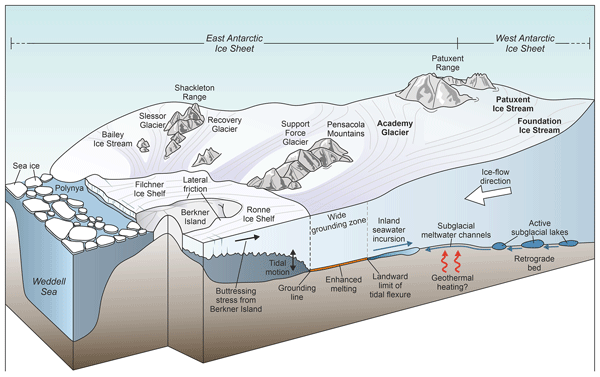
Neil Ross, Rebecca J. Sanderson, Bernd Kulessa, Martin Siegert, Guy J. G. Paxman, Keir A. Nichols, Matthew R. Siegfried, Stewart S. R. Jamieson, Michael J. Bentley, Tom A. Jordan, Christine L. Batchelor, David Small, Olaf Eisen, Kate Winter, Robert G. Bingham, S. Louise Callard, Rachel Carr, Christine F. Dow, Helen A. Fricker, Emily Hill, Benjamin H. Hills, Coen Hofstede, Hafeez Jeofry, Felipe Napoleoni, and Wilson Sauthoff
The Cryosphere, 20, 3705–3737, https://doi.org/10.5194/tc-20-3705-2026, https://doi.org/10.5194/tc-20-3705-2026, 2026
Short summary
Short summary
We review research about a group of fast-flowing Antarctic ice streams, the Foundation-Patuxent-Academy System. Previously, we knew little about how these ice streams flow, how they interact with each other and the ocean, what their geological history was, and how they might evolve in a warming world. By reviewing existing research, we have identified the future research needed to determine how these ice streams function, and how they might contribute to future global sea level rise.
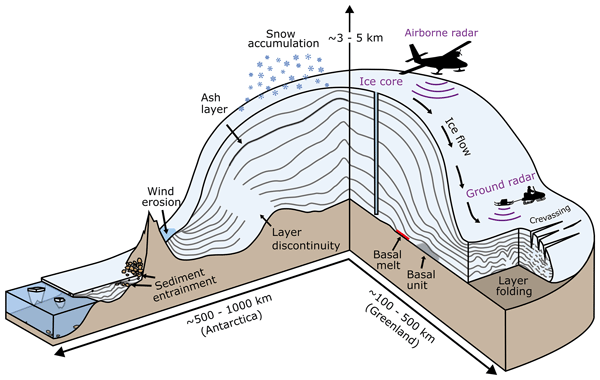
Robert G. Bingham, Julien A. Bodart, Marie G. P. Cavitte, Ailsa Chung, Rebecca J. Sanderson, Johannes C. R. Sutter, Olaf Eisen, Nanna B. Karlsson, Joseph A. MacGregor, Neil Ross, Duncan A. Young, David W. Ashmore, Andreas Born, Winnie Chu, Xiangbin Cui, Reinhard Drews, Steven Franke, Vikram Goel, John W. Goodge, A. Clara J. Henry, Antoine Hermant, Benjamin H. Hills, Nicholas Holschuh, Michelle R. Koutnik, Gwendolyn J.-M. C. Leysinger Vieli, Emma J. MacKie, Elisa Mantelli, Carlos Martín, Felix S. L. Ng, Falk M. Oraschewski, Felipe Napoleoni, Frédéric Parrenin, Sergey V. Popov, Therese Rieckh, Rebecca Schlegel, Dustin M. Schroeder, Martin J. Siegert, Xueyuan Tang, Thomas O. Teisberg, Kate Winter, Shuai Yan, Harry Davis, Christine F. Dow, Tyler J. Fudge, Tom A. Jordan, Bernd Kulessa, Kenichi Matsuoka, Clara J. Nyqvist, Maryam Rahnemoonfar, Matthew R. Siegfried, Shivangini Singh, Vjeran Višnjević, Rodrigo Zamora, and Alexandra Zuhr
The Cryosphere, 19, 4611–4655, https://doi.org/10.5194/tc-19-4611-2025, https://doi.org/10.5194/tc-19-4611-2025, 2025
Short summary
Short summary
The ice sheets covering Antarctica have built up over millenia through successive snowfall events which become buried and preserved as internal surfaces of equal age detectable with ice-penetrating radar. This paper describes an international initiative working together on these archival data to build a comprehensive 3-D picture of how old the ice is everywhere across Antarctica and how this is being used to reconstruct past and to predict future ice and climate behaviour.
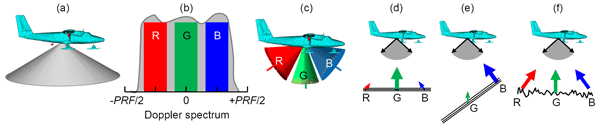
Álvaro Arenas-Pingarrón, Alex M. Brisbourne, Carlos Martín, Hugh F. J. Corr, Carl Robinson, Tom A. Jordan, and Paul V. Brennan
The Cryosphere, 19, 4657–4670, https://doi.org/10.5194/tc-19-4657-2025, https://doi.org/10.5194/tc-19-4657-2025, 2025
Short summary
Short summary
Synthetic Aperture Radar (SAR) imaging is essential for deep englacial observations. Each pixel is formed by averaging the radar echoes within an antenna beamwidth, but the echo diversity is lost after the average. We improve the SAR interpretation if three sub-images are formed with different sub-beamwidths: each is coloured in red, green, or blue, and they are overlapped, creating a coloured image. Interpreters will better identify the slopes of internal layers, crevasses, and layer roughness.
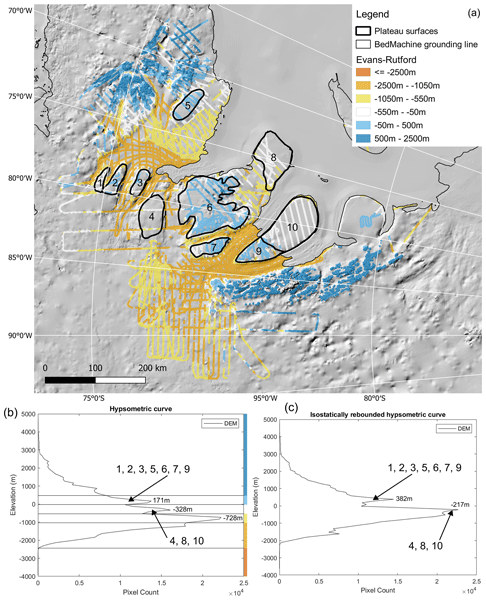
Charlotte M. Carter, Michael J. Bentley, Stewart S. R. Jamieson, Guy J. G. Paxman, Tom A. Jordan, Julien A. Bodart, Neil Ross, and Felipe Napoleoni
The Cryosphere, 18, 2277–2296, https://doi.org/10.5194/tc-18-2277-2024, https://doi.org/10.5194/tc-18-2277-2024, 2024
Short summary
Short summary
We use radio-echo sounding data to investigate the presence of flat surfaces beneath the Evans–Rutford region in West Antarctica. These surfaces may be what remains of laterally continuous surfaces, formed before the inception of the West Antarctic Ice Sheet, and we assess two hypotheses for their formation. Tectonic structures in the region may have also had a control on the growth of the ice sheet by focusing ice flow into troughs adjoining these surfaces.
Rebecca J. Sanderson, Kate Winter, S. Louise Callard, Felipe Napoleoni, Neil Ross, Tom A. Jordan, and Robert G. Bingham
The Cryosphere, 17, 4853–4871, https://doi.org/10.5194/tc-17-4853-2023, https://doi.org/10.5194/tc-17-4853-2023, 2023
Short summary
Short summary
Ice-penetrating radar allows us to explore the internal structure of glaciers and ice sheets to constrain past and present ice-flow conditions. In this paper, we examine englacial layers within the Lambert Glacier in East Antarctica using a quantitative layer tracing tool. Analysis reveals that the ice flow here has been relatively stable, but evidence for former fast flow along a tributary suggests that changes have occurred in the past and could change again in the future.
Alice C. Frémand, Peter Fretwell, Julien A. Bodart, Hamish D. Pritchard, Alan Aitken, Jonathan L. Bamber, Robin Bell, Cesidio Bianchi, Robert G. Bingham, Donald D. Blankenship, Gino Casassa, Ginny Catania, Knut Christianson, Howard Conway, Hugh F. J. Corr, Xiangbin Cui, Detlef Damaske, Volkmar Damm, Reinhard Drews, Graeme Eagles, Olaf Eisen, Hannes Eisermann, Fausto Ferraccioli, Elena Field, René Forsberg, Steven Franke, Shuji Fujita, Yonggyu Gim, Vikram Goel, Siva Prasad Gogineni, Jamin Greenbaum, Benjamin Hills, Richard C. A. Hindmarsh, Andrew O. Hoffman, Per Holmlund, Nicholas Holschuh, John W. Holt, Annika N. Horlings, Angelika Humbert, Robert W. Jacobel, Daniela Jansen, Adrian Jenkins, Wilfried Jokat, Tom Jordan, Edward King, Jack Kohler, William Krabill, Mette Kusk Gillespie, Kirsty Langley, Joohan Lee, German Leitchenkov, Carlton Leuschen, Bruce Luyendyk, Joseph MacGregor, Emma MacKie, Kenichi Matsuoka, Mathieu Morlighem, Jérémie Mouginot, Frank O. Nitsche, Yoshifumi Nogi, Ole A. Nost, John Paden, Frank Pattyn, Sergey V. Popov, Eric Rignot, David M. Rippin, Andrés Rivera, Jason Roberts, Neil Ross, Anotonia Ruppel, Dustin M. Schroeder, Martin J. Siegert, Andrew M. Smith, Daniel Steinhage, Michael Studinger, Bo Sun, Ignazio Tabacco, Kirsty Tinto, Stefano Urbini, David Vaughan, Brian C. Welch, Douglas S. Wilson, Duncan A. Young, and Achille Zirizzotti
Earth Syst. Sci. Data, 15, 2695–2710, https://doi.org/10.5194/essd-15-2695-2023, https://doi.org/10.5194/essd-15-2695-2023, 2023
Short summary
Short summary
This paper presents the release of over 60 years of ice thickness, bed elevation, and surface elevation data acquired over Antarctica by the international community. These data are a crucial component of the Antarctic Bedmap initiative which aims to produce a new map and datasets of Antarctic ice thickness and bed topography for the international glaciology and geophysical community.
Dominic A. Hodgson, Tom A. Jordan, Neil Ross, Teal R. Riley, and Peter T. Fretwell
The Cryosphere, 16, 4797–4809, https://doi.org/10.5194/tc-16-4797-2022, https://doi.org/10.5194/tc-16-4797-2022, 2022
Short summary
Short summary
This paper describes the drainage (and refill) of a subglacial lake on the Antarctic Peninsula resulting in the collapse of the overlying ice into the newly formed subglacial cavity. It provides evidence of an active hydrological network under the region's glaciers and close coupling between surface climate processes and the base of the ice.
Alice C. Frémand, Julien A. Bodart, Tom A. Jordan, Fausto Ferraccioli, Carl Robinson, Hugh F. J. Corr, Helen J. Peat, Robert G. Bingham, and David G. Vaughan
Earth Syst. Sci. Data, 14, 3379–3410, https://doi.org/10.5194/essd-14-3379-2022, https://doi.org/10.5194/essd-14-3379-2022, 2022
Short summary
Short summary
This paper presents the release of large swaths of airborne geophysical data (including gravity, magnetics, and radar) acquired between 1994 and 2020 over Antarctica by the British Antarctic Survey. These include a total of 64 datasets from 24 different surveys, amounting to >30 % of coverage over the Antarctic Ice Sheet. This paper discusses how these data were acquired and processed and presents the methods used to standardize and publish the data in an interactive and reproducible manner.
Kaihe Yamazaki, Karen J. Heywood, Gillian M. Damerell, Marina Azaneu, and Maya I. Jakes
EGUsphere, https://doi.org/10.5194/egusphere-2026-6184, https://doi.org/10.5194/egusphere-2026-6184, 2026
This preprint is open for discussion and under review for Ocean Science (OS).
Short summary
Short summary
Seamounts can trap ocean currents and stir the water around them. Using two underwater glider surveys over a seamount near the tip of the Antarctic Peninsula, we show that a persistent eddy circling the seamount is held in place by the seafloor and partly driven by strong tides. Tidal mixing weakens the water layering over the summit and favours upwelling, which may supply nutrients to surface waters. The eddy can also trap giant icebergs, holding one for about 18 months.
Ronja Reese, Nicolas C. Jourdain, Xylar S. Asay-Davis, Clara Burgard, Erwin Lambert, Yoshihiro Nakayama, Paul R. Holland, Kaitlin A. Naughten, Ralph Timmermann, Pierre Dutrieux, Shenjie Zhou, Golsa Talebigheshlaghi, and Yanmei Tian
EGUsphere, https://doi.org/10.5194/egusphere-2026-5337, https://doi.org/10.5194/egusphere-2026-5337, 2026
This preprint is open for discussion and under review for The Cryosphere (TC).
Short summary
Short summary
An important factor in projections of the Antarctic contribution to future sea level rise is the Southern Ocean. The Ice Sheet Model Intercomparison Project for CMIP7 aims to provide ice sheet projections, and here we introduce the protocol for handling the ocean in Antarctica. It describes how ocean changes from global atmosphere-ocean models can be used in Antarctic simulations and how ocean conditions can be translated into melt rates, taking into account oceanographic knowledge.
Isabelle F. M. White, Oana Dragomir, Alessandro Silvano, Alberto C. Naveira Garabato, Anna E. Hogg, Pierre Dutrieux, Laura Herraiz-Borreguero, and Jennifer Cocks
EGUsphere, https://doi.org/10.5194/egusphere-2026-4414, https://doi.org/10.5194/egusphere-2026-4414, 2026
This preprint is open for discussion and under review for Earth Observation (EO).
Short summary
Short summary
We present a 22-year sea surface height product in the ice-covered Southern Ocean from Envisat and CryoSat-2 satellite altimetry data. Our product is 1° longitude by 0.5° latitude from 50° S to the Antarctic coast. Validation with in-situ, independent satellite and reanalysis data shows it captures seasonal and interannual variability. This supports long-term study of large-scale sea level trends and processes in the Southern Ocean, a region that is observing rapid sea ice and ice sheet melting.
Robert J. W. Brewin, Bethany Wilkinson, Xuerong Sun, Giorgio Dall'Olmo, Gavin H. Tilstone, Katharine R. Hendry, Sarah Breimann, Ian Brown, Angus Atkinson, Katrin Schmidt, Elisabetta Canuti, Meredith G. Meyer, Qi Zheng, Johannes J. Viljoen, Tom Bell, and Karen J. Heywood
EGUsphere, https://doi.org/10.5194/egusphere-2026-4398, https://doi.org/10.5194/egusphere-2026-4398, 2026
This preprint is open for discussion and under review for Ocean Science (OS).
Short summary
Short summary
Phytoplankton are the foundation of the Antarctic food web. Their size affects carbon storage in the ocean and energy transfer to krill, fish, and whales. Because the northwestern Weddell Sea is rarely sampled, little is known about phytoplankton size there. Using ship-based measurements and satellite data, we found medium-sized phytoplankton dominate rather than the smallest types that dominate warmer oceans. This provides a baseline for tracking ecosystem responses to climate change.
Neil Ross, Rebecca J. Sanderson, Bernd Kulessa, Martin Siegert, Guy J. G. Paxman, Keir A. Nichols, Matthew R. Siegfried, Stewart S. R. Jamieson, Michael J. Bentley, Tom A. Jordan, Christine L. Batchelor, David Small, Olaf Eisen, Kate Winter, Robert G. Bingham, S. Louise Callard, Rachel Carr, Christine F. Dow, Helen A. Fricker, Emily Hill, Benjamin H. Hills, Coen Hofstede, Hafeez Jeofry, Felipe Napoleoni, and Wilson Sauthoff
The Cryosphere, 20, 3705–3737, https://doi.org/10.5194/tc-20-3705-2026, https://doi.org/10.5194/tc-20-3705-2026, 2026
Short summary
Short summary
We review research about a group of fast-flowing Antarctic ice streams, the Foundation-Patuxent-Academy System. Previously, we knew little about how these ice streams flow, how they interact with each other and the ocean, what their geological history was, and how they might evolve in a warming world. By reviewing existing research, we have identified the future research needed to determine how these ice streams function, and how they might contribute to future global sea level rise.
Meredith G. Meyer, Robert J. W. Brewin, Xuerong Sun, Clara Manno, Florence Atherden, Sasha J. Kramer, Giorgio Dall'Olmo, and Karen J. Heywood
EGUsphere, https://doi.org/10.5194/egusphere-2026-3148, https://doi.org/10.5194/egusphere-2026-3148, 2026
Short summary
Short summary
Antarctica is a key region for carbon cycling and export. The efficiency of carbon export has been linked to the type of phytoplankton dominating the system. Our results suggest diatoms, haptophytes, and cryptophytes are present in all water column samples despite substantial physical differences between sampling locations. Our data shows a strong relationship between the proportion of diatoms, haptophytes, and cryptophytes relative to all other phytoplankton and the magnitude of carbon flux.
Michael J. Field, Emma J. MacKie, Lijing Wang, Atsuhiro Muto, and Niya Shao
Geosci. Model Dev., 19, 1749–1768, https://doi.org/10.5194/gmd-19-1749-2026, https://doi.org/10.5194/gmd-19-1749-2026, 2026
Short summary
Short summary
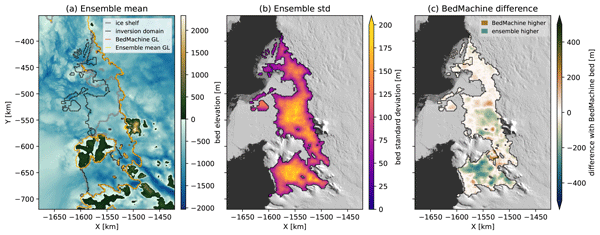
Ice shelves are thinning and losing mass in West Antarctica because of interaction with warm water. The topography of the bedrock beneath the ice shelves is difficult to measure but important for understanding how quickly the ice shelves will melt. This study uses gravity data to infer the bedrock topography beneath the ice shelves. We use statistical methods to create an ensemble of bathymetry models that sample the uncertainty of the assumptions in the problem.
Morven Muilwijk, Tore Hattermann, Rebecca L. Beadling, Neil C. Swart, Aleksi Nummelin, Chuncheng Guo, David M. Chandler, Petra M. Langebroek, Shenjie Zhou, Pierre Dutrieux, Jia-Jia Chen, Christopher Danek, Matthew H. England, Stephen M. Griffies, F. Alexander Haumann, André Jüling, Ombeline Jouet, Qian Li, Torge Martin, John Marshall, Andrew G. Pauling, Ariaan Purich, Zihan Song, Inga J. Smith, Max Thomas, Irene Trombini, Eveline C. van der Linden, and Xiaoqi Xu
The Cryosphere, 20, 1087–1117, https://doi.org/10.5194/tc-20-1087-2026, https://doi.org/10.5194/tc-20-1087-2026, 2026
Short summary
Short summary
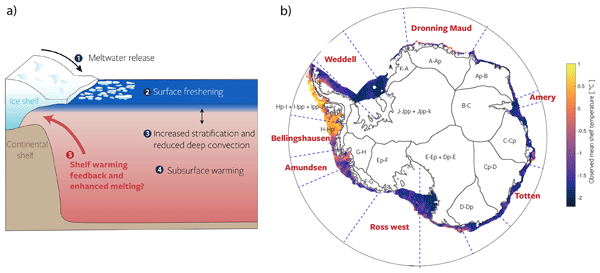
Antarctic meltwater affects ocean stratification and temperature, which in turn influences the rate of ice shelf melting – a coupling missing in most climate models. We analyze a suite of climate models with added meltwater to explore this feedback in different regions. While meltwater generally enhances ocean warming and melt, in West Antarctica most models simulate coastal cooling, suggesting a negative feedback that could slow future ice loss there.
Yoshihiro Nakayama, Shuntaro Hyogo, Yichen Lin, Taewook Park, Jinho Lee, Juistine Caillet, Gobishankar Mohan, Mattia Poinelli, Pierre Dutrieux, Kazuki Nakata, Hong Zhang, Brice Loose, and Lauren Kowalski
EGUsphere, https://doi.org/10.5194/egusphere-2025-5958, https://doi.org/10.5194/egusphere-2025-5958, 2026
Short summary
Short summary
We develop a regional ocean model of the Amundsen and Bellingshausen Seas in Antarctica. Differences in model setups and parameter choices often limit usability and broader scientific application, especially for non-ocean modellers. We carefully evaluate the model outputs and establish a common control experiment that can be shared and applied across studies with tracer and particle applications. This effort aims to support wide community use and improve understanding of ice–ocean interactions.
Kevin Hank, Robert J. Arthern, C. Rosie Williams, Alex M. Brisbourne, Andrew M. Smith, James A. Smith, Anna Wåhlin, and Sridhar Anandakrishnan
The Cryosphere, 20, 495–510, https://doi.org/10.5194/tc-20-495-2026, https://doi.org/10.5194/tc-20-495-2026, 2026
Short summary
Short summary
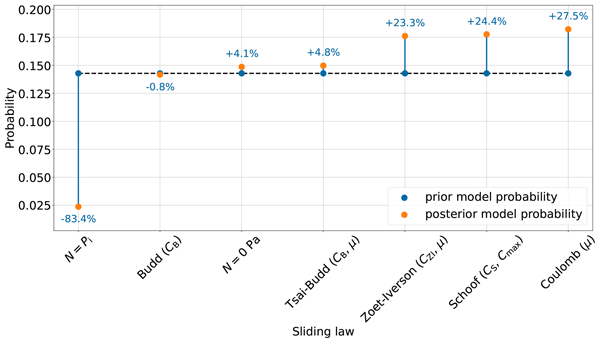
The slipperiness at the ice base is a key uncertainty in sea level rise projections. Alternative formulations of the sliding law exist, but limited access to the ice base makes it difficult to validate them. We introduce a new approach using observations and model output to infer a basal sliding law. For Pine Island Glacier, currently the largest single contributor to sea level rise in Antarctica, the results provide support for a Coulomb-type sliding law and widespread low effective pressures.
Shenjie Zhou, Pierre Dutrieux, Claudia Giulivi, Andrew Meijers, Won Sang Lee, Tae-Wan Kim, Tore Hattermann, and Markus Janout
Earth Syst. Sci. Data Discuss., https://doi.org/10.5194/essd-2025-727, https://doi.org/10.5194/essd-2025-727, 2026
Revised manuscript under review for ESSD
Short summary
Short summary
A collection of temperature and salinity measurements made in the Southern Ocean and around Antarctic continental shelf seas is assembled and described in this paper. A gridded product developed out of these scattered data points is also described. The gridded product provide us a better view of contemporary mean status of the Southern Ocean and Antarctic shelf seas and help models to better reference the prediction of the future climate.
Yavor Kostov, Paul R. Holland, Kelly A. Hogan, James A. Smith, Nicolas C. Jourdain, Pierre Mathiot, Anna Olivé Abelló, Andrew H. Fleming, and Andrew J. S. Meijers
The Cryosphere, 20, 135–169, https://doi.org/10.5194/tc-20-135-2026, https://doi.org/10.5194/tc-20-135-2026, 2026
Short summary
Short summary
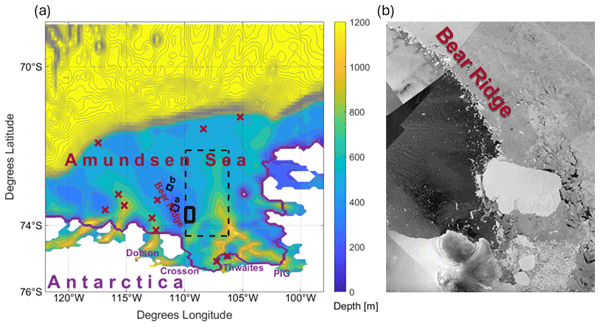
Icebergs ground when they reach shallow topography such as Bear Ridge in the Amundsen Sea. Grounded icebergs can block the transport of sea-ice and create areas of higher and lower sea-ice concentration. We introduce a physically and observationally motivated representation of grounding in an ocean model. In addition, we improve the way simulated icebergs respond to winds, ocean currents, and density differences in sea water. We analyse the forces acting on freely floating and grounded icebergs.
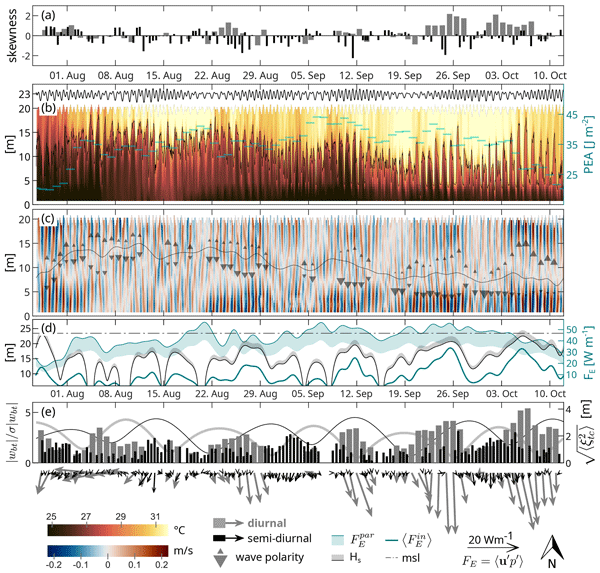
Gerd A. Bruss, Estel Font, Bastien Y. Queste, and Rob A. Hall
Ocean Sci., 22, 31–47, https://doi.org/10.5194/os-22-31-2026, https://doi.org/10.5194/os-22-31-2026, 2026
Short summary
Short summary
We studied internal tides in the Gulf of Oman, where they had not been observed in detail before. Using seabed instruments, we found that these underwater waves travel far inshore, strengthen as the season shifts toward fall, and stay predictable for weeks. They may bring cooler, low-oxygen water to coastal areas, influencing marine ecosystems and reef health.
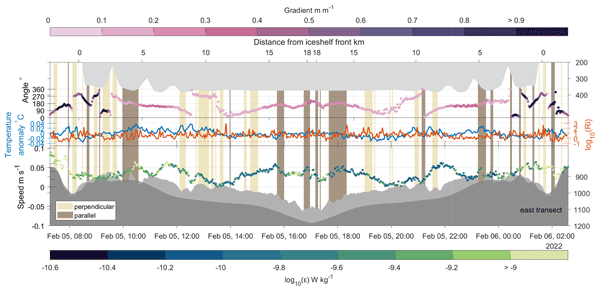
Maren Elisabeth Richter, Karen J. Heywood, Rob A. Hall, and Peter E. D. Davis
Ocean Sci., 21, 3341–3359, https://doi.org/10.5194/os-21-3341-2025, https://doi.org/10.5194/os-21-3341-2025, 2025
Short summary
Short summary
Warm ocean water causes rapid melting of Antarctic glaciers. The circulation and mixing of warm water in ice shelf cavities is mostly unknown. We observed ocean currents and mixing under Dotson Ice Shelf. Mixing is low, with patches of higher mixing associated with stronger currents and vertical current shear. The levels of turbulent mixing will lead to negligible heat loss during the path of the warm water to the grounding line, leaving plenty of heat available to melt the ice shelf there.
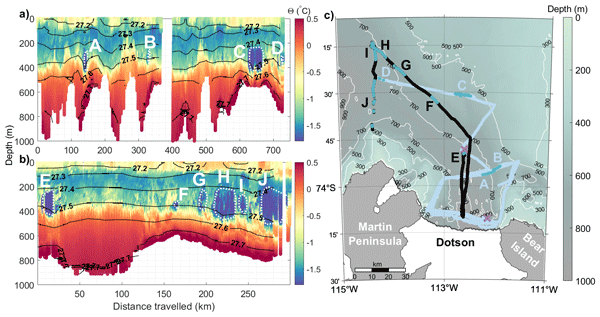
Daisy D. Pickup, Dorothee C. E. Bakker, Karen J. Heywood, Francis Glassup, Emily M. Hammermeister, Sharon E. Stammerjohn, Gareth A. Lee, Socratis Loucaides, Bastien Y. Queste, Benjamin G. M. Webber, and Patricia L. Yager
Ocean Sci., 21, 2727–2741, https://doi.org/10.5194/os-21-2727-2025, https://doi.org/10.5194/os-21-2727-2025, 2025
Short summary
Short summary
Autonomous platforms in the Amundsen Sea have allowed for detection of isolated water masses that are colder, saltier and denser than overlying water. They are also associated with a higher dissolved inorganic carbon concentration and lower pH. The water masses, referred to as lenses, could have implications for the transfer of heat and storage of carbon in the region. We hypothesise that they form in surrounding areas that experience intense cooling and sea ice formation in autumn/winter.
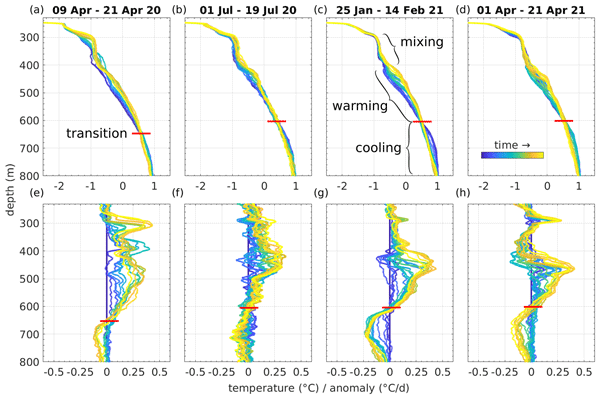
Christian T. Wild, Tasha Snow, Tiago S. Dotto, Peter E. D. Davis, Scott Tyler, Ted A. Scambos, Erin C. Pettit, and Karen J. Heywood
Ocean Sci., 21, 2605–2629, https://doi.org/10.5194/os-21-2605-2025, https://doi.org/10.5194/os-21-2605-2025, 2025
Short summary
Short summary
Thwaites Glacier is retreating due to warm ocean water melting it from below, but its thick ice shelf makes this heat hard to monitor. Using hot-water drilling, we placed sensors beneath the floating ice, revealing how surface freezing in Pine Island Bay influences heat at depth. Alongside gradual warming, we found bursts of heat that could speed up melting at the grounding zone, which may become more common as sea ice declines.
Shenjie Zhou, Pierre Dutrieux, Claudia F. Giulivi, Adrian Jenkins, Alessandro Silvano, Christopher Auckland, E. Povl Abrahamsen, Michael Meredith, Irena Vaňková, Keith Nicholls, Peter E. D. Davis, Svein Østerhus, Arnold L. Gordon, Christopher J. Zappa, Tiago S. Dotto, Ted Scambos, Kathryn L. Gunn, Stephen R. Rintoul, Shigeru Aoki, Craig Stevens, Chengyan Liu, Sukyoung Yun, Tae-Wan Kim, Won Sang Lee, Markus Janout, Tore Hattermann, Julius Lauber, Elin Darelius, Anna Wåhlin, Leo Middleton, Pasquale Castagno, Giorgio Budillon, Karen J. Heywood, Jennifer Graham, Stephen Dye, Daisuke Hirano, and Una Kim Miller
Earth Syst. Sci. Data, 17, 5693–5706, https://doi.org/10.5194/essd-17-5693-2025, https://doi.org/10.5194/essd-17-5693-2025, 2025
Short summary
Short summary
We created the first standardised dataset of in-situ ocean measurements time series from around Antarctica collected since 1970s. This includes temperature, salinity, pressure, and currents recorded by instruments deployed in icy, challenging conditions. Our analysis highlights the dominance of tidal currents and separates these from other patterns to study regional energy distribution. This unique dataset offers a foundation for future research on Antarctic ocean dynamics and ice interactions.
Katie Lowery, Pierre Dutrieux, Paul R. Holland, Anna E. Hogg, Noel Gourmelen, and Benjamin J. Wallis
The Cryosphere, 19, 4893–4911, https://doi.org/10.5194/tc-19-4893-2025, https://doi.org/10.5194/tc-19-4893-2025, 2025
Short summary
Short summary
Using CryoSat-2, we observe monthly changes in the Pine Island Glacier (PIG) ice shelf surface and derive oceanic melt at its base. Basal channels, kilometres wide, are reflected in the ice surface and captured in our observations. We demonstrate that melt is concentrated on the western walls of channels, that channels play a role in grounding pinning points, and that PIG's main channel geometry is inherited upstream of the grounding line. These results highlight the importance of channels to ice shelf stability.
Álvaro Arenas-Pingarrón, Alex M. Brisbourne, Carlos Martín, Hugh F. J. Corr, Carl Robinson, Tom A. Jordan, and Paul V. Brennan
The Cryosphere, 19, 4657–4670, https://doi.org/10.5194/tc-19-4657-2025, https://doi.org/10.5194/tc-19-4657-2025, 2025
Short summary
Short summary
Synthetic Aperture Radar (SAR) imaging is essential for deep englacial observations. Each pixel is formed by averaging the radar echoes within an antenna beamwidth, but the echo diversity is lost after the average. We improve the SAR interpretation if three sub-images are formed with different sub-beamwidths: each is coloured in red, green, or blue, and they are overlapped, creating a coloured image. Interpreters will better identify the slopes of internal layers, crevasses, and layer roughness.
Robert G. Bingham, Julien A. Bodart, Marie G. P. Cavitte, Ailsa Chung, Rebecca J. Sanderson, Johannes C. R. Sutter, Olaf Eisen, Nanna B. Karlsson, Joseph A. MacGregor, Neil Ross, Duncan A. Young, David W. Ashmore, Andreas Born, Winnie Chu, Xiangbin Cui, Reinhard Drews, Steven Franke, Vikram Goel, John W. Goodge, A. Clara J. Henry, Antoine Hermant, Benjamin H. Hills, Nicholas Holschuh, Michelle R. Koutnik, Gwendolyn J.-M. C. Leysinger Vieli, Emma J. MacKie, Elisa Mantelli, Carlos Martín, Felix S. L. Ng, Falk M. Oraschewski, Felipe Napoleoni, Frédéric Parrenin, Sergey V. Popov, Therese Rieckh, Rebecca Schlegel, Dustin M. Schroeder, Martin J. Siegert, Xueyuan Tang, Thomas O. Teisberg, Kate Winter, Shuai Yan, Harry Davis, Christine F. Dow, Tyler J. Fudge, Tom A. Jordan, Bernd Kulessa, Kenichi Matsuoka, Clara J. Nyqvist, Maryam Rahnemoonfar, Matthew R. Siegfried, Shivangini Singh, Vjeran Višnjević, Rodrigo Zamora, and Alexandra Zuhr
The Cryosphere, 19, 4611–4655, https://doi.org/10.5194/tc-19-4611-2025, https://doi.org/10.5194/tc-19-4611-2025, 2025
Short summary
Short summary
The ice sheets covering Antarctica have built up over millenia through successive snowfall events which become buried and preserved as internal surfaces of equal age detectable with ice-penetrating radar. This paper describes an international initiative working together on these archival data to build a comprehensive 3-D picture of how old the ice is everywhere across Antarctica and how this is being used to reconstruct past and to predict future ice and climate behaviour.
Meredith G. Meyer, Esther Portela, Walker O. Smith Jr., and Karen J. Heywood
Ocean Sci., 21, 1223–1236, https://doi.org/10.5194/os-21-1223-2025, https://doi.org/10.5194/os-21-1223-2025, 2025
Short summary
Short summary
During the annual phytoplankton bloom, rates of primary production and carbon export in the Ross Sea, Antarctica, are uncoupled from each other and from oxygen and carbon stocks. These biogeochemical rates support the high-productivity, low-export classification of the region and suggest that environmental factors influence these stocks and rates differently and make projections under future climate change scenarios difficult.
Heather L. Selley, Anna E. Hogg, Benjamin J. Davison, Pierre Dutrieux, and Thomas Slater
The Cryosphere, 19, 1725–1738, https://doi.org/10.5194/tc-19-1725-2025, https://doi.org/10.5194/tc-19-1725-2025, 2025
Short summary
Short summary
We used satellite observations to measure recent changes in ice speed and flow direction in the Pope, Smith, and Kohler region of West Antarctica (2005–2022). We found substantial speed-up on seven ice streams of up to 87 %. However, Kohler West Glacier has slowed by 10 %, due to the redirection of ice flow into its rapidly thinning neighbour. This process of “ice piracy” has not previously been directly observed on this rapid timescale and may influence future ice shelf and sheet mass changes.
Asmara A. Lehrmann, Rebecca L. Totten, Julia S. Wellner, Claus-Dieter Hillenbrand, Svetlana Radionovskaya, R. Michael Comas, Robert D. Larter, Alastair G. C. Graham, James D. Kirkham, Kelly A. Hogan, Victoria Fitzgerald, Rachel W. Clark, Becky Hopkins, Allison P. Lepp, Elaine Mawbey, Rosemary V. Smyth, Lauren E. Miller, James A. Smith, and Frank O. Nitsche
J. Micropalaeontol., 44, 79–105, https://doi.org/10.5194/jm-44-79-2025, https://doi.org/10.5194/jm-44-79-2025, 2025
Short summary
Short summary
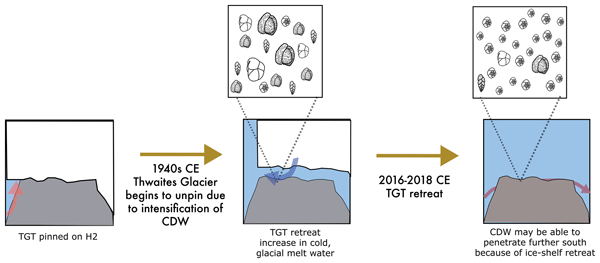
Thwaites Glacier's retreat is driven by warm ocean water melting its ice shelf. Seafloor-dwelling marine protists, benthic foraminifera, reflect their environment. Here, ice margins, oceanography, and sea ice cover control live foraminiferal populations. Including dead foraminifera in the analyses shows the calcareous test preservation's role in the assemblage make-up. Understanding these modern communities helps interpret past glacial retreat controls through foraminifera in sediment records.
Jan De Rydt, Nicolas C. Jourdain, Yoshihiro Nakayama, Mathias van Caspel, Ralph Timmermann, Pierre Mathiot, Xylar S. Asay-Davis, Hélène Seroussi, Pierre Dutrieux, Ben Galton-Fenzi, David Holland, and Ronja Reese
Geosci. Model Dev., 17, 7105–7139, https://doi.org/10.5194/gmd-17-7105-2024, https://doi.org/10.5194/gmd-17-7105-2024, 2024
Short summary
Short summary
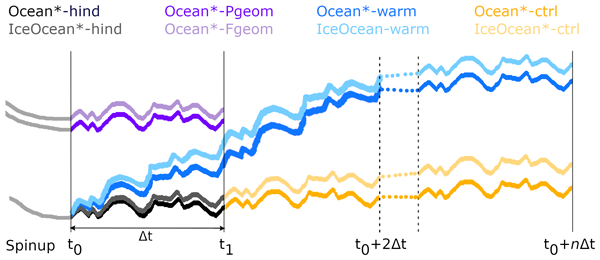
Global climate models do not reliably simulate sea-level change due to ice-sheet–ocean interactions. We propose a community modelling effort to conduct a series of well-defined experiments to compare models with observations and study how models respond to a range of perturbations in climate and ice-sheet geometry. The second Marine Ice Sheet–Ocean Model Intercomparison Project will continue to lay the groundwork for including ice-sheet–ocean interactions in global-scale IPCC-class models.
Gabriela Collao-Barrios, Ted A. Scambos, Christian T. Wild, Martin Truffer, Karen E. Alley, and Erin C. Pettit
EGUsphere, https://doi.org/10.5194/egusphere-2024-1895, https://doi.org/10.5194/egusphere-2024-1895, 2024
Preprint archived
Short summary
Short summary
Destabilization of ice shelves frequently leads to significant acceleration and greater mass loss, affecting rates of sea level rise. Our results show a relation between tides, flow direction, and grounding-zone acceleration that result from changing stresses in the ice margins and around a nunatak in Dotson Ice Shelf. The study describes a new way tides can influence ice shelf dynamics, an effect that could become more common as ice shelves thin and weaken around Antarctica.
Ian Joughin, Daniel Shapero, and Pierre Dutrieux
The Cryosphere, 18, 2583–2601, https://doi.org/10.5194/tc-18-2583-2024, https://doi.org/10.5194/tc-18-2583-2024, 2024
Short summary
Short summary
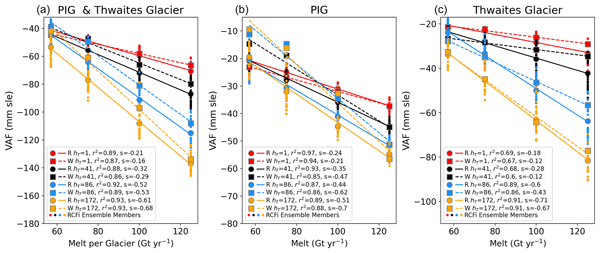
The Pine Island and Thwaites glaciers are losing ice to the ocean rapidly as warmer water melts their floating ice shelves. Models help determine how much such glaciers will contribute to sea level. We find that ice loss varies in response to how much melting the ice shelves are subjected to. Our estimated losses are also sensitive to how much the friction beneath the glaciers is reduced as it goes afloat. Melt-forced sea level rise from these glaciers is likely to be less than 10 cm by 2300.
Charlotte M. Carter, Michael J. Bentley, Stewart S. R. Jamieson, Guy J. G. Paxman, Tom A. Jordan, Julien A. Bodart, Neil Ross, and Felipe Napoleoni
The Cryosphere, 18, 2277–2296, https://doi.org/10.5194/tc-18-2277-2024, https://doi.org/10.5194/tc-18-2277-2024, 2024
Short summary
Short summary
We use radio-echo sounding data to investigate the presence of flat surfaces beneath the Evans–Rutford region in West Antarctica. These surfaces may be what remains of laterally continuous surfaces, formed before the inception of the West Antarctic Ice Sheet, and we assess two hypotheses for their formation. Tectonic structures in the region may have also had a control on the growth of the ice sheet by focusing ice flow into troughs adjoining these surfaces.
Naomi E. Ochwat, Ted A. Scambos, Alison F. Banwell, Robert S. Anderson, Michelle L. Maclennan, Ghislain Picard, Julia A. Shates, Sebastian Marinsek, Liliana Margonari, Martin Truffer, and Erin C. Pettit
The Cryosphere, 18, 1709–1731, https://doi.org/10.5194/tc-18-1709-2024, https://doi.org/10.5194/tc-18-1709-2024, 2024
Short summary
Short summary
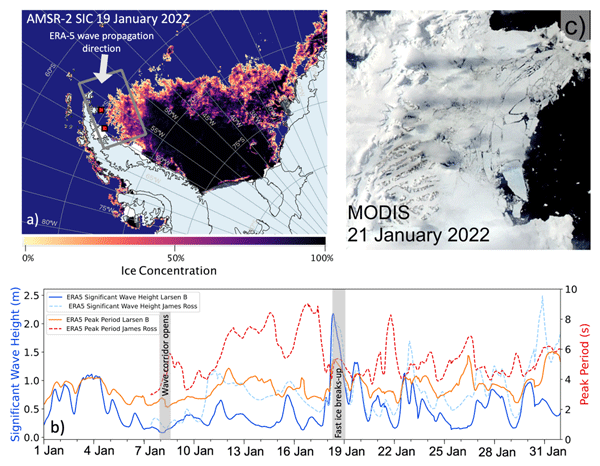
On the Antarctic Peninsula, there is a small bay that had sea ice fastened to the shoreline (
fast ice) for over a decade. The fast ice stabilized the glaciers that fed into the ocean. In January 2022, the fast ice broke away. Using satellite data we found that this was because of low sea ice concentrations and a high long-period ocean wave swell. We find that the glaciers have responded to this event by thinning, speeding up, and retreating by breaking off lots of icebergs at remarkable rates.
Rebecca J. Sanderson, Kate Winter, S. Louise Callard, Felipe Napoleoni, Neil Ross, Tom A. Jordan, and Robert G. Bingham
The Cryosphere, 17, 4853–4871, https://doi.org/10.5194/tc-17-4853-2023, https://doi.org/10.5194/tc-17-4853-2023, 2023
Short summary
Short summary
Ice-penetrating radar allows us to explore the internal structure of glaciers and ice sheets to constrain past and present ice-flow conditions. In this paper, we examine englacial layers within the Lambert Glacier in East Antarctica using a quantitative layer tracing tool. Analysis reveals that the ice flow here has been relatively stable, but evidence for former fast flow along a tributary suggests that changes have occurred in the past and could change again in the future.
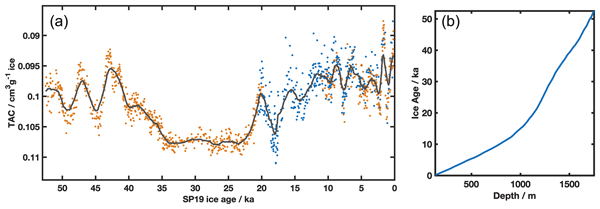
Jenna A. Epifanio, Edward J. Brook, Christo Buizert, Erin C. Pettit, Jon S. Edwards, John M. Fegyveresi, Todd A. Sowers, Jeffrey P. Severinghaus, and Emma C. Kahle
The Cryosphere, 17, 4837–4851, https://doi.org/10.5194/tc-17-4837-2023, https://doi.org/10.5194/tc-17-4837-2023, 2023
Short summary
Short summary
The total air content (TAC) of polar ice cores has long been considered a potential proxy for past ice sheet elevation. This study presents a high-resolution record of TAC from the South Pole ice core. The record reveals orbital- and millennial-scale variability that cannot be explained by elevation changes. The orbital- and millennial-scale changes are likely a product of firn grain metamorphism near the surface of the ice sheet, due to summer insolation changes or local accumulation changes.
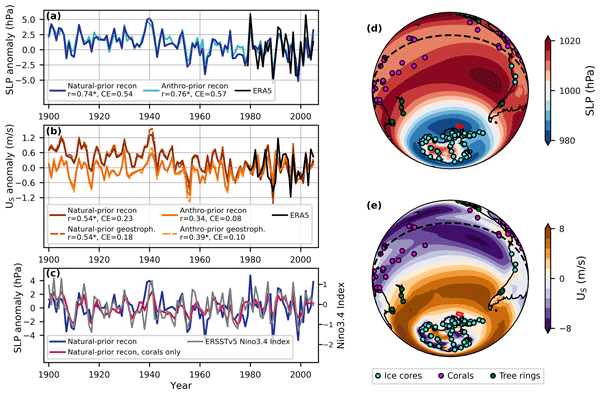
Gemma K. O'Connor, Paul R. Holland, Eric J. Steig, Pierre Dutrieux, and Gregory J. Hakim
The Cryosphere, 17, 4399–4420, https://doi.org/10.5194/tc-17-4399-2023, https://doi.org/10.5194/tc-17-4399-2023, 2023
Short summary
Short summary
Glaciers in West Antarctica are rapidly melting, but the causes are unknown due to limited observations. A leading hypothesis is that an unusually large wind event in the 1940s initiated the ocean-driven melting. Using proxy reconstructions (e.g., using ice cores) and climate model simulations, we find that wind events similar to the 1940s event are relatively common on millennial timescales, implying that ocean variability or climate trends are also necessary to explain the start of ice loss.
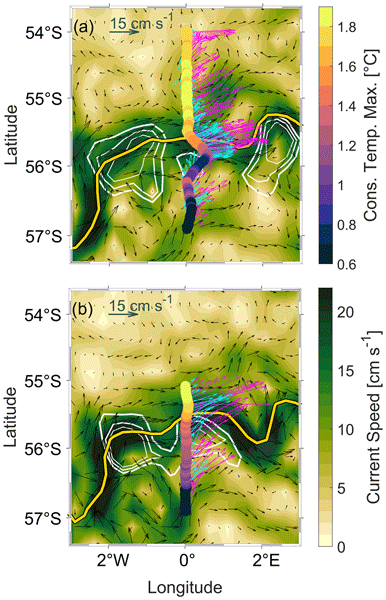
Ria Oelerich, Karen J. Heywood, Gillian M. Damerell, Marcel du Plessis, Louise C. Biddle, and Sebastiaan Swart
Ocean Sci., 19, 1465–1482, https://doi.org/10.5194/os-19-1465-2023, https://doi.org/10.5194/os-19-1465-2023, 2023
Short summary
Short summary
At the southern boundary of the Antarctic Circumpolar Current, relatively warm waters encounter the colder waters surrounding Antarctica. Observations from underwater vehicles and altimetry show that medium-sized cold-core eddies influence the southern boundary's barrier properties by strengthening the slopes of constant density lines across it and amplifying its associated jet. As a result, the ability of exchanging properties, such as heat, across the southern boundary is reduced.
Alice C. Frémand, Peter Fretwell, Julien A. Bodart, Hamish D. Pritchard, Alan Aitken, Jonathan L. Bamber, Robin Bell, Cesidio Bianchi, Robert G. Bingham, Donald D. Blankenship, Gino Casassa, Ginny Catania, Knut Christianson, Howard Conway, Hugh F. J. Corr, Xiangbin Cui, Detlef Damaske, Volkmar Damm, Reinhard Drews, Graeme Eagles, Olaf Eisen, Hannes Eisermann, Fausto Ferraccioli, Elena Field, René Forsberg, Steven Franke, Shuji Fujita, Yonggyu Gim, Vikram Goel, Siva Prasad Gogineni, Jamin Greenbaum, Benjamin Hills, Richard C. A. Hindmarsh, Andrew O. Hoffman, Per Holmlund, Nicholas Holschuh, John W. Holt, Annika N. Horlings, Angelika Humbert, Robert W. Jacobel, Daniela Jansen, Adrian Jenkins, Wilfried Jokat, Tom Jordan, Edward King, Jack Kohler, William Krabill, Mette Kusk Gillespie, Kirsty Langley, Joohan Lee, German Leitchenkov, Carlton Leuschen, Bruce Luyendyk, Joseph MacGregor, Emma MacKie, Kenichi Matsuoka, Mathieu Morlighem, Jérémie Mouginot, Frank O. Nitsche, Yoshifumi Nogi, Ole A. Nost, John Paden, Frank Pattyn, Sergey V. Popov, Eric Rignot, David M. Rippin, Andrés Rivera, Jason Roberts, Neil Ross, Anotonia Ruppel, Dustin M. Schroeder, Martin J. Siegert, Andrew M. Smith, Daniel Steinhage, Michael Studinger, Bo Sun, Ignazio Tabacco, Kirsty Tinto, Stefano Urbini, David Vaughan, Brian C. Welch, Douglas S. Wilson, Duncan A. Young, and Achille Zirizzotti
Earth Syst. Sci. Data, 15, 2695–2710, https://doi.org/10.5194/essd-15-2695-2023, https://doi.org/10.5194/essd-15-2695-2023, 2023
Short summary
Short summary
This paper presents the release of over 60 years of ice thickness, bed elevation, and surface elevation data acquired over Antarctica by the international community. These data are a crucial component of the Antarctic Bedmap initiative which aims to produce a new map and datasets of Antarctic ice thickness and bed topography for the international glaciology and geophysical community.
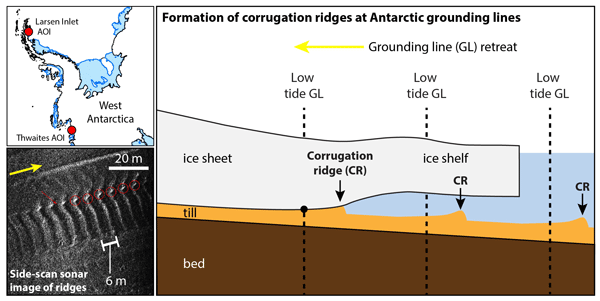
Kelly A. Hogan, Katarzyna L. P. Warburton, Alastair G. C. Graham, Jerome A. Neufeld, Duncan R. Hewitt, Julian A. Dowdeswell, and Robert D. Larter
The Cryosphere, 17, 2645–2664, https://doi.org/10.5194/tc-17-2645-2023, https://doi.org/10.5194/tc-17-2645-2023, 2023
Short summary
Short summary
Delicate sea floor ridges – corrugation ridges – that form by tidal motion at Antarctic grounding lines record extremely fast retreat of ice streams in the past. Here we use a mathematical model, constrained by real-world observations from Thwaites Glacier, West Antarctica, to explore how corrugation ridges form. We identify
till extrusion, whereby deformable sediment is squeezed out from under the ice like toothpaste as it settles down at each low-tide position, as the most likely process.
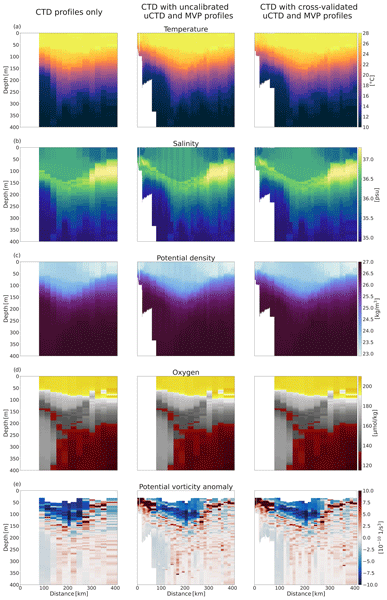
Pierre L'Hégaret, Florian Schütte, Sabrina Speich, Gilles Reverdin, Dariusz B. Baranowski, Rena Czeschel, Tim Fischer, Gregory R. Foltz, Karen J. Heywood, Gerd Krahmann, Rémi Laxenaire, Caroline Le Bihan, Philippe Le Bot, Stéphane Leizour, Callum Rollo, Michael Schlundt, Elizabeth Siddle, Corentin Subirade, Dongxiao Zhang, and Johannes Karstensen
Earth Syst. Sci. Data, 15, 1801–1830, https://doi.org/10.5194/essd-15-1801-2023, https://doi.org/10.5194/essd-15-1801-2023, 2023
Short summary
Short summary
In early 2020, the EUREC4A-OA/ATOMIC experiment took place in the northwestern Tropical Atlantic Ocean, a dynamical region where different water masses interact. Four oceanographic vessels and a fleet of autonomous devices were deployed to study the processes at play and sample the upper ocean, each with its own observing capability. The article first describes the data calibration and validation and second their cross-validation, using a hierarchy of instruments and estimating the uncertainty.
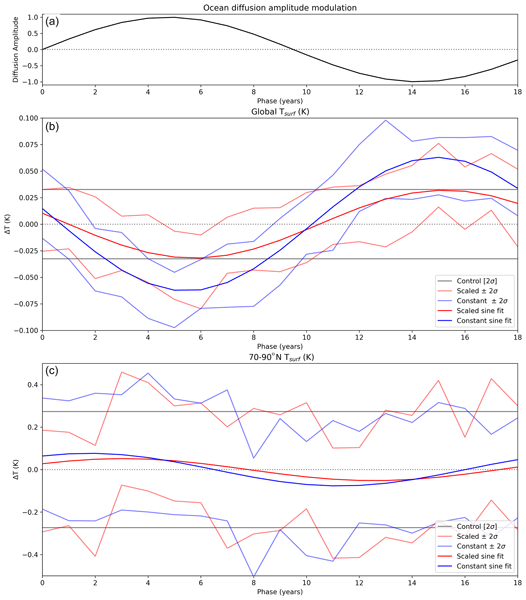
Manoj Joshi, Robert A. Hall, David P. Stevens, and Ed Hawkins
Earth Syst. Dynam., 14, 443–455, https://doi.org/10.5194/esd-14-443-2023, https://doi.org/10.5194/esd-14-443-2023, 2023
Short summary
Short summary
The 18.6-year lunar nodal cycle arises from variations in the angle of the Moon's orbital plane and affects ocean tides. In this work we use a climate model to examine the effect of this cycle on the ocean, surface, and atmosphere. The timing of anomalies is consistent with the so-called slowdown in global warming and has implications for when global temperatures will exceed 1.5 ℃ above pre-industrial levels. Regional anomalies have implications for seasonal climate areas such as Europe.
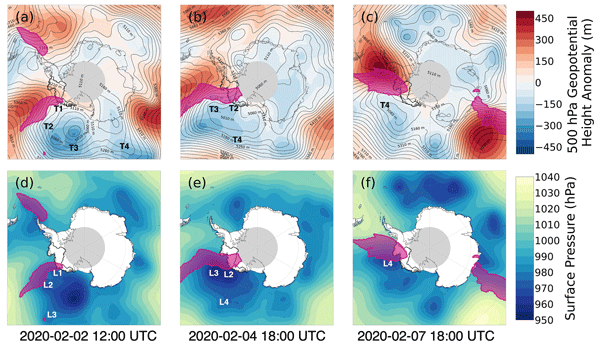
Michelle L. Maclennan, Jan T. M. Lenaerts, Christine A. Shields, Andrew O. Hoffman, Nander Wever, Megan Thompson-Munson, Andrew C. Winters, Erin C. Pettit, Theodore A. Scambos, and Jonathan D. Wille
The Cryosphere, 17, 865–881, https://doi.org/10.5194/tc-17-865-2023, https://doi.org/10.5194/tc-17-865-2023, 2023
Short summary
Short summary
Atmospheric rivers are air masses that transport large amounts of moisture and heat towards the poles. Here, we use a combination of weather observations and models to quantify the amount of snowfall caused by atmospheric rivers in West Antarctica which is about 10 % of the total snowfall each year. We then examine a unique event that occurred in early February 2020, when three atmospheric rivers made landfall over West Antarctica in rapid succession, leading to heavy snowfall and surface melt.

Peter M. F. Sheehan, Gillian M. Damerell, Philip J. Leadbitter, Karen J. Heywood, and Rob A. Hall
Ocean Sci., 19, 77–92, https://doi.org/10.5194/os-19-77-2023, https://doi.org/10.5194/os-19-77-2023, 2023
Short summary
Short summary
We calculate the rate of turbulent kinetic energy dissipation, i.e. the mixing driven by small-scale ocean turbulence, in the western tropical Atlantic Ocean via two methods. We find good agreement between the results of both. A region of elevated mixing is found between 200 and 500 m, and we calculate the associated heat and salt fluxes. We find that double-diffusive mixing in salt fingers, a common feature of the tropical oceans, drives larger heat and salt fluxes than the turbulent mixing.
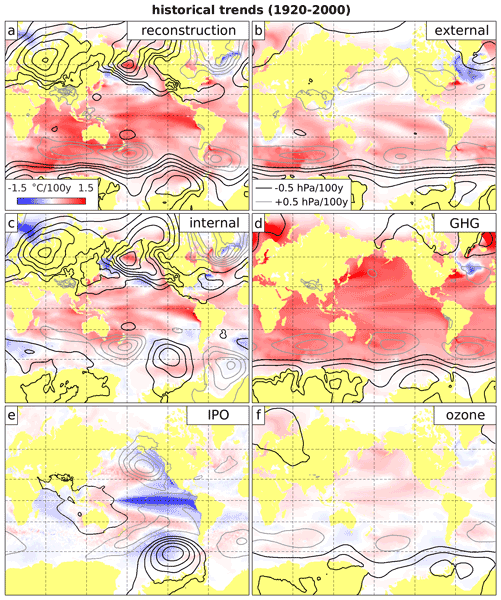
Paul R. Holland, Gemma K. O'Connor, Thomas J. Bracegirdle, Pierre Dutrieux, Kaitlin A. Naughten, Eric J. Steig, David P. Schneider, Adrian Jenkins, and James A. Smith
The Cryosphere, 16, 5085–5105, https://doi.org/10.5194/tc-16-5085-2022, https://doi.org/10.5194/tc-16-5085-2022, 2022
Short summary
Short summary
The Antarctic Ice Sheet is losing ice, causing sea-level rise. However, it is not known whether human-induced climate change has contributed to this ice loss. In this study, we use evidence from climate models and palaeoclimate measurements (e.g. ice cores) to suggest that the ice loss was triggered by natural climate variations but is now sustained by human-forced climate change. This implies that future greenhouse-gas emissions may influence sea-level rise from Antarctica.
Dominic A. Hodgson, Tom A. Jordan, Neil Ross, Teal R. Riley, and Peter T. Fretwell
The Cryosphere, 16, 4797–4809, https://doi.org/10.5194/tc-16-4797-2022, https://doi.org/10.5194/tc-16-4797-2022, 2022
Short summary
Short summary
This paper describes the drainage (and refill) of a subglacial lake on the Antarctic Peninsula resulting in the collapse of the overlying ice into the newly formed subglacial cavity. It provides evidence of an active hydrological network under the region's glaciers and close coupling between surface climate processes and the base of the ice.
Callum Rollo, Karen J. Heywood, and Rob A. Hall
Geosci. Instrum. Method. Data Syst., 11, 359–373, https://doi.org/10.5194/gi-11-359-2022, https://doi.org/10.5194/gi-11-359-2022, 2022
Short summary
Short summary
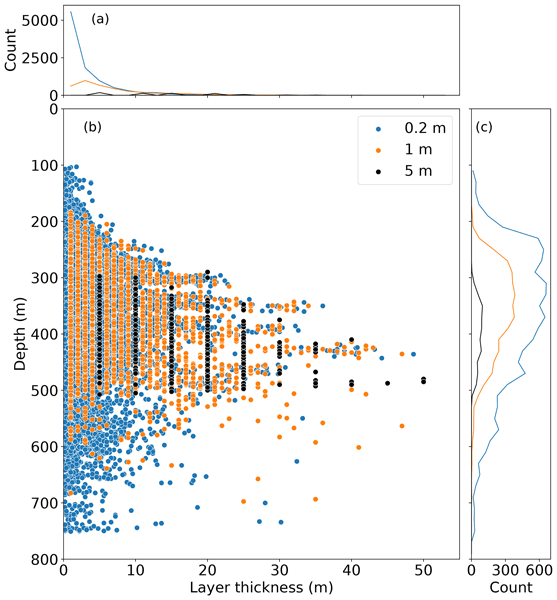
Using an underwater buoyancy-powered autonomous glider, we collected profiles of temperature and salinity from the ocean north-east of Barbados. Most of the temperature and salinity profiles contained staircase-like structures of alternating constant values and large gradients. We wrote an algorithm to identify these staircases. We hypothesise that these staircases are prevented from forming where background gradients in temperature and salinity are too great.
Michael P. Hemming, Jan Kaiser, Jacqueline Boutin, Liliane Merlivat, Karen J. Heywood, Dorothee C. E. Bakker, Gareth A. Lee, Marcos Cobas García, David Antoine, and Kiminori Shitashima
Ocean Sci., 18, 1245–1262, https://doi.org/10.5194/os-18-1245-2022, https://doi.org/10.5194/os-18-1245-2022, 2022
Short summary
Short summary
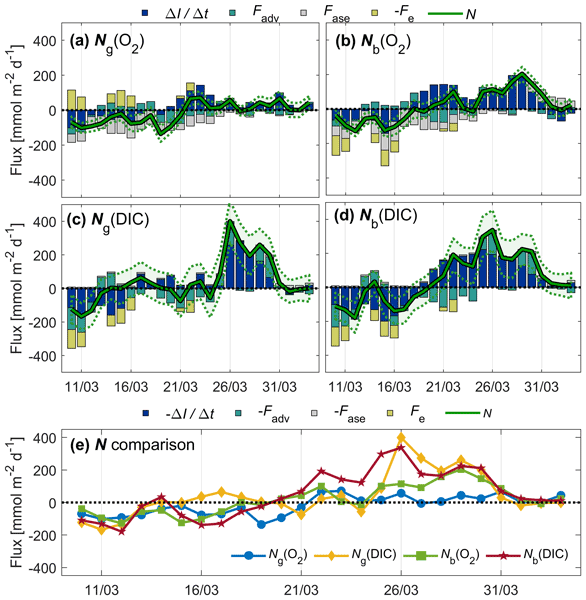
An underwater glider mission was carried out in spring 2016 near a mooring in the northwestern Mediterranean Sea. The glider deployment served as a test of a prototype ion-sensitive field-effect transistor pH sensor. Mean net community production rates were estimated from glider and buoy measurements of dissolved oxygen and inorganic carbon concentrations before and during the spring bloom. Incorporating advection is important for accurate mass budgets. Unexpected metabolic quotients were found.
Yixi Zheng, David P. Stevens, Karen J. Heywood, Benjamin G. M. Webber, and Bastien Y. Queste
The Cryosphere, 16, 3005–3019, https://doi.org/10.5194/tc-16-3005-2022, https://doi.org/10.5194/tc-16-3005-2022, 2022
Short summary
Short summary
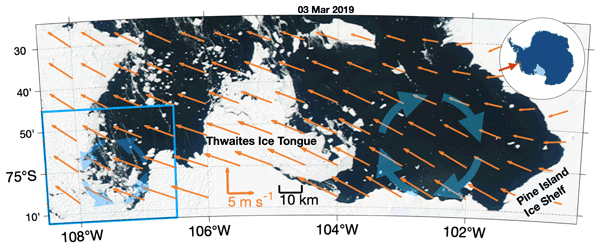
New observations reveal the Thwaites gyre in a habitually ice-covered region in the Amundsen Sea for the first time. This gyre rotates anticlockwise, despite the wind here favouring clockwise gyres like the Pine Island Bay gyre – the only other ocean gyre reported in the Amundsen Sea. We use an ocean model to suggest that sea ice alters the wind stress felt by the ocean and hence determines the gyre direction and strength. These processes may also be applied to other gyres in polar oceans.
Alice C. Frémand, Julien A. Bodart, Tom A. Jordan, Fausto Ferraccioli, Carl Robinson, Hugh F. J. Corr, Helen J. Peat, Robert G. Bingham, and David G. Vaughan
Earth Syst. Sci. Data, 14, 3379–3410, https://doi.org/10.5194/essd-14-3379-2022, https://doi.org/10.5194/essd-14-3379-2022, 2022
Short summary
Short summary
This paper presents the release of large swaths of airborne geophysical data (including gravity, magnetics, and radar) acquired between 1994 and 2020 over Antarctica by the British Antarctic Survey. These include a total of 64 datasets from 24 different surveys, amounting to >30 % of coverage over the Antarctic Ice Sheet. This paper discusses how these data were acquired and processed and presents the methods used to standardize and publish the data in an interactive and reproducible manner.
Douglas I. Benn, Adrian Luckman, Jan A. Åström, Anna J. Crawford, Stephen L. Cornford, Suzanne L. Bevan, Thomas Zwinger, Rupert Gladstone, Karen Alley, Erin Pettit, and Jeremy Bassis
The Cryosphere, 16, 2545–2564, https://doi.org/10.5194/tc-16-2545-2022, https://doi.org/10.5194/tc-16-2545-2022, 2022
Short summary
Short summary
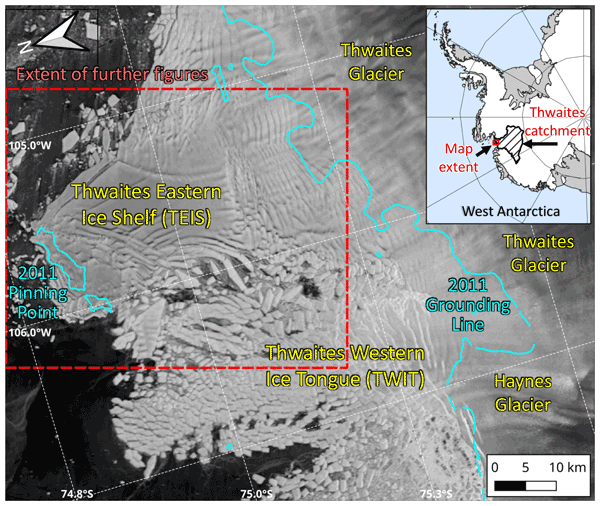
Thwaites Glacier (TG), in West Antarctica, is potentially unstable and may contribute significantly to sea-level rise as global warming continues. Using satellite data, we show that Thwaites Eastern Ice Shelf, the largest remaining floating extension of TG, has started to accelerate as it fragments along a shear zone. Computer modelling does not indicate that fragmentation will lead to imminent glacier collapse, but it is clear that major, rapid, and unpredictable changes are underway.

Yanxin Wang, Karen J. Heywood, David P. Stevens, and Gillian M. Damerell
Ocean Sci., 18, 839–855, https://doi.org/10.5194/os-18-839-2022, https://doi.org/10.5194/os-18-839-2022, 2022
Short summary
Short summary
It is important that climate models give accurate projections of future extremes in summer and winter sea surface temperature because these affect many features of the global climate system. Our results demonstrate that some models would give large errors if used for future projections of these features, and models with more detailed representation of vertical structure in the ocean tend to have a better representation of sea surface temperature, particularly in summer.
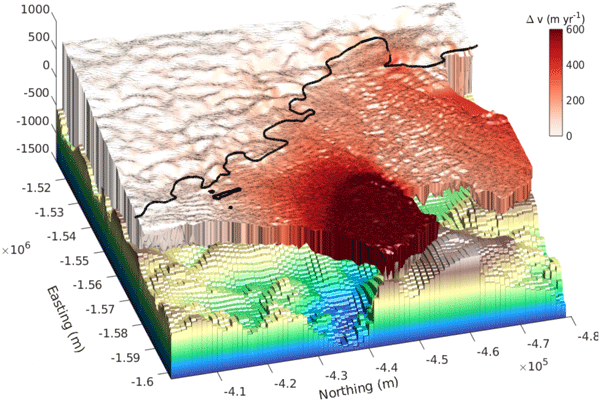
Christian T. Wild, Karen E. Alley, Atsuhiro Muto, Martin Truffer, Ted A. Scambos, and Erin C. Pettit
The Cryosphere, 16, 397–417, https://doi.org/10.5194/tc-16-397-2022, https://doi.org/10.5194/tc-16-397-2022, 2022
Short summary
Short summary
Thwaites Glacier has the potential to significantly raise Antarctica's contribution to global sea-level rise by the end of this century. Here, we use satellite measurements of surface elevation to show that its floating part is close to losing contact with an underwater ridge that currently acts to stabilize. We then use computer models of ice flow to simulate the predicted unpinning, which show that accelerated ice discharge into the ocean follows the breakup of the floating part.
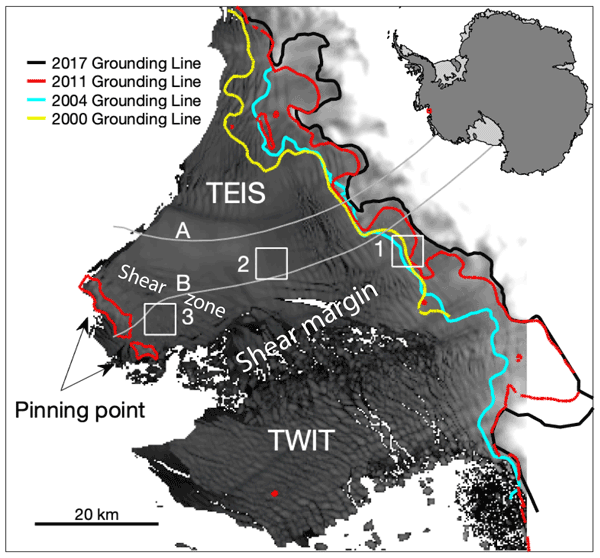
Karen E. Alley, Christian T. Wild, Adrian Luckman, Ted A. Scambos, Martin Truffer, Erin C. Pettit, Atsuhiro Muto, Bruce Wallin, Marin Klinger, Tyler Sutterley, Sarah F. Child, Cyrus Hulen, Jan T. M. Lenaerts, Michelle Maclennan, Eric Keenan, and Devon Dunmire
The Cryosphere, 15, 5187–5203, https://doi.org/10.5194/tc-15-5187-2021, https://doi.org/10.5194/tc-15-5187-2021, 2021
Short summary
Short summary
We present a 20-year, satellite-based record of velocity and thickness change on the Thwaites Eastern Ice Shelf (TEIS), the largest remaining floating extension of Thwaites Glacier (TG). TG holds the single greatest control on sea-level rise over the next few centuries, so it is important to understand changes on the TEIS, which controls much of TG's flow into the ocean. Our results suggest that the TEIS is progressively destabilizing and is likely to disintegrate over the next few decades.
Cited articles
An, L., Rignot, E., Millan, R., Tinto, K., and Willis, J.: Bathymetry of Northwest Greenland Using “Ocean Melting Greenland” (OMG) High-Resolution Airborne Gravity and Other Data, Remote Sens., 11, https://doi.org/10.3390/rs11020131 2019.
Charrassin, R., Millan, R., Rignot, E., and Scheinert, M.: Bathymetry of the Antarctic continental shelf and ice shelf cavities from circumpolar gravity anomalies and other data, Sci. Rep,, 15, 1214, https://doi.org/10.1038/s41598-024-81599-1, 2025.
Cochran, J. R., Jacobs, S. S., Tinto, K. J., and Bell, R. E.: Bathymetric and oceanic controls on Abbot Ice Shelf thickness and stability, The Cryosphere, 8, 877–889, https://doi.org/10.5194/tc-8-877-2014, 2014.
Cox, S. C., Smith Lyttle, B., Elkind, S., Smith Siddoway, C. S., Morin, P., Capponi, G., Abu-Alam, T., Ballinger, M., Bamber, L., Kitchener, B., Lelli, L., Mawson, J. F., Millikin, A., Dal Seno, N., Whitburn, L., White, T., Burton-Johnson, A., Crispini, L., Elliot, D., Elvevold, S., Goodge, J. W., Halpin, J. A., Jacobs, J., Mikhalsky, E., Martin, A. P., Morgan, F., Smellie, J., Scadden, P., and Wilson, G. S.: The GeoMAP (v.2022-08) continent-wide detailed geological dataset of Antarctica, PANGAEA [data set], https://doi.org/10.1594/PANGAEA.951482, 2023.
Fretwell, P., Pritchard, H. D., Vaughan, D. G., Bamber, J. L., Barrand, N. E., Bell, R., Bianchi, C., Bingham, R. G., Blankenship, D. D., Casassa, G., Catania, G., Callens, D., Conway, H., Cook, A. J., Corr, H. F. J., Damaske, D., Damm, V., Ferraccioli, F., Forsberg, R., Fujita, S., Gim, Y., Gogineni, P., Griggs, J. A., Hindmarsh, R. C. A., Holmlund, P., Holt, J. W., Jacobel, R. W., Jenkins, A., Jokat, W., Jordan, T., King, E. C., Kohler, J., Krabill, W., Riger-Kusk, M., Langley, K. A., Leitchenkov, G., Leuschen, C., Luyendyk, B. P., Matsuoka, K., Mouginot, J., Nitsche, F. O., Nogi, Y., Nost, O. A., Popov, S. V., Rignot, E., Rippin, D. M., Rivera, A., Roberts, J., Ross, N., Siegert, M. J., Smith, A. M., Steinhage, D., Studinger, M., Sun, B., Tinto, B. K., Welch, B. C., Wilson, D., Young, D. A., Xiangbin, C., and Zirizzotti, A.: Bedmap2: improved ice bed, surface and thickness datasets for Antarctica, The Cryosphere, 7, 375–393, https://doi.org/10.5194/tc-7-375-2013, 2013.
Girton, J. B., Christianson, K., Dunlap, J., Dutrieux, P., Gobat, J., Lee, C., and Rainville, L.: Buoyancy-adjusting Profiling Floats for Exploration of Heat Transport, Melt Rates, and Mixing in the Ocean Cavities Under Floating Ice Shelves, OCEANS 2019 MTS/IEEE SEATTLE, 1–6, https://doi.org/10.23919/OCEANS40490.2019.8962744, 27–31 October 2019.
Goldberg, D. N. and Holland, P. R.: The relative impacts of initialization and climate forcing in coupled ice sheet-ocean modeling: Application to Pope, Smith, and Kohler glaciers, J. Geophys. Res.-Earth Surf., 127, e2021JF006570, https://doi.org/10.1029/2021JF006570, 2022.
Hogan, K. A., Larter, R. D., Graham, A. G. C., Arthern, R., Kirkham, J. D., Totten, R. L., Jordan, T. A., Clark, R., Fitzgerald, V., Wåhlin, A. K., Anderson, J. B., Hillenbrand, C.-D., Nitsche, F. O., Simkins, L., Smith, J. A., Gohl, K., Arndt, J. E., Hong, J., and Wellner, J.: Revealing the former bed of Thwaites Glacier using sea-floor bathymetry: implications for warm-water routing and bed controls on ice flow and buttressing, The Cryosphere, 14, 2883–2908, https://doi.org/10.5194/tc-14-2883-2020, 2020.
Jordan, T. A., Ferraccioli, F., Vaughan, D. G., Holt, J. W., Corr, H., Blankenship, D. D., and Diehl, T. M.: Aerogravity evidence for major crustal thinning under the Pine Island Glacier region (West Antarctica), Geol. Soc. Am. B., 122, 714–726, https://doi.org/10.1130/B26417.1, 2010.
Jordan, T. A., Porter, D., Tinto, K., Millan, R., Muto, A., Hogan, K., Larter, R. D., Graham, A. G. C., and Paden, J. D.: New gravity-derived bathymetry for the Thwaites, Crosson, and Dotson ice shelves revealing two ice shelf populations, The Cryosphere, 14, 2869–2882, https://doi.org/10.5194/tc-14-2869-2020, 2020.
Jordan, T., Heywood, K., Wahlin, A., Hall, R., Muto, A., Dutrieux, P., Hogan, K., Girton, J., Alley, K., and Pettit, E.: Updated gravity-derived bathymetry for the Thwaites, Crosson and Dotson ice shelves (2009–2022) (Version 1.0), NERC EDS UK Polar Data Centre [data set], https://doi.org/10.5285/baef2e88-300f-42bc-8ccb-bfdff147a492, 2025.
Lindow, J., Castex, M., Wittmann, H., Johnson, J. S., Lisker, F., Gohl, K., and Spiegel, C.: Glacial retreat in the Amundsen Sea sector, West Antarctica – first cosmogenic evidence from central Pine Island Bay and the Kohler Range, Quaternary Sci. Rev., 98, 166–173, https://doi.org/10.1016/j.quascirev.2014.05.010, 2014.
Millan, R., Rignot, E., Bernier, V., Morlighem, M., and Dutrieux, P.: Bathymetry of the Amundsen Sea Embayment sector of West Antarctica from Operation IceBridge gravity and other data, Geophys. Res. Lett., 44, 1360–1368, https://doi.org/10.1002/2016GL072071, 2017.
Morlighem, M., Rignot, E., Binder, T., Blankenship, D., Drews, R., Eagles, G., Eisen, O., Ferraccioli, F., Forsberg, R., Fretwell, P., Goel, V., Greenbaum, J. S., Gudmundsson, H., Guo, J., Helm, V., Hofstede, C., Howat, I., Humbert, A., Jokat, W., Karlsson, N. B., Lee, W. S., Matsuoka, K., Millan, R., Mouginot, J., Paden, J., Pattyn, F., Roberts, J., Rosier, S., Ruppel, A., Seroussi, H., Smith, E. C., Steinhage, D., Sun, B., Broeke, M. R. v. d., Ommen, T. D. v., Wessem, M. v., and Young, D. A.: Deep glacial troughs and stabilizing ridges unveiled beneath the margins of the Antarctic ice sheet, Nat. Geosci., 13, 132–137, https://doi.org/10.1038/s41561-019-0510-8, 2020.
Muto, A., Peters, L. E., Gohl, K., Sasgen, I., Alley, R. B., Anandakrishnan, S., and Riverman, K. L.: Subglacial bathymetry and sediment distribution beneath Pine Island Glacier ice shelf modeled using aerogravity and in situ geophysical data: New results, Earth Planet. Sc. Lett., 433, 63–75, https://doi.org/10.1016/j.epsl.2015.10.037, 2016.
Muto, A., Alley, K., Pettit, E. C., Pomraning, D., Roccaro, A., and Scambos, T., Truffer, M., Wild, C., and Wallin, B.: Sub-ice-shelf seafloor elevation derived from point-source active-seismic data on Thwaites Eastern Ice Shelf and Dotson Ice Shelf, December 2019 and January 2020, U.S. Antarctic Program (USAP) Data Center [data set], https://doi.org/10.15784/601827, 2024.
O' Donnell, J. P., Stuart, G. W., Brisbourne, A. M., Selway, K., Yang, Y., Nield, G. A., Whitehouse, P. L., Nyblade, A. A., Wiens, D. A., Aster, R. C., Anandakrishnan, S., Huerta, A. D., Wilson, T., and Winberry, J. P.: The uppermost mantle seismic velocity structure of West Antarctica from Rayleigh wave tomography: Insights into tectonic structure and geothermal heat flow, Earth Planet. Sc. Lett., 522, 219–233, https://doi.org/10.1016/j.epsl.2019.06.024, 2019.
Parker, R. L.: The rapid calculation of potential anomalies, Geophys. J. Int., 31, 447–455, 1973.
Richter, M. E., Heywood, K. J., Hall, R. A., and Davis, P. E. D.: Observations of turbulent mixing in the Dotson Ice Shelf cavity, Ocean Sci., 21, 3341–3359, https://doi.org/10.5194/os-21-3341-2025, 2025.
Rignot, E., Mouginot, J., Morlighem, M., Seroussi, H., and Scheuchl, B.: Widespread, rapid grounding line retreat of Pine Island, Thwaites, Smith, and Kohler glaciers,West Antarctica, from 1992 to 2011, Geophys. Res. Lett., 41, 3502–3409, https://doi.org/10.1002/2014GL060140, 2014.
Tankersley, M. D., Horgan, H., Caratori Tontini, F., and Tinto, K.: Gravity inversion for sub-ice shelf bathymetry: strengths, limitations, and insights from synthetic modeling, The Cryosphere, 19, 6827–6864, https://doi.org/10.5194/tc-19-6827-2025, 2025.
Tinto, K., Bell, R., and Cochran, J. R.: IceBridge Sander AIRGrav L1B Geolocated Free Air Gravity Anomalies, Version 1, NASA National Snow and Ice Data Center Distributed Active Archive Center [data set], https://doi.org/10.5067/R1RQ6NRIJV89, 2010, updated 2019.
von Frese, R. R. B., Hinze, W. J., Braile, L. W., and Luca, A. J.: Spherical earth gravity and magnetic anomaly modeling by Gauss- Legendre quadrature integration, J. Geophys., 49, 234–242, 1981.
Wåhlin, A., Alley, K. E., Begeman, C., Hegrenæs, Ø., Yuan, X., Graham, A. G. C., Hogan, K., Davis, P. E. D., Dotto, T. S., Eayrs, C., Hall, R. A., Holland, D. M., Kim, T. W., Larter, R. D., Ling, L., Muto, A., Pettit, E. C., Schmidt, B. E., Snow, T., Stedt, F., Washam, P. M., Wahlgren, S., Wild, C., Wellner, J., Zheng, Y., and Heywood, K. J.: Swirls and scoops: Ice base melt revealed by multibeam imagery of an Antarctic ice shelf, Sci. Adv., 10, eadn9188, https://doi.org/10.1126/sciadv.adn9188, 2024.
Wessel, P., Smith, W. H. F., Scharroo, R., Luis, J., and Wobbe, F.: Generic Mapping Tools: Improved Version Released, Eos, Transactions American Geophysical Union, 94, 409–410, https://doi.org/10.1002/2013EO450001, 2013.
Wild, C. T., Snow, T., Dotto, T. S., Davis, P. E. D., Tyler, S., Scambos, T. A., Pettit, E. C., and Heywood, K. J.: Thwaites Eastern Ice Shelf cavity observations reveal multiyear sea ice dynamics and deepwater warming in Pine Island Bay, West Antarctica, Ocean Sci., 21, 2605–2629, https://doi.org/10.5194/os-21-2605-2025, 2025.
Short summary
The shape of the water filled cavity hidden beneath ice shelves is extremely important, but hard to measure. Gravity data collected from aircraft can be used to predict the shape. However, in the Dotson Crosson ice shelves in West Antarctica, new direct observations from autonomous platforms sent beneath the ice, and seismic observations from the ice surface showed gravity models were systematically too shallow. We explain why and provide a solution applicable her and in other ice shelves.
The shape of the water filled cavity hidden beneath ice shelves is extremely important, but hard...


