
Articles | Volume 17, issue 11
https://doi.org/10.5194/se-17-1239-2026
© Author(s) 2026. This work is distributed under
the Creative Commons Attribution 4.0 License.
the Creative Commons Attribution 4.0 License.
https://doi.org/10.5194/se-17-1239-2026
© Author(s) 2026. This work is distributed under
the Creative Commons Attribution 4.0 License.
the Creative Commons Attribution 4.0 License.
Research article
| 
03 Nov 2026
Research article |
| 03 Nov 2026
| 03 Nov 2026
From burial to barrier: how burial history controls the hydraulic conductivity in argillaceous formations
Raphael Burchartz
CORRESPONDING AUTHOR

Institute of Engineering Geology and Hydrogeology, RWTH-Aachen University, 52064 Aachen, Germany
Geological Institute, RWTH-Aachen University, 52062 Aachen, Germany
Brian Mutuma Mbui
Institute of Organic Biogeochemistry in Geo-Systems, RWTH-Aachen University, 52064 Aachen, Germany
Peter Achtziger-Zupančič
Fraunhofer Research Institution for Energy Infrastructures and Geotechnologies IEG, 52062 Aachen, Germany
Garri Gaus
Institute of Organic Biogeochemistry in Geo-Systems, RWTH-Aachen University, 52064 Aachen, Germany
Fraunhofer Research Institution for Energy Infrastructures and Geotechnologies IEG, 52062 Aachen, Germany
Timo Seemann
Institute of Engineering Geology and Hydrogeology, RWTH-Aachen University, 52064 Aachen, Germany
Lisa Winhausen
Institute of Engineering Geology and Hydrogeology, RWTH-Aachen University, 52064 Aachen, Germany
Yvonne Spychala
Geological Institute, RWTH-Aachen University, 52062 Aachen, Germany
Mohammadreza Jalali
Institute of Engineering Geology and Hydrogeology, RWTH-Aachen University, 52064 Aachen, Germany
Ralf Littke
Institute of Organic Biogeochemistry in Geo-Systems, RWTH-Aachen University, 52064 Aachen, Germany
Florian Amann
Institute of Engineering Geology and Hydrogeology, RWTH-Aachen University, 52064 Aachen, Germany
Fraunhofer Research Institution for Energy Infrastructures and Geotechnologies IEG, 52062 Aachen, Germany
Related authors
Raphael Burchartz, Timo Seemann, Garri Gaus, Lisa Winhausen, Mohammadreza Jalali, Brian Mutuma Mbui, Sebastian Grohmann, Linda Burnaz, Marlise Colling Cassel, Jochen Erbacher, Ralf Littke, and Florian Amann
Solid Earth, 17, 485–512, https://doi.org/10.5194/se-17-485-2026, https://doi.org/10.5194/se-17-485-2026, 2026
Short summary
Short summary
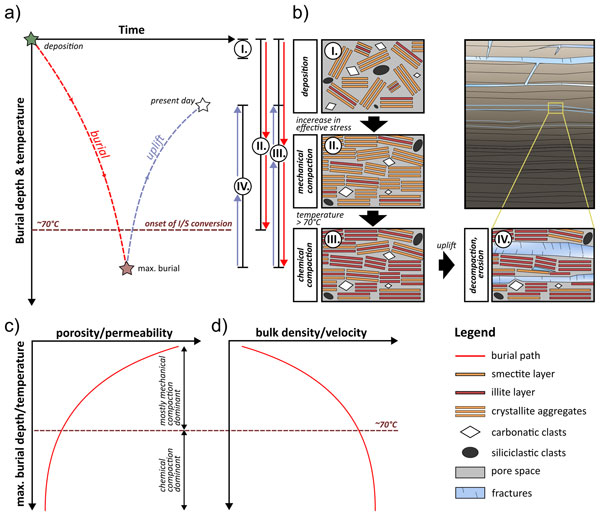
In Germany, claystones are studied for their suitability as host-rocks for the disposal of high-level radioactive waste. The MATURITY project systematically investigates how gradual burial affects physical properties in the Lower Jurassic Amaltheenton Formation of the Lower Saxony Basin (Germany). Understanding these changes helps assess claystone suitability for long-term waste isolation, improving site selection for deep geological repositories.
Pooya Hamdi, Jonas Dickmann, Michal Kruszewski, Antonio Pio Rinaldi, Linus Villiger, Alexis Shakas, Mathew Perras, Navid Bahrani, Patrick Bianchi, Peter Achtziger-Zupančič, Steven Gaines, Kai Bröker, Xiaodong Ma, Paul A. Selvadurai, Virginie Durand, Kavan Khaledi, Mohammadreza Jalali, Yousef Golabchi, Sam Harris, Alba Zappone, Mathilde Wimez, Marian Hertrich, Stefan Wiemer, and Florian Amann
Solid Earth, 17, 1139–1165, https://doi.org/10.5194/se-17-1139-2026, https://doi.org/10.5194/se-17-1139-2026, 2026
Short summary
Short summary
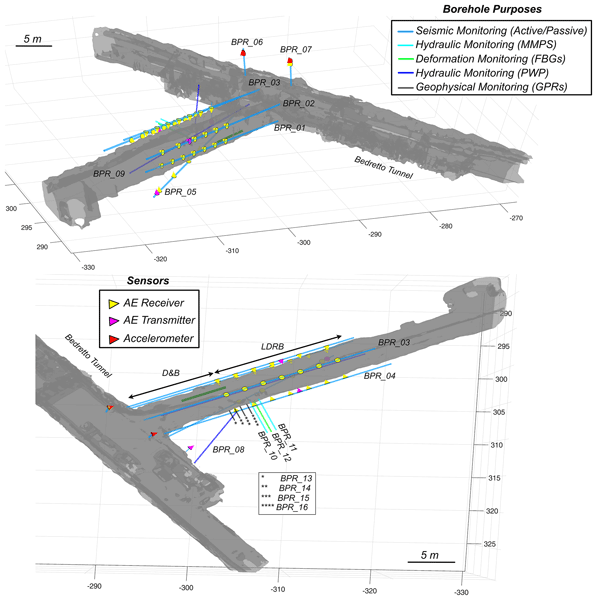
Deep geological repositories are considered one of the safest solutions for the long-term disposal of nuclear waste. This paper presents an overview of an experiment conducted at the BedrettoLab, Switzerland, where a new 100 m long tunnel was excavated in granite at a depth of 1300 m to investigate excavation-induced rock damage and its time-dependent evolution.
Raphael Burchartz, Timo Seemann, Garri Gaus, Lisa Winhausen, Mohammadreza Jalali, Brian Mutuma Mbui, Sebastian Grohmann, Linda Burnaz, Marlise Colling Cassel, Jochen Erbacher, Ralf Littke, and Florian Amann
Solid Earth, 17, 485–512, https://doi.org/10.5194/se-17-485-2026, https://doi.org/10.5194/se-17-485-2026, 2026
Short summary
Short summary
In Germany, claystones are studied for their suitability as host-rocks for the disposal of high-level radioactive waste. The MATURITY project systematically investigates how gradual burial affects physical properties in the Lower Jurassic Amaltheenton Formation of the Lower Saxony Basin (Germany). Understanding these changes helps assess claystone suitability for long-term waste isolation, improving site selection for deep geological repositories.
Tom Schaber, Mohammedreza Jalali, Alberto Ceccato, Alba Simona Zappone, Giacomo Pozzi, Valentin Gischig, Marian Hertrich, Men-Andrin Meier, Timo Seemann, Hannes Claes, Yves Guglielmi, Domenico Giardini, Stefan Wiemer, Massimo Cocco, and Florian Amann
Solid Earth, 17, 275–295, https://doi.org/10.5194/se-17-275-2026, https://doi.org/10.5194/se-17-275-2026, 2026
Short summary
Short summary
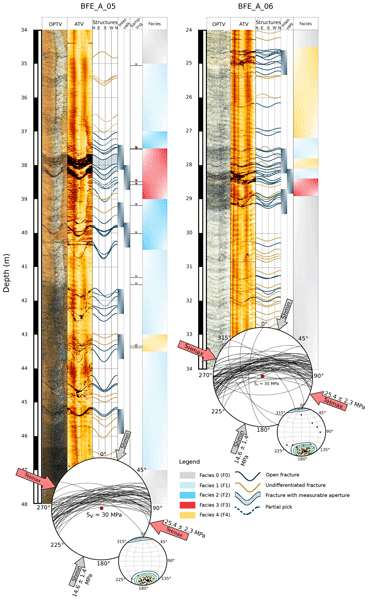
We studied a deep fault zone in Switzerland to gain a better understanding of how water moves through faults and how this affects earthquake activity. Using field and laboratory tests, we found that flow is strongly controlled by open fractures and permeability changes significantly with scale. Small samples underestimate flow compared to larger tests. Our results show that faults are heterogeneous, highlighting the need for site-specific studies when assessing risks or planning experiments.
Friedrich Carl, Jian Yang, Marlise Colling Cassel, Florian Wellmann, and Peter Achtziger-Zupančič
Solid Earth, 17, 155–178, https://doi.org/10.5194/se-17-155-2026, https://doi.org/10.5194/se-17-155-2026, 2026
Short summary
Short summary
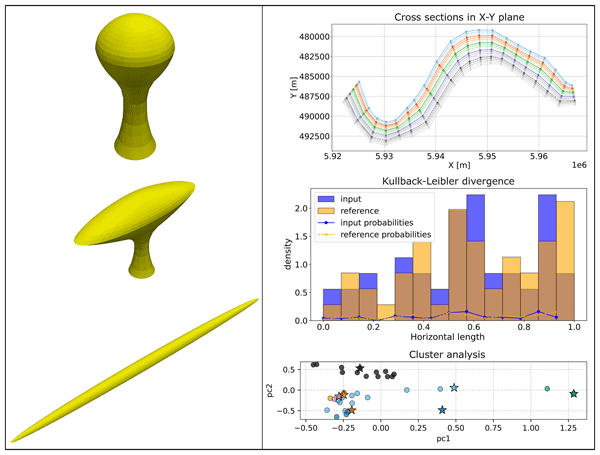
A method for shape quantification based on geometrical parameters is proposed alongside a set of regular geometries established as geomodeling benchmarks. Dimensions, gradient and curvature data is obtained on cross-sections. Data analyses provide insight into the main geometrical characteristics of the benchmark models and visualizes geometrical dis-/similarities between bodies. The method and benchmarks are usable in geomodeling workflows and structural comparisons based on sparse data.
Peter Achtziger-Zupančič, Alberto Ceccato, Alba Simona Zappone, Giacomo Pozzi, Alexis Shakas, Florian Amann, Whitney Maria Behr, Daniel Escallon Botero, Domenico Giardini, Marian Hertrich, Mohammadreza Jalali, Xiaodong Ma, Men-Andrin Meier, Julian Osten, Stefan Wiemer, and Massimo Cocco
Solid Earth, 15, 1087–1112, https://doi.org/10.5194/se-15-1087-2024, https://doi.org/10.5194/se-15-1087-2024, 2024
Short summary
Short summary
We detail the selection and characterization of a fault zone for earthquake experiments in the Fault Activation and Earthquake Ruptures (FEAR) project at the Bedretto Lab. FEAR, which studies earthquake processes, overcame data collection challenges near faults. The fault zone in Rotondo granite was selected based on geometry, monitorability, and hydro-mechanical properties. Remote sensing, borehole logging, and geological mapping were used to create a 3D model for precise monitoring.
Lisa Maria Ringel, Mohammadreza Jalali, and Peter Bayer
Hydrol. Earth Syst. Sci., 26, 6443–6455, https://doi.org/10.5194/hess-26-6443-2022, https://doi.org/10.5194/hess-26-6443-2022, 2022
Short summary
Short summary
Fractured rocks host a class of aquifers that serve as major freshwater resources worldwide. This work is dedicated to resolving the three-dimensional hydraulic and structural properties of fractured rock. For this purpose, hydraulic tomography experiments at the Grimsel Test Site in Switzerland are utilized, and the discrete fracture network is inverted. The comparison of the inversion results with independent findings from other studies demonstrates the validity of the approach.

Stefan Back, Sebastian Amberg, Victoria Sachse, and Ralf Littke
Solid Earth, 13, 1027–1043, https://doi.org/10.5194/se-13-1027-2022, https://doi.org/10.5194/se-13-1027-2022, 2022
Short summary
Short summary
Three-dimensional backstripping based on the Archimedes principle restored changes through time in 3D subsurface evaporite thickness, 3D salt loss and gain, and 3D subsurface salt movement. The methodology presented is sensitive to any process that influences overburden thickness, in this case sedimentation, erosion and tectonics. The restoration approach can be integrated into existing backstripping workflows and can serve as a benchmark for physics-based numerical modelling of salt tectonics.
Lisa Winhausen, Kavan Khaledi, Mohammadreza Jalali, Janos L. Urai, and Florian Amann
Solid Earth, 13, 901–915, https://doi.org/10.5194/se-13-901-2022, https://doi.org/10.5194/se-13-901-2022, 2022
Short summary
Short summary
Triaxial compression tests at different effective stresses allow for analysing the deformation behaviour of Opalinus Clay, the potential host rock for nuclear waste in Switzerland. We conducted microstructural investigations of the deformed samples to relate the bulk hydro-mechanical behaviour to the processes on the microscale. Results show a transition from brittle- to more ductile-dominated deformation. We propose a non-linear failure envelop associated with the failure mode transition.
Xiaodong Ma, Marian Hertrich, Florian Amann, Kai Bröker, Nima Gholizadeh Doonechaly, Valentin Gischig, Rebecca Hochreutener, Philipp Kästli, Hannes Krietsch, Michèle Marti, Barbara Nägeli, Morteza Nejati, Anne Obermann, Katrin Plenkers, Antonio P. Rinaldi, Alexis Shakas, Linus Villiger, Quinn Wenning, Alba Zappone, Falko Bethmann, Raymi Castilla, Francisco Seberto, Peter Meier, Thomas Driesner, Simon Loew, Hansruedi Maurer, Martin O. Saar, Stefan Wiemer, and Domenico Giardini
Solid Earth, 13, 301–322, https://doi.org/10.5194/se-13-301-2022, https://doi.org/10.5194/se-13-301-2022, 2022
Short summary
Short summary
Questions on issues such as anthropogenic earthquakes and deep geothermal energy developments require a better understanding of the fractured rock. Experiments conducted at reduced scales but with higher-resolution observations can shed some light. To this end, the BedrettoLab was recently established in an existing tunnel in Ticino, Switzerland, with preliminary efforts to characterize realistic rock mass behavior at the hectometer scale.
Lisa Winhausen, Mohammadreza Jalali, and Florian Amann
Saf. Nucl. Waste Disposal, 1, 301–301, https://doi.org/10.5194/sand-1-301-2021, https://doi.org/10.5194/sand-1-301-2021, 2021
Ben Laurich, Jürgen Hesser, Sibylle Mayr, Lisa Winhausen, Amin Ghanizadeh, Antonia Nitsch, Julia Leuthold, Christian Weber, and Garri Gaus
Saf. Nucl. Waste Disposal, 1, 299–300, https://doi.org/10.5194/sand-1-299-2021, https://doi.org/10.5194/sand-1-299-2021, 2021
Cited articles
Addis, M. A. and Jones, M. E.: Volume changes during diagenesis, Mar. Petrol. Geol., 2, 241–246, https://doi.org/10.1016/0264-8172(85)90013-3, 1985.
Aertsens, M., Put, M., and Dierckx, A.: An analytical model for the interpretation of pulse injection experiments performed for testing the spatial variability of clay formations, J. Contam. Hydrol., 61, 423–436, https://doi.org/10.1016/S0169-7722(02)00118-3, 2003.
Aertsens, M., Wemaere, I., and Wouters, L.: Spatial variability of transport parameters in the Boom Clay, Appl. Clay Sci., 26, 37–45, https://doi.org/10.1016/j.clay.2003.09.015, 2004.
Aertsens, M., Van Gompel, M., De Cannière, P., Maes, N., and Dierckx, A.: Vertical distribution of transport parameters in Boom Clay in the Mol-1 borehole (Mol, Belgium), Phys. Chem. Earth Pts. A/B/C, 33, S61–S66, https://doi.org/10.1016/j.pce.2008.10.060, 2008.
Aertsens, M., Maes, N., Labat, S., Van Gompel, M., and Maes, T.: Vertical distribution of HTO and 125I− transport parameters in Boom Clay in the Essen-1 borehole (Mol, Belgium), Phys. Chem. Earth Pts. A/B/C, 65, 90–97, https://doi.org/10.1016/j.pce.2013.05.006, 2013.
Appel, D. and Habler, W.: Quantifizierung der Wasserdurchlässigkeit von Gesteinen als Voraussetzung für die Entwicklung von Kriterien zur Grundwasserbewegung – Phase 1: Überprüfung der Datenbasis für die Ableitung von Kriterien zur Wasserdurchlässigkeit, Arbeitskreis Auswahlverfahren Endlagerstandorte, 2001.
Árkai, P., Balogh, K., Demeny, A., Nagy, G., and Mathe, Z.: Composition, diagenetic and post-diagenetic alterations of a possible radioactive waste repository site: the Boda Albitic Claystone Formation, southern Hungary, 43, Acta Geologica Hungarica, Budapest, 2000.
Asem, P. and Gardoni, P.: A probabilistic, empirical model for permeability of mudstone, Probabilist. Eng. Mech., 69, 103262, https://doi.org/10.1016/j.probengmech.2022.103262, 2022.
Athy, L. F.: Density, Porosity and Compaction of Sedimentary Rocks, AAPG Bull., 14, 1–24, https://doi.org/10.1306/3D93289E-16B1-11D7-8645000102C1865D, 1930.
Avseth, P., Mavko, G., Dvorkin, J., and Mukerji, T.: Rock physics and seismic properties of sands and shales as a function of burial depth, in: SEG Technical Program Expanded Abstracts 2001, SEG Technical Program Expanded Abstracts 2001, 1780–1783, https://doi.org/10.1190/1.1816471, 2001.
Barbarand, J., Lucazeau, F., Pagel, M., and Séranne, M.: Burial and exhumation history of the south-eastern Massif Central (France) constrained by apatite fission-track thermochronology, Tectonophysics, 335, 275–290, https://doi.org/10.1016/S0040-1951(01)00069-5, 2001.
Bastiaens, W., Bernier, F., and Li, X. L.: SELFRAC: Experiments and conclusions on fracturing, self-healing and self-sealing processes in clays, Phys. Chem. Earth Pts. A/B/C, 32, 600–615, https://doi.org/10.1016/j.pce.2006.04.026, 2007.
Batlle-Aguilar, J., Cook, P. G., and Harrington, G. A.: Comparison of hydraulic and chemical methods for determining hydraulic conductivity and leakage rates in argillaceous aquitards, J. Hydrol., 532, 102–121, https://doi.org/10.1016/j.jhydrol.2015.11.035, 2016.
Beaucaire, C., Michelot, J.-L., Savoye, S., and Cabrera, J.: Groundwater characterisation and modelling of water–rock interaction in an argillaceous formation (Tournemire, France), Appl. Geochem., 23, 2182–2197, https://doi.org/10.1016/j.apgeochem.2008.03.003, 2008.
Belmokhtar, M., Delage, P., Ghabezloo, S., Tang, A.-M., Menaceur, H., and Conil, N.: Poroelasticity of the Callovo–Oxfordian Claystone, Rock Mech. Rock Eng., 50, 871–889, https://doi.org/10.1007/s00603-016-1137-3, 2017.
Berry, T., Murphy, W., and Paraskevopoulou, C.: Self-sealing of argillaceous media in the context of geological disposal of radioactive waste – a perspective from past and ongoing studies, Geoenergy, 3, geoenergy2024-021, https://doi.org/10.1144/geoenergy2024-021, 2025.
Berthonneau, J., Hoover, C. G., Grauby, O., Baronnet, A., Pellenq, R. J.-M., and Ulm, F.-J.: Crystal-chemistry control of the mechanical properties of 2:1 clay minerals, Appl. Clay Sci., 143, 387–398, https://doi.org/10.1016/j.clay.2017.04.010, 2017.
Bjørlykke, K.: Principal aspects of compaction and fluid flow in mudstones, in: Muds and Mudstones. Physical and Fluid FlowProperties, vol. 158, The Geological Society of London, London, 73–78, https://doi.org/10.1144/gsl.sp.1999.158.01.06, 1999.
Bjørlykke, K.: Relationships between depositional environments, burial history and rock properties. Some principal aspects of diagenetic process in sedimentary basins, Sediment. Geol., 301, 1–14, https://doi.org/10.1016/j.sedgeo.2013.12.002, 2014.
Bjørlykke, K. and Høeg, K.: Effects of burial diagenesis on stresses, compaction and fluid flow in sedimentary basins, Mar. Petrol. Geol., 14, 267–276, https://doi.org/10.1016/S0264-8172(96)00051-7, 1997.
Blaise, T., Barbarand, J., Kars, M., Ploquin, F., Aubourg, C., Brigaud, B., Cathelineau, M., El Albani, A., Gautheron, C., Izart, A., Janots, D., Michels, R., Pagel, M., Pozzi, J.-P., Boiron, M.-C., and Landrein, P.: Reconstruction of low temperature (<100 °C) burial in sedimentary basins: A comparison of geothermometer in the intracontinental Paris Basin, Mar. Petrol. Geol., 53, 71–87, https://doi.org/10.1016/j.marpetgeo.2013.08.019, 2014.
Bock, H., Dehandschutter, B., Martin, D. C., Haller, A. de, Mazurek, M., Skoczylas, F., and Davy, C. (Eds.): Self-sealing of fractures in argillaqceous formations in the context of geological disposal of radioactive waste: review and synthesis, NEA No. 6184, OECD, Paris, https:// www.oecd-nea.org/jcms/pl_14208/self-sealing-of-fractures-in-argillaceous-formations-in-the-context-of-geological-disposal-of-radioactive-waste?details=true (last access: 7 October 2025), 2010.
Boisson, J.-Y., Bertrand, L., Heitz, J.-F., and Golvan, Y.: In situ and laboratory investigations of fluid flow through an argillaceous formation at different scales of space and time, Tournemire tunnel, southern France, Hydrogeol. J., 9, 108–123, https://doi.org/10.1007/s100400000119, 2001.
Bonin, B.: Deep geological disposal in argillaceous formations: studies at the Tournemire test site, J. Contam. Hydrol., 35, 315–330, https://doi.org/10.1016/S0169-7722(98)00132-6, 1998.
Bowers, G. L.: Pore Pressure Estimation From Velocity Data: Accounting for Overpressure Mechanisms Besides Undercompaction, SPE Drill. Completion, 10, 89–95, https://doi.org/10.2118/27488-PA, 1995.
Bredehoeft, J. D. and Papadopulos, S. S.: A method for determining the hydraulic properties of tight formations, Water Resour. Res., 16, 233–238, https://doi.org/10.1029/WR016i001p00233, 1980.
Bruns, B., Littke, R., Gasparik, M., Van Wees, J.-D., and Nelskamp, S.: Thermal evolution and shale gas potential estimation of the Wealden and Posidonia Shale in NW-Germany and the Netherlands: a 3D basin modelling study, Basin Res., 28, 2–33, https://doi.org/10.1111/bre.12096, 2016.
Burchartz, R., Seemann, T., Gaus, G., Winhausen, L., Jalali, M., Mbui, B. M., Grohmann, S., Burnaz, L., Colling Cassel, M., Erbacher, J., Littke, R., and Amann, F.: The influence of burial history on physical rock properties: a case study of Lower Jurassic claystones from the Hils and Sack Synclines (Germany), Solid Earth, 17, 485–512, https://doi.org/10.5194/se-17-485-2026, 2026.
Burnaz, L., Littke, R., Grohmann, S., Erbacher, J., Strauss, H., and Amann, F.: Lower Jurassic (Pliensbachian–Toarcian) marine paleoenvironment in Western Europe: sedimentology, geochemistry and organic petrology of the wells Mainzholzen and Wickensen, Hils Syncline, Lower Saxony Basin, Int. J. Earth Sci. (Geol. Rundsch.), https://doi.org/10.1007/s00531-023-02381-8, 2024.
Carcione, J. M., Gei, D., Yu, T., and Ba, J.: Effect of Clay and Mineralogy on Permeability, Pure Appl. Geophys., 176, 2581–2594, https://doi.org/10.1007/s00024-019-02117-3, 2019.
Carcione, J. M., Gei, D., Picotti, S., Qadrouh, A. N., Alajmi, M., and Ba, J.: Rock Acoustics of Diagenesis and Cementation, Pure Appl. Geophys., 179, 1919–1934, https://doi.org/10.1007/s00024-022-03016-w, 2022.
Castro-Vera, L., Amberg, S., Gaus, G., Leu, K., and Littke, R.: 3D basin modeling of the Hils Syncline, Germany: reconstruction of burial and thermal history and implications for petrophysical properties of potential Mesozoic shale host rocks for nuclear waste storage, Int. J. Earth Sci. (Geol. Rundsch.), https://doi.org/10.1007/s00531-024-02384-z, 2024.
Charpentier, D., Tessier, D., and Cathelineau, M.: Shale microstructure evolution due to tunnel excavation after 100 years and impact of tectonic paleo-fracturing. Case of Tournemire, France, Eng. Geol., 70, 55–69, https://doi.org/10.1016/S0013-7952(03)00082-6, 2003.
Clennell, M. B., Dewhurst, D. N., Brown, K. M., and Westbrook, G. K.: Permeability anisotropy of consolidated clays, SP, 158, 79–96, https://doi.org/10.1144/GSL.SP.1999.158.01.07, 1999.
Constantin, J., Vergély, P., and Cabrera, J.: Tectonic evolution and related fracturing in the Causses Basin (Aveyron, France): the Tournemire area example, B. Soc. Geol. Fr., 173, 229–243, https://doi.org/10.2113/173.3.229, 2002.
Constantin, J., Peyaud, J. B., Vergély, P., Pagel, M., and Cabrera, J.: Evolution of the structural fault permeability in argillaceous rocks in a polyphased tectonic context, Phys. Chem. Earth Pts. A/B/C, 29, 25–41, https://doi.org/10.1016/j.pce.2003.11.001, 2004.
Cosenza, P., Robinet, J. C., Prêt, D., Huret, E., Fleury, M., Géraud, Y., Lebon, P., Villiéras, F., and Zamora, M.: Indirect estimation of the clay content of clay-rocks using acoustic measurements: New insights from the Montiers-sur-Saulx deep borehole (Meuse, France), Mar. Petrol. Geol., 53, 117–132, https://doi.org/10.1016/j.marpetgeo.2013.07.004, 2014.
Cripps, J. C. and Czerewko, M. A.: The influence of diagenetic and mineralogical factors on the breakdown and geotechnical properties of mudrocks, Geological Society, London, Special Publications, 454, 271–293, https://doi.org/10.1144/SP454.10, 2017.
Crisci, E., Ferrari, A., Giger, S. B., and Laloui, L.: Hydro-mechanical behaviour of shallow Opalinus Clay shale, Eng. Geol., 251, 214–227, https://doi.org/10.1016/j.enggeo.2019.01.016, 2019.
Croisé, J., Schlickenrieder, L., Marschall, P., Boisson, J. Y., Vogel, P., and Yamamoto, S.: Hydrogeological investigations in a low permeability claystone formation: the Mont Terri Rock Laboratory, Phys. Chem. Earth Pts. A/B/C, 29, 3–15, https://doi.org/10.1016/j.pce.2003.11.008, 2004.
Czerewko, M. A. and Cripps, J. C.: The implications of diagenetic history and weathering on the engineering behaviour of mudrocks, 10th Congress of the International Association for Engineering Geology and the Environment, 118, The Geological Society of London, Nottingham, UK, https://media.geolsoc.org.uk/iaeg2006/INDEXES/HOME.HTM (last access: 13 January 2025), 2006.
Dehandschutter, B., Vandycke, S., Sintubin, M., Vandenberghe, N., and Wouters, L.: Brittle fractures and ductile shear bands in argillaceous sediments: inferences from Oligocene Boom Clay (Belgium), J. Struct. Geol., 27, 1095–1112, https://doi.org/10.1016/j.jsg.2004.08.014, 2005.
Delage, P., Cui, Y. J., and Tang, A. M.: Clays in radioactive waste disposal, Journal of Rock Mechanics and Geotechnical Engineering, 2, 111–123, https://doi.org/10.3724/SP.J.1235.2010.00111, 2010.
Delay, J., Trouiller, A., and Lavanchy, J.-M.: Propriétés hydrodynamiques du Callovo-Oxfordien dans l'Est du bassin de Paris: comparaison des résultats obtenus selon différentes approches, CR Geosci., 338, 892–907, https://doi.org/10.1016/j.crte.2006.07.009, 2006.
Delay, J., Distinguin, M., and Dewonck, S.: Characterization of a clay-rich rock through development and installation of specific hydrogeological and diffusion test equipment in deep boreholes, Phys. Chem. Earth Pts. A/B/C, 32, 393–407, https://doi.org/10.1016/j.pce.2006.01.011, 2007.
Deng, Y.-F., Tang, A.-M., Cui, Y.-J., and Li, X.-L.: Study on the hydraulic conductivity of Boom clay, Can. Geotech. J., 48, 1461–1470, https://doi.org/10.1139/t11-048, 2011.
Dewhurst, D. N., Aplin, A. C., Sarda, J., and Yang, Y.: Compaction-driven evolution of porosity and permeability in natural mudstones: An experimental study, J. Geophys. Res., 103, 651–661, https://doi.org/10.1029/97JB02540, 1998.
Dewhurst, D. N., Aplin, A. C., and Sarda, J.: Influence of clay fraction on pore-scale properties and hydraulic conductivity of experimentally compacted mudstones, J. Geophys. Res., 104, 29261–29274, https://doi.org/10.1029/1999JB900276, 1999.
De Windt, L., Cabrera, J., and Boisson, J. Y.: Radioactive waste containment in indurated shales: comparison between the chemical containment properties of matrix and fractures, SP, 157, 167–181, https://doi.org/10.1144/GSL.SP.1999.157.01.13, 1999.
Di Donna, A., Charrier, P., Dijkstra, J., Andò, E., and Bésuelle, P.: The contribution of swelling to self-sealing of claystone studied through x-ray tomography, Phys. Chem. Earth Pts. A/B/C, 127, 103191, https://doi.org/10.1016/j.pce.2022.103191, 2022.
Distinguin, M. and Lavanchy, J.-M.: Determination of hydraulic properties of the Callovo-Oxfordian argillite at the bure site: Synthesis of the results obtained in deep boreholes using several in situ investigation techniques, Phys. Chem. Earth Pts. A/B/C, 32, 379–392, https://doi.org/10.1016/j.pce.2006.02.056, 2007.
Durce, D., Aertsens, M., Maes, N., Van Gompel, M., and Brassinnes, S.: Comparison of lab-scale experiments for the determination of non-reactive tracer diffusion coefficients in Boom Clay, Appl. Geochem., 173, 106101, https://doi.org/10.1016/j.apgeochem.2024.106101, 2024.
Einsele, G., Heitfeld, K.-H., Lempp, Ch., and Schetelig, K.: Auflockerung und Verwitterung in der Ingenieurgeologie: Übersicht, Feldansprache, Klassifikation (Verwitterungsprofile) – Einleitender Beitrag, in: Ingenieurgeologische Probleme im Grenzbereich zwischen Locker- und Festgesteinen, edited by: Heitfeld, K.-H., Springer Berlin Heidelberg, Berlin, Heidelberg, 2–23, https://doi.org/10.1007/978-3-642-70452-9_1, 1985.
Esteban, L., Géraud, Y., and Bouchez, J. L.: Pore network connectivity anisotropy in Jurassic argillite specimens from eastern Paris Basin (France), Phys. Chem. Earth Pts. A/B/C, 32, 161–169, https://doi.org/10.1016/j.pce.2005.11.001, 2007.
Ewy, R., Dirkzwager, J., and Bovberg, C.: Claystone porosity and mechanical behavior vs. geologic burial stress, Mar. Petrol. Geol., 121, 104563, https://doi.org/10.1016/j.marpetgeo.2020.104563, 2020.
Favero, V.: Multiphysical behaviour of shales from Northern Switzerland, PhD thesis, EPFL, Lausanne, Switzerland, 279 pp., https://doi.org/10.5075/epfl-thesis-7539, 2017.
Favero, V., Ferrari, A., and Laloui, L.: Anisotropic Behaviour of Opalinus Clay Through Consolidated and Drained Triaxial Testing in Saturated Conditions, Rock Mech. Rock Eng., 51, 1305–1319, https://doi.org/10.1007/s00603-017-1398-5, 2018.
Fedor, F., Hámos, G., Jobbik, A., Máthé, Z., Somodi, G., and Szűcs, I.: Laboratory pressure pulse decay permeability measurement of Boda Claystone, Mecsek Mts., SW Hungary, Phys. Chem. Earth Pts. A/B/C, 33, S45–S53, https://doi.org/10.1016/j.pce.2008.10.059, 2008.
Fedor, F., Máthé, Z., Ács, P., and Koroncz, P.: New results of Boda Claystone research: Genesis, mineralogy, geochemistry, petrophysics, Geological Society, London, Special Publications, 482, 75–92, https://doi.org/10.1144/SP482.13, 2019.
Ferrari, A., Favero, V., and Laloui, L.: One-dimensional compression and consolidation of shales, Int. J. Rock Mech. Min., 88, 286–300, https://doi.org/10.1016/j.ijrmms.2016.07.030, 2016.
Ferris, D. M., Potter, G., and Ferguson, G.: Characterization of the hydraulic conductivity of glacial till aquitards, Hydrogeol. J., 28, 1827–1839, https://doi.org/10.1007/s10040-020-02161-7, 2020.
Frederickx, L., Honty, M., De Craen, M., Dohrmann, R., and Elsen, J.: Relating the Cation Exchange Properties of the Boom Clay (Belgium) to Mineralogy and Pore-Water Chemistry, Clay. Clay Miner., 66, 449–465, https://doi.org/10.1346/CCMN.2018.064111, 2018.
Frederickx, L., Honty, M., De Craen, M., and Elsen, J.: Evaluating the quantification of the clay mineralogy of the Rupelian Boom Clay in Belgium by a detailed study of size fractions, Appl. Clay Sci., 201, 105954, https://doi.org/10.1016/j.clay.2020.105954, 2021.
Froidl, F., Zieger, L., Mahlstedt, N., and Littke, R.: Comparison of single- and multi-ramp bulk kinetics for a natural maturity series of Westphalian coals: Implications for modelling petroleum generation, Int. J. Coal Geol., 219, 103378, https://doi.org/10.1016/j.coal.2019.103378, 2020.
Gale, J. F. W., Laubach, S. E., Olson, J. E., Eichhuble, P., and Fall, A.: Natural Fractures in shale: A review and new observations, AAPG Bull., 98, 2165–2216, https://doi.org/10.1306/08121413151, 2014.
Gaucher, E., Robelin, C., Matray, J. M., Négrel, G., Gros, Y., Heitz, J. F., Vinsot, A., Rebours, H., Cassagnabère, A., and Bouchet, A.: ANDRA underground research laboratory: interpretation of the mineralogical and geochemical data acquired in the Callovian–Oxfordian formation by investigative drilling, Phys. Chem. Earth Pts. A/B/C, 29, 55–77, https://doi.org/10.1016/j.pce.2003.11.006, 2004.
Gaus, G., Hoyer, E.-M., Seemann, T., Fink, R., Amann, F., and Littke, R.: Laboratory investigation of permeability, pore space and unconfined compressive strength of uplifted Jurassic mudstones: The role of burial depth and thermal maturation, Z. Dtsch. Ges. Geowiss., 173, 469–489, https://doi.org/10.1127/zdgg/2022/0329, 2022.
Gautschi, A.: Hydrogeology of a fractured shale (Opalinus Clay): Implications for deep geological disposal of radioactive wastes, Hydrogeol. J., 9, 97–107, https://doi.org/10.1007/s100400000117, 2001.
Gautschi, A.: Safety-relevant hydrogeological properties of the claystone barrier of a Swiss radioactive waste repository: An evaluation using multiple lines of evidence, Grundwasser, 22, 221–233, https://doi.org/10.1007/s00767-017-0364-1, 2017.
Geng, Z., Bonnelye, A., David, C., Dick, P., Wang, Y., and Schubnel, A.: Pressure Solution Compaction During Creep Deformation of Tournemire Shale: Implications for Temporal Sealing in Shales, J. Geophys. Res.-Sol. Ea., 126, e2020JB021370, https://doi.org/10.1029/2020JB021370, 2021.
Giger, S. B., Ewy, R. T., Favero, V., Stankovic, R., and Keller, L. M.: Consolidated-undrained triaxial testing of Opalinus Clay: Results and method validation, Geomechanics for Energy and the Environment, 14, 16–28, https://doi.org/10.1016/j.gete.2018.01.003, 2018.
Gonzalez-Blanco, L., Romero, E., and Levasseur, S.: Self-Sealing of Boom Clay After Gas Transport, Rock Mech. Rock Eng., 57, 4173–4189, https://doi.org/10.1007/s00603-023-03529-3, 2024.
Hart, B. S., Schieber, J., and Kalinec, J.: Clay diagenesis and overpressure development in Upper Cretaceous and Tertiary shales of South Texas, Mar. Petrol. Geol., 147, 105978, https://doi.org/10.1016/j.marpetgeo.2022.105978, 2023.
Hekel, U.: Hydrogeologische Erkundung toniger Festgesteine am Beispiel des Opalinustons (Unteres Aalenium), Universität Tübingen, Tübingen, Germany, https://publikationen.uni-tuebingen.de/xmlui/handle/10900/56824 (last access: 9 January 2025), 1994.
Hemes, S., Desbois, G., Urai, J. L., De Craen, M., and Honty, M.: Variations in the morphology of porosity in the Boom Clay Formation: insights from 2D high resolution BIB-SEM imaging and Mercury injection Porosimetry, Neth. J. Geosci., 92, 275–300, https://doi.org/10.1017/S0016774600000214, 2013.
Honty, M. and De Craen, M.: Boom Clay mineralogy – qualitative and quantitative aspects: Status Report 2011, SCK CEN Reports; No. ER-194, SCK-CEN, Mol, Belgium, https://researchportal.sckcen.be/en/publications/boom-clay-mineralogy-qualitative-and-quantitative-aspects/ (last access: 13 March 2025), 2012.
Horseman, S. T., Winter, M. G., and Entwistle, D. C.: Geotechnical characterization of boom clay in relation to the disposal of radioactive waste, EUR–10987, Commission of the European Communities, Luxembourg, https://inis.iaea.org/records/dh1h6-qtf70 (last access: 10 March 2025), 1987.
Horseman, S. T., Higgo, J. A., Harrington, J. F., and NEA (Eds.): Water, gas and solute movement through argillaceous media, Report CC-91/1, Organisation for Economic Co-Operation and Development, Paris (France), https://inis.iaea.org/records/vdc40-6j882 (last access: 5 August 2025), 1996.
Hu, D. W., Zhang, F., Shao, J. F., and Gatmiri, B.: Influences of Mineralogy and Water Content on the Mechanical Properties of Argillite, Rock Mech. Rock Eng., 47, 157–166, https://doi.org/10.1007/s00603-013-0413-8, 2014.
Humbezi Desfeux, M., Marcoux, M., Matray, J.-M., Gorny, J., Schädle, P., and Pochet, G.: DIGIT: An In Situ Experiment for Studying the Diffusion of Water and Solutes under Thermal Gradient in the Toarcian Clay Rock at the Tournemire Underground Research Laboratory: Part 1 – Goals, Scoping Calculations, Installation and First Results under Unheated Conditions, Minerals-Basel, 14, 563, https://doi.org/10.3390/min14060563, 2024.
Ishii, E., Sanada, H., Funaki, H., Sugita, Y., and Kurikami, H.: The relationships among brittleness, deformation behavior, and transport properties in mudstones: An example from the Horonobe Underground Research Laboratory, Japan, J. Geophys. Res., 116, B09206, https://doi.org/10.1029/2011JB008279, 2011.
Jacops, E. and Maes, N.: Measuring the diffusion coefficient for He and Ar in Callovo-Oxfordian Clay, Final report, SCK-CEN-ER-301, SCK-CEN, Mol, Belgium, https://researchportal.sckcen.be/en/publications/measuring-the-diffusion-coefficient-for-he-and-ar-in-callovo-oxfo/ (last access: 14 March 2025), 2015.
Jacops, E., Rogiers, B., Frederickx, L., Swennen, R., Littke, R., Krooss, B. M., Amann-Hildenbrand, A., and Bruggeman, C.: The relation between petrophysical and transport properties of the Boom Clay and Eigenbilzen Sands, Appl. Geochem., 114, 104527, https://doi.org/10.1016/j.apgeochem.2020.104527, 2020.
Jones, M. E. and Addis, M. A.: On changes in porosity and volume during burial of argillaceous sediments, Mar. Petrol. Geol., 2, 247–253, https://doi.org/10.1016/0264-8172(85)90014-5, 1985.
Kiczka, M., Wersin, P., Mazurek, M., Zwahlen, C., Jenni, A., Mäder, U., and Traber, D.: Porewater composition in clay rocks explored by advective displacement and squeezing experiments, Appl. Geochem., 159, 105838, https://doi.org/10.1016/j.apgeochem.2023.105838, 2023.
Kneuker, T., Dohrmann, R., Ufer, K., and Jaeggi, D.: Compositional-structural characterization of the Opalinus Clay and Passwang Formation: New insights from Rietveld refinement (Mont Terri URL, Switzerland), Appl. Clay Sci., 242, 107017, https://doi.org/10.1016/j.clay.2023.107017, 2023.
Kneuker, T., Mann, T., Dohrmann, R., Ufer, K., Blumenberg, M., Erbacher, J., Bornemann, A., Schuck, B., Zimmerli, G. N., and Pollok, L.: Compositional-structural properties of the Opalinus Clay in southern Germany: Combining facies-based studies and mineralogical analyses, Appl. Clay Sci., 279, 108032, https://doi.org/10.1016/j.clay.2025.108032, 2026.
Konrád, G., Sebe, K., Halász, A., and Babinszki, E.: Sedimentology of a Permian playa lake: the Boda Claystone Formation, Hungary, Geologos, 16, https://doi.org/10.2478/v10118-010-0002-1, 2010.
Kovács, L.: Partial Self-Healing Effects of a Highly Indurated Claystone Formation (BCF) Discovered by In Situ Measurements, IGSC Working Group on Measurement and Physical Understanding of Groundwater Flow through Argillaceous Media (Clay Club) Self-Healing Topical Session Proceedings, NEA, Nancy, France, https://inis.iaea.org/records/hzg2z-87n09 (last access: 20 March 2025), 2001.
Laubach, S. E., Olson, J. E., and Gross, M. R.: Mechanical and fracture stratigraphy, AAPG Bull., 93, 1413–1426, https://doi.org/10.1306/07270909094, 2009.
Lázár, K., Máthé, Z., Németh, T., Kovács-Kis, V., Stichleutner, S., and Kovács, I.: Iron-Bearing Minerals in the Boda Claystone Formation: Correspondences with Stages of Evolution Revealed by Mössbauer Spectroscopy, Minerals-Basel, 14, 196, https://doi.org/10.3390/min14020196, 2024.
Littke, R., Baker, D. R., and Leythaeuser, D.: Microscopic and sedimentologic evidence for the generation and migration of hydrocarbons in Toarcian source rocks of different maturities, Advances in Organic Geochemistry, 13, 549–559, https://doi.org/10.1016/0146-6380(88)90075-7, 1988.
Mäder, U.: Advective Displacement Method for the Characterisation of Pore Water Chemistry and Transport Properties in Claystone, Geofluids, 2018, 1–11, https://doi.org/10.1155/2018/8198762, 2018.
Maes, N., Bruggeman, C., Govaerts, J., Martens, E., Salah, S., and Van Gompel, M.: A consistent phenomenological model for natural organic matter linked migration of Tc(IV), Cm(III), Np(IV), Pu(III/IV) and Pa(V) in the Boom Clay, Phys. Chem. Earth Pts. A/B/C, 36, 1590–1599, https://doi.org/10.1016/j.pce.2011.10.003, 2011.
Marten, T., Ruebsam, W., Mutterlose, J., Wiesenberg, G. L. B., and Schwark, L.: Latest Pliensbachian to Early Toarcian depositional environment and organo-facies evolution in the North-German Basin (Hondelage Section), Int. J. Earth Sci. (Geol. Rundsch.), https://doi.org/10.1007/s00531-024-02433-7, 2024.
Mazurek, M., Hurford, A. J., and Leu, W.: Unravelling the multi-stage burial history of the Swiss Molasse Basin: Integration of apatite fission track, vitrinite reflectance and biomarker isomerisation analysis, Basin Res., 18, 27–50, https://doi.org/10.1111/j.1365-2117.2006.00286.x, 2006.
Mazurek, M., Gautschi, A., Marschall, P., Vigneron, G., Lebon, P., and Delay, J.: Transferability of geoscientific information from various sources (study sites, underground rock laboratories, natural analogues) to support safety cases for radioactive waste repositories in argillaceous formations, Phys. Chem. Earth Pts. A/B/C, 33, S95–S105, https://doi.org/10.1016/j.pce.2008.10.046, 2008.
Mazurek, M., Alt-Epping, P., Bath, A., Gimmi, T., and Waber, H. N.: Natural Tracer Profiles Across Argillaceous Formations: The CLAYTRAC Project, OECD/NEA, Paris, https://doi.org/10.1787/9789264060487-en, 2009.
Mazurek, M., Alt-Epping, P., Bath, A., Gimmi, T., Niklaus Waber, H., Buschaert, S., Cannière, P. D., Craen, M. D., Gautschi, A., Savoye, S., Vinsot, A., Wemaere, I., and Wouters, L.: Natural tracer profiles across argillaceous formations, Appl. Geochem., 26, 1035–1064, https://doi.org/10.1016/j.apgeochem.2011.03.124, 2011.
Mazurek, M., Wersin, P., Hadi, J., Grenèche, J.-M., Prinpreecha, N., and Traber, D.: Geochemistry and palaeo-hydrogeology of the weathered zone in the Opalinus Clay, Appl. Clay Sci., 232, 106793, https://doi.org/10.1016/j.clay.2022.106793, 2023.
Mbui, B. M., Gaus, G., Littke, R., and Amann, F.: A Rapid Laboratory Method for Matrix-Scale Permeability Characterisation in Tight Rocks, Transport Porous Med., 153, 86, https://doi.org/10.1007/s11242-026-02332-2, 2026.
Menaceur, H., Delage, P., Tang, A.-M., and Conil, N.: The thermo-mechanical behaviour of the Callovo-Oxfordian claystone, Int. J. Rock Mech. Min., 78, 290–303, https://doi.org/10.1016/j.ijrmms.2015.07.002, 2015.
Mertens, J., Vandenberghe, N., Wouters, L., and Sintubin, M.: The origin and development of joints in the Boom Clay Formation (Rupelian) in Belgium, SP, 216, 309–321, https://doi.org/10.1144/GSL.SP.2003.216.01.20, 2003.
Nagra: Synthese der geowissenschaftlichen Untersuchungsergebnisse, Nagra Technischer Bericht, NTB 02-03, Nagra, Wettingen, https://www.nagra.ch/reports/technischer-bericht-ntb-02-03 (last access: 30 September 2025), 2002.
Nagra: SGT-E3 deep drilling campaign (TBO): Experiment Procedures and Analytical Methods at RWI, University of Bern, Arbeitsbericht, NAB 20-13, Nagra, Wettingen, https://www.nagra.ch/reports/arbeitsbericht-nab-20-13 (last access: 19 October 2025), 2020.
Németh, T., Máthé, Z., Pekker, P., Dódony, I., Kovács-Kis, V., Sipos, P., Cora, I., and Kovács, I.: Clay mineralogy of the Boda Claystone Formation (Mecsek Mts., SW Hungary), Open Geosci., 8, https://doi.org/10.1515/geo-2016-0024, 2016.
Neuzil, C. E.: How permeable are clays and shales?, Water Resour. Res., 30, 145–150, https://doi.org/10.1029/93WR02930, 1994.
Neuzil, C. E.: Interpreting fluid pressure anomalies in shallow intraplate argillaceous formations, Geophys. Res. Lett., 42, 4801–4808, https://doi.org/10.1002/2015GL064140, 2015.
Neuzil, C. E.: Permeability of Clays and Shales, Annu. Rev. Earth Pl. Sc., 47, 247–273, https://doi.org/10.1146/annurev-earth-053018-060437, 2019.
Norris, S.: Radioactive waste confinement: clays in natural and engineered barriers – introduction, SP, 443, 1–8, https://doi.org/10.1144/SP443.26, 2017.
OECD and NEA: Clay Club Catalogue of Characteristics of Argillaceous Rocks: 2022 Update, OECD, https://doi.org/10.1787/8860f7d8-en, 2022.
Patriarche, D., Ledoux, E., Simon-Coinçon, R., Michelot, J.-L., and Cabrera, J.: Characterization and modeling of diffusion process for mass transport through the Tournemire argillites (Aveyron, France), Appl. Clay Sci., 26, 109–122, https://doi.org/10.1016/j.clay.2003.10.005, 2004a.
Patriarche, D., Ledoux, E., Michelot, J., Simon-Coinçon, R., and Savoye, S.: Diffusion as the main process for mass transport in very low water content argillites: 2. Fluid flow and mass transport modeling, Water Resour. Res., 40, 2003WR002700, https://doi.org/10.1029/2003WR002700, 2004b.
Peltonen, C., Marcussen, Ø., Bjørlykke, K., and Jahren, J.: Clay mineral diagenesis and quartz cementation in mudstones: The effects of smectite to illite reaction on rock properties, Mar. Petrol. Geol., 26, 887–898, https://doi.org/10.1016/j.marpetgeo.2008.01.021, 2009.
Peyaud, J.-B., Barbarand, J., Carter, A., and Pagel, M.: Mid-Cretaceous uplift and erosion on the northern margin of the Ligurian Tethys deduced from thermal history reconstruction, Int. J. Earth Sci. (Geol. Rundsch.), 94, 462–474, https://doi.org/10.1007/s00531-005-0486-z, 2005.
Pollastro, R. M.: Considerations and Applications of the Illite/Smectite Geothermometer in Hydrocarbon-Bearing Rocks of Miocene to Mississippian Age, Clay. Clay Miner., 41, 119–133, https://doi.org/10.1346/CCMN.1993.0410202, 1993.
Robinet, J. C., Sardini, P., Siitari-Kauppi, M., Prêt, D., and Yven, B.: Upscaling the porosity of the Callovo-Oxfordian mudstone from the pore scale to the formation scale; insights from the 3H-PMMA autoradiography technique and SEM BSE imaging, Sediment. Geol., 321, 1–10, https://doi.org/10.1016/j.sedgeo.2015.02.007, 2015.
Song, Y., Davy, C. A., Bertier, P., Skoczylas, F., and Talandier, J.: On the porosity of COx claystone by gas injection, Micropor. Mesopor. Mat., 239, 272–286, https://doi.org/10.1016/j.micromeso.2016.10.017, 2017.
Stahl, W. J.: Isotope geochemistry of light hydrocarbons adsorbed in Jurassic shales from the Hils syncline, North-west Germany, in: Abhandlungen der Braunschweigischen Wissenschaftlichen Gesellschaft, vol. 43, Erich Goltze KG, Göttingen, 103–125, https://doi.org/10.24355/dbbs.084-201308211449-0, 1993.
StandAG: Standortauswahlgesetz vom 5. Mai 2017 (BGBl. I S. 1074), das zuletzt durch Artikel 8 des Gesetzes vom 22. März 2023 (BGBl. 2023 I Nr. 88) geändert worden ist, https://www.gesetze-im-internet.de/standag_2017/ (last access: 9 January 2025), 2017.
Su, X., Nguyen, S., Haghighat, E., Pietruszczak, S., Labrie, D., Barnichon, J.-D., and Abdi, H.: Characterizing the mechanical behaviour of the Tournemire argillite, Geological Society, London, Special Publications, 443, 97–113, https://doi.org/10.1144/SP443.20, 2017.
Swarbrick, R. E. and Osborne, M. J.: Mechanisms that Generate Abnormal Pressures: An Overview, in: Abnormal Pressures in Hydrocarbon Environments, vol. 70, edited by: Law, B. E., Ulmishek, G. F., and Slavin, V. I., American Association of Petroleum Geologists, https://doi.org/10.1306/M70615C2, 1998.
Tóth, E., Hrabovszki, E., Schubert, F., and Tóth, T. M.: Discrete fracture network (DFN) modelling of a high-level radioactive waste repository host rock and the effects on its hydrogeological behaviour, J. Struct. Geol., 156, 104556, https://doi.org/10.1016/j.jsg.2022.104556, 2022.
Totten, M. W., Hanan, M. A., Knight, D., and Borges, J.: Characteristics of mixed-layer smectite/illite density separates during burial diagenesis, Am. Mineral., 87, 1571–1579, https://doi.org/10.2138/am-2002-11-1207, 2002.
Vandenberghe, N. and Mertens, J.: Differentiating between tectonic and eustatic signals in the Rupelian Boom Clay cycles (Lower Oligocene, Southern North Sea Basin), Newsl. Stratigr., 46, 319–337, https://doi.org/10.1127/0078-0421/2013/0034, 2013.
Van Geet, M., Bastiaens, W., and Ortiz, L.: Self-sealing capacity of argillaceous rocks: Review of laboratory results obtained from the SELFRAC project, Phys. Chem. Earth Pts. A/B/C, 33, S396–S406, https://doi.org/10.1016/j.pce.2008.10.063, 2008.
Vogt, T., Hekel, U., Ebert, A., Becker, J. K., Traber, D., Giger, S., Brod, M., and Häring, C.: Hydrogeologische Untersuchungen im oberflächennahen Opalinuston (Bohrloch Lausen, Schweiz), Grundwasser, 22, 209–220, https://doi.org/10.1007/s00767-017-0363-2, 2017.
Voigt, T., Kley, J., and Voigt, S.: Dawn and dusk of Late Cretaceous basin inversion in central Europe, Solid Earth, 12, 1443–1471, https://doi.org/10.5194/se-12-1443-2021, 2021.
Voltolini, M. and Ajo-Franklin, J. B.: The Sealing Mechanisms of a Fracture in Opalinus Clay as Revealed by in situ Synchrotron X-Ray Micro-Tomography, Front. Earth Sci., 8, 207, https://doi.org/10.3389/feart.2020.00207, 2020.
Wagner, J.-F.: Mechanical Properties of Clays and Clay Minerals, in: Developments in Clay Science, vol. 5, Elsevier, 347–381, https://doi.org/10.1016/B978-0-08-098258-8.00011-0, 2013.
Wan, M., Delage, P., Tang, A. M., and Talandier, J.: Water retention properties of the Callovo-Oxfordian claystone, Int. J. Rock Mech. Min., 64, 96–104, https://doi.org/10.1016/j.ijrmms.2013.08.020, 2013.
Wang, C., Talandier, J., and Skoczylas, F.: Swelling and Fluid Transport of Re-sealed Callovo–Oxfordian Claystone, Rock Mech. Rock Eng., 55, 1143–1158, https://doi.org/10.1007/s00603-021-02708-4, 2022a.
Wang, C., Song, Y., Briffaut, M., Talandier, J., and Skoczylas, F.: Water Permeability and Swelling Characteristics of Callovo-Oxfordian Claystone: Summary of Laboratory Studies on Intact and Cracked Samples, Rock Mech. Rock Eng., 58, 3227–3243, https://doi.org/10.1007/s00603-024-04283-w, 2025.
Wang, H., Cui, Y.-J., Vu, M. N., Talandier, J., and Conil, N.: Fracture effect on the hydro-mechanical behaviour of Callovo-Oxfordian claystone, Eng. Geol., 303, 106674, https://doi.org/10.1016/j.enggeo.2022.106674, 2022b.
Wang, H., Sun, Q., Pei, H., Zhang, Y., Vu, M.-N., Zhang, C., and Zhang, J.: Time-dependent permeability of fractured Callovo-Oxfordian claystone in laboratory and in situ drift excavation induced damaged zone in the claystone formation: experiment and numerical modeling, B. Eng. Geol. Environ., 83, 53, https://doi.org/10.1007/s10064-024-03543-x, 2024.
Wemaere, I., Marivoet, J., and Labat, S.: Hydraulic conductivity variability of the Boom Clay in north-east Belgium based on four core drilled boreholes, Phys. Chem. Earth Pts. A/B/C, 33, S24–S36, https://doi.org/10.1016/j.pce.2008.10.051, 2008.
Wersin, P., Mazurek, M., Waber, H. N., Mäder, U. K., Gimmi, T., Rufer, D., and de Haller, A.: Rock and porewater characterisation on drillcores from the Schlattingen borehole, Arbeitsbericht, NAB 12-54, Nagra, Wettingen, https://www.nagra.ch/reports/arbeitsbericht-nab-12-54 (last access: 27 February 2025), 2013.
Wersin, P., Aschwanden, L., Camesi, L., Gaucher, E. C., Gimmi, T., Jenni, A., Kiczka, M., Mäder, U., Mazurek, M., Rufer, D., Waber, H. N., Zwahlen, C., and Traber, D.: Dossier VIII Rock Properties, Porewater Characterisation and Natural Tracer Profiles, NAB 21-21, Nagra, Wettingen, https://www.nagra.ch/reports/arbeitsbericht-nab-21-21 (last access: 3 March 2025), 2022.
Wetzel, A., Allenbach, R., and Allia, V.: Reactivated basement structures affecting the sedimentary facies in a tectonically “quiescent” epicontinental basin: an example from NW Switzerland, Sediment. Geol., 157, 153–172, https://doi.org/10.1016/S0037-0738(02)00230-0, 2003.
Wijesinghe, P., Littke, R., Burnaz, L., Blumenberg, M., Erbacher, J., Mann, T., Amann, F., and Bauersachs, T.: Black shale deposition during the Early Jurassic: Geochemistry of Pliensbachian and Toarcian sedimentary rocks of the Hunzen Well, Hils Syncline, Northwest German Basin, The Depositional Record, 11, 1451–1478, https://doi.org/10.1002/dep2.70037, 2025.
Winhausen, L., Amann-Hildenbrand, A., Fink, R., Jalali, M., Khaledi, K., Hamdi, P., Urai, J. L., Schmatz, J., and Amann, F.: A comparative study on methods for determining the hydraulic properties of a clay shale, Geophys. J. Int., 224, 1523–1539, https://doi.org/10.1093/gji/ggaa532, 2020.
Winhausen, L., Khaledi, K., Jalali, M., Urai, J. L., and Amann, F.: Failure mode transition in Opalinus Clay: a hydro-mechanical and microstructural perspective, Solid Earth, 13, 901–915, https://doi.org/10.5194/se-13-901-2022, 2022.
Yang, Y. and Aplin, A. C.: Permeability and petrophysical properties of 30 natural mudstones, J. Geophys. Res., 112, 2005JB004243, https://doi.org/10.1029/2005JB004243, 2007.
Yu, C., Matray, J.-M., Gonçalvès, J., Jaeggi, D., Gräsle, W., Wieczorek, K., Vogt, T., and Sykes, E.: Comparative study of methods to estimate hydraulic parameters in the hydraulically undisturbed Opalinus Clay (Switzerland), Swiss J. Geosci., 110, 85–104, https://doi.org/10.1007/s00015-016-0257-9, 2017.
Yu, L., Gedeon, M., Wemaere, I., Marivoet, J., and De Craen, M.: Boom Clay Hydraulic Conductivity A synthesis of 30 years of research, SCK-CEN-ER-122, SCK-CEN, Mol, Belgium, https://researchportal.sckcen.be/en/publications/boom-clay-hydraulic-conductivity-a-synthesis-of-30-years-of-resea/ (last access: 12 March 2025), 2011.
Yu, L., Rogiers, B., Gedeon, M., Marivoet, J., Craen, M. D., and Mallants, D.: A critical review of laboratory and in-situ hydraulic conductivity measurements for the Boom Clay in Belgium, Appl. Clay Sci., 75–76, 1–12, https://doi.org/10.1016/j.clay.2013.02.018, 2013.
Yven, B., Sammartino, S., Geraud, Y., Homand, F., and Villieras, F.: Mineralogy, texture and porosity of Callovo-Oxfordian argillites of the Meuse/Haute-Marne region (eastern Paris Basin), Mém. Soc. Géol. France, 2007.
Zeelmaekers, E., Honty, M., Derkowski, A., Środoń, J., De Craen, M., Vandenberghe, N., Adriaens, R., Ufer, K., and Wouters, L.: Qualitative and quantitative mineralogical composition of the Rupelian Boom Clay in Belgium, Clay Miner., 50, 249–272, https://doi.org/10.1180/claymin.2015.050.2.08, 2015.
Zhang, C.-L.: Experimental evidence for self-sealing of fractures in claystone, Phys. Chem. Earth Pts. A/B/C, 36, 1972–1980, https://doi.org/10.1016/j.pce.2011.07.030, 2011.
Zhang, C.-L. and Talandier, J.: Self-sealing of fractures in indurated claystones measured by water and gas flow, Journal of Rock Mechanics and Geotechnical Engineering, 15, 227–238, https://doi.org/10.1016/j.jrmge.2022.01.014, 2023.
Zhang, C.-L., Wieczorek, K., and Xie, M. L.: Swelling experiments on mudstones, Journal of Rock Mechanics and Geotechnical Engineering, 2, 44–51, 2010.
Zimmerli, G. N., Wohlwend, S., Deplazes, G., Becker, J., Wetzel, A., Francescangeli, F., and Foubert, A.: Facies variability and depositional cyclicity in central Northern Switzerland: insights from new Opalinus Clay drill cores, Swiss J. Geosci., 117, 18, https://doi.org/10.1186/s00015-024-00463-6, 2024.
Short summary
We compile 782 hydraulic conductivity measurements from six European argillaceous formations relevant for high-level radioactive waste disposal. We show that maximum burial depth controls matrix-scale conductivity, while present-day depth, decompaction, fracturing, and self-sealing govern rock-mass behaviour, defining three depth-related evolutionary trends.
We compile 782 hydraulic conductivity measurements from six European argillaceous formations...


Altmetrics
Final-revised paper
Preprint