
Articles | Volume 17, issue 3
https://doi.org/10.5194/se-17-485-2026
© Author(s) 2026. This work is distributed under
the Creative Commons Attribution 4.0 License.
the Creative Commons Attribution 4.0 License.
https://doi.org/10.5194/se-17-485-2026
© Author(s) 2026. This work is distributed under
the Creative Commons Attribution 4.0 License.
the Creative Commons Attribution 4.0 License.
Method article
| 
18 Mar 2026
Method article |
| 18 Mar 2026
| 18 Mar 2026
The influence of burial history on physical rock properties: a case study of Lower Jurassic claystones from the Hils and Sack Synclines (Germany)
Raphael Burchartz
CORRESPONDING AUTHOR

Institute of Engineering Geology and Hydrogeology, RWTH-Aachen University, 52064 Aachen, Germany
Timo Seemann
Institute of Engineering Geology and Hydrogeology, RWTH-Aachen University, 52064 Aachen, Germany
Garri Gaus
Institute of Organic Biogeochemistry in Geo-Systems, RWTH-Aachen University, 52064 Aachen, Germany
Fraunhofer Research Institution for Energy Infrastructures and Geotechnologies IEG, 52056 Aachen, Germany
Lisa Winhausen
Institute of Engineering Geology and Hydrogeology, RWTH-Aachen University, 52064 Aachen, Germany
Mohammadreza Jalali
Institute of Engineering Geology and Hydrogeology, RWTH-Aachen University, 52064 Aachen, Germany
Brian Mutuma Mbui
Institute of Organic Biogeochemistry in Geo-Systems, RWTH-Aachen University, 52064 Aachen, Germany
Sebastian Grohmann
Institute of Organic Biogeochemistry in Geo-Systems, RWTH-Aachen University, 52064 Aachen, Germany
Linda Burnaz
Institute of Organic Biogeochemistry in Geo-Systems, RWTH-Aachen University, 52064 Aachen, Germany
Marlise Colling Cassel
Institute of Organic Biogeochemistry in Geo-Systems, RWTH-Aachen University, 52064 Aachen, Germany
Jochen Erbacher
Federal Institute for Geosciences and Natural Resources, 30655 Hannover, Germany
Ralf Littke
Institute of Organic Biogeochemistry in Geo-Systems, RWTH-Aachen University, 52064 Aachen, Germany
Florian Amann
Institute of Engineering Geology and Hydrogeology, RWTH-Aachen University, 52064 Aachen, Germany
Fraunhofer Research Institution for Energy Infrastructures and Geotechnologies IEG, 52056 Aachen, Germany
Related authors
No articles found.
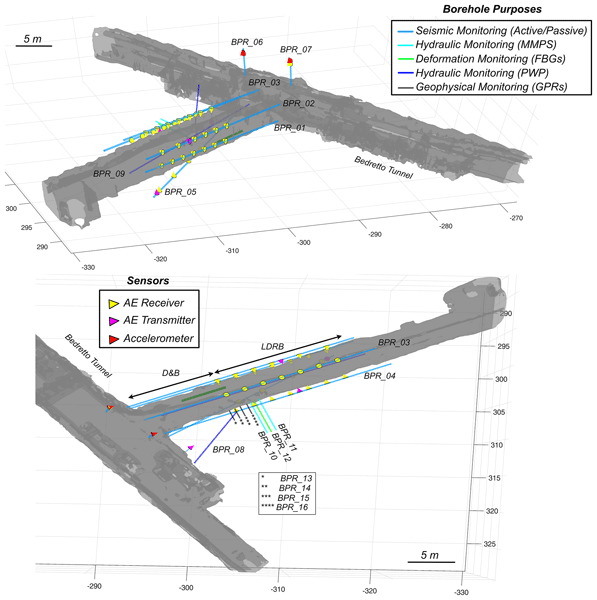
Pooya Hamdi, Jonas Dickmann, Michal Kruszewski, Antonio Pio Rinaldi, Linus Villiger, Alexis Shakas, Mathew Perras, Navid Bahrani, Patrick Bianchi, Peter Achtziger-Zupančič, Steven Gaines, Kai Bröker, Xiaodong Ma, Paul A. Selvadurai, Virginie Durand, Kavan Khaledi, Mohammadreza Jalali, Yousef Golabchi, Sam Harris, Alba Zappone, Mathilde Wimez, Marian Hertrich, Stefan Wiemer, and Florian Amann
Solid Earth, 17, 1139–1165, https://doi.org/10.5194/se-17-1139-2026, https://doi.org/10.5194/se-17-1139-2026, 2026
Short summary
Short summary
Deep geological repositories are considered one of the safest solutions for the long-term disposal of nuclear waste. This paper presents an overview of an experiment conducted at the BedrettoLab, Switzerland, where a new 100 m long tunnel was excavated in granite at a depth of 1300 m to investigate excavation-induced rock damage and its time-dependent evolution.
Raphael Burchartz, Brian Mutuma Mbui, Peter Achtziger-Zupančič, Garri Gaus, Timo Seemann, Lisa Winhausen, Yvonne Spychala, Mohammadreza Jalali, Ralf Littke, and Florian Amann
EGUsphere, https://doi.org/10.5194/egusphere-2026-964, https://doi.org/10.5194/egusphere-2026-964, 2026
Short summary
Short summary
We compile 782 hydraulic conductivity measurements from six European argillaceous formations relevant for high-level radioactive waste disposal. We show that maximum burial depth controls matrix-scale conductivity, while present-day depth, decompaction, fracturing, and self-sealing govern rock-mass behaviour, defining three depth-related evolutionary trends.
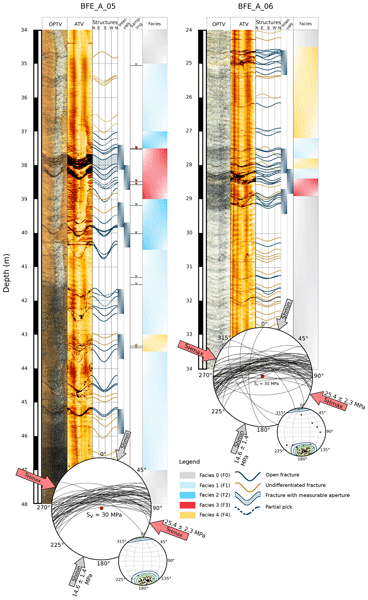
Tom Schaber, Mohammedreza Jalali, Alberto Ceccato, Alba Simona Zappone, Giacomo Pozzi, Valentin Gischig, Marian Hertrich, Men-Andrin Meier, Timo Seemann, Hannes Claes, Yves Guglielmi, Domenico Giardini, Stefan Wiemer, Massimo Cocco, and Florian Amann
Solid Earth, 17, 275–295, https://doi.org/10.5194/se-17-275-2026, https://doi.org/10.5194/se-17-275-2026, 2026
Short summary
Short summary
We studied a deep fault zone in Switzerland to gain a better understanding of how water moves through faults and how this affects earthquake activity. Using field and laboratory tests, we found that flow is strongly controlled by open fractures and permeability changes significantly with scale. Small samples underestimate flow compared to larger tests. Our results show that faults are heterogeneous, highlighting the need for site-specific studies when assessing risks or planning experiments.
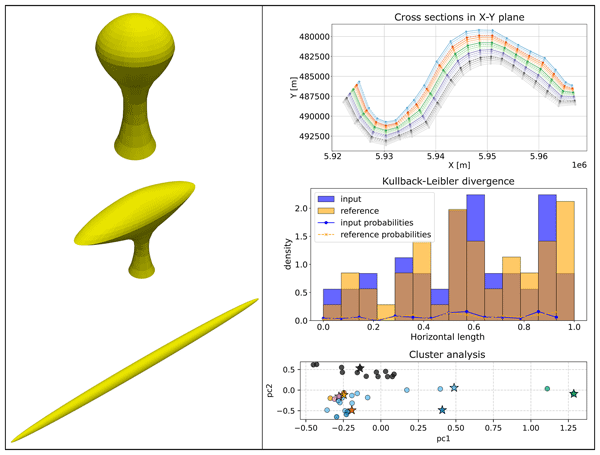
Friedrich Carl, Jian Yang, Marlise Colling Cassel, Florian Wellmann, and Peter Achtziger-Zupančič
Solid Earth, 17, 155–178, https://doi.org/10.5194/se-17-155-2026, https://doi.org/10.5194/se-17-155-2026, 2026
Short summary
Short summary
A method for shape quantification based on geometrical parameters is proposed alongside a set of regular geometries established as geomodeling benchmarks. Dimensions, gradient and curvature data is obtained on cross-sections. Data analyses provide insight into the main geometrical characteristics of the benchmark models and visualizes geometrical dis-/similarities between bodies. The method and benchmarks are usable in geomodeling workflows and structural comparisons based on sparse data.
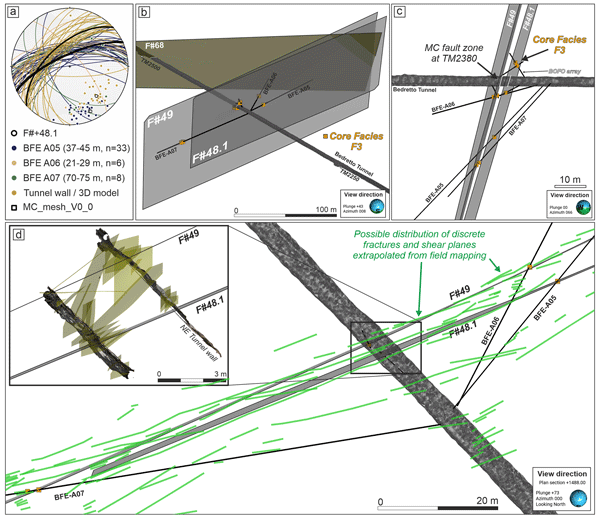
Peter Achtziger-Zupančič, Alberto Ceccato, Alba Simona Zappone, Giacomo Pozzi, Alexis Shakas, Florian Amann, Whitney Maria Behr, Daniel Escallon Botero, Domenico Giardini, Marian Hertrich, Mohammadreza Jalali, Xiaodong Ma, Men-Andrin Meier, Julian Osten, Stefan Wiemer, and Massimo Cocco
Solid Earth, 15, 1087–1112, https://doi.org/10.5194/se-15-1087-2024, https://doi.org/10.5194/se-15-1087-2024, 2024
Short summary
Short summary
We detail the selection and characterization of a fault zone for earthquake experiments in the Fault Activation and Earthquake Ruptures (FEAR) project at the Bedretto Lab. FEAR, which studies earthquake processes, overcame data collection challenges near faults. The fault zone in Rotondo granite was selected based on geometry, monitorability, and hydro-mechanical properties. Remote sensing, borehole logging, and geological mapping were used to create a 3D model for precise monitoring.
Thomas Mann, Bernhard Schuck, Tilo Kneuker, Lukas Pollok, André Bornemann, and Jochen Erbacher
Saf. Nucl. Waste Disposal, 2, 53–53, https://doi.org/10.5194/sand-2-53-2023, https://doi.org/10.5194/sand-2-53-2023, 2023
Short summary
Short summary
This contribution outlines that the BGE, implementer of Germany’s site selection procedure for a nuclear waste repository, likely underestimates the time necessary to characterize claystones within potential siting regions. Our latest experience originates from two research projects that developed sequence stratigraphic frameworks for largely homogenous claystone successions in Germany. We reckoned a total duration of 5 years for the workload in each of the abovementioned research projects.
Lisa Maria Ringel, Mohammadreza Jalali, and Peter Bayer
Hydrol. Earth Syst. Sci., 26, 6443–6455, https://doi.org/10.5194/hess-26-6443-2022, https://doi.org/10.5194/hess-26-6443-2022, 2022
Short summary
Short summary
Fractured rocks host a class of aquifers that serve as major freshwater resources worldwide. This work is dedicated to resolving the three-dimensional hydraulic and structural properties of fractured rock. For this purpose, hydraulic tomography experiments at the Grimsel Test Site in Switzerland are utilized, and the discrete fracture network is inverted. The comparison of the inversion results with independent findings from other studies demonstrates the validity of the approach.

Stefan Back, Sebastian Amberg, Victoria Sachse, and Ralf Littke
Solid Earth, 13, 1027–1043, https://doi.org/10.5194/se-13-1027-2022, https://doi.org/10.5194/se-13-1027-2022, 2022
Short summary
Short summary
Three-dimensional backstripping based on the Archimedes principle restored changes through time in 3D subsurface evaporite thickness, 3D salt loss and gain, and 3D subsurface salt movement. The methodology presented is sensitive to any process that influences overburden thickness, in this case sedimentation, erosion and tectonics. The restoration approach can be integrated into existing backstripping workflows and can serve as a benchmark for physics-based numerical modelling of salt tectonics.
Lisa Winhausen, Kavan Khaledi, Mohammadreza Jalali, Janos L. Urai, and Florian Amann
Solid Earth, 13, 901–915, https://doi.org/10.5194/se-13-901-2022, https://doi.org/10.5194/se-13-901-2022, 2022
Short summary
Short summary
Triaxial compression tests at different effective stresses allow for analysing the deformation behaviour of Opalinus Clay, the potential host rock for nuclear waste in Switzerland. We conducted microstructural investigations of the deformed samples to relate the bulk hydro-mechanical behaviour to the processes on the microscale. Results show a transition from brittle- to more ductile-dominated deformation. We propose a non-linear failure envelop associated with the failure mode transition.
Xiaodong Ma, Marian Hertrich, Florian Amann, Kai Bröker, Nima Gholizadeh Doonechaly, Valentin Gischig, Rebecca Hochreutener, Philipp Kästli, Hannes Krietsch, Michèle Marti, Barbara Nägeli, Morteza Nejati, Anne Obermann, Katrin Plenkers, Antonio P. Rinaldi, Alexis Shakas, Linus Villiger, Quinn Wenning, Alba Zappone, Falko Bethmann, Raymi Castilla, Francisco Seberto, Peter Meier, Thomas Driesner, Simon Loew, Hansruedi Maurer, Martin O. Saar, Stefan Wiemer, and Domenico Giardini
Solid Earth, 13, 301–322, https://doi.org/10.5194/se-13-301-2022, https://doi.org/10.5194/se-13-301-2022, 2022
Short summary
Short summary
Questions on issues such as anthropogenic earthquakes and deep geothermal energy developments require a better understanding of the fractured rock. Experiments conducted at reduced scales but with higher-resolution observations can shed some light. To this end, the BedrettoLab was recently established in an existing tunnel in Ticino, Switzerland, with preliminary efforts to characterize realistic rock mass behavior at the hectometer scale.
Lisa Winhausen, Mohammadreza Jalali, and Florian Amann
Saf. Nucl. Waste Disposal, 1, 301–301, https://doi.org/10.5194/sand-1-301-2021, https://doi.org/10.5194/sand-1-301-2021, 2021
Ben Laurich, Jürgen Hesser, Sibylle Mayr, Lisa Winhausen, Amin Ghanizadeh, Antonia Nitsch, Julia Leuthold, Christian Weber, and Garri Gaus
Saf. Nucl. Waste Disposal, 1, 299–300, https://doi.org/10.5194/sand-1-299-2021, https://doi.org/10.5194/sand-1-299-2021, 2021
Cited articles
Adams, J. A. S. and Weaver, C. E.: Thorium-to-Uranium Ratios as Indicators of Sedimentary Processes: Example of Concept of Geochemical Facies, AAPG Bull., 42, 387–430, 1958.
Addis, M. A. and Jones, M. E.: Volume changes during diagenesis, Mar. Petrol. Geol., 2, 241–246, https://doi.org/10.1016/0264-8172(85)90013-3, 1985.
Adriasola Muñoz, Y.: The thermal history of the Western Lower Saxony Basin, Germany, 1. Aufl., Verlagshaus Mainy GmbH Aachen, Mainz, Aachen, 152 pp., ISBN 3-86130-884-3, 2007.
Amann, F., Wild, K. M., Loew, S., Yong, S., Thoeny, R., and Frank, E.: Geomechanical behaviour of Opalinus Clay at multiple scales: results from Mont Terri rock laboratory (Switzerland), Swiss J. Geosci., 110, 151–171, https://doi.org/10.1007/s00015-016-0245-0, 2017.
Aplin, A. C. and Macquaker, J. H. S.: Mudstone diversity: Origin and implications for source, seal, and reservoir properties in petroleum systems, AAPG Bull., 95, 2031–2059, https://doi.org/10.1306/03281110162, 2011.
Aplin, A. C. and Yang, Y.: Assessment of ß, the compression coefficient of mudstones and its relationship with detailed lithology, Mar. Petrol. Geol., 12, 955–963, 1995.
Aplin, A. C., Matenaar, I. F., McCarty, D. K., and Van Der Pluijm, B. A.: Influence of Mechanical Compaction and Clay Mineral Diagenesis on the Microfabric and Pore-Scale Properties of Deep-Water Gulf of Mexico Mudstones, Clay. Clay Miner., 54, 500–514, https://doi.org/10.1346/CCMN.2006.0540411, 2006.
Armitage, P. J., Worden, R. H., Faulkner, D. R., Aplin, A. C., Butcher, A. R., and Iliffe, J.: Diagenetic and sedimentary controls on porosity in Lower Carboniferous fine-grained lithologies, Krechba field, Algeria: A petrological study of a caprock to a carbon capture site, Mar. Petrol. Geol., 27, 1395–1410, https://doi.org/10.1016/j.marpetgeo.2010.03.018, 2010.
Athy, L. F.: Density, Porosity and Compaction of Sedimentary Rocks, AAPG Bull., 14, 1–24, https://doi.org/10.1306/3D93289E-16B1-11D7-8645000102C1865D, 1930.
Bachmann, G. H., Voigt, T., Bayer, U., von Eynatten, H., Legler, B., Littke, R., Breitkreuz, Ch., Geiβler, M., Schneider, J., Kiersnowski, H., Stollhofen, H., Barnasch, J., Beutler, G., Franz, M., Kästner, M., Mutterlose, J., Radies, D., Reicherter, K., von Eynatten, H., Littke, R., Voigt, S., Kley, J., Sirocko, F., Lehné, R., Hübscher, Ch., Winsemann, J., and Stackebrandt, W.: Basin Fill, in: Dynamics of Complex Intracontinental Basins: The Central European Basin System, edited by: Littke, R., Bayer, U., Gajewski, D., and Nelskamp, S., Springer Berlin Heidelberg, Berlin, Heidelberg, 156–245, https://doi.org/10.1007/978-3-540-85085-4_4, 2008.
Baldschuhn, R. and Kockel, F.: Der Untergrund von Hannover und seiner Umgebung, Naturhistorische Gesellschaft Hannover, 1998.
Barker, C. E. and Pawlewicz, M. J.: Calculation of Vitrinite Reflectance from Thermal Histories and Peak Temperatures, in: Vitrinite Reflectance as a Maturity Parameter, vol. 570, American Chemical Society, 216–229, https://doi.org/10.1021/bk-1994-0570.ch014, 1994.
Bastiaens, W., Bernier, F., and Li, X. L.: SELFRAC: Experiments and conclusions on fracturing, self-healing and self-sealing processes in clays, Phys. Chem. Earth Pts. A/B/C, 32, 600–615, https://doi.org/10.1016/j.pce.2006.04.026, 2007.
Basu, S., Jones, A., and Mahzari, P.: Best Practices for Shale Core Handling: Transportation, Sampling and Storage for Conduction of Analyses, Journal of Marine Science Engineering, 8, 136, https://doi.org/10.3390/jmse8020136, 2020.
Bataller, F. J., McDougall, N. D., and Moscariello, A.: Reviewing the correlation potential of Spectral Gamma Ray: a case study in Ordovician glacial environments in the Murzuq basin, SW Libya, J. Afr. Earth Sci., 188, 104475, https://doi.org/10.1016/j.jafrearsci.2022.104475, 2022.
Bernard, S., Horsfield, B., Schulz, H.-M., Wirth, R., Schreiber, A., and Sherwood, N.: Geochemical evolution of organic-rich shales with increasing maturity: A STXM and TEM study of the Posidonia Shale (Lower Toarcian, northern Germany), Mar. Petrol. Geol., 31, 70–89, https://doi.org/10.1016/j.marpetgeo.2011.05.010, 2012.
Berthonneau, J., Hoover, C. G., Grauby, O., Baronnet, A., Pellenq, R. J.-M., and Ulm, F.-J.: Crystal-chemistry control of the mechanical properties of 2:1 clay minerals, Appl. Clay Sci., 143, 387–398, https://doi.org/10.1016/j.clay.2017.04.010, 2017.
Betz, D., Führer, F., Greiner, G., and Plein, E.: Evolution of the lower Saxony Basin, Tectonophysics, 137, 127–170, 1987.
BGE: Zwischenbericht Teilgebiete gemäß §13 StandAG, Bundesgesellschaft für Endlagerung, https://www.bge.de/fileadmin/user_upload/Standortsuche/ (last accessed: 10 June 2024), 2020.
Bjørlykke, K.: Clay mineral diagenesis in sedimentary basins – a key to the prediction of rock properties. Examples from the North Sea Basin, Clay Miner., 33, 15–34, 1998.
Bjørlykke, K.: Effects of compaction processes on stresses, faults, and fluid flow in sedimentary basins: examples from the Norwegian margin, Geol. Soc. Spec. Publ., 253, 359–379, https://doi.org/10.1144/GSL.SP.2006.253.01.19, 2006.
Bjørlykke, K. and Høeg, K.: Effects of burial diagenesis on stresses, compaction and fluid flow in sedimentary basins, Mar. Petrol. Geol., 14, 267–276, https://doi.org/10.1016/S0264-8172(96)00051-7, 1997.
Blümling, P., Bernier, F., Lebon, P., and Derek Martin, C.: The excavation damaged zone in clay formations time-dependent behaviour and influence on performance assessment, Phys. Chem. Earth Pts. A/B/C, 32, 588–599, https://doi.org/10.1016/j.pce.2006.04.034, 2007.
Bock, H., Dehandschutter, B., Martin, D. C., Haller, A. de, Mazurek, M., Skoczylas, F., and Davy, C. (Eds.): Self-sealing of fractures in argillaqceous formations in the context of geological disposal of radioactive waste: review and synthesis, OECD, Paris, 310 pp., OECD, ISBN 978-92-64-99095-1, 2010.
Bonin, B.: Deep geological disposal in argillaceous formations: studies at the Tournemire test site, J. Contam. Hydrol., 35, 315–330, https://doi.org/10.1016/S0169-7722(98)00132-6, 1998.
Bossart, P., Meier, P. M., Moeri, A., Trick, T., and Mayor, J.-C.: Geological and hydraulic characterisation of the excavation disturbed zone in the Opalinus Clay of the Mont Terri Rock Laboratory, Eng. Geol., 66, 19–38, https://doi.org/10.1016/S0013-7952(01)00140-5, 2002.
Bossart, P., Trick, T., Meier, P. M., and Mayor, J.-C.: Structural and hydrogeological characterisation of the excavation-disturbed zone in the Opalinus Clay (Mont Terri Project, Switzerland), Appl. Clay Sci., 26, 429–448, https://doi.org/10.1016/j.clay.2003.12.018, 2004.
Bowers, G. L.: Pore Pressure Estimation From Velocity Data: Accounting for Overpressure Mechanisms Besides Undercompaction, SPE Dril. Completion, 10, 89–95, https://doi.org/10.2118/27488-PA, 1995.
Broichhausen, H., Littke, R., and Hantschel, T.: Mudstone compaction and its influence on overpressure generation, elucidated by a 3D case study in the North Sea, Int. J. Earth Sci. (Geol. Rundsch.), 94, 956–978, https://doi.org/10.1007/s00531-005-0014-1, 2005.
Bruns, B., Di Primio, R., Berner, U., and Littke, R.: Petroleum system evolution in the inverted Lower Saxony Basin, northwest Germany: a 3D basin modeling study, Geofluids, 13, 246–271, https://doi.org/10.1111/gfl.12016, 2013.
Bruns, B., Littke, R., Gasparik, M., Van Wees, J. -D., and Nelskamp, S.: Thermal evolution and shale gas potential estimation of the Wealden and Posidonia Shale in NW-Germany and the Netherlands: a 3D basin modelling study, Basin Res., 28, 2–33, https://doi.org/10.1111/bre.12096, 2016.
Burnaz, L., Littke, R., Grohmann, S., Erbacher, J., Strauss, H., and Amann, F.: Lower Jurassic (Pliensbachian–Toarcian) marine paleoenvironment in Western Europe: sedimentology, geochemistry and organic petrology of the wells Mainzholzen and Wickensen, Hils Syncline, Lower Saxony Basin, Int. J. Earth Sci. (Geol. Rundsch.), https://doi.org/10.1007/s00531-023-02381-8, 2024.
Busch, A., Schweinar, K., Kampman, N., Coorn, A., Pipich, V., Feoktystov, A., Leu, L., Amann-Hildenbrand, A., and Bertier, P.: Determining the porosity of mudrocks using methodological pluralism, Geol. Soc. Spec. Publ., 454, 15–38, https://doi.org/10.1144/SP454.1, 2017.
Burchartz, R. and Seemann, T.: MATURITY Project Data, Zenodo [data set], https://doi.org/10.5281/ZENODO.18849751, 2026.
Carcione, J. M., Gei, D., Yu, T., and Ba, J.: Effect of Clay and Mineralogy on Permeability, Pure Appl. Geophys., 176, 2581–2594, https://doi.org/10.1007/s00024-019-02117-3, 2019.
Castro-Vera, L., Amberg, S., Gaus, G., Leu, K., and Littke, R.: 3D basin modeling of the Hils Syncline, Germany: reconstruction of burial and thermal history and implications for petrophysical properties of potential Mesozoic shale host rocks for nuclear waste storage, Int. J. Earth Sci. (Geol. Rundsch.), https://doi.org/10.1007/s00531-024-02384-z, 2024.
Corkum, A. G. and Martin, C. D.: The mechanical behaviour of weak mudstone (Opalinus Clay) at low stresses, Int. J. Rock Mech. Min., 44, 196–209, https://doi.org/10.1016/j.ijrmms.2006.06.004, 2007.
Crank, J.: The mathematics of diffusion, 2d edn., Clarendon Press, Oxford, (Eng), 414 pp., ISBN 978-0-19-853344-3, 1975.
Cripps, J. C. and Czerewko, M. A.: The influence of diagenetic and mineralogical factors on the breakdown and geotechnical properties of mudrocks, Geol. Soc. Spec. Publ., 454, 271–293, https://doi.org/10.1144/SP454.10, 2017.
Crisci, E., Ferrari, A., Giger, S. B., and Laloui, L.: Hydro-mechanical behaviour of shallow Opalinus Clay shale, Eng. Geol., 251, 214–227, https://doi.org/10.1016/j.enggeo.2019.01.016, 2019.
Czerewko, M. A. and Cripps, J. C.: The implications of diagenetic history and weathering on the engineering behaviour of mudrocks, in: IAEG2006, 10th Congress of the International Association for Engineering Geology and the Environment, Nottingham, UK, 6–10 September 2006, 2006.
Delage, P., Cui, Y. J., and Tang, A. M.: Clays in radioactive waste disposal, Journal of Rock Mechanics and Geotechnical Engineering, 2, 111–123, https://doi.org/10.3724/SP.J.1235.2010.00111, 2010.
Dewhurst, D. N., Aplin, A. C., Sarda, J., and Yang, Y.: Compaction-driven evolution of porosity and permeability in natural mudstones: An experimental study, J. Geophys. Res., 103, 651–661, https://doi.org/10.1029/97JB02540, 1998.
Dewhurst, D. N., Aplin, A. C., and Sarda, J.: Influence of clay fraction on pore-scale properties and hydraulic conductivity of experimentally compacted mudstones, J. Geophys. Res., 104, 29261–29274, https://doi.org/10.1029/1999JB900276, 1999.
Doebelin, N. and Kleeberg, R.: Profex: a graphical user interface for the Rietveld refinement program BGMN, J. Appl. Crystallogr., 48, 1573–1580, https://doi.org/10.1107/S1600576715014685, 2015.
Eaton, B. A.: The Equation for Geopressure Prediction from Well Logs, Fall Meeting of the Society of Petroleum Engineers of AIME: Society of Petroleum Engineers, https://doi.org/10.2118/5544-MS, 1975.
Ewy, R., Dirkzwager, J., and Bovberg, C.: Claystone porosity and mechanical behavior vs. geologic burial stress, Mar. Petrol. Geol., 121, 104563, https://doi.org/10.1016/j.marpetgeo.2020.104563, 2020.
Ewy, R. T.: Shale/claystone response to air and liquid exposure, and implications for handling, sampling and testing, Int. J. Rock Mech. Min., 80, 388–401, https://doi.org/10.1016/j.ijrmms.2015.10.009, 2015.
Fertl, W. H. and Chilingarian, G. V.: Type and distribution modes of clay minerals from well logging data, J. Petrol. Sci. Eng., 3, 321–332, https://doi.org/10.1016/0920-4105(90)90052-5, 1990.
Fink, R., Frohn, V., Froidl, F., Littke, R., and Uffmann, A. K.: Impact of burial history on petrophysical properties of Jurassic and Lower Cretaceous mudstones as potential nuclear waste storage sites in the Lower Saxony Basin, Northern Germany, Z. Dtsch. Ges. Geowiss., 170, 339–355, https://doi.org/10.1127/zdgg/2019/0191, 2019.
Fisher, Q., Kaminskaite, I., and Del Pino Sanchez, A.: Shale barrier performance in petroleum systems: implications for CO2 storage and nuclear waste disposal, Geoenergy, 1, geoenergy2023-006, https://doi.org/10.1144/geoenergy2023-006, 2023.
Gama, J. and Schwark, L.: Lithofacies of early Jurassic successions derived from spectral gamma ray logging in the Mandawa Basin, SE Tanzania, Arab. J. Geosci., 15, 1373, https://doi.org/10.1007/s12517-022-10622-4, 2022.
Gasparik, M., Bertier, P., Gensterblum, Y., Ghanizadeh, A., Krooss, B. M., and Littke, R.: Geological controls on the methane storage capacity in organic-rich shales, Int. J. Coal Geol., 123, 34–51, https://doi.org/10.1016/j.coal.2013.06.010, 2014.
Gaus, G., Amann-Hildenbrand, A., Krooss, B. M., and Fink, R.: Gas permeability tests on core plugs from unconventional reservoir rocks under controlled stress: A comparison of different transient methods, J. Nat. Gas Sci. Eng., 65, 224–236, https://doi.org/10.1016/j.jngse.2019.03.003, 2019.
Gaus, G., Hoyer, E.-M., Seemann, T., Fink, R., Amann, F., and Littke, R.: Laboratory investigation of permeability, pore space and unconfined compressive strength of uplifted Jurassic mudstones: The role of burial depth and thermal maturation, Z. Dtsch. Ges. Geowiss., 173, 469–489, https://doi.org/10.1127/zdgg/2022/0329, 2022.
Gautschi, A.: Safety-relevant hydrogeological properties of the claystone barrier of a Swiss radioactive waste repository: An evaluation using multiple lines of evidence, Grundwasser, 22, 221–233, https://doi.org/10.1007/s00767-017-0364-1, 2017.
Ghanizadeh, A., Amann-Hildenbrand, A., Gasparik, M., Gensterblum, Y., Krooss, B. M., and Littke, R.: Experimental study of fluid transport processes in the matrix system of the European organic-rich shales: II. Posidonia Shale (Lower Toarcian, northern Germany), Int. J. Coal Geol., 123, 20–33, https://doi.org/10.1016/j.coal.2013.06.009, 2014.
Grathoff, G. H., Peltz, M., Enzmann, F., and Kaufhold, S.: Porosity and permeability determination of organic-rich Posidonia shales based on 3-D analyses by FIB-SEM microscopy, Solid Earth, 7, 1145–1156, https://doi.org/10.5194/se-7-1145-2016, 2016.
Grohmann, S., Littke, R., Abu-Mahfouz, I., Gaus, G., Klaver, J., Thüns, N., Schulte, P., Patzek, T., and Vahrenkamp, V.: The deposition of type II-S Jordan oil shale in the context of Late Cretaceous source rock formation in the Eastern Mediterranean realm. Insights from organic and inorganic geochemistry and petrography, Mar. Petrol. Geol., 148, 106058, https://doi.org/10.1016/j.marpetgeo.2022.106058, 2023.
Guglielmi, Y., Cappa, F., Shadoan, T., Ajo-Franklin, J., Soom, F., Lanyon, B., Cook, P., Hopp, C., Rodríguez Tribaldos, V., Robertson, M., Wood, T., Ulrich, C., Schefer, S., Nussbaum, C., and Birkholzer, J.: Control Mechanisms for Self-Sealing in Activated Clay-Rich Faults Through Controlled Hydraulic Injection Experiment, Water Resour. Res., 61, e2024WR037595, https://doi.org/10.1029/2024WR037595, 2025.
Hart, B. S., Schieber, J., and Kalinec, J.: Clay diagenesis and overpressure development in Upper Cretaceous and Tertiary shales of South Texas, Mar. Petrol. Geol., 147, 105978, https://doi.org/10.1016/j.marpetgeo.2022.105978, 2023.
Hekel, U.: Hydrogeologische Erkundung toniger Festgesteine am Beispiel des Opalinustons (Unteres Aalenium), Ph.D. thesis, Universität Tübingen, Tübingen, Germany, 170 pp., 1994.
Heunisch, C., Caspers, G., Elbracht, J., Langer, A., Röhling, H.-G., Schwarz, C., and Streif, H.: Erdgeschichte von Niedersachsen: Geologie und Landschaftsentwicklung, Landesamt für Bergbau, Energie und Geologie, Hannover, https://doi.org/10.48476/GEOBER_6_2017, 2018.
Hooker, J. N., Ruhl, M., Dickson, A. J., Hansen, L. N., Idiz, E., Hesselbo, S. P., and Cartwright, J.: Shale Anisotropy and Natural Hydraulic Fracture Propagation: An Example from the Jurassic (Toarcian) Posidonienschiefer, Germany, J. Geophys. Res.-Sol. Ea., 125, e2019JB018442, https://doi.org/10.1029/2019JB018442, 2020.
Ibanez, W. D. and Kronenberg, A. K.: Experimental deformation of shale: Mechanical properties and microstructural indicators of mechanisms, Int. J. Rock Mech. Min. and Geomechanics Abstracts, 30, 723–734, https://doi.org/10.1016/0148-9062(93)90014-5, 1993.
Jones, M. E. and Addis, M. A.: Volume change during sediment diagenesis and the development of growth faults, Mar. Petrol. Geol., 1, 118–122, https://doi.org/10.1016/0264-8172(84)90081-3, 1984.
Jones, M. E. and Addis, M. A.: On changes in porosity and volume during burial of argillaceous sediments, Mar. Petrol. Geol., 2, 247–253, https://doi.org/10.1016/0264-8172(85)90014-5, 1985.
Jordan, H.: Geologische Wanderkarte Leinebergland 1:100000, Niedersächsisches Landesamt für Bodenforschung, Hannover, 1989.
Khajooie, S., Gaus, G., Seemann, T., Ahrens, B., Hua, T., and Littke, R.: Exploring Effective Diffusion Coefficients in Water-Saturated Reservoir Rocks via the Pressure Decay Technique: Implications for Underground Hydrogen Storage, Transport Porous Med., 152, 12, https://doi.org/10.1007/s11242-024-02148-y, 2025.
Klaja, J. and Dudek, L.: Geological interpretation of spectral gamma ray (SGR) logging in selected boreholes, Nafta-Gaz, 72, 3–14, https://doi.org/10.18668/NG2016.01.01, 2016.
Klaver, J., Desbois, G., Urai, J. L., and Littke, R.: BIB-SEM study of the pore space morphology in early mature Posidonia Shale from the Hils area, Germany, Int. J. Coal Geol., 103, 12–25, https://doi.org/10.1016/j.coal.2012.06.012, 2012.
Koch, G. and Arnemann, H.: Die Inkohlung in Gesteinen des Rhät und Lias im südlichen Nordwestdeutschland, in: Geologisches Jahrbuch, vol. A29, Schweizerbart`sche Verlagsbuchhandlung, Hannover, 45–55, ISBN 978-3-510-96464-2, 1975.
Kockel, F., Wehner, H., and Gerling, P.: Petroleum Systems of the Lower Saxony Basin, Germany, in: The Petroleum System – From Source to Trap, vol. 60, edited by: Magoon, L. B. and Dow, W. G., American Association of Petroleum Geologists, https://doi.org/10.1306/M60585C34, 1994.
Lazar, O. R., Bohacs, K. M., Macquaker, J. H. S., Schieber, J., and Demko, T. M.: Capturing Key Attributes of Fine-Grained Sedimentary Rocks In Outcrops, Cores, and Thin Sections: Nomenclature and Description Guidelines, J. Sedimentary Res., 85, 230–246, https://doi.org/10.2110/jsr.2015.11, 2015.
Lehocki, I. and Avseth, P.: From cradle to grave: how burial history controls the rock-physics properties of quartzose sandstones, Geophys. Prospect., 69, 629–649, https://doi.org/10.1111/1365-2478.13039, 2021.
Li, Z., Dong, M., Li, S., and Dai, L.: A New Method for Gas Effective Diffusion Coefficient Measurement in Water-Saturated Porous Rocks under High Pressures, J. Porous Media, 9, 445–461, 2006.
Littke, R. and Rullkötter, J.: Mikroskopische und makroskopische Unterschiede zwischen Profilen unreifen und reifen Posidonienschiefers aus der Hilsmulde, Facies, 17, 171–179, https://doi.org/10.1007/BF02536781, 1987.
Littke, R., Baker, D. R., and Leythaeuser, D.: Microscopic and sedimentologic evidence for the generation and migration of hydrocarbons in Toarcian source rocks of different maturities, Advances in Organic Geochemistry, 13, 549–559, 1988.
Littke, R., Leythaeuser, D., Rullkötter, J., and Baker, D. R.: Keys to the depositional history of the Posidonia Shale (Toarcian) in the Hils Syncline, northern Germany, Geol. Soc. Spec. Publ., 58, 311–333, https://doi.org/10.1144/GSL.SP.1991.058.01.20, 1991.
Ma, X. and Zoback, M. D.: Static and Dynamic Response of Bakken Cores to Cyclic Hydrostatic Loading, Rock Mech. Rock Eng., 51, 1943–1953, https://doi.org/10.1007/s00603-018-1443-z, 2018.
Mackenzie, A. S., Leythaeuser, D., Altebäumer, F., Disko, U., and Rullkötter, J.: Molecular measurements of maturity for Lias δ shales in N. W. Germany, Geochim. Cosmoehim. Ac., 52, 1145–1154, 1988.
Mann, U.: Veränderung von Mineralmatrix und Porosität eines Erdölmuttergesteins durch einen Intrusivkörper (Lias epsilon 2–3: Hilsmulde, NW-Deutschland), 2. Tagung deutschsprachiger Sedimentologen, Heidelberg, 181–188, https://doi.org/10.1007/BF02536782, 1987.
Mann, U. and Müller, P. J.: Source rock evaluation by well log analysis (Lower Toarcian, Hils syncline), Advances in Organic Geochemistry, 13, 109–119, 1988.
Mathia, E. J., Bowen, L., Thomas, K. M., and Aplin, A. C.: Evolution of porosity and pore types in organic-rich, calcareous, Lower Toarcian Posidonia Shale, Mar. Petrol. Geol., 75, 117–139, https://doi.org/10.1016/j.marpetgeo.2016.04.009, 2016.
Maystrenko, Y., Bayer, U., Brink, H.-J., and Littke, R.: The Central European Basin System – an Overview, in: Dynamics of Complex Intracontinental Basins, edited by: Littke, R., Bayer, U., Gajewski, D., and Nelskamp, S., Springer Berlin Heidelberg, Berlin, Heidelberg, 16–34, https://doi.org/10.1007/978-3-540-85085-4_2, 2008.
Mazurek, M., Gautschi, A., Marschall, P., Vigneron, G., Lebon, P., and Delay, J.: Transferability of geoscientific information from various sources (study sites, underground rock laboratories, natural analogues) to support safety cases for radioactive waste repositories in argillaceous formations, Phys. Chem. Earth Pts. A/B/C, 33, S95–S105, https://doi.org/10.1016/j.pce.2008.10.046, 2008.
Mazurek, M., Wersin, P., Hadi, J., Grenèche, J.-M., Prinpreecha, N., and Traber, D.: Geochemistry and palaeo-hydrogeology of the weathered zone in the Opalinus Clay, Appl. Clay Sci., 232, 106793, https://doi.org/10.1016/j.clay.2022.106793, 2023.
Minisini, D., Simo, T., Macquaker, J. H. S., and Rudnicki, M. D.: Controls on storage capacity in mudstones. Cementation before sediment compaction and preservation of porosity in lithified rock, Mar. Petrol. Geol., 177, 107350, https://doi.org/10.1016/j.marpetgeo.2025.107350, 2025.
Mohnhoff, D., Littke, R., Krooss, B. M., and Weniger, P.: Flow-through extraction of oil and gas shales under controlled stress using organic solvents: Implications for organic matter-related porosity and permeability changes with thermal maturity, Int. J. Coal Geol., 157, 84–99, https://doi.org/10.1016/j.coal.2015.09.010, 2016.
Neuzil, C. E.: How permeable are clays and shales?, Water Resour. Res., 30, 145–150, https://doi.org/10.1029/93WR02930, 1994.
Neuzil, C. E.: Permeability of Clays and Shales, Annu. Rev. Earth Pl. Sc., 47, 247–273, https://doi.org/10.1146/annurev-earth-053018-060437, 2019.
NIBIS® Kartenserver: Geological map 1:25.000, Landesamt für Bergbau, Energie und Geologie (LBEG), Hannover, 2014.
Norris, S.: Radioactive waste confinement: clays in natural and engineered barriers – introduction, Geol. Soc. Spec. Publ., 443, 1–8, https://doi.org/10.1144/SP443.26, 2017.
OECD and NEA: Clay Club Catalogue of Characteristics of Argillaceous Rocks: 2022 Update, OECD, https://doi.org/10.1787/8860f7d8-en, 2022.
Ohazuruike, L. and Lee, K. J.: A comprehensive review on clay swelling and illitization of smectite in natural subsurface formations and engineered barrier systems, Nucl. Eng. Technol., 55, 1495–1506, https://doi.org/10.1016/j.net.2023.01.007, 2023.
Peltonen, C., Marcussen, Ø., Bjørlykke, K., and Jahren, J.: Clay mineral diagenesis and quartz cementation in mudstones: The effects of smectite to illite reaction on rock properties, Mar. Petrol. Geol., 26, 887–898, https://doi.org/10.1016/j.marpetgeo.2008.01.021, 2009.
Petmecky, S., Meier, L., Reiser, H., and Littke, R.: High thermal maturity in the Lower Saxony Basin: intrusion or deep burial?, Tectonophysics, 304, 317–344, https://doi.org/10.1016/S0040-1951(99)00030-X, 1999.
Pollastro, R. M.: Considerations and Applications of the Illite/Smectite Geothermometer in Hydrocarbon-Bearing Rocks of Miocene to Mississippian Age, Clay. Clay Miner., 41, 119–133, https://doi.org/10.1346/CCMN.1993.0410202, 1993.
Quirein, J. A., Gardner, J. S., and Watson, J. T.: Combined natural gamma ray spectral/litho-density measurements applied to complex lithologies, in: Soc. Pet. Eng. AIME, Pap., United States, Schlumberger Well Services, https://doi.org/10.2118/11143-MS, 1982.
Rider, M. H.: The geological interpretation of well logs, 2nd edn., revised, Rider-French Consulting, Sutherland, 280 pp., ISBN 0-9541906-0-2, 2000.
Roberts, R. M.: User's manual for nSIGHTS, Version 2.40 (p. 496), ERMS 544708, Sandia National Laboratories, Carlsbad, NM, 2006.
Rullkötter, J., Leythaeuser, D., Horsfield, B., Littke, R., Mann, U., Müller, P. J., Radke, M., Schaefer, R. G., Schenk, H.-J., Schwochau, K., Witte, E. G., and Welte, D. H.: Organic matter maturation under the influence of a deep intrusive heat source: A natural experiment for quantitation of hydrocarbon generation and expulsion from a petroleum source rock (Toarcian shale, northern Germany), Org. Geochem., 13, 847–856, https://doi.org/10.1016/0146-6380(88)90237-9, 1988.
Rutter, E., Mecklenburgh, J., and Taylor, K.: Geomechanical and petrophysical properties of mudrocks: introduction, Geol. Soc. Spec. Publ., 454, 1–13, https://doi.org/10.1144/SP454.16, 2017.
Rybacki, E., Reinicke, A., Meier, T., Makasi, M., and Dresen, G.: What controls the mechanical properties of shale rocks? – Part I: Strength and Young's modulus, J. Petrol. Sci. Eng., 135, 702–722, https://doi.org/10.1016/j.petrol.2015.10.028, 2015.
Schlumberger: Log Interpretation Charts, Schlumberger, Sugar Land, Texas, 293 pp., 2009.
Schmitz, H.-H.: Ölschiefer in Niedersachsen, Naturhistorische Gesellschaft Hannover, Hannover, 1980.
Senglaub, Y., Brix, M. R., Adriasola, A. C., and Littke, R.: New information on the thermal history of the southwestern Lower Saxony Basin, northern Germany, based on fission track analysis, Int. J. Earth Sci. (Geol. Rundsch.), 94, 876–896, https://doi.org/10.1007/s00531-005-0008-z, 2005.
Sone, H. and Zoback, M. D.: Mechanical properties of shale-gas reservoir rocks – Part 1: Static and dynamic elastic properties and anisotropy, Geophysics, 78, D381–D392, https://doi.org/10.1190/geo2013-0050.1, 2013.
Stahl, W. J.: Isotope geochemistry of light hydrocarbons adsorbed in Jurassic shales from the Hils syncline, North-west Germany, in: Abhandlungen der Braunschweigischen Wissenschaftlichen Gesellschaft, vol. 43, Erich Goltze KG, Göttingen, 103–125, ISBN 3-88452-225-6, 1992.
Stollhofen, H., Bachmann, G., Barnasch, J., Bayer, U., Beutler, G., Franz, M., Kästner, M., Legler, B., Mutterlose, J., and Radies, D.: Upper Rotliegend to Early Cretaceous basin development, in: Dynamics of complex intracontinental basins. The Central European Basin System, edited by: Littke, R., Bayer, U., Gajewski, D., and Nelskamp, S., Springer, Berlin, 181–210, https://link.springer.com/book/10.1007/978-3-540-85085-4, 2008.
Swarbrick, R. E. and Osborne, M. J.: Mechanisms that Generate Abnormal Pressures: An Overview, in: Abnormal Pressures in Hydrocarbon Environments, vol. 70, edited by: Law, B. E., Ulmishek, G. F., and Slavin, V. I., American Association of Petroleum Geologists, https://doi.org/10.1306/M70615C2, 1998.
Ufer, K. and Kleeberg, R.: Parametric Rietveld refinement of coexisting disordered clay minerals, Clay Miner., 50, 287–296, https://doi.org/10.1180/claymin.2015.050.3.03, 2015.
Ufer, K., Stanjek, H., Roth, G., Dohrmann, R., Kleeberg, R., and Kaufhold, S.: Quantitative phase analysis of bentonites by the rietveld method, Clay. Clay Miner., 56, 272–282, https://doi.org/10.1346/ccmn.2008.0560210, 2008.
Van Der Kamp, G.: Methods for determining the in situ hydraulic conductivity of shallow aquitards – an overview, Hydrogeol. J., 9, 5–16, https://doi.org/10.1007/s100400000118, 2001.
Van Wees, J.-D., Stephenson, R. A., Ziegler, P. A., Bayer, U., McCann, T., Dadlez, R., Gaupp, R., Narkiewicz, M., Bitzer, F., and Scheck, M.: On the origin of the Southern Permian Basin, Central Europe, Mar. Petrol. Geol., 17, 43–59, https://doi.org/10.1016/S0264-8172(99)00052-5, 2000.
Vogt, T., Hekel, U., Ebert, A., Becker, J. K., Traber, D., Giger, S., Brod, M., and Häring, C.: Hydrogeologische Untersuchungen im oberflächennahen Opalinuston (Bohrloch Lausen, Schweiz), Grundwasser, 22, 209–220, https://doi.org/10.1007/s00767-017-0363-2, 2017.
Voigt, T., Kley, J., and Voigt, S.: Dawn and dusk of Late Cretaceous basin inversion in central Europe, Solid Earth, 12, 1443–1471, https://doi.org/10.5194/se-12-1443-2021, 2021.
Wagner, J.-F.: Mechanical Properties of Clays and Clay Minerals, in: Developments in Clay Science, vol. 5, Elsevier, 347–381, https://doi.org/10.1016/B978-0-08-098258-8.00011-0, 2013.
Weaver, C. E. and Pollard, L. D.: The chemistry of clay minerals, Elsevier Scientific Pub. Co, Amsterdam New York, ISBN 0-444-41043-0, 1973.
Wiese, F. and Arp, G.: Ober-Jura und Ober-Kreide in Hils- und Sackmulde (NW-Deutschland) (Exkursion K am 5. April 2013) Upper Jurassic and Upper Cretaceous of the Hils and Sack Syncline (NW Germany), Jahresberichte und Mitteilungen des Oberrheinischen Geologischen Vereins, 95, 221–258, https://doi.org/10.1127/jmogv/95/2013/221, 2013.
Wijesinghe, P., Littke, R., Burnaz, L., Blumenberg, M., Erbacher, J., Mann, T., Amann, F., and Bauersachs, T.: Black shale deposition during the Early Jurassic: Geochemistry of Pliensbachian and Toarcian sedimentary rocks of the Hunzen Well, Hils Syncline, Northwest German Basin, The Depositional Record, 11, 1451–1478, https://doi.org/10.1002/dep2.70037, 2025.
Wild, K. M. and Amann, F.: Experimental study of the hydro-mechanical response of Opalinus Clay – Part 1: Pore pressure response and effective geomechanical properties under consideration of confinement and anisotropy, Eng. Geol., 237, 32–41, https://doi.org/10.1016/j.enggeo.2018.02.012, 2018a.
Wild, K. M. and Amann, F.: Experimental study of the hydro-mechanical response of Opalinus Clay – Part 2: Influence of the stress path on the pore pressure response, Eng. Geol., 237, 92–101, https://doi.org/10.1016/j.enggeo.2018.02.011, 2018b.
Winhausen, L., Khaledi, K., Jalali, M., Urai, J. L., and Amann, F.: Failure mode transition in Opalinus Clay: a hydro-mechanical and microstructural perspective, Solid Earth, 13, 901–915, https://doi.org/10.5194/se-13-901-2022, 2022.
Winhausen, L., Khaledi, K., Jalali, M., Bretthauer, M., and Amann, F.: The Anisotropic Behavior of a Clay Shale: Strength, Hydro-Mechanical Couplings and Failure Processes, J. Geophys. Res.-Sol. Ea., 128, e2023JB027382, https://doi.org/10.1029/2023JB027382, 2023.
Short summary
In Germany, claystones are studied for their suitability as host-rocks for the disposal of high-level radioactive waste. The MATURITY project systematically investigates how gradual burial affects physical properties in the Lower Jurassic Amaltheenton Formation of the Lower Saxony Basin (Germany). Understanding these changes helps assess claystone suitability for long-term waste isolation, improving site selection for deep geological repositories.
In Germany, claystones are studied for their suitability as host-rocks for the disposal of...


