
Articles | Volume 17, issue 4
https://doi.org/10.5194/se-17-617-2026
© Author(s) 2026. This work is distributed under
the Creative Commons Attribution 4.0 License.
the Creative Commons Attribution 4.0 License.
https://doi.org/10.5194/se-17-617-2026
© Author(s) 2026. This work is distributed under
the Creative Commons Attribution 4.0 License.
the Creative Commons Attribution 4.0 License.
Research article
| 
10 Apr 2026
Research article |
| 10 Apr 2026
| 10 Apr 2026
Interpreting the cause of bound earthquakes at underground injection experiments

Swiss Seismological Service, ETH Zürich, Zürich, Switzerland
Linus Villiger
Swiss Seismological Service, ETH Zürich, Zürich, Switzerland
Valentin Gischig
Swiss Seismological Service, ETH Zürich, Zürich, Switzerland
Stefan Wiemer
Swiss Seismological Service, ETH Zürich, Zürich, Switzerland
Related authors
No articles found.
Pooya Hamdi, Jonas Dickmann, Michal Kruszewski, Antonio Pio Rinaldi, Linus Villiger, Alexis Shakas, Mathew Perras, Navid Bahrani, Patrick Bianchi, Peter Achtziger-Zupančič, Steven Gaines, Kai Bröker, Xiaodong Ma, Paul A. Selvadurai, Virginie Durand, Kavan Khaledi, Mohammadreza Jalali, Yousef Golabchi, Sam Harris, Alba Zappone, Mathilde Wimez, Marian Hertrich, Stefan Wiemer, and Florian Amann
Solid Earth, 17, 1139–1165, https://doi.org/10.5194/se-17-1139-2026, https://doi.org/10.5194/se-17-1139-2026, 2026
Short summary
Short summary
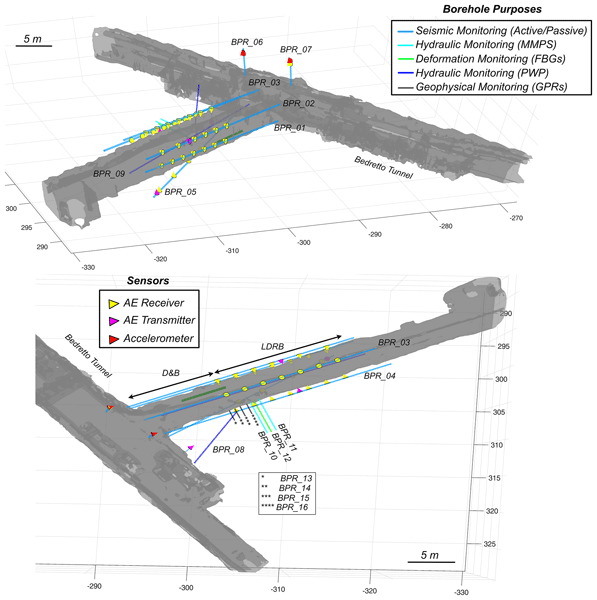
Deep geological repositories are considered one of the safest solutions for the long-term disposal of nuclear waste. This paper presents an overview of an experiment conducted at the BedrettoLab, Switzerland, where a new 100 m long tunnel was excavated in granite at a depth of 1300 m to investigate excavation-induced rock damage and its time-dependent evolution.
Maren Böse, Nadja Valenzuela, György Hetényi, Romain Roduit, Irina Dallo, Kerstin Bircher, John Clinton, Urs Fässler, Florian Haslinger, Tanja Jaeger, Michèle Marti, Roman Racine, Anne Sauron, Shiba Subedi, and Stefan Wiemer
Geosci. Commun., 9, 223–237, https://doi.org/10.5194/gc-9-223-2026, https://doi.org/10.5194/gc-9-223-2026, 2026
Short summary
Short summary
Although Switzerland faces moderate seismic hazard, earthquakes represent the natural risk with the greatest impact potential. As most residents have never experienced a damaging earthquake, education is critical for raising awareness and enhancing preparedness. In a recent project, we expanded the seismo@school program in Switzerland by developing new teaching materials in four languages, related classroom activities, and by installing Raspberry Shake seismometers in schools across the country.
Miriam Larissa Schwarz, Hansruedi Maurer, Anne Christine Obermann, Paul Antony Selvadurai, Alexis Shakas, Stefan Wiemer, and Domenico Giardini
Solid Earth, 17, 347–368, https://doi.org/10.5194/se-17-347-2026, https://doi.org/10.5194/se-17-347-2026, 2026
Short summary
Short summary
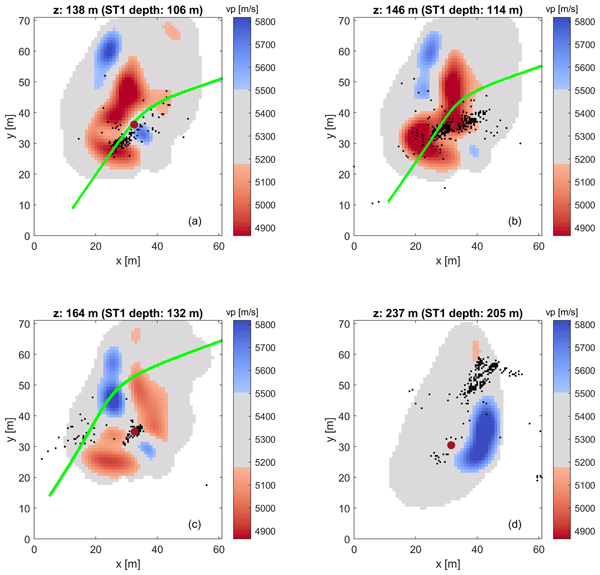
We applied fat ray travel time tomography to image the geothermal testbed at the BedrettoLab (Switzerland). An active seismic crosshole survey provided a dataset of 41’881 manually picked first breaks. The complex major fault zone was identified by a 3D velocity model and validated with wireline logs and geological observations. Induced seismicity from hydraulic stimulation experiments preferentially occurs in intermediate-velocity regions, possibly due to the presence of stress gradients.
Tom Schaber, Mohammedreza Jalali, Alberto Ceccato, Alba Simona Zappone, Giacomo Pozzi, Valentin Gischig, Marian Hertrich, Men-Andrin Meier, Timo Seemann, Hannes Claes, Yves Guglielmi, Domenico Giardini, Stefan Wiemer, Massimo Cocco, and Florian Amann
Solid Earth, 17, 275–295, https://doi.org/10.5194/se-17-275-2026, https://doi.org/10.5194/se-17-275-2026, 2026
Short summary
Short summary
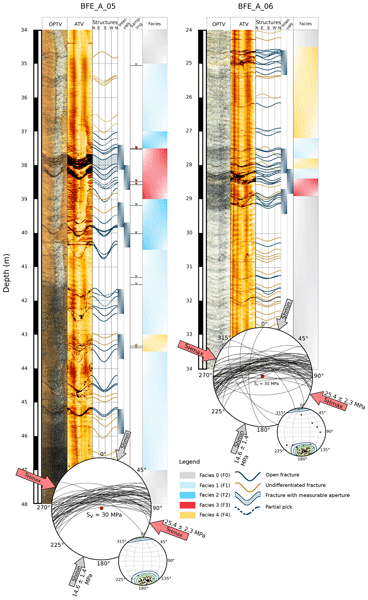
We studied a deep fault zone in Switzerland to gain a better understanding of how water moves through faults and how this affects earthquake activity. Using field and laboratory tests, we found that flow is strongly controlled by open fractures and permeability changes significantly with scale. Small samples underestimate flow compared to larger tests. Our results show that faults are heterogeneous, highlighting the need for site-specific studies when assessing risks or planning experiments.
Jordan Aaron, Larissa de Palézieux, Jake Langham, Valentin Gischig, Reto Thoeny, and Daniel Figi
Nat. Hazards Earth Syst. Sci., 26, 449–464, https://doi.org/10.5194/nhess-26-449-2026, https://doi.org/10.5194/nhess-26-449-2026, 2026
Short summary
Short summary
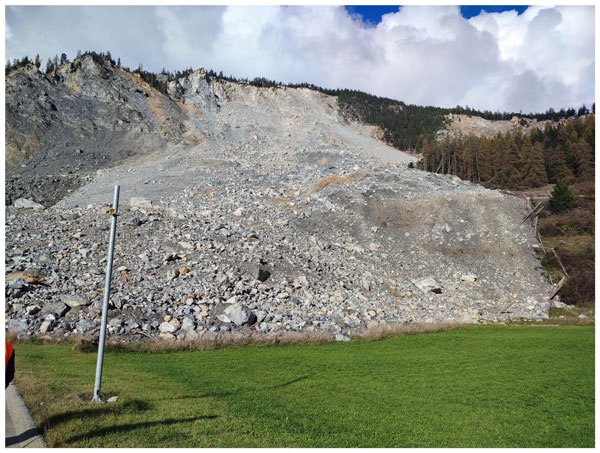
In mid-May, 2023, the village of Brienz/Brinzauls in the Swiss canton of Graubunden was evacuated, and one month later a flowlike landslide emplaced with velocities of ~25 m/s and narrowly missed impacting the village. Landslides at this site have emplaced with velocities that can vary by 5 order-of-magnitude, a puzzling observation which we analyse in the present work. Our results show that the range of scenarios usually considered in landslide risk analyses must be expanded.
Valentin Samuel Gischig, Antonio Pio Rinaldi, Andres Alcolea, Falko Bethman, Marco Broccardo, Kai Bröker, Raymi Castilla, Federico Ciardo, Victor Clasen Repollés, Virginie Durand, Nima Gholizadeh Doonechaly, Marian Hertrich, Rebecca Hochreutener, Philipp Kästli, Dimitrios Karvounis, Xiaodong Ma, Men-Andrin Meier, Peter Meier, Maria Mesimeri, Arnaud Mignan, Anne Obermann, Katrin Plenkers, Martina Rosskopf, Francisco Serbeto, Paul Selvadurai, Alexis Shakas, Linus Villiger, Quinn Wenning, Alba Zappone, Jordan Aaron, Hansruedi Maurer, Domenico Giardini, and Stefan Wiemer
Solid Earth, 16, 1153–1180, https://doi.org/10.5194/se-16-1153-2025, https://doi.org/10.5194/se-16-1153-2025, 2025
Short summary
Short summary
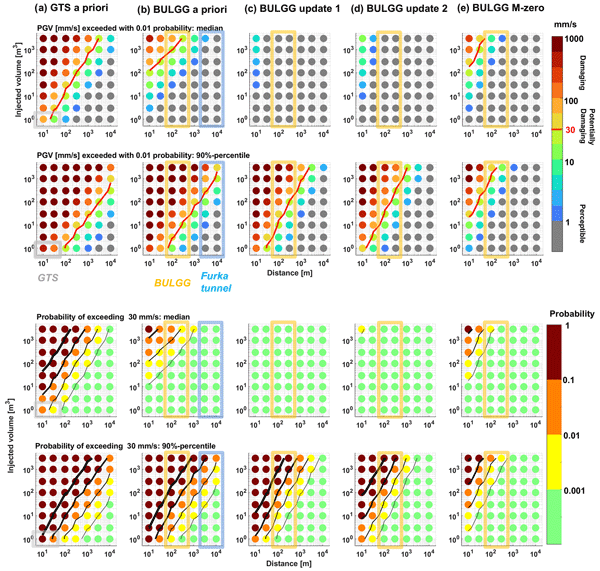
Induced earthquakes present a major obstacle for developing geoenergy resources. These occur during hydraulic stimulations that enhance fluid pathways in the rock. In the Bedretto Underground Laboratory, hydraulic stimulations are investigated in a downscaled manner. A workflow to analyze the hazard posed by induced earthquakes is applied at different stages of the test program. The hazard estimates illustrate the difficulty in reducing the uncertainty due to the variable seismogenic responses.
Sandro Truttmann, Tobias Diehl, Marco Herwegh, and Stefan Wiemer
Solid Earth, 16, 641–662, https://doi.org/10.5194/se-16-641-2025, https://doi.org/10.5194/se-16-641-2025, 2025
Short summary
Short summary
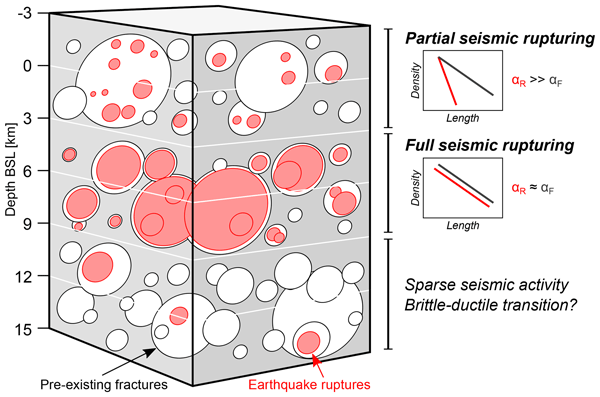
Our study investigates the statistical relationship between geological fractures and earthquakes in the southwestern Swiss Alps. We analyze how the fracture size and earthquake rupture are related and find differences in how fractures at different depths rupture seismically. While shallow fractures tend to rupture only partially, deeper fractures are more likely to rupture along their entire length, potentially resulting in larger earthquakes.
Marta Han, Leila Mizrahi, and Stefan Wiemer
Nat. Hazards Earth Syst. Sci., 25, 991–1012, https://doi.org/10.5194/nhess-25-991-2025, https://doi.org/10.5194/nhess-25-991-2025, 2025
Short summary
Short summary
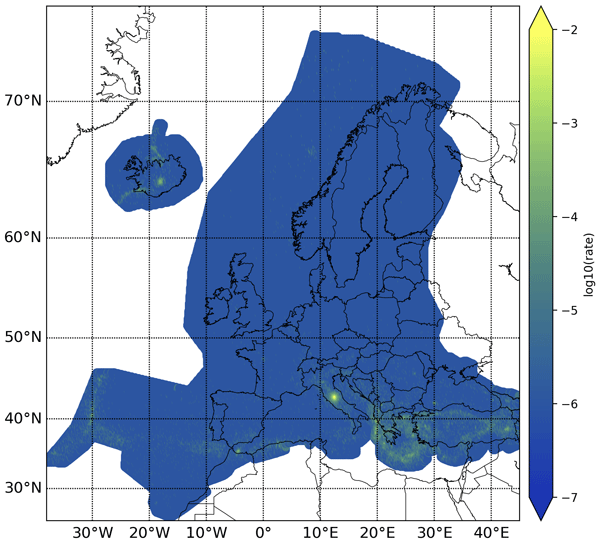
Relying on recent accomplishments of collecting and harmonizing data by the 2020 European Seismic Hazard Model (ESHM20) and leveraging advancements in state-of-the-art earthquake forecasting methods, we develop a harmonized earthquake forecasting model for Europe. We propose several model variants and test them on training data for consistency and on a 7-year testing period against each other, as well as against both a time-independent benchmark and a global time-dependent benchmark.
Athanasios N. Papadopoulos, Philippe Roth, Laurentiu Danciu, Paolo Bergamo, Francesco Panzera, Donat Fäh, Carlo Cauzzi, Blaise Duvernay, Alireza Khodaverdian, Pierino Lestuzzi, Ömer Odabaşi, Ettore Fagà, Paolo Bazzurro, Michèle Marti, Nadja Valenzuela, Irina Dallo, Nicolas Schmid, Philip Kästli, Florian Haslinger, and Stefan Wiemer
Nat. Hazards Earth Syst. Sci., 24, 3561–3578, https://doi.org/10.5194/nhess-24-3561-2024, https://doi.org/10.5194/nhess-24-3561-2024, 2024
Short summary
Short summary
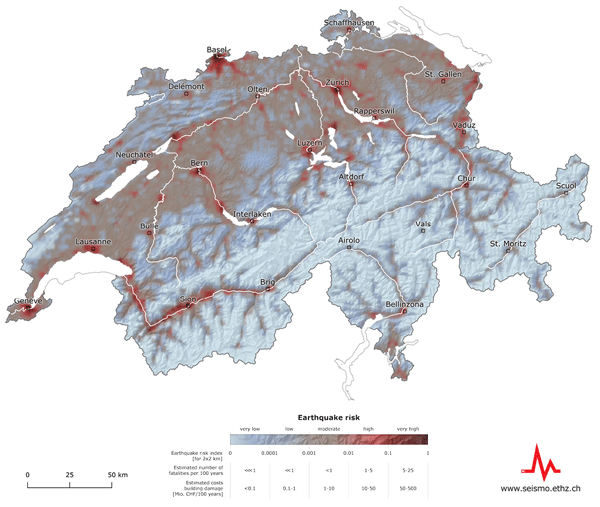
The Earthquake Risk Model of Switzerland (ERM-CH23), released in early 2023, is the culmination of a multidisciplinary effort aiming to achieve, for the first time, a comprehensive assessment of the potential consequences of earthquakes on the Swiss building stock and population. ERM-CH23 provides risk estimates for various impact metrics, ranging from economic loss as a result of damage to buildings and their contents to human losses, such as deaths, injuries, and displaced population.
Laurentiu Danciu, Domenico Giardini, Graeme Weatherill, Roberto Basili, Shyam Nandan, Andrea Rovida, Céline Beauval, Pierre-Yves Bard, Marco Pagani, Celso G. Reyes, Karin Sesetyan, Susana Vilanova, Fabrice Cotton, and Stefan Wiemer
Nat. Hazards Earth Syst. Sci., 24, 3049–3073, https://doi.org/10.5194/nhess-24-3049-2024, https://doi.org/10.5194/nhess-24-3049-2024, 2024
Short summary
Short summary
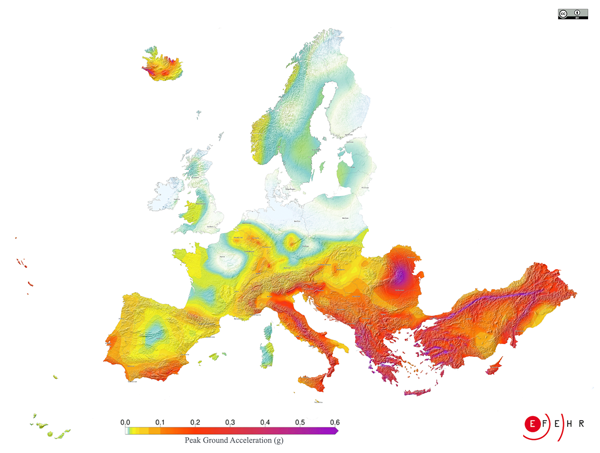
The 2020 European Seismic Hazard Model (ESHM20) is the latest seismic hazard assessment update for the Euro-Mediterranean region. This state-of-the-art model delivers a broad range of hazard results, including hazard curves, maps, and uniform hazard spectra. ESHM20 provides two hazard maps as informative references in the next update of the European Seismic Design Code (CEN EC8), and it also provides a key input to the first earthquake risk model for Europe.
Peter Achtziger-Zupančič, Alberto Ceccato, Alba Simona Zappone, Giacomo Pozzi, Alexis Shakas, Florian Amann, Whitney Maria Behr, Daniel Escallon Botero, Domenico Giardini, Marian Hertrich, Mohammadreza Jalali, Xiaodong Ma, Men-Andrin Meier, Julian Osten, Stefan Wiemer, and Massimo Cocco
Solid Earth, 15, 1087–1112, https://doi.org/10.5194/se-15-1087-2024, https://doi.org/10.5194/se-15-1087-2024, 2024
Short summary
Short summary
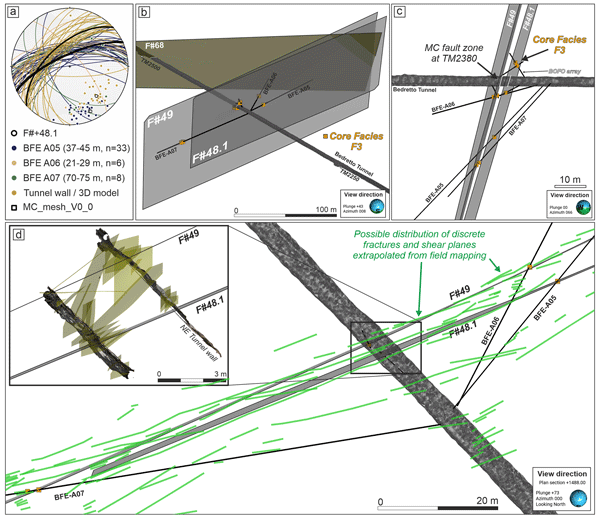
We detail the selection and characterization of a fault zone for earthquake experiments in the Fault Activation and Earthquake Ruptures (FEAR) project at the Bedretto Lab. FEAR, which studies earthquake processes, overcame data collection challenges near faults. The fault zone in Rotondo granite was selected based on geometry, monitorability, and hydro-mechanical properties. Remote sensing, borehole logging, and geological mapping were used to create a 3D model for precise monitoring.
Maren Böse, Laurentiu Danciu, Athanasios Papadopoulos, John Clinton, Carlo Cauzzi, Irina Dallo, Leila Mizrahi, Tobias Diehl, Paolo Bergamo, Yves Reuland, Andreas Fichtner, Philippe Roth, Florian Haslinger, Frédérick Massin, Nadja Valenzuela, Nikola Blagojević, Lukas Bodenmann, Eleni Chatzi, Donat Fäh, Franziska Glueer, Marta Han, Lukas Heiniger, Paulina Janusz, Dario Jozinović, Philipp Kästli, Federica Lanza, Timothy Lee, Panagiotis Martakis, Michèle Marti, Men-Andrin Meier, Banu Mena Cabrera, Maria Mesimeri, Anne Obermann, Pilar Sanchez-Pastor, Luca Scarabello, Nicolas Schmid, Anastasiia Shynkarenko, Bozidar Stojadinović, Domenico Giardini, and Stefan Wiemer
Nat. Hazards Earth Syst. Sci., 24, 583–607, https://doi.org/10.5194/nhess-24-583-2024, https://doi.org/10.5194/nhess-24-583-2024, 2024
Short summary
Short summary
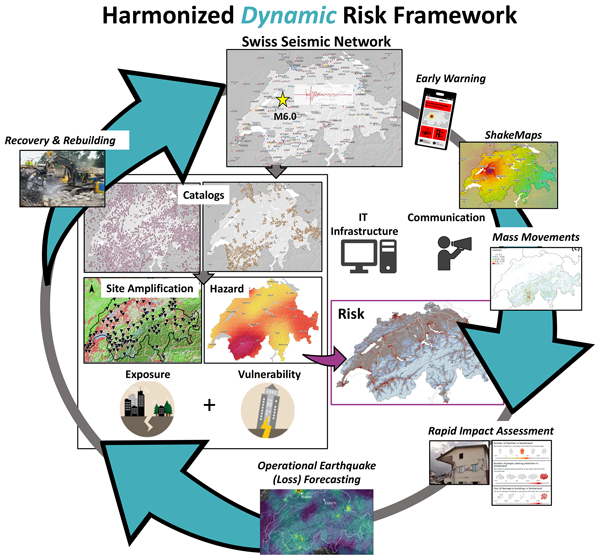
Seismic hazard and risk are time dependent as seismicity is clustered and exposure can change rapidly. We are developing an interdisciplinary dynamic earthquake risk framework for advancing earthquake risk mitigation in Switzerland. This includes various earthquake risk products and services, such as operational earthquake forecasting and early warning. Standardisation and harmonisation into seamless solutions that access the same databases, workflows, and software are a crucial component.
Irina Dallo, Michèle Marti, Nadja Valenzuela, Helen Crowley, Jamal Dabbeek, Laurentiu Danciu, Simone Zaugg, Fabrice Cotton, Domenico Giardini, Rui Pinho, John F. Schneider, Céline Beauval, António A. Correia, Olga-Joan Ktenidou, Päivi Mäntyniemi, Marco Pagani, Vitor Silva, Graeme Weatherill, and Stefan Wiemer
Nat. Hazards Earth Syst. Sci., 24, 291–307, https://doi.org/10.5194/nhess-24-291-2024, https://doi.org/10.5194/nhess-24-291-2024, 2024
Short summary
Short summary
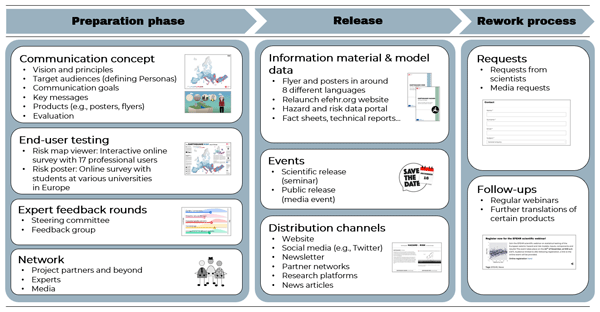
For the release of cross-country harmonised hazard and risk models, a communication strategy co-defined by the model developers and communication experts is needed. The strategy should consist of a communication concept, user testing, expert feedback mechanisms, and the establishment of a network with outreach specialists. Here we present our approach for the release of the European Seismic Hazard Model and European Seismic Risk Model and provide practical recommendations for similar efforts.
Xiaodong Ma, Marian Hertrich, Florian Amann, Kai Bröker, Nima Gholizadeh Doonechaly, Valentin Gischig, Rebecca Hochreutener, Philipp Kästli, Hannes Krietsch, Michèle Marti, Barbara Nägeli, Morteza Nejati, Anne Obermann, Katrin Plenkers, Antonio P. Rinaldi, Alexis Shakas, Linus Villiger, Quinn Wenning, Alba Zappone, Falko Bethmann, Raymi Castilla, Francisco Seberto, Peter Meier, Thomas Driesner, Simon Loew, Hansruedi Maurer, Martin O. Saar, Stefan Wiemer, and Domenico Giardini
Solid Earth, 13, 301–322, https://doi.org/10.5194/se-13-301-2022, https://doi.org/10.5194/se-13-301-2022, 2022
Short summary
Short summary
Questions on issues such as anthropogenic earthquakes and deep geothermal energy developments require a better understanding of the fractured rock. Experiments conducted at reduced scales but with higher-resolution observations can shed some light. To this end, the BedrettoLab was recently established in an existing tunnel in Ticino, Switzerland, with preliminary efforts to characterize realistic rock mass behavior at the hectometer scale.
Cited articles
Akaike, H: Information theory and an extension of the maximum likelihood principle, in: Selected papers of hirotugu akaike, 199–213, New York, NY, Springer New York, 1998.
Amann, F., Gischig, V., Evans, K., Doetsch, J., Jalali, R., Valley, B., Krietsch, H., Dutler, N., Villiger, L., Brixel, B., Klepikova, M., Kittilä, A., Madonna, C., Wiemer, S., Saar, M. O., Loew, S., Driesner, T., Maurer, H., and Giardini, D.: The seismo-hydromechanical behavior during deep geothermal reservoir stimulations: open questions tackled in a decameter-scale in situ stimulation experiment, Solid Earth, 9, 115–137, https://doi.org/10.5194/se-9-115-2018, 2018.
Atkinson, G. M., Eaton, D. W., Ghofrani, H., Walker, D., Cheadle, B., Schultz, R., Shcherbakov, R., Tiampo, K., Gu, J., Harrington, R. H., Liu, Y., van der Baan, M., and Kao, H.: Hydraulic Fracturing and Seismicity in the Western Canada Sedimentary Basin, Seismol. Res. Lett., 87, 631–647, https://doi.org/10.1785/0220150263, 2016.
Berger, V. W. and Zhou, Y.: Kolmogorov–Smirnov test: Overview, Wiley StatsRef: Statistics Reference Online, https://doi.org/10.1002/9781118445112.stat06558, 2014.
Bommer, J. and Verdon, J. P.: The maximum magnitude of natural and induced earthquakes, Geomechanics and Geophysics for Geo-Energy and Geo-Resources, 10, 172, https://doi.org/10.1007/s40948-024-00895-2, 2024.
Bommer, J. J., Oates, S., Cepeda, J. M., Lindholm, C., Bird, J., Torres, R., Marroquín, G., and Rivas, J.: Control of hazard due to seismicity induced by a hot fractured rock geothermal project, Eng. Geol., 83, 287–306, https://doi.org/10.1016/j.enggeo.2005.11.002, 2006.
Bommer, J. J.: Earthquake hazard and risk analysis for natural and induced seismicity: towards objective assessments in the face of uncertainty, B. Earthq. Eng., 20, 2825–3069, https://doi.org/10.1007/s10518-022-01357-4, 2022.
Brixel, B., Klepikova, M., Jalali, M. R., Lei, Q., Roques, C., Krietsch, H., and Loew, S.: Tracking fluid flow in shallow crustal fault zones: 1. Insights from single-hole permeability estimates, J. Geophys. Res.-Sol. Ea., 125, e2019JB018200, https://doi.org/10.1029/2019JB018200, 2020a.
Brixel, B., Klepikova, M., Lei, Q., Roques, C., Jalali, M. R., Krietsch, H., and Loew, S.: Tracking fluid flow in shallow crustal fault zones: 2. Insights from cross-hole forced flow experiments in damage zones, J. Geophys. Res.-Sol. Ea., 125, e2019JB019108, https://doi.org/10.1029/2019JB019108, 2020b.
Cao, N. T., Eisner, L., and Jechumtálová, Z.: Next record breaking magnitude for injection induced seismicity, First Break, 38, 53–57, https://doi.org/10.3997/1365-2397.fb2020010, 2020.
Cao, N. T., Eisner, L., Jechumtálová, Z., Verdon, J., and Waheed, U. B.: Upper limit magnitudes for induced seismicity in energy industries, Geophys. Prospect., https://doi.org/10.1111/1365-2478.13553, 2024.
Chai, C., Maceira, M., Santos-Villalobos, H. J., Venkatakrishnan, S. V., Schoenball, M., Zhu, W., Beroza, G. C., Thurber, C., and EGS Collab Team: Using a deep neural network and transfer learning to bridge scales for seismic phase picking, Geophys. Res. Lett., 47, e2020GL088651, https://doi.org/10.1029/2020GL088651, 2020.
Clarke, H., Verdon, J. P., Kettlety, T., Baird, A. F., and Kendall, J. M.: Real-time imaging, forecasting, and management of human-induced seismicity at Preston New Road, Lancashire, England, Seismol. Res. Lett., 90, 1902–1915, https://doi.org/10.1785/0220190110, 2019.
Clarkson, C. R., Alkhayyali, W., and Zeinabady, D.: Characterization and modeling of enhanced geothermal systems using methods developed for unconventional hydrocarbon reservoirs, SPE Annual Technical Conference and Exhibition, SPE-228230, https://doi.org/10.2118/228230-MS, 2025.
Danré, P., Garagash, D., De Barros, L., Cappa, F., and Ampuero, J. P.: Control of seismicity migration in earthquake swarms by injected fluid volume and aseismic crack propagation, J. Geophys. Res.-Sol. Ea., 129, e2023JB027276, https://doi.org/10.1029/2023JB027276, 2024.
Davis, T., Rivalta, E., and Dahm, T.: Critical fluid injection volumes for uncontrolled fracture ascent, Geophys. Res. Lett., 47, e2020GL087774, https://doi.org/10.1029/2020GL087774, 2020.
DeDontney, N., Gans, C., Burnett, W., Burch, D., Garzon, J., Gist, G., Hsu, S., Lele, S., Pais, D., Rehermann, P. S., Searles, K., Symington, B., Tomic, J., Terell, M., and Younan, A.: Maximum magnitude of induced earthquakes in the Groningen gas field, ExxonMobil URC External Report, https://nam-onderzoeksrapporten.data-app.nl/reports/download/groningen/en/36dea690-c7eb-4164-9d94-d9725381c426 (last access: July 2025), 2016.
Dobson, P., Kneafsey, T., Morris, J., Singh, A., Zoback, M., Roggenthen, W., Doe, T., Neupane, G., Podgorney, R., Wang, H., Knox, H., Scwering, P., Blankenship, D., Ulrich, C., Johnson, T., White, M., and EGS Collab Team: The EGS Collab hydroshear experiment at the Sanford Underground Research Facility–Siting criteria and evaluation of candidate sites, Geoth. Res. T., 42, 708–723, 2018.
Doetsch, J., Gischig, V., Krietsch, H., Villiger, L., Amann, F., Dutler, N., Jalali, M., Brixel, B., Roques, C., Giertzuch, P., Kittilä, A., and Hochreutener, R.: Grimsel ISC Experimental Description, ETH Zurich Report, https://doi.org/10.3929/ethz-b-000310581, 2018a.
Doetsch, J., Gischig, V. S., Villiger, L., Krietsch, H., Nejati, M., Amann, F., Jalali, M., Madonna, C., Maurer, H., Wiemer, S., Driesner, T., and Giardini, D.: Subsurface fluid pressure and rock deformation monitoring using seismic velocity observations, Geophys. Res. Lett., 45, 10389–10397, https://doi.org/10.1029/2018GL079009, 2018b.
Doetsch, J., Gischig, V., Amman, F., Jalali, M., Krietsch, H., and Giardini, D.: Data collection for the Grimsel In-Situ Stimulation and Circulation (ISC) experiment, ETH Zurich [data set], https://doi.org/10.3929/ethz-b-000276170, 2018c.
Dutler, N., Valley, B., Gischig, V., Villiger, L., Krietsch, H., Doetsch, J., Brixel, B., Jalali, M., and Amann, F.: Hydraulic fracture propagation in a heterogeneous stress field in a crystalline rock mass, Solid Earth, 10, 1877–1904, https://doi.org/10.5194/se-10-1877-2019, 2019.
Eaton, D. W. and Igonin, N.: What controls the maximum magnitude of injection-induced earthquakes?, The Leading Edge, 37, 135–140, https://doi.org/10.1190/tle37020135.1, 2018.
Elsworth, D., Li, Z., Yu, P., An, M., Zhang, F., Huang, R., Sun, Z., Cui, G., Chen, T., Gan, Q., Zhao, Y., Liu, J. and Liu, S.: Constraints on triggered seismicity and its control on permeability evolution, Journal of Rock Mechanics and Geotechnical Engineering, 17, 20–30, https://doi.org/10.1016/j.jrmge.2024.11.035, 2025.
Evans, K. F., Moriya, H., Niitsuma, H., Jones, R. H., Phillips, W. S., Genter, A., Sausse, J., Jung, R, and Baria, R.: Microseismicity and permeability enhancement of hydrogeologic structures during massive fluid injections into granite at 3 km depth at the Soultz HDR site, Geophys. J. Int., 160, 388–412, https://doi.org/10.1111/j.1365-246X.2004.02474.x, 2005.
Foulger, G. R., Wilson, M. P., Gluyas, J. G., Julian, B. R., and Davies, R. J.: Global review of human-induced earthquakes, Earth-Sci. Rev., 178, 438–514, https://doi.org/10.1016/j.earscirev.2017.07.008, 2018.
Frash, L. P., Carey, J. W., and Welch, N. J.: EGS collab experiment 1 geomechanical and hydrological properties by triaxial direct shear, in: 44th Workshop on Geothermal Reservoir Engineering, 2019.
Fu, P., Schoenball, M., Ajo-Franklin, J. B., Chai, C., Maceira, M., Morris, J. P., Wu, H., Knox, H., Schwering, P. C., White, M. D. Burghardt, J. A., Strickland, C. D., Johnson, T. C., Vermeul, V. R., Sprinkle, P., Roberts, B., Ulrich, C., Guglielmi, Y., Cook, P. J., Dobson, P. F., Wood, T., Frash, L. P., Lianjie, H., Ingraham, M. D., Pope, J. S., Smith, M. M., Neupane, G., Doe, T. W., Roggenthen, W. M. Horne, R., Singh, A., Zoback, M. D., Wang, H., Condon, K., Ghassemi, A., Chen, H., McClure, M. W. Vandine, G., Blankenship, D. Kneafsey, T. J., and EGS Collab Team: Close observation of hydraulic fracturing at EGS Collab Experiment 1: Fracture trajectory, microseismic interpretations, and the role of natural fractures, J. Geophys. Res.-Sol. Ea., 126, e2020JB020840, https://doi.org/10.1029/2020JB020840, 2021.
Galis, M., Ampuero, J. P., Mai, P. M., and Cappa, F.: Induced seismicity provides insight into why earthquake ruptures stop, Science Advances, 3, eaap7528, https://doi.org/10.1126/sciadv.aap7528, 2017.
Grigoli, F., Cesca, S., Rinaldi, A. P., Manconi, A., Lopez-Comino, J. A., Clinton, J. F., Westaway, R., Cauzzi, C., Dahm, T., and Wiemer, S.: The November 2017 Mw 5.5 Pohang earthquake: A possible case of induced seismicity in South Korea, Science, 360, 1003–1006, https://doi.org/10.1126/science.aat2010, 2018.
Gischig, V., Jalali, R., Amann, F., Krietsch, H., Klepikova, M., Esposito, S., Broccardo, M., Obermann, A., Arnaud, M., Doetsch, J., and Madonna, C.: Impact of the ISC Experiment at the Grimsel Test Site–Assessment of Potential Seismic Hazard and Disturbances to Nearby Experiments and KWO Infrastructure, ETH Zurich Report, https://doi.org/10.3929/ethz-b-000189973, 2016.
Gischig, V. S.: Rupture propagation behavior and the largest possible earthquake induced by fluid injection into deep reservoirs, Geophys. Res. Lett., 42, 7420–7428, https://doi.org/10.1002/2015GL065072, 2015.
Gischig, V. S., Giardini, D., Amann, F., Hertrich, M., Krietsch, H., Loew, S., Maurer, H., Villiger, L., Wiemer, S., Bethmann, F., Brixel, B., Doetsch, J., Doonechaly, N.G., Driesner, T., Dutler, N., Evans, K.F., Jalali, M., Jordan, D., Kittilä, Ma, X., and Valley, B.: Hydraulic stimulation and fluid circulation experiments in underground laboratories: Stepping up the scale towards engineered geothermal systems, Geomechanics for Energy and the Environment, 24, 100175, https://doi.org/10.1016/j.gete.2019.100175, 2020.
Guglielmi, Y., Cook, P., Soom, F., Schoenball, M., Dobson, P., and Kneafsey, T.: In situ continuous monitoring of borehole displacements induced by stimulated hydrofracture growth, Geophys. Res. Lett., 48, e2020GL090782, https://doi.org/10.1029/2020GL090782, 2021.
Gutenberg, B. and Richter, C. F.: Frequency of earthquakes in California, B. Seismol. Soc. Am., 34, 185–188, https://doi.org/10.1785/BSSA0340040185, 1944.
Hanks, T. C. and Kanamori, H.: A moment magnitude scale, J. Geophys. Res.-Sol. Ea., 84, 2348–2350, https://doi.org/10.1029/JB084iB05p02348, 1979.
Hallo, M., Oprsal, I., Eisner, L., and Ali, M. Y.: Prediction of magnitude of the largest potentially induced seismic event, J. Seismol., 18, 421–431, https://doi.org/10.1007/s10950-014-9417-4, 2014.
Heise, J.: The Sanford underground research facility at Homestake, J. Phys. Conf. Ser., 606, 012015, https://doi.org/10.1088/1742-6596/606/1/012015, 2015.
Holschneider, M., Zöller, G., and Hainzl, S.: Estimation of the maximum possible magnitude in the framework of a doubly truncated Gutenberg–Richter model, B. Seismol. Soc. Am., 101, 1649–1659, https://doi.org/10.1785/0120100289, 2011.
Holschneider, M., Zöller, G., Clements, R., and Schorlemmer, D.: Can we test for the maximum possible earthquake magnitude?, J. Geophys. Res.-Sol. Ea., 119, 2019–2028, https://doi.org/10.1002/2013JB010319, 2014.
Im, K. and Avouac, J. P.: Maximum Magnitude of Induced Earthquakes in Rate and State Friction Framework, Seismol. Res. Lett., 96, 1654–1664, https://doi.org/10.1785/0220240382, 2025.
Ishimoto, M. and Iida, K.: Observations of earthquakes registered with the microseismograph constructed recently, B. Earthq. Res. I. Tokyo, 17, 443–478, 1939.
Jalali, M., Gischig, V., Doetsch, J., Näf, R., Krietsch, H., Klepikova, M., Amann, F., and Giardini, D.: Transmissivity changes and microseismicity induced by small-scale hydraulic fracturing tests in crystalline rock, Geophys. Res. Lett., 45, 2265–2273, https://doi.org/10.1002/2017GL076781, 2018.
Jin, G., Ning, Y., Gale, M., Simmons, J., and Tura, A.: Impact of natural fractures on hydraulic fracture propagation in Denver-Julesburg Basin: Insights from a decade of research, The Leading Edge, 43, 806–814, https://doi.org/10.1190/tle43120806.1, 2024.
Kanamori, H. and Anderson, D. L.: Theoretical basis of some empirical relations in seismology, B. Seismol. Soc. Am., 65, 1073–1095, 1975.
Kass, R. E. and Raftery, A. E.: Bayes factors, J. Am. Stat. Assoc., 90, 773–795, https://doi.org/10.1080/01621459.1995.10476572, 1995.
Kettlety, T., Verdon, J. P., Butcher, A., Hampson, M., and Craddock, L.: High-resolution imaging of the ML 2.9 August 2019 earthquake in Lancashire, United Kingdom, induced by hydraulic fracturing during Preston New Road PNR-2 operations, Seismol. Res. Lett., 92, 151–169, https://doi.org/10.1785/0220200187, 2021.
Kijko, A.: Bayesian Assessment of the Maximum Possible Earthquake Magnitude m max, J. Geol. Soc. India, 101, 764–769, https://doi.org/10.17491/jgsi/2025/174157, 2025.
Krietsch, H., Doetsch, J., Dutler, N., Jalali, M., Gischig, V., Loew, S., and Amann, F.: Comprehensive geological dataset describing a crystalline rock mass for hydraulic stimulation experiments, Scientific Data, 5, 1–12, https://doi.org/10.1038/sdata.2018.269, 2018.
Krietsch, H., Gischig, V., Evans, K., Doetsch, J., Dutler, N. O., Valley, B., and Amann, F.: Stress measurements for an in situ stimulation experiment in crystalline rock: integration of induced seismicity, stress relief and hydraulic methods, Rock Mech. Rock Eng., 52, 517–542, https://doi.org/10.1007/s00603-018-1597-8, 2019.
Krietsch, H., Villiger, L., Doetsch, J., Gischig, V., Evans, K. F., Brixel, B., Jalali, M. R., Loew, S., Giardini, D., and Amann, F.: Changing flow paths caused by simultaneous shearing and fracturing observed during hydraulic stimulation, Geophys. Res. Lett., 47, e2019GL086135, https://doi.org/10.1029/2019GL086135, 2020a.
Krietsch, H., Gischig, V. S., Doetsch, J., Evans, K. F., Villiger, L., Jalali, M., Valley, B., Löw, S., and Amann, F.: Hydromechanical processes and their influence on the stimulation effected volume: observations from a decameter-scale hydraulic stimulation project, Solid Earth, 11, 1699–1729, https://doi.org/10.5194/se-11-1699-2020, 2020b.
Kroll, K. A. and Cochran, E. S.: Stress controls rupture extent and maximum magnitude of induced earthquakes, Geophys. Res. Lett., 48, e2020GL092148, https://doi.org/10.1029/2020GL092148, 2021.
Kneafsey, T. J., Dobson, P., Blankenship, D., Morris, J., Knox, H., Schwering, P., White, M., Doe, T., Roggenthen, W., Mattson, E., Podgorney, R., Johnson, T., Ajo-Franklin, J., Valladao, C., and EGS Collab Team: An overview of the EGS Collab project: field validation of coupled process modeling of fracturing and fluid flow at the Sanford Underground Research Facility, Lead, SD, in: 43rd Workshop on Geothermal Reservoir Engineering, 2018.
Kneafsey, T. J., Blankenship, D., Dobson, P. F., Morris, J. P., White, M. D., Fu, P., Schwering, P. C., Ajo-Franklin, J.B., Huang, L., Schoenball, M., Johnson, T. C., Knox, H. A., Neupane, G., Weers, J., Horne, R., Zhang, Y., Roggenthen, W., Doe, T., Mattson, E., Valladao, C., and EGS Collab Team: The EGS collab project: Learnings from Experiment 1, in: Proceedings of the 45th Workshop on Geothermal Reservoir Engineering, 10–12, Stanford University, 2020.
Kwiatek, G., Martínez-Garzón, P., Plenkers, K., Leonhardt, M., Zang, A., von Specht, S., Dresen, G., and Bohnhoff, M.: Insights into complex subdecimeter fracturing processes occurring during a water injection experiment at depth in Äspö Hard Rock Laboratory, Sweden, J. Geophys. Res.-Sol. Ea., 123, 6616–6635, https://doi.org/10.1029/2017JB014715, 2018.
Langenbruch, C., Moein, M. J., and Shapiro, S. A.: Are maximum magnitudes of induced earthquakes controlled by pressure diffusion?, Philosophical Transactions A, 382, 20230184, https://doi.org/10.1098/rsta.2023.0184, 2024.
Lanza, F., Rinaldi, A. P., Passarelli, L., Ritz, V. A., Repollés, V. C., Schultz, R., Ciardo, F., Dyer, B., Ermert, L., Grigoratos, I., Karvounis, D., Meier, P., Mignan, A., Moore, J., Pankow, K., Scarabello, L., Schmid, N., Shi, P., Tuinstra, K., and Wiemer, S.: The 2022 hydraulic stimulation at Utah FORGE: investigating fracturing mechanisms and testing forecasting approaches, Seismica, accepted, 2026.
Lee, J., Tsai, V. C., Hirth, G., Chatterjee, A., and Trugman, D. T.: Fault-network geometry influences earthquake frictional behaviour, Nature, 1–5, https://doi.org/10.1038/s41586-024-07518-6, 2024.
Li, Z., Elsworth, D., and Wang, C.: Constraining maximum event magnitude during injection-triggered seismicity, Nat. Commun., 12, 1528, https://doi.org/10.1038/s41467-020-20700-4, 2021.
Li, S. and Zhang, D.: Three-dimensional thermoporoelastic modeling of hydrofracturing and fluid circulation in hot dry rock, J. Geophys. Res.-Sol. Ea., 128, e2022JB025673, https://doi.org/10.1029/2022JB025673, 2023.
López-Comino, J. Á., Cesca, S., Heimann, S., Grigoli, F., Milkereit, C., Dahm, T., and Zang, A.: Characterization of hydraulic fractures growth during the Äspö Hard Rock Laboratory experiment (Sweden), Rock Mech. Rock Eng., 50, 2985–3001, https://doi.org/10.1007/s00603-017-1285-0, 2017.
López-Comino, J. Á., Cesca, S., Niemz, P., Dahm, T., and Zang, A.: Rupture directivity in 3D inferred from acoustic emissions events in a mine-scale hydraulic fracturing experiment, Frontiers in Earth Science, 9, 670757, https://doi.org/10.3389/feart.2021.670757, 2021.
Majer, E. L., Baria, R., Stark, M., Oates, S., Bommer, J., Smith, B., and Asanuma, H.: Induced seismicity associated with enhanced geothermal systems, Geothermics, 36, 185–222, https://doi.org/10.1016/j.geothermics.2007.03.003, 2007.
Marzocchi, W. and Sandri, L.: A review and new insights on the estimation of the b-value and its uncertainty, Ann. Geophys., 46, 1271–1282, 2003.
Maurer, J., Dunham, E. M., and Segall, P.: Role of fluid injection on earthquake size in dynamic rupture simulations on rough faults, Geophys. Res. Lett., 47, e2020GL088377, https://doi.org/10.1029/2020GL088377, 2020.
McGarr, A.: Maximum magnitude earthquakes induced by fluid injection, J. Geophys. Res.-Sol. Ea., 119, 1008–1019, https://doi.org/10.1002/2013JB010597, 2014.
McQuarrie, A. D.: A small-sample correction for the Schwarz SIC model selection criterion, Stat. Probabil. Lett., 44, 79–86, https://doi.org/10.1016/S0167-7152(98)00294-6, 1999.
Mendecki, A. J.: Mine Seismology Reference Book: Seismic Hazard, Institute of Mine Seismology, Tasmania, Australia, 88 pp., ISBN 978-0-9942943-0-2, 2016.
Moein, M. J., Langenbruch, C., Schultz, R., Grigoli, F., Ellsworth, W. L., Wang, R., Rinaldi, A. P., and Shapiro, S.: The physical mechanisms of induced earthquakes, Nature Reviews Earth & Environment, 4, 847–863, https://doi.org/10.1038/s43017-023-00497-8, 2023.
Moore, J., McLennan, J., Allis, R., Pankow, K., Simmons, S., Podgorney, R., Wannamaker, P., Bartley, J., Jones, C., and Rickard, W.: The Utah Frontier Observatory for Research in Geothermal Energy (FORGE): an international laboratory for enhanced geothermal system technology development, in: 44th Workshop on Geothermal Reservoir Engineering, 11–13, Stanford University, 2019.
Morris, J. P., Fu, P., Dobson, P., Ajo-Franklin, J., Kneafsey, T. J., Knox, H., Blankenship, D., White, M.D., Burghardt, J., Doe, T. W., and EGS Collab Team: Experimental design for hydrofracturing and fluid flow at the DOE EGS collab testbed, in: ARMA US Rock Mechanics/Geomechanics Symposium, ARMA-2018, 2018.
Muntendam-Bos, A. G., Hoedeman, G., Polychronopoulou, K., Draganov, D., Weemstra, C., van der Zee, W., Bakker, R. R., and Roest, H.: An overview of induced seismicity in the Netherlands, Neth. J. Geosci., 101, e1, https://doi.org/10.1017/njg.2021.14, 2022.
Niemz, P., Cesca, S., Heimann, S., Grigoli, F., von Specht, S., Hammer, C., Zang, A., and Dahm, T.: Full-waveform-based characterization of acoustic emission activity in a mine-scale experiment: a comparison of conventional and advanced hydraulic fracturing schemes, Geophys. J. Int., 222, 189–206, https://doi.org/10.1093/gji/ggaa127, 2020.
Niemz, P., Dahm, T., Milkereit, C., Cesca, S., Petersen, G., and Zang, A.: Insights into hydraulic fracture growth gained from a joint analysis of seismometer-derived tilt signals and acoustic emissions, J. Geophys. Res.-Sol. Ea., 126, e2021JB023057, https://doi.org/10.1029/2021JB023057, 2021.
Niemz, P., Pankow, K., Isken, M. P., Whidden, K., McLennan, J., and Moore, J.: Mapping fracture zones with nodal geophone patches: Insights from induced microseismicity during the 2024 stimulations at Utah FORGE, Seismol. Res. Lett., https://doi.org/10.1785/0220240300, 2025.
Niemz, P., Petersen, G., Rutledge, J., Whidden, K., and Pankow, K.: Isotropic components of microseismic moment tensors at Utah FORGE reveal a diversity of fluid pathway creation processes in EGS development, Sci. Rep., https://doi.org/10.1038/s41598-026-42493-0, 2026.
Norbeck, J. H. and Horne, R. N.: Maximum magnitude of injection-induced earthquakes: A criterion to assess the influence of pressure migration along faults, Tectonophysics, 733, 108–118, https://doi.org/10.1016/j.tecto.2018.01.028, 2018.
Oldenburg, C., Dobson, P., Wu, Y., Cook, P., Kneafsey, T., Nakagawa, S., Ulrich, C., Siler, D., Guglielmi, Y., Ajo-Franklin, J., Rutqvist, J., Daley, T., Birkholzer, J., Wang, H. F., Lord, N. E., Haimson, B. C., Sone, H., Vigiliante, P., Roggenthen, W. M., Doe, T. W., Lee, M. Y., Ingraham, M., Huang, H., Mattson, E. D., Zhou, J., Johnson, T. J., Zoback, M. D., Morris, J. P., White, J. A., Johnson, P. A., and Heise, J.: Hydraulic fracturing experiments at 1500 m depth in a deep mine: Highlights from the kISMET project, in: 42nd Workshop on Geothermal Reservoir Engineering, 9, Stanford University, 2017.
Pisarenko, V. F. and Rodkin, M. V.: Approaches to solving the maximum possible earthquake magnitude (Mmax) problem, Surv. Geophys., https://doi.org/10.1007/s10712-021-09673-1, 2022.
Qin, Y., Li, J., Huang, L., Schoenball, M., Ajo-Franklin, J., Blankenship, D., Kneafsey, T. J., and EGS Collab Team: Source mechanism of kHz microseismic events recorded in multiple boreholes at the first EGS Collab testbed, Geothermics, 120, 102994, https://doi.org/10.1016/j.geothermics.2024.102994, 2024.
Rubin, A. M., Gillard, D., and Got, J. L.: Streaks of microearthquakes along creeping faults, Nature, 400, 635–641, https://doi.org/10.1038/23196, 1999.
Rutledge, J. T., Phillips, W. S., and Mayerhofer, M. J.: Faulting induced by forced fluid injection and fluid flow forced by faulting: An interpretation of hydraulic-fracture microseismicity, Carthage Cotton Valley gas field, Texas, B. Seismol. Soc. Am., 94, 1817–1830, https://doi.org/10.1785/012003257, 2004.
Sáez, A., Passelègue, F., and Lecampion, B.: Maximum size and magnitude of injection-induced slow slip events, Science Advances, 11, eadq0662, https://doi.org/10.1126/sciadv.adq0662, 2025.
Schneeberger, R., Kober, F., Spillmann, T., Blechschmidt, I., Lanyon, G. W., and Mäder, U. K.: Grimsel Test Site: Revisiting the site-specific geoscientific knowledge, Nagra Technical Report 19-01, https://nagra.ch/en/downloads/technical-report-ntb-19-01-2/ (last access: January 2026), 2019.
Schoenball, M., Ajo-Franklin, J., Fu, P., and Templeton, D.: Microseismic monitoring of meso-scale stimulations for the DOE EGS Collab project at the Sanford Underground Research Facility, LLNL-CONF-767025, Lawrence Livermore National Laboratory, 2019.
Schoenball, M., Ajo-Franklin, J. B., Blankenship, D., Chai, C., Chakravarty, A., Dobson, P., Hopp, C., Kneafsey, T., Knox, H. A., Maceira, M. Robertson, M. C., Sprinkle, P., Strickland, C., Templeton, D., Chwering, P. C., Ulrich, C., Wood, T., and EGS Collab Team: Creation of a mixed-mode fracture network at mesoscale through hydraulic fracturing and shear stimulation, J. Geophys. Res.-Sol. Ea., 125, e2020JB019807, https://doi.org/10.1029/2020JB019807, 2020.
Schopper, F., Doetsch, J., Villiger, L., Krietsch, H., Gischig, V. S., Jalali, M., Amann, F., Dutler, N., and Maurer, H.: On the variability of pressure propagation during hydraulic stimulation based on seismic velocity observations, J. Geophys. Res.-Sol. Ea., 125, e2019JB018801, https://doi.org/10.1029/2019JB018801, 2020.
Schultz, R.: Inferring maximum magnitudes from the ordered sequence of large earthquakes, Philosophical Transactions A, 382, 20230185, https://doi.org/10.1098/rsta.2023.0185, 2024.
Schultz, R.: Improving the resolvability of MMAX truncation via deeper order statistics, Geophys. J. Int., ggag110, https://doi.org/10.1093/gji/ggag110, 2026a.
Schultz, R.: RyanJamesSchultz/CAPugl: v1 (Version v1), Zenodo [code, data set], https://doi.org/10.5281/zenodo.19390588, 2026b.
Schultz, R., Atkinson, G., Eaton, D. W., Gu, Y. J., and Kao, H.: Hydraulic fracturing volume is associated with induced earthquake productivity in the Duvernay play, Science, 359, 304–308, https://doi.org/10.1126/science.aao0159, 2018.
Schultz, R., Skoumal, R. J., Brudzinski, M. R., Eaton, D., Baptie, B., and Ellsworth, W.: Hydraulic fracturing-induced seismicity, Rev. Geophys., 58, e2019RG000695, https://doi.org/10.1029/2019RG000695, 2020.
Schultz, R., Beroza, G. C., and Ellsworth, W. L.: A risk-based approach for managing hydraulic fracturing–induced seismicity, Science, 372, 504–507, https://doi.org/10.1126/science.abg5451, 2021a.
Schultz, R., Beroza, G. C., and Ellsworth, W. L.: A strategy for choosing red-light thresholds to manage hydraulic fracturing induced seismicity in North America, J. Geophys. Res.-Sol. Ea., 126, e2021JB022340, https://doi.org/10.1029/2021JB022340, 2021b.
Schultz, R., Ellsworth, W. L., and Beroza, G. C.: Statistical bounds on how induced seismicity stops, Sci. Rep., 12, 1184, https://doi.org/10.1038/s41598-022-05216-9, 2022.
Schultz, R., Baptie, B., Edwards, B., and Wiemer, S.: Red-light thresholds for induced seismicity in the UK, Seismica, 2, https://doi.org/10.26443/seismica.v2i2.1086, 2023a.
Schultz, R., Park, Y., Aguilar Suarez, A. L., Ellsworth, W. L., and Beroza, G. C.: En echelon faults reactivated by wastewater disposal near Musreau Lake, Alberta, Geophys. J. Int., 235, 417–429, https://doi.org/10.1093/gji/ggad226, 2023b.
Schultz, R., Ellsworth, W. L., and Beroza, G. C.: An ensemble approach to characterizing trailing-induced seismicity, Seismol. Res. Lett., 94, 699–707, https://doi.org/10.1785/0220220352, 2023c.
Schultz, R., Lanza, F., Dyer, B., Karvounis, D., Fiori, R., Shi, P., Ritz, V., Villiger, L., Meier, P., and Wiemer, S.: The bound growth of induced earthquakes could de-risk hydraulic fracturing, Commun. Earth Environ., https://doi.org/10.1038/s43247-025-02881-2, 2025.
Schwarz, G.: Estimating the dimension of a model, Ann. Stat., 461–464, 1978.
Segall, P. and Lu, S.: Injection-induced seismicity: Poroelastic and earthquake nucleation effects, J. Geophys. Res.-Sol. Ea., 120, 5082–5103, https://doi.org/10.1002/2015JB012060, 2015.
Shapiro, S. A., Dinske, C., Langenbruch, C., and Wenzel, F.: Seismogenic index and magnitude probability of earthquakes induced during reservoir fluid stimulations, The Leading Edge, 29, 304–309, https://doi.org/10.1190/1.3353727, 2010.
Shapiro, S. A., Krüger, O. S., Dinske, C., and Langenbruch, C.: Magnitudes of induced earthquakes and geometric scales of fluid-stimulated rock volumes, Geophysics, 76, WC55–WC63, https://doi.org/10.1190/geo2010-0349.1, 2011.
Shapiro, S. A., Kim, K. H., and Ree, J. H.: Magnitude and nucleation time of the 2017 Pohang Earthquake point to its predictable artificial triggering, Nat. Commun., 12, 6397, https://doi.org/10.1038/s41467-021-26679-w, 2021.
Singh, A., Neupane, G., Dobson, P., Zoback, M., Morris, J., Fu, P., Schwering, P., William, R., Luke, F., Time, Kneafsey, Schoenball, M., Guglielmi, Y., Knox, H., Ulrich, C., Nuri, U., Doe, T., Wang, H., Condon, K., and Johnston, B.: Slip tendency analysis of fracture networks to determine suitability of candidate testbeds for the EGS Collab hydroshear experiment, INL/CON-19-53585-Rev001, Idaho National Laboratory, https://www.osti.gov/biblio/1564264 (last access: January 2025), 2019.
Stanfors, R., Rhén, I., Tullborg, E. L., and Wikberg, P.: Overview of geological and hydrogeological conditions of the Äspö hard rock laboratory site, Appl. Geochem., 14, 819–834, https://doi.org/10.1016/S0883-2927(99)00022-0, 1999.
Stephansson, O., Semikova, H., Zimmermann, G., and Zang, A.: Laboratory pulse test of hydraulic fracturing on granitic sample cores from Äspö HRL, Sweden, Rock Mech. Rock Eng., 52, 629–633, https://doi.org/10.1007/s00603-018-1421-5, 2019.
Sugiura, N.: Further analysis of the data by Akaike's information criterion and the finite corrections, Commun. Stat.-Theor. M., 7, 13–26, https://doi.org/10.1080/03610927808827599, 1978.
van der Elst, N. J., Page, M. T., Weiser, D. A., Goebel, T. H., and Hosseini, S. M.: Induced earthquake magnitudes are as large as (statistically) expected, J. Geophys. Res.-Sol. Ea., 121, 4575–4590, https://doi.org/10.1002/2016JB012818, 2016.
Verdon, J. P. and Eisner, L.: An Empirically Constrained Forecasting Strategy for Induced Earthquake Magnitudes Using Extreme Value Theory, Seismol. Res. Lett., https://doi.org/10.1785/0220240061, 2024.
Verdon, J. P. and Bommer, J. J.: Green, yellow, red, or out of the blue? An assessment of Traffic Light Schemes to mitigate the impact of hydraulic fracturing-induced seismicity, J. Seismol., 25, 301–326, https://doi.org/10.1007/s10950-020-09966-9, 2021.
Verdon, J. P., Pullen, B., and Rodríguez-Pradilla, G.: Growth and stabilisation of induced seismicity rates during long-term, low pressure fluid injection, Philosophical Transactions A, 382, 20230183, https://doi.org/10.1098/rsta.2023.0183, 2023.
Verdon, J. P. and Schultz, R.: Induced earthquakes in the southern Delaware Basin, Texas, are bound by a geomechanically controlled maximum magnitude, Geophys. Res. Lett., 53, e2025GL117419, https://doi.org/10.1029/2025GL117419, 2026.
Vigilante, P. J., Sone, H., Wang, H. F., Haimson, B., and Doe, T. W.: Anisotropic strength of Poorman Formation rocks, kISMET project, in: ARMA US Rock Mechanics/Geomechanics Symposium, ARMA-2017, 2017.
Villiger, L., Gischig, V. S., Doetsch, J., Krietsch, H., Dutler, N. O., Jalali, M., Valley, B., Selvadurai, P. A., Mignan, A., Plenkers, K., Giardini, D., Amann, F., and Wiemer, S.: Influence of reservoir geology on seismic response during decameter-scale hydraulic stimulations in crystalline rock, Solid Earth, 11, 627–655, https://doi.org/10.5194/se-11-627-2020, 2020.
Villiger, L., Gischig, V. S., Kwiatek, G., Krietsch, H., Doetsch, J., Jalali, M., Amann, F., Giardini, D., and Wiemer, S.: Metre-scale stress heterogeneities and stress redistribution drive complex fracture slip and fracture growth during a hydraulic stimulation experiment, Geophys. J. Int., 225, 1689–1703, https://doi.org/10.1093/gji/ggab057, 2021.
Wagenmakers, E. J. and Farrell, S.: AIC model selection using Akaike weights, Psychon. B. Rev., 11, 192–196, https://doi.org/10.3758/BF03206482, 2004.
Waldhauser, F., Ellsworth, W. L., Schaff, D. P., and Cole, A.: Streaks, multiplets, and holes: High-resolution spatio-temporal behavior of Parkfield seismicity, Geophys. Res. Lett., 31, https://doi.org/10.1029/2004GL020649, 2004.
Wang, L., Kwiatek, G., Renard, F., Guérin-Marthe, S., Rybacki, E., Bohnhoff, M., Naumann, M., and Dresen, G.: Fault roughness controls injection-induced seismicity, P. Natl. Acad. Sci. USA, 121, e2310039121, https://doi.org/10.1073/pnas.2310039121, 2024.
White, M., Johnson, T., Kneafsey, T., Blankenship, D., Fu, P., Wu, H., Ghassemi, A., Lu, J., Huang, H., Neupane, G., Oldenburg, C., Doughty, C., Johnston, B., Winterfled, P., Pollyea, R., Jayne, R., Hawkins, A., Zhang, Y., and EGS Collab Team: The necessity for iteration in the application of numerical simulation to EGS: Examples from the EGS Collab test bed 1, in: 44th Workshop on Geothermal Reservoir Engineering, 2019.
Wu, H., Fu, P., Morris, J. P., Mattson, E. D., Neupane, G., Smith, M. M., Hawkins, A. J., Zhang, Y., Keanfsey, T., and EGS Collab Team: Characterization of flow and transport in a fracture network at the EGS Collab field experiment through stochastic modeling of tracer recovery, J. Hydrol., 593, 125888, https://doi.org/10.1016/j.jhydrol.2020.125888, 2021a.
Wu, H., Fu, P., Frone, Z., White, M. D., Ajo-Franklin, J. B., Morris, J. P., Knox, H. A., Schwering, P. C., Strickland, C. E., Roberts, B. Q., Vermeul, V. R., Mattson, E. D., Ingraham, M. D., Kneafsey, T. J., Blankenship, D. A., and EGS Collab Team: Modeling heat transport processes in enhanced geothermal systems: A validation study from EGS Collab Experiment 1, Geothermics, 97, 102254, https://doi.org/10.1016/j.geothermics.2021.102254, 2021b.
Yin, X., Jiang, C., Yin, F., Zhai, H., Zheng, Y., Wu, H., Niu, X., Zhang, Y., Jiang, C., and Li, J.: Assessment and optimization of maximum magnitude forecasting models for induced seismicity in enhanced geothermal systems: The Gonghe EGS project in Qinghai, China, Tectonophysics, 886, 230438, https://doi.org/10.1016/j.tecto.2024.230438, 2024.
Yu, J., Eijsink, A., Marone, C., Rivière, J., Shokouhi, P., and Elsworth, D.: Role of critical stress in quantifying the magnitude of fluid-injection triggered earthquakes, Nat. Commun., 15, 7893, https://doi.org/10.1038/s41467-024-52089-9, 2024.
Zang, A., Zimmermann, G., Hofmann, H., Stephansson, O., Min, K. B., and Kim, K. Y.: How to reduce fluid-injection-induced seismicity, Rock Mech. Rock Eng., 52, 475–493, https://doi.org/10.1007/s00603-018-1467-4, 2019.
Zang, A., Zimmermann, G., Hofmann, H., Niemz, P., Kim, K. Y., Diaz, M., Zhuang, L., and Yoon, J. S.: Relaxation damage control via fatigue-hydraulic fracturing in granitic rock as inferred from laboratory-, mine-, and field-scale experiments, Sci. Rep., 11, 6780, https://doi.org/10.1038/s41598-021-86094-5, 2021.
Zang, A., Niemz, P., von Specht, S., Zimmermann, G., Milkereit, C., Plenkers, K., and Klee, G.: Comprehensive data set of in situ hydraulic stimulation experiments for geothermal purposes at the Äspö Hard Rock Laboratory (Sweden), Earth Syst. Sci. Data, 16, 295–310, https://doi.org/10.5194/essd-16-295-2024, 2024.
Zhou, W., Lanza, F., Grigoratos, I., Schultz, R., Cousse, J., Trutnevyte, E., Muntendam-Bos, A., and Wiemer, S.: Managing induced seismicity risks from enhanced geothermal systems: A good practice guideline, Rev. Geophys., https://doi.org/10.1029/2024RG000849, 2024.
Zhuang, L., Kim, K. Y., Jung, S. G., Diaz, M., Min, K. B., Zang, A., Stephansson, O., Zimmermann, G., Yoon, J., and Hofmann, H.: Cyclic hydraulic fracturing of pocheon granite cores and its impact on breakdown pressure, acoustic emission amplitudes and injectivity, Int. J. Rock Mech. Min., 122, 104065, https://doi.org/10.1016/j.ijrmms.2019.104065, 2019.
Zimmermann, G., Zang, A., Stephansson, O., Klee, G., and Semiková, H.: Permeability enhancement and fracture development of hydraulic in situ experiments in the Äspö Hard Rock Laboratory, Sweden, Rock Mech. Rock Eng., 52, 495–515, https://doi.org/10.1007/s00603-018-1499-9, 2019.
Zöller, G. and Holschneider, M.: The earthquake history in a fault zone tells us almost nothing about Mmax, Seismol. Res. Lett., 87, 132–137, https://doi.org/10.1785/0220150176, 2016.
Short summary
We use statistical tests to infer MMAX (maximum possible magnitude) from an earthquake catalogue and focus on data from three underground laboratories with controlled injection experiments. There, we find clear evidence for MMAX bounds and corroborate interpretations of fracture growth against other geophysical studies. Unbound sequences occur when stimulation is directed towards pre-existing faults. The validation of our methods against well-studied cases is encouraging and will help validate future interpretations.
We use statistical tests to infer MMAX (maximum possible magnitude) from an earthquake catalogue...


