Articles | Volume 17, issue 5
https://doi.org/10.5194/se-17-735-2026
© Author(s) 2026. This work is distributed under
the Creative Commons Attribution 4.0 License.
https://doi.org/10.5194/se-17-735-2026
© Author(s) 2026. This work is distributed under
the Creative Commons Attribution 4.0 License.
Patterns of contemporary horizontal stress orientation in the Earth's crust derived from the World Stress Map Database 2025
Oliver Heidbach
CORRESPONDING AUTHOR
GFZ Helmholtz Centre for Geosciences, Telegrafenberg, 14473 Potsdam, Germany
Institute of Applied Geosciences, TU Berlin, Ernst-Reuter-Platz 1, 10587 Berlin, Germany
School of the Environment, the University of Queensland, Saint Lucia, Queensland, 4072, Australia
Related authors
Lalit Sai Aditya Reddy Velagala, Oliver Heidbach, Moritz Ziegler, Karsten Reiter, Mojtaba Rajabi, Andreas Henk, Silvio B. Giger, and Tobias Hergert
Solid Earth, 17, 179–201, https://doi.org/10.5194/se-17-179-2026, https://doi.org/10.5194/se-17-179-2026, 2026
Short summary
Short summary
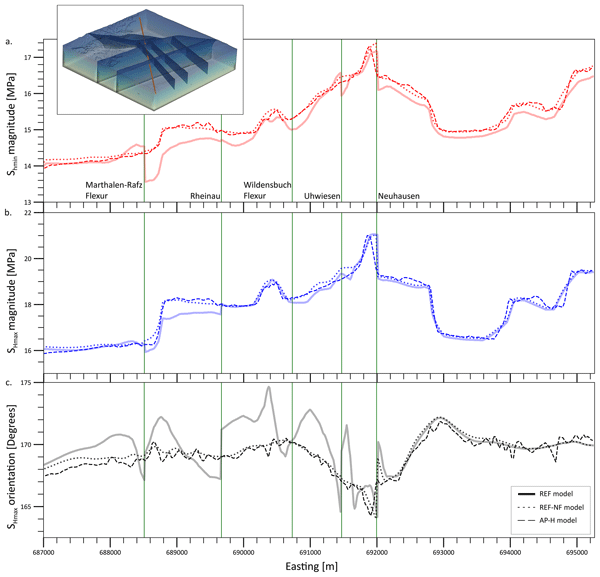
We assess the fault impact on the stress field in northern Switzerland using 3D geomechanical models, calibrated with stress data. We see that faults affect the stresses only locally, with negligible impact beyond 1 km, suggesting that faults may not be necessary in reservoir-scale models predicting stresses of undisturbed rock volumes, such as for a geological repository. Omitting them can substantially reduce model set-up time and computational cost without compromising prediction reliability.
Antonio Olaiz, José A. Álvarez Gómez, Gerardo de Vicente, Alfonso Muñoz-Martín, Juan V. Cantavella, Susana Custódio, Dina Vales, and Oliver Heidbach
Solid Earth, 16, 947–1024, https://doi.org/10.5194/se-16-947-2025, https://doi.org/10.5194/se-16-947-2025, 2025
Short summary
Short summary
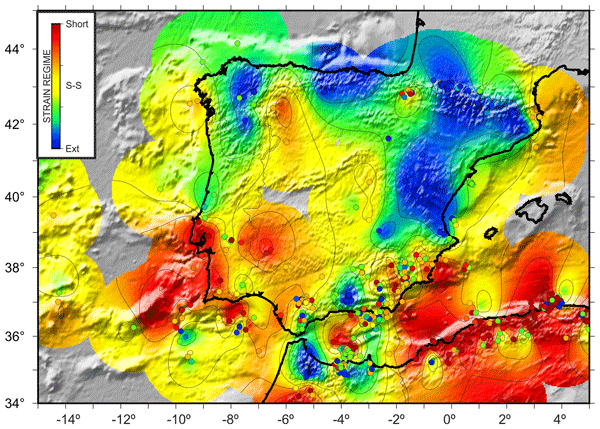
Understanding the stress and strain conditions in the Earth's crust is crucial for various activities, such as oil and gas exploration and assessing seismic hazards. In this article, we have updated the database of moment tensor focal mechanisms for Greater Iberia. We conducted kinematic and dynamic analyses on the selected populations, determining the average focal mechanism, strain and stress orientations, and tectonic regime. The orientation for horizontal compression is primarily N154° E.
Denise Degen, Moritz Ziegler, Oliver Heidbach, Andreas Henk, Karsten Reiter, and Florian Wellmann
Solid Earth, 16, 477–502, https://doi.org/10.5194/se-16-477-2025, https://doi.org/10.5194/se-16-477-2025, 2025
Short summary
Short summary
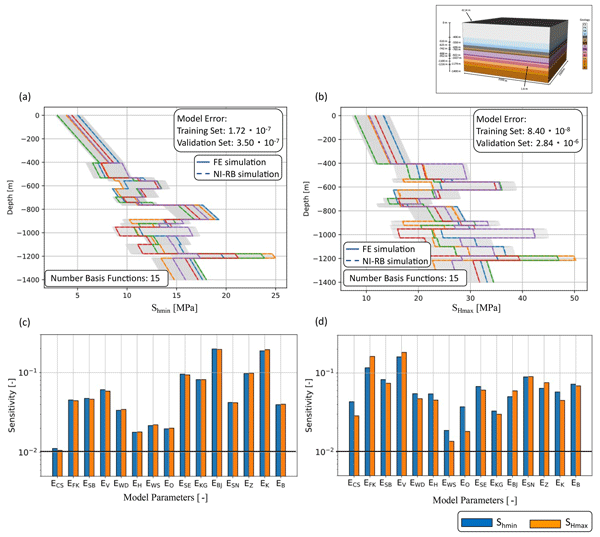
Obtaining reliable estimates of the subsurface state distributions is essential to determine the location of, e.g., potential nuclear waste disposal sites. However, providing these is challenging since it requires solving the problem numerous times, yielding high computational cost. To overcome this, we use a physics-based machine learning method to construct surrogate models. We demonstrate how it produces physics-preserving predictions, which differentiates it from purely data-driven approaches.
Moritz O. Ziegler, Robin Seithel, Thomas Niederhuber, Oliver Heidbach, Thomas Kohl, Birgit Müller, Mojtaba Rajabi, Karsten Reiter, and Luisa Röckel
Solid Earth, 15, 1047–1063, https://doi.org/10.5194/se-15-1047-2024, https://doi.org/10.5194/se-15-1047-2024, 2024
Short summary
Short summary
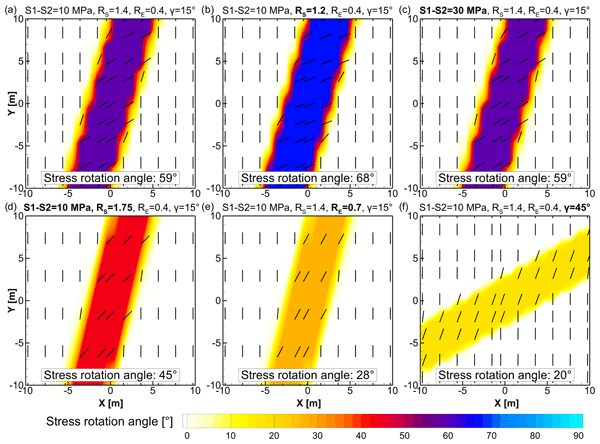
The rotation of the principal stress axes in a fault structure because of a rock stiffness contrast has been investigated for the impact of the ratio of principal stresses, the angle between principal stress axes and fault strike, and the ratio of the rock stiffness contrast. A generic 2D geomechanical model is employed for the systematic investigation of the parameter space.
Karsten Reiter, Oliver Heidbach, and Moritz O. Ziegler
Solid Earth, 15, 305–327, https://doi.org/10.5194/se-15-305-2024, https://doi.org/10.5194/se-15-305-2024, 2024
Short summary
Short summary
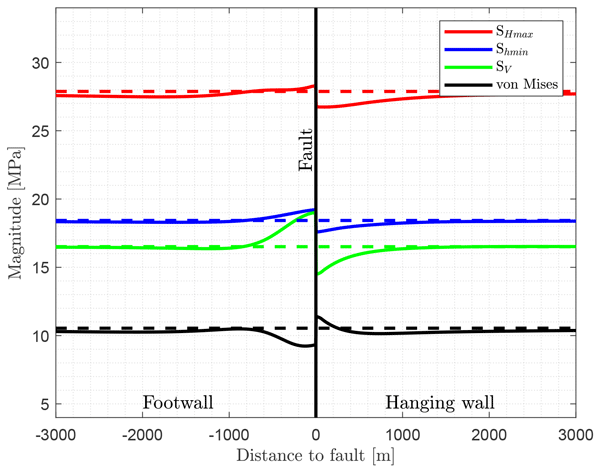
It is generally assumed that faults have an influence on the stress state of the Earth’s crust. It is questionable whether this influence is still present far away from a fault. Simple numerical models were used to investigate the extent of the influence of faults on the stress state. Several models with different fault representations were investigated. The stress fluctuations further away from the fault (> 1 km) are very small.
Karsten Reiter, Oliver Heidbach, Moritz Ziegler, Silvio Giger, Rodney Garrard, and Jean Desroches
Saf. Nucl. Waste Disposal, 2, 71–72, https://doi.org/10.5194/sand-2-71-2023, https://doi.org/10.5194/sand-2-71-2023, 2023
Short summary
Short summary
Numerical methods can be used to estimate the stress state in the Earth’s upper crust. Measured stress data are needed for model calibration. High-quality stress data are available for the calibration of models for possible radioactive waste repositories in Switzerland. A best-fit model predicts the stress state for each point within the model volume. In this study, variable rock properties are used to predict the potential stress variations due to inhomogeneous rock properties.
Steffen Ahlers, Karsten Reiter, Tobias Hergert, Andreas Henk, Luisa Röckel, Sophia Morawietz, Oliver Heidbach, Moritz Ziegler, and Birgit Müller
Saf. Nucl. Waste Disposal, 2, 59–59, https://doi.org/10.5194/sand-2-59-2023, https://doi.org/10.5194/sand-2-59-2023, 2023
Short summary
Short summary
The recent crustal stress state is a crucial parameter in the search for a high-level nuclear waste repository. We present results of a 3D geomechanical numerical model that improves the state of knowledge by providing a continuum-mechanics-based prediction of the recent crustal stress field in Germany. The model results can be used, for example, for the calculation of fracture potential, for slip tendency analyses or as boundary conditions for smaller local models.
Tobias Hergert, Steffen Ahlers, Luisa Röckel, Sophia Morawietz, Karsten Reiter, Moritz Ziegler, Birgit Müller, Oliver Heidbach, Frank Schilling, and Andreas Henk
Saf. Nucl. Waste Disposal, 2, 65–65, https://doi.org/10.5194/sand-2-65-2023, https://doi.org/10.5194/sand-2-65-2023, 2023
Short summary
Short summary
In numerical geomechanical models, an initial stress state is established before displacement boundary conditions are applied in order to match calibration data. We present generic models to show that the choice of initial stress and boundary conditions affects the final state of stress in areas of the model domain where no stress data for calibration are available. These deviations are largest in the vicinity of lithological interfaces, and they can be reduced if more stress data exist.
Luisa Röckel, Steffen Ahlers, Sophia Morawietz, Birgit Müller, Tobias Hergert, Karsten Reiter, Andreas Henk, Moritz Ziegler, Oliver Heidbach, and Frank Schilling
Saf. Nucl. Waste Disposal, 2, 73–73, https://doi.org/10.5194/sand-2-73-2023, https://doi.org/10.5194/sand-2-73-2023, 2023
Short summary
Short summary
Stress data predicted by a geomechanical–numerical model are mapped onto 3D fault geometries. Then the slip tendency of these faults is calculated as a measure of their reactivation potential. Characteristics of the faults and the state of stress are identified that lead to a high fault reactivation potential. An overall high reactivation potential is observed in the Upper Rhine Graben area, whereas the reactivation potential is quite low in the Molasse Basin.
Moritz O. Ziegler, Oliver Heidbach, and Mojtaba Rajabi
Saf. Nucl. Waste Disposal, 2, 79–80, https://doi.org/10.5194/sand-2-79-2023, https://doi.org/10.5194/sand-2-79-2023, 2023
Short summary
Short summary
The subsurface is subject to constant stress. With increasing depth, more rock overlies an area, thereby increasing the stress. There is also constant stress from the sides. Knowledge of this stress is fundamental to build lasting and safe underground structures. Very few data on the stress state are available; thus, computer models are used to predict this parameter. We present a method to improve the quality of the computer models, even if no direct data on the stress state are available.
Oliver Heidbach, Karsten Reiter, Moritz O. Ziegler, and Birgit Müller
Saf. Nucl. Waste Disposal, 2, 185–185, https://doi.org/10.5194/sand-2-185-2023, https://doi.org/10.5194/sand-2-185-2023, 2023
Short summary
Short summary
When stresses yield a critical value, rock breaks and generate pathways for fluid migration. Thus, the contemporary undisturbed stress state is a key parameter for assessing the stability of deep geological repositories. In this workshop you can ask everything you always wanted to know about stress (but were afraid to ask), and this is divided into three parts. 1) How do we formally describe the stress field? 2) How do we to actually measure stress? 3) How do we go from points to 3D description?
Michal Kruszewski, Alessandro Verdecchia, Oliver Heidbach, Rebecca M. Harrington, and David Healy
EGUsphere, https://doi.org/10.5194/egusphere-2023-1889, https://doi.org/10.5194/egusphere-2023-1889, 2023
Preprint archived
Short summary
Short summary
In this study, we investigate the evolution of fault reactivation potential in the greater Ruhr region (Germany) in respect to a future utilization of deep geothermal resources. We use analytical and numerical approaches to understand the initial stress conditions on faults as well as their evolution in space and time during geothermal fluid production. Using results from our analyses, we can localize areas more favorable for geothermal energy use based on fault reactivation potential.
Michal Kruszewski, Gerd Klee, Thomas Niederhuber, and Oliver Heidbach
Earth Syst. Sci. Data, 14, 5367–5385, https://doi.org/10.5194/essd-14-5367-2022, https://doi.org/10.5194/essd-14-5367-2022, 2022
Short summary
Short summary
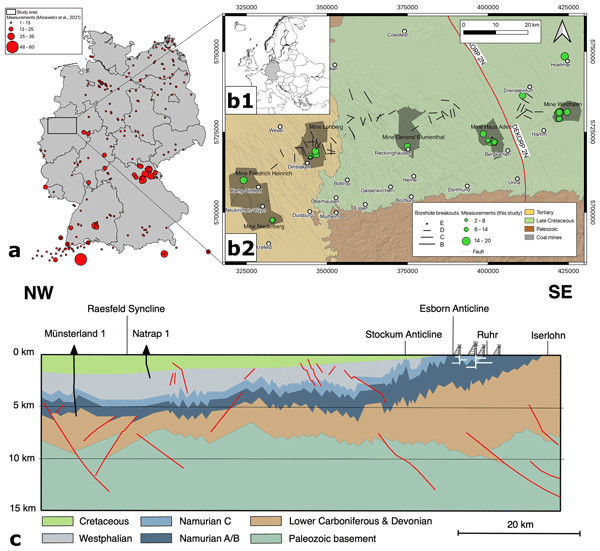
The authors assemble an in situ stress magnitude and orientation database based on 429 hydrofracturing tests that were carried out in six coal mines and two coal bed methane boreholes between 1986 and 1995 within the greater Ruhr region (Germany). Our study summarises the results of the extensive in situ stress test campaign and assigns quality to each data record using the established quality ranking schemes of the World Stress Map project.
Luisa Röckel, Steffen Ahlers, Birgit Müller, Karsten Reiter, Oliver Heidbach, Andreas Henk, Tobias Hergert, and Frank Schilling
Solid Earth, 13, 1087–1105, https://doi.org/10.5194/se-13-1087-2022, https://doi.org/10.5194/se-13-1087-2022, 2022
Short summary
Short summary
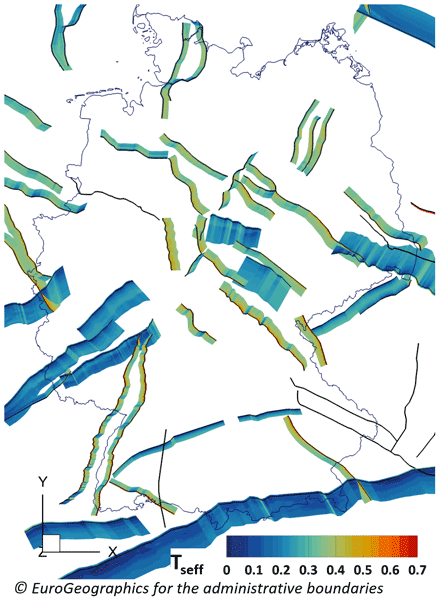
Reactivation of tectonic faults can lead to earthquakes and jeopardize underground operations. The reactivation potential is linked to fault properties and the tectonic stress field. We create 3D geometries for major faults in Germany and use stress data from a 3D geomechanical–numerical model to calculate their reactivation potential and compare it to seismic events. The reactivation potential in general is highest for NNE–SSW- and NW–SE-striking faults and strongly depends on the fault dip.
Steffen Ahlers, Andreas Henk, Tobias Hergert, Karsten Reiter, Birgit Müller, Luisa Röckel, Oliver Heidbach, Sophia Morawietz, Magdalena Scheck-Wenderoth, and Denis Anikiev
Saf. Nucl. Waste Disposal, 1, 163–164, https://doi.org/10.5194/sand-1-163-2021, https://doi.org/10.5194/sand-1-163-2021, 2021
Karsten Reiter, Steffen Ahlers, Sophia Morawietz, Luisa Röckel, Tobias Hergert, Andreas Henk, Birgit Müller, and Oliver Heidbach
Saf. Nucl. Waste Disposal, 1, 75–76, https://doi.org/10.5194/sand-1-75-2021, https://doi.org/10.5194/sand-1-75-2021, 2021
Luisa Röckel, Steffen Ahlers, Sophia Morawietz, Birgit Müller, Karsten Reiter, Oliver Heidbach, Andreas Henk, Tobias Hergert, and Frank Schilling
Saf. Nucl. Waste Disposal, 1, 77–78, https://doi.org/10.5194/sand-1-77-2021, https://doi.org/10.5194/sand-1-77-2021, 2021
Moritz Ziegler and Oliver Heidbach
Saf. Nucl. Waste Disposal, 1, 187–188, https://doi.org/10.5194/sand-1-187-2021, https://doi.org/10.5194/sand-1-187-2021, 2021
Short summary
Short summary
The Earth's crust is subject to constant stress which is manifested by earthquakes at plate boundaries. This stress is not only at plate boundaries but everywhere in the crust. A profound knowledge of the magnitude and orientation of the stress is important to select and build a safe deep geological repository for nuclear waste. We demonstrate how to build computer models of the stress state and show how to deal with the associated uncertainties.
Steffen Ahlers, Andreas Henk, Tobias Hergert, Karsten Reiter, Birgit Müller, Luisa Röckel, Oliver Heidbach, Sophia Morawietz, Magdalena Scheck-Wenderoth, and Denis Anikiev
Solid Earth, 12, 1777–1799, https://doi.org/10.5194/se-12-1777-2021, https://doi.org/10.5194/se-12-1777-2021, 2021
Short summary
Short summary
Knowledge about the stress state in the upper crust is of great importance for many economic and scientific questions. However, our knowledge in Germany is limited since available datasets only provide pointwise, incomplete and heterogeneous information. We present the first 3D geomechanical model that provides a continuous description of the contemporary crustal stress state for Germany. The model is calibrated by the orientation of the maximum horizontal stress and stress magnitudes.
Lalit Sai Aditya Reddy Velagala, Oliver Heidbach, Moritz Ziegler, Karsten Reiter, Mojtaba Rajabi, Andreas Henk, Silvio B. Giger, and Tobias Hergert
Solid Earth, 17, 179–201, https://doi.org/10.5194/se-17-179-2026, https://doi.org/10.5194/se-17-179-2026, 2026
Short summary
Short summary
We assess the fault impact on the stress field in northern Switzerland using 3D geomechanical models, calibrated with stress data. We see that faults affect the stresses only locally, with negligible impact beyond 1 km, suggesting that faults may not be necessary in reservoir-scale models predicting stresses of undisturbed rock volumes, such as for a geological repository. Omitting them can substantially reduce model set-up time and computational cost without compromising prediction reliability.
Antonio Olaiz, José A. Álvarez Gómez, Gerardo de Vicente, Alfonso Muñoz-Martín, Juan V. Cantavella, Susana Custódio, Dina Vales, and Oliver Heidbach
Solid Earth, 16, 947–1024, https://doi.org/10.5194/se-16-947-2025, https://doi.org/10.5194/se-16-947-2025, 2025
Short summary
Short summary
Understanding the stress and strain conditions in the Earth's crust is crucial for various activities, such as oil and gas exploration and assessing seismic hazards. In this article, we have updated the database of moment tensor focal mechanisms for Greater Iberia. We conducted kinematic and dynamic analyses on the selected populations, determining the average focal mechanism, strain and stress orientations, and tectonic regime. The orientation for horizontal compression is primarily N154° E.
Denise Degen, Moritz Ziegler, Oliver Heidbach, Andreas Henk, Karsten Reiter, and Florian Wellmann
Solid Earth, 16, 477–502, https://doi.org/10.5194/se-16-477-2025, https://doi.org/10.5194/se-16-477-2025, 2025
Short summary
Short summary
Obtaining reliable estimates of the subsurface state distributions is essential to determine the location of, e.g., potential nuclear waste disposal sites. However, providing these is challenging since it requires solving the problem numerous times, yielding high computational cost. To overcome this, we use a physics-based machine learning method to construct surrogate models. We demonstrate how it produces physics-preserving predictions, which differentiates it from purely data-driven approaches.
Moritz O. Ziegler, Robin Seithel, Thomas Niederhuber, Oliver Heidbach, Thomas Kohl, Birgit Müller, Mojtaba Rajabi, Karsten Reiter, and Luisa Röckel
Solid Earth, 15, 1047–1063, https://doi.org/10.5194/se-15-1047-2024, https://doi.org/10.5194/se-15-1047-2024, 2024
Short summary
Short summary
The rotation of the principal stress axes in a fault structure because of a rock stiffness contrast has been investigated for the impact of the ratio of principal stresses, the angle between principal stress axes and fault strike, and the ratio of the rock stiffness contrast. A generic 2D geomechanical model is employed for the systematic investigation of the parameter space.
Karsten Reiter, Oliver Heidbach, and Moritz O. Ziegler
Solid Earth, 15, 305–327, https://doi.org/10.5194/se-15-305-2024, https://doi.org/10.5194/se-15-305-2024, 2024
Short summary
Short summary
It is generally assumed that faults have an influence on the stress state of the Earth’s crust. It is questionable whether this influence is still present far away from a fault. Simple numerical models were used to investigate the extent of the influence of faults on the stress state. Several models with different fault representations were investigated. The stress fluctuations further away from the fault (> 1 km) are very small.
Karsten Reiter, Oliver Heidbach, Moritz Ziegler, Silvio Giger, Rodney Garrard, and Jean Desroches
Saf. Nucl. Waste Disposal, 2, 71–72, https://doi.org/10.5194/sand-2-71-2023, https://doi.org/10.5194/sand-2-71-2023, 2023
Short summary
Short summary
Numerical methods can be used to estimate the stress state in the Earth’s upper crust. Measured stress data are needed for model calibration. High-quality stress data are available for the calibration of models for possible radioactive waste repositories in Switzerland. A best-fit model predicts the stress state for each point within the model volume. In this study, variable rock properties are used to predict the potential stress variations due to inhomogeneous rock properties.
Steffen Ahlers, Karsten Reiter, Tobias Hergert, Andreas Henk, Luisa Röckel, Sophia Morawietz, Oliver Heidbach, Moritz Ziegler, and Birgit Müller
Saf. Nucl. Waste Disposal, 2, 59–59, https://doi.org/10.5194/sand-2-59-2023, https://doi.org/10.5194/sand-2-59-2023, 2023
Short summary
Short summary
The recent crustal stress state is a crucial parameter in the search for a high-level nuclear waste repository. We present results of a 3D geomechanical numerical model that improves the state of knowledge by providing a continuum-mechanics-based prediction of the recent crustal stress field in Germany. The model results can be used, for example, for the calculation of fracture potential, for slip tendency analyses or as boundary conditions for smaller local models.
Tobias Hergert, Steffen Ahlers, Luisa Röckel, Sophia Morawietz, Karsten Reiter, Moritz Ziegler, Birgit Müller, Oliver Heidbach, Frank Schilling, and Andreas Henk
Saf. Nucl. Waste Disposal, 2, 65–65, https://doi.org/10.5194/sand-2-65-2023, https://doi.org/10.5194/sand-2-65-2023, 2023
Short summary
Short summary
In numerical geomechanical models, an initial stress state is established before displacement boundary conditions are applied in order to match calibration data. We present generic models to show that the choice of initial stress and boundary conditions affects the final state of stress in areas of the model domain where no stress data for calibration are available. These deviations are largest in the vicinity of lithological interfaces, and they can be reduced if more stress data exist.
Luisa Röckel, Steffen Ahlers, Sophia Morawietz, Birgit Müller, Tobias Hergert, Karsten Reiter, Andreas Henk, Moritz Ziegler, Oliver Heidbach, and Frank Schilling
Saf. Nucl. Waste Disposal, 2, 73–73, https://doi.org/10.5194/sand-2-73-2023, https://doi.org/10.5194/sand-2-73-2023, 2023
Short summary
Short summary
Stress data predicted by a geomechanical–numerical model are mapped onto 3D fault geometries. Then the slip tendency of these faults is calculated as a measure of their reactivation potential. Characteristics of the faults and the state of stress are identified that lead to a high fault reactivation potential. An overall high reactivation potential is observed in the Upper Rhine Graben area, whereas the reactivation potential is quite low in the Molasse Basin.
Moritz O. Ziegler, Oliver Heidbach, and Mojtaba Rajabi
Saf. Nucl. Waste Disposal, 2, 79–80, https://doi.org/10.5194/sand-2-79-2023, https://doi.org/10.5194/sand-2-79-2023, 2023
Short summary
Short summary
The subsurface is subject to constant stress. With increasing depth, more rock overlies an area, thereby increasing the stress. There is also constant stress from the sides. Knowledge of this stress is fundamental to build lasting and safe underground structures. Very few data on the stress state are available; thus, computer models are used to predict this parameter. We present a method to improve the quality of the computer models, even if no direct data on the stress state are available.
Oliver Heidbach, Karsten Reiter, Moritz O. Ziegler, and Birgit Müller
Saf. Nucl. Waste Disposal, 2, 185–185, https://doi.org/10.5194/sand-2-185-2023, https://doi.org/10.5194/sand-2-185-2023, 2023
Short summary
Short summary
When stresses yield a critical value, rock breaks and generate pathways for fluid migration. Thus, the contemporary undisturbed stress state is a key parameter for assessing the stability of deep geological repositories. In this workshop you can ask everything you always wanted to know about stress (but were afraid to ask), and this is divided into three parts. 1) How do we formally describe the stress field? 2) How do we to actually measure stress? 3) How do we go from points to 3D description?
Michal Kruszewski, Alessandro Verdecchia, Oliver Heidbach, Rebecca M. Harrington, and David Healy
EGUsphere, https://doi.org/10.5194/egusphere-2023-1889, https://doi.org/10.5194/egusphere-2023-1889, 2023
Preprint archived
Short summary
Short summary
In this study, we investigate the evolution of fault reactivation potential in the greater Ruhr region (Germany) in respect to a future utilization of deep geothermal resources. We use analytical and numerical approaches to understand the initial stress conditions on faults as well as their evolution in space and time during geothermal fluid production. Using results from our analyses, we can localize areas more favorable for geothermal energy use based on fault reactivation potential.
Michal Kruszewski, Gerd Klee, Thomas Niederhuber, and Oliver Heidbach
Earth Syst. Sci. Data, 14, 5367–5385, https://doi.org/10.5194/essd-14-5367-2022, https://doi.org/10.5194/essd-14-5367-2022, 2022
Short summary
Short summary
The authors assemble an in situ stress magnitude and orientation database based on 429 hydrofracturing tests that were carried out in six coal mines and two coal bed methane boreholes between 1986 and 1995 within the greater Ruhr region (Germany). Our study summarises the results of the extensive in situ stress test campaign and assigns quality to each data record using the established quality ranking schemes of the World Stress Map project.
Luisa Röckel, Steffen Ahlers, Birgit Müller, Karsten Reiter, Oliver Heidbach, Andreas Henk, Tobias Hergert, and Frank Schilling
Solid Earth, 13, 1087–1105, https://doi.org/10.5194/se-13-1087-2022, https://doi.org/10.5194/se-13-1087-2022, 2022
Short summary
Short summary
Reactivation of tectonic faults can lead to earthquakes and jeopardize underground operations. The reactivation potential is linked to fault properties and the tectonic stress field. We create 3D geometries for major faults in Germany and use stress data from a 3D geomechanical–numerical model to calculate their reactivation potential and compare it to seismic events. The reactivation potential in general is highest for NNE–SSW- and NW–SE-striking faults and strongly depends on the fault dip.
Steffen Ahlers, Andreas Henk, Tobias Hergert, Karsten Reiter, Birgit Müller, Luisa Röckel, Oliver Heidbach, Sophia Morawietz, Magdalena Scheck-Wenderoth, and Denis Anikiev
Saf. Nucl. Waste Disposal, 1, 163–164, https://doi.org/10.5194/sand-1-163-2021, https://doi.org/10.5194/sand-1-163-2021, 2021
Karsten Reiter, Steffen Ahlers, Sophia Morawietz, Luisa Röckel, Tobias Hergert, Andreas Henk, Birgit Müller, and Oliver Heidbach
Saf. Nucl. Waste Disposal, 1, 75–76, https://doi.org/10.5194/sand-1-75-2021, https://doi.org/10.5194/sand-1-75-2021, 2021
Luisa Röckel, Steffen Ahlers, Sophia Morawietz, Birgit Müller, Karsten Reiter, Oliver Heidbach, Andreas Henk, Tobias Hergert, and Frank Schilling
Saf. Nucl. Waste Disposal, 1, 77–78, https://doi.org/10.5194/sand-1-77-2021, https://doi.org/10.5194/sand-1-77-2021, 2021
Moritz Ziegler and Oliver Heidbach
Saf. Nucl. Waste Disposal, 1, 187–188, https://doi.org/10.5194/sand-1-187-2021, https://doi.org/10.5194/sand-1-187-2021, 2021
Short summary
Short summary
The Earth's crust is subject to constant stress which is manifested by earthquakes at plate boundaries. This stress is not only at plate boundaries but everywhere in the crust. A profound knowledge of the magnitude and orientation of the stress is important to select and build a safe deep geological repository for nuclear waste. We demonstrate how to build computer models of the stress state and show how to deal with the associated uncertainties.
Steffen Ahlers, Andreas Henk, Tobias Hergert, Karsten Reiter, Birgit Müller, Luisa Röckel, Oliver Heidbach, Sophia Morawietz, Magdalena Scheck-Wenderoth, and Denis Anikiev
Solid Earth, 12, 1777–1799, https://doi.org/10.5194/se-12-1777-2021, https://doi.org/10.5194/se-12-1777-2021, 2021
Short summary
Short summary
Knowledge about the stress state in the upper crust is of great importance for many economic and scientific questions. However, our knowledge in Germany is limited since available datasets only provide pointwise, incomplete and heterogeneous information. We present the first 3D geomechanical model that provides a continuous description of the contemporary crustal stress state for Germany. The model is calibrated by the orientation of the maximum horizontal stress and stress magnitudes.
Cited articles
Addis, M. A.: The geology of geomechanics: petroleum geomechanical engineering in field development planning, Geological Society, London, Special Publications, 458, 7–29, https://doi.org/10.1144/sp458.7, 2017.
Ahlers, S., Henk, A., Hergert, T., Reiter, K., Müller, B., Röckel, L., Heidbach, O., Morawietz, S., Scheck-Wenderoth, M., and Anikiev, D.: 3D crustal stress state of Germany according to a data-calibrated geomechanical model, Solid Earth, 12(8), 1777–1799, https://doi.org/10.5194/se-12-1777-2021, 2021.
Amadei, B. and Stephansson, O.: Rock Stress and its Measurements, Chapman and Hall, New York, 1997.
Bell, J. S. and Gough, D. I.: Northeast-southwest compressive stress in Alberta: Evidence from oil wells, Earth Planet. Sci. Lett., 45, 475–482, https://doi.org/10.1016/0012-821X(79)90146-8, 1979.
Bird, P.: An updated digital model for plate boundaries, Geochemistry Geophysics Geosystems, 4, 1027, https://doi.org/10.1029/2001GC000252, 2003.
Brady, B. H. G. and Brown, E. T.: Rock Mechanics For Underground Mining, 3rd, Kluwer Academic Publishers, 2004.
Brudy, M., Zoback, M. D., Fuchs, K., Rummel, F., and Baumgartner, J.: Estimation of the complete stress tensor to 8 km depth in the KTB scientific drill holes: Implications for crustal strength, J. Geophys. Res., 102, 18453–18475, https://doi.org/10.1029/96jb02942, 1997.
Coblentz, D., van Wijk, J., Carmichael, J., Johnson, C., Delorey, A., Chai, C., Maceira, M., and Richardson, R. M.: New approaches to an old problem: addressing spatial gaps in the World Stress Map, Geological Society, London, Special Publications, 546, 47–68, https://doi.org/10.1144/sp546-2023-27, 2024.
Desroches, J., Peyret, E., Gisolf, A., Wilcox, A., Di Giovanni, M., Schram de Jong, A., Sepehri, S., Garrard, R., and Giger, S.: Stress Measurement Campaign in Scientific Deep Boreholes: Focus on Tools and Methods, Petrophysics, 64, 621–639, https://doi.org/10.30632/PJV64N5-2023a2, 2023.
Dziewonski, A. M., Chou, T.-A., and Woodhouse, J. H.: Determination of earthquake source parameters from waveform data for studies of global and regional seismicity, J. Geophys. Res., 86, 2825–2852, https://doi.org/10.1029/JB086iB04p02825, 1981.
Fuchs, K. and Müller, B.: World Stress Map of the Earth: a key to tectonic processes and technological applications, Naturwissenschaften, 88, 357–371, https://doi.org/10.1007/s001140100253, 2001.
Haimson, B. C. and Cornet, F. H.: ISRM Suggested Methods for rock stress estimation—Part 3: hydraulic fracturing (HF) and/or hydraulic testing of pre-existing fractures (HTPF), Int. J. Rock Mech. Mining Sc., 40, 1011–1020, https://doi.org/10.1016/j.ijrmms.2003.08.002, 2003.
Heidbach, O., Barth, A., Connolly, P., Fuchs, F., Müller, B., Reinecker, J., Sperner, B., Tingay, M., and Wenzel, F.: Stress Maps in a Minute: The 2004 World Stress Map Release, EOS T., 85, 521–529, 2004.
Heidbach, O., Reinecker, J., Tingay, M., Müller, B., Sperner, B., Fuchs, K., and Wenzel, F.: Plate boundary forces are not enough: Second- and third-order stress patterns highlighted in the World Stress Map database, Tectonics, 26, TC6014, https://doi.org/10.1029/2007TC002133, 2007.
Heidbach, O., Tingay, M., Barth, A., Reinecker, J., Kurfeß, D., and Müller, B.: Global crustal stress pattern based on the World Stress Map database release 2008, Tectonophys., 482, 3–15, https://doi.org/10.1016/j.tecto.2009.07.023, 2010.
Heidbach, O., Rajabi, M., Cui, X., Fuchs, K., Müller, B., Reinecker, J., Reiter, K., Tingay, M., Wenzel, F., Xie, F., Ziegler, M. O., Zoback, M.-L., and Zoback, M. D.: The World Stress Map database release 2016: Crustal stress pattern across scales, Tectonophys., 744, 484–498, https://doi.org/10.1016/j.tecto.2018.07.007, 2018.
Heidbach, O., Reinecker, J., Diehl, T., Desroches, J., Ziegler, M. O., Reiter, K., Vietor, T., and Giger, S. B.: The present-day crustal stress field of the Molasse Basin in Switzerland, Swiss J. Geosci., 118, https://doi.org/10.1186/s00015-025-00487-6, 2025.
Heidbach, O. and Rajabi, M.: Global datasets of the mean orientation of maximum horizontal stress S_Hmax on regular grids, GFZ Data Services [data set], https://doi.org/10.5880/wsm.2026.001, 2026.
Heidbach, O., Rajabi, M., Di Giacomo, D., Harris, J., Lammers, S., Morawietz, S., Pierdominici, S., Reiter, K., von Specht, S., Storchak, D., and Ziegler, M. O.: World Stress Map Database Release 2025, GFZ Data Services [data set], https://doi.org/10.5880/wsm.2025.001, 2025.
Henk, A.: Perspectives of Geomechanical Reservoir Models – Why Stress is Important, European Magazine, 4, 1–5, 2008.
Hergert, T., Heidbach, O., Reiter, K., Giger, S., and Marschall, P.: Stress field sensitivity analysis in a sedimentary sequence of the Alpine foreland, northern Switzerland, Solid Earth, 6, 533–552, https://doi.org/10.5194/se-6-533-2015, 2015.
Hickman, S. and Zoback, M. D.: Stress orientations and magnitudes in the SAFOD pilot hole, Geophys. Res. Lett., 31, https://doi.org/10.1029/2004gl020043, 2004.
Hottman, C. E., Smith, J. H., and Purcell, W. R.: Relationship Among Earth Stresses, Pore Pressure, and Drilling Problems Offshore Gulf of Alaska, J. Petrol. Tech., 1477–1484, 1979.
Hu, X., Zang, A., Heidbach, O., Cui, X., Xie, F., and Chen, J.: Crustal stress pattern in China and its adjacent areas, Journal of Asian Earth Sciences, 149, 20–28, https://doi.org/10.1016/j.jseaes.2017.07.005, 2017.
Jolie, E., Scott, S., Faulds, J., Chambefort, I., Axelsson, G., Gutiérrez-Negrín, L. C., Regenspurg, S., Ziegler, M., Ayling, B., Richter, A., and Zemedkun, M. T.: Geological controls on geothermal resources for power generation, Nature Reviews Earth & Environment, 2, 324–339, https://doi.org/10.1038/s43017-021-00154-y, 2021.
Laruelle, L., Ziegler, M. O., Reiter, K., Heidbach, O., Desroches, J., Giger, S. B., and Degen, D.: Minimum Amount of Stress Magnitude Data Records For Reliable Geomechanical Modelling, Rock Mech. Rock Eng., https://doi.org/10.1007/s00603-025-05194-0, 2026.
Lecampion, B. and Lei, T.: Reconstructing the 3D Initial Stress State over Reservoir Geomechanics Model from Local Measurement and Geological Priors: A Bayesian Approach, Schlumberger Journal of Modelling, Design and Simulations, 1, 100000–100104, 2010.
Lentas, K., Di Giacomo, D., Harris, J., and Storchak, D. A.: The ISC Bulletin as a comprehensive source of earthquake source mechanisms, Earth System Science Data, 11, 565–578, https://doi.org/10.5194/essd-11-565-2019, 2019.
Levi, N., Habermueller, M., Exner, U., Piani, E., Wiesmayr, G., and Decker, K.: The stress field in the frontal part of the Eastern Alps (Austria) from borehole image log data, Tectonophys., 769, https://doi.org/10.1016/j.tecto.2019.228175, 2019.
Ljunggren, C., Chang, Y., Janson, T., and Christiansson, R.: An overview of rock stress measurement methods, Int. J. Rock Mech. Mining Sc., 40, 975–989, https://doi.org/10.1016/j.ijrmms.2003.07.003, 2003.
Lund Snee, J. E. and Zoback, M. D.: Multiscale variations of the crustal stress field throughout North America, Nat. Common., 11, https://doi.org/10.1038/s41467-020-15841-5, 2020.
Mardia, K. V. and Jupp, P. E.: Directional Statistics, Wiley, 2000.
Morawietz, S., Heidbach, O., Reiter, K., Ziegler, M. O., Rajabi, M., Zimmerman, G., Müller, B., and Tingay, M.: An open-access stress magnitude database for Germany and adjacent regions, Geothermal Energy, https://doi.org/10.1186/s40517-020-00178-5, 2020.
Müller, B., Zoback, M.-L., Fuchs, K., Mastin, L., Gregersen, S., Pavoni, N., Stephansson, O., and Ljunggren, C.: Regional Patterns of Tectonic Stress in Europe, J. Geophys. Res., 97, 11783–11803, https://doi.org/10.1029/91JB01096, 1992.
NAGRA: In-situ stress field in the siting regions Jura Ost, Nördlich Lägern and Zürich Nordost, NAGRA, Wettingen, NAGRA Arbeitsbericht NAB 24-19, 2024.
Peña Clavijo, S., Dash, A., Baby, G., Alafifi, A. M., and Finkbeiner, T.: Modelling principal stress orientations in the Arabian Plate using plate velocities, Geological Society, London, Special Publications, 546, 193–214, https://doi.org/10.1144/sp546-2022-327, 2024.
Pierdominici, S. and Heidbach, O.: Stress field of Italy – Mean stress orientation at different depths and wave-length of the stress pattern, Tectonophys., 532-535, 301–311, https://doi.org/10.1016/j.tecto.2012.02.018, 2012.
Plumb, R. A. and Hickman, S. H.: Stress-induced borehole elongation: A comparison between the four-arm dipmeter and the borehole televiewer in the Auburn Geothermal Well, J. Geophys. Res., 90, 5513–5521, https://doi.org/10.1029/JB090iB07p05513, 1985.
Qin, X., Zhao, X., Zhang, C., Li, P., Chen, Q., and Wang, J.: Measurement and Assessment of the In-Situ Stress of the Shazaoyuan Rock Block, a Candidate Site for HLW Disposal in Northwest China, Rock Mech. Rock Eng., 57, 4011–4031, https://doi.org/10.1007/s00603-024-03775-z, 2024.
Rajabi, M., Tingay, M., and Heidbach, O.: The present-day stress field of New South Wales, Australia, Australian J. Earth Sci., 63, 1–21, https://doi.org/10.1080/08120099.2016.1135821, 2016.
Rajabi, M., Heidbach, O., Tingay, M., and Reiter, K.: Prediction of the present-day stress field in the Australian continental crust using 3D geomechanical–numerical models, Australian J. Earth Sci., 64, 435–454, https://doi.org/10.1080/08120099.2017.1294109, 2017a.
Rajabi, M., Tingay, M., King, R., and Heidbach, O.: Present-day stress orientation in the Clarence-Moreton Basin of New South Wales, Australia: A new high density dataset reveals local stress rotations, Basin Res., 29, 622–640, https://doi.org/10.1111/bre.12175, 2017b.
Rajabi, M., Tingay, M., Heidbach, O., Hillis, R., and Reynolds, S.: The present-day stress field of Australia, Earth Science Reviews, 168, 165–189, https://doi.org/10.1016/j.earscirev.2017.04.003, 2017c.
Rajabi, M., Ziegler, M. O., Heidbach, O., Mukherjee, S., and Esterle, J.: Contribution of mine borehole data toward high-resolution stress mapping: An example from northern Bowen Basin, Australia, Int. J. Rock Mech. Mining Sc., 173, https://doi.org/10.1016/j.ijrmms.2023.105630, 2024.
Rajabi, M., Lammers, S., and Heidbach, O.: WSM database description and guidelines for analysis of horizontal stress orientation from borehole logging, WSM Technical Report TR 25-01, GFZ Helmholtz Centre for Geosciences, Potsdam,, https://doi.org/10.48440/wsm.2025.001, 2025.
Reinecker, J., Tingay, M., Müller, B., and Heidbach, O.: Present-day stress orientation in the Molasse Basin, Tectonophys., 462, 129–138, https://doi.org/10.1016/j.tecto.2009.07.021, 2010.
Reiter, K., Heidbach, O., Schmitt, D. R., Moeck, I., Ziegler, M. O., and Hauck, C.: Crustal stress field pattern of Canada, Tectonophys., 636, 111–124, https://doi.org/10.1016/j.tecto.2014.08.006, 2014.
Reiter, K.: Stress rotation – impact and interaction of rock stiffness and faults, Solid Earth, 12, 1287–1307, https://doi.org/10.5194/se-12-1287-2021, 2021.
Reiter, K., Heidbach, O., and Ziegler, M. O.: Impact of faults on the remote stress state, Solid Earth, 15, 305–327, https://doi.org/10.5194/se-15-305-2024, 2024.
Schmitt, D. R., Currie, C. A., and Zhang, L.: Crustal stress determination from boreholes and rock cores: Fundamental principles Tectonophys., 580, 1–26, https://doi.org/10.1016/j.tecto.2012.08.029, 2012.
Schmitt, D. R. and Haimson, B. C.: Hydraulic fracturing stress measurements in deep holes, in: Rock Mechanics and Engineering Volume I: Principles, Feng, X.-T. (ed.), CRS Press, Boca Raton, 183–226, 2018.
Segall, P. and Fitzgerald, S. D.: A note on induced stress changes in hydrocarbon and geothermal reservoirs, Tectonophys., 289, 117–128, https://doi.org/10.1016/s0040-1951(97)00311-9, 1998.
Sperner, B., Müller, B., Heidbach, O., Delvaux, D., Reinecker, J., and Fuchs, K.: Tectonic stress in the Earth's crust: advances in the World Stress Map project, in: New insights in structural interpretation and modelling, Nieuwland, D. A. (ed.), Geological Society, London, Special Publications, 101–116, https://doi.org/10.1144/gsl.sp.2003.212.01.07, 2003.
Szwillus, W., Afonso, J. C., Ebbing, J., and Mooney, W. D.: Global Crustal Thickness and Velocity Structure From Geostatistical Analysis of Seismic Data, J. Geophys. Res., 124, 1626–1652, https://doi.org/10.1029/2018jb016593, 2019.
Thiercelin, M. J., Plumb, R. A., Desroches, J., Bixenman, P. W., Jonas, J. K., and Davie, W. R.: A New Wireline Tool for In-Situ Stress Measurements, SPE Formation Evaluation, 19–25, https://doi.org/10.2118/25906-PA, 1996.
Tingay, M., Hillis, R., Morley, C. K., King, R. C., Swarbrick, R. E., and Damit, A. R.: Present-day stress and neotectonics of Brunei: Implications for petroleum exploration and production, AAPG Bulletin, 93, 75–100, https://doi.org/10.1306/08080808031, 2009.
Tingay, M., Bentham, P., De Feyter, A. and Kellner, A.: Present-day stress-field rotations associated with evaporites in the offshore Nile Delta, Geological Society of America Bulletin, 123, 1171–1180, https://doi.org/10.1130/B30185.1, 2011.
Tozer, B., Sandwell, D. T., Smith, W. H. F., Olson, C., Beale, J. R., and Wessel, P.: Global Bathymetry and Topography at 15 Arc Sec: SRTM15+, Earth and Space Science, 6, 1847–1864, https://doi.org/10.1029/2019ea000658, 2019.
Velagala, L. S. A. R., Heidbach, O., Ziegler, M. O., Reiter, K., Rajabi, M., Henk, A., Giger, S. B., and Hergert, T.: Spatial influence of fault-related stress perturbations in northern Switzerland, Solid Earth, 17, 179–201, https://doi.org/10.5194/se-17-179-2026, 2026.
Voight, B., Taylor, J. W., and Voight, J. P.: Tectonophysical implications of rock stress determinations, Geologische Rundschau, 58, 655–676, 1968.
Zang, A. and Stephansson, O.: Stress in the Earth's Crust, Springer, Heidelberg, 323 pp., 2010.
Ziegler, M. O., Heidbach, O., Reinecker, J., Przybycin, A. M., and Scheck-Wenderoth, M.: A multi-stage 3-D stress field modelling approach exemplified in the Bavarian Molasse Basin, Solid Earth, 7, 1365–1382, https://doi.org/10.5194/se-7-1365-2016, 2016.
Ziegler, M. O., Heidbach, O., Zang, A., Martínez-Garzón, P., and Bohnhoff, M.: Estimation of the differential stress from the stress rotation angle in low permeable rock, Geohpys. Res. Lett., 44, 6761–6770, https://doi.org/10.1002/2017GL073598, 2017.
Ziegler, M. and Heidbach, O.: Matlab script Stress2Grid v1.1, GFZ Data Services [code], https://doi.org/10.5880/wsm.2019.002, 2019.
Ziegler, M. O. and Heidbach, O.: The 3D stress state from geomechanical–numerical modelling and its uncertainties: a case study in the Bavarian Molasse Basin, Geothermal Energy, 8, https://doi.org/10.1186/s40517-020-00162-z, 2020.
Ziegler, M., Finkbeiner, T., Massiot, C., and Goteti, R.: The quest for high fidelity, accurate geomechanical models and the research leading to it, Geological Society, London, Special Publications, 546, 1–7, https://doi.org/10.1144/sp546-2024-38, 2024.
Zoback, M.-L.: First- and Second- Order Patterns of Stress in the Lithosphere: The World Stress Map Project, J. Geophys. Res., 97, 11703–11728, https://doi.org/10.1029/92JB00132, 1992.
Zoback, M.-L. and Mooney, W. D.: Lithospheric Bouyancy and Continental Intraplate Stresses, International Geology Review, 45, 95–118, https://doi.org/10.2747/0020-6814.45.2.95, 2003.
Zoback, M.-L. and Zoback, M. D.: Tectonic stress field of the continental United States, in: Geophysical Framework of the Continental United States, edited by: Pakiser, L. C., and Mooney, W. D., Geol. Soc. Am. Mem., Boulder, Colorado, 523–539, https://doi.org/10.1130/MEM172-p523, 1989.
Zoback, M.-L., Zoback, M. D., Adams, J., Assumpção, M., Bell, S., Bergman, E. A., Blümling, P., Brereton, N. R., Denham, D., Ding, J., Fuchs, K., Gay, N., Gregersen, S., Gupta, H. K., Gvishiani, A., Jacob, K., Klein, R., Knoll, P., Magee, M., Mercier, J. L., Müller, B. C., Paquin, C., Rajendran, K., Stephansson, O., Suarez, G., Suter, M., Udías, A., Xu, Z. H., and Zhizhin, M.: Global patterns of tectonic stress, Nature, 341, 291–298, https://doi.org/10.1038/341291a0, 1989.
Zoback, M. D.: Reservoir Geomechanics, Cambridge, Cambridge, 449 pp., 2010.
Zoback, M. D. and Zoback, M.-L.: Tectonic stress field of North America and relative plate motions, in: Neotectonics of North America, Slemmons, D. B., Engdahl, E. R., Zoback, M. D., and Blackwell, D. D. (eds.), Geological Society of America, Boulder, Colorado, 339–366, https://doi.org/10.1130/DNAG-CSMS-NEO.339, 1991.

Editorial statement
Solid Earth is excited to announce the publication of the latest 2025 update of the World Stress Map (WSM) Project, marking the 40th anniversary of this ongoing collaboration between academia and industry. The WSM offers a global compilation of the present-day crustal stress field, integrating a broad range of measurement techniques. This dataset continues to serve as a valuable resource for researchers in geodynamics, tectonics, geomechanics, seismic hazards, structural geology, and resource engineering. The WSM is thus an indispensable resource that informs and impacts a global science community. As such, this latest iteration is worthy of being a highlighted paper in our journal.
Solid Earth is excited to announce the publication of the latest 2025 update of the World Stress...
Short summary
The World Stress Map project provides the only open-access database of crustal stress information. The new global database has been substantially updated, and now contains more than twice the number of data on the orientation of maximum horizontal stress (SHmax). As data are clustered, we provide mean SHmax orientations on different global grids. The results reveal for intraplate areas that the earlier hypothesis that plate boundary forces control the SHmax orientation needs to be revised.
The World Stress Map project provides the only open-access database of crustal stress...