
Articles | Volume 17, issue 8
https://doi.org/10.5194/se-17-923-2026
© Author(s) 2026. This work is distributed under
the Creative Commons Attribution 4.0 License.
the Creative Commons Attribution 4.0 License.
https://doi.org/10.5194/se-17-923-2026
© Author(s) 2026. This work is distributed under
the Creative Commons Attribution 4.0 License.
the Creative Commons Attribution 4.0 License.
Research article
| 
05 Aug 2026
Research article |
| 05 Aug 2026
| 05 Aug 2026
Gas migration and slope instability in the Danube Fan: insights from integrated OBS-MCS seismic analysis

GEOMAR Helmholtz Centre for Ocean Research Kiel, RD Marine Geodynamics, Kiel, Germany
Anke Dannowski
GEOMAR Helmholtz Centre for Ocean Research Kiel, RD Marine Geodynamics, Kiel, Germany
Jörg Bialas
GEOMAR Helmholtz Centre for Ocean Research Kiel, RD Marine Geodynamics, Kiel, Germany
Felix Gross
Christian-Albrechts-University Kiel, Institute of Geosciences, Kiel, Germany
Christian-Albrechts-University Kiel, Centre for Ocean and Society, Kiel, Germany
Jasper Hoffmann
GEOMAR Helmholtz Centre for Ocean Research Kiel, RD Marine Geodynamics, Kiel, Germany
Alfred-Wegener-Institute, Helmholtz Centre for Polar and Marine Research Sylt, Department Coastal Ecology, List, Germany
Dirk Klaeschen
GEOMAR Helmholtz Centre for Ocean Research Kiel, RD Marine Geodynamics, Kiel, Germany
Christian Berndt
GEOMAR Helmholtz Centre for Ocean Research Kiel, RD Marine Geodynamics, Kiel, Germany
Related authors
No articles found.
Arne Warwel, Anke Dannowski, Dietrich Lange, Anna Jegen, Michael Riedel, and Heidrun Kopp
EGUsphere, https://doi.org/10.5194/egusphere-2026-5327, https://doi.org/10.5194/egusphere-2026-5327, 2026
This preprint is open for discussion and under review for Solid Earth (SE).
Short summary
Short summary
In this study, we used active-source seismic data to investigate crustal anisotropy in a 45 Ma old segment of the Nazca Plate. We identified a strong twofold anisotropic pattern in the upper crust, with fast wave propagation in E–W direction. The anisotropy decreases with depth and is best explained by fractures associated with horst and graben structures. Our results highlight how tectonic deformation impacts seismic properties and anisotropic structure of oceanic crust.
Henriette M. Kolling, Markus Kienast, Peter Matzerath, Julia Gottschalk, Stephanie Kienast, Daniel A. Frick, Felix Gross, Jack Wharton, David Thornalley, and Ralph R. Schneider
EGUsphere, https://doi.org/10.5194/egusphere-2026-809, https://doi.org/10.5194/egusphere-2026-809, 2026
Short summary
Short summary
We studied past ocean conditions on the Scotian Shelf to understand how warm Gulf Stream waters reached this region in the past. Using chemical signals preserved in microscopic shells from seafloor sediments, we reconstructed sea surface temperature and salinity over the last 8,500 years. We found repeated warm-water intrusions during the mid to late Holocene, similar in strength to those observed today, providing important context for modern ocean warming.
Gesa Franz, Marion Jegen, Max Moorkamp, Christian Berndt, and Wolfgang Rabbel
Solid Earth, 14, 237–259, https://doi.org/10.5194/se-14-237-2023, https://doi.org/10.5194/se-14-237-2023, 2023
Short summary
Short summary
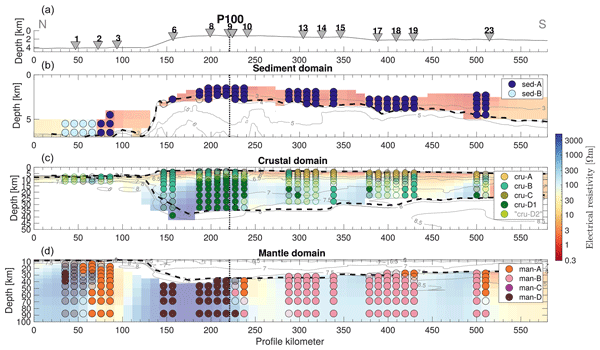
Our study focuses on the correlation of two geophysical parameters (electrical resistivity and density) with geological units. We use this computer-aided correlation to improve interpretation of the Earth’s formation history along the Namibian coast and the associated formation of the South Atlantic Ocean. It helps to distinguish different types of sediment cover and varieties of oceanic crust, as well as to identify typical features associated with the breakup of continents.
Damian L. Arévalo-Martínez, Amir Haroon, Hermann W. Bange, Ercan Erkul, Marion Jegen, Nils Moosdorf, Jens Schneider von Deimling, Christian Berndt, Michael Ernst Böttcher, Jasper Hoffmann, Volker Liebetrau, Ulf Mallast, Gudrun Massmann, Aaron Micallef, Holly A. Michael, Hendrik Paasche, Wolfgang Rabbel, Isaac Santos, Jan Scholten, Katrin Schwalenberg, Beata Szymczycha, Ariel T. Thomas, Joonas J. Virtasalo, Hannelore Waska, and Bradley A. Weymer
Biogeosciences, 20, 647–662, https://doi.org/10.5194/bg-20-647-2023, https://doi.org/10.5194/bg-20-647-2023, 2023
Short summary
Short summary
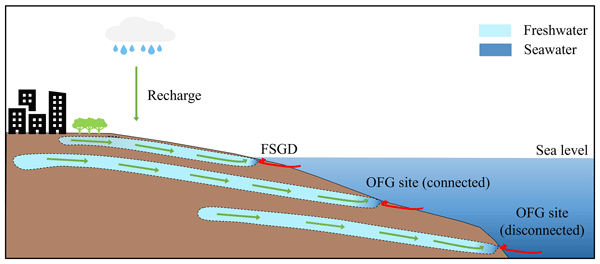
Groundwater flows at the land–ocean transition and the extent of freshened groundwater below the seafloor are increasingly relevant in marine sciences, both because they are a highly uncertain term of biogeochemical budgets and due to the emerging interest in the latter as a resource. Here, we discuss our perspectives on future research directions to better understand land–ocean connectivity through groundwater and its potential responses to natural and human-induced environmental changes.
Yueyang Xia, Dirk Klaeschen, Heidrun Kopp, and Michael Schnabel
Solid Earth, 13, 367–392, https://doi.org/10.5194/se-13-367-2022, https://doi.org/10.5194/se-13-367-2022, 2022
Short summary
Short summary
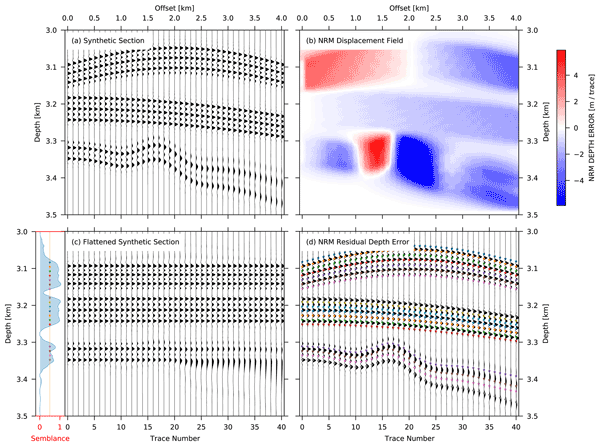
Geological interpretations based on seismic depth images depend on an accurate subsurface velocity model. Reflection tomography is one method to iteratively update a velocity model based on depth error analysis. We used a warping method to estimate closely spaced data-driven depth error displacement fields. The application to a multichannel seismic line across the Sunda subduction zone illustrates the approach which leads to more accurate images of complex geological structures.
Felix N. Wolf, Dietrich Lange, Anke Dannowski, Martin Thorwart, Wayne Crawford, Lars Wiesenberg, Ingo Grevemeyer, Heidrun Kopp, and the AlpArray Working Group
Solid Earth, 12, 2597–2613, https://doi.org/10.5194/se-12-2597-2021, https://doi.org/10.5194/se-12-2597-2021, 2021
Short summary
Short summary
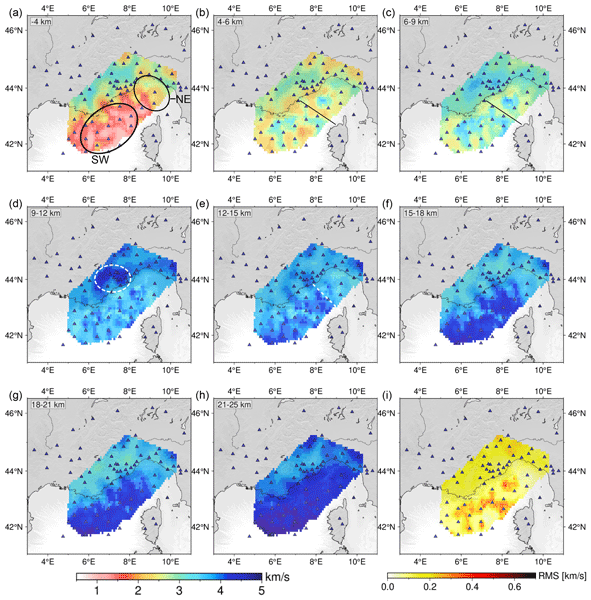
The Ligurian Sea opened ~30–15 Ma during SE migration of the Calabrian subduction zone. Using ambient seismic noise from stations on land and at the ocean bottom, we calculated a 3D shear-velocity model of the Ligurian Basin. In keeping with existing 2D studies, we find a shallow crust–mantle transition at the SW basin centre that deepens towards the northeast, Corsica, and the Liguro-Provençal coast. We observe a separation of SW and NE basins. We do not observe high crustal vP/vS ratios.
Martin Thorwart, Anke Dannowski, Ingo Grevemeyer, Dietrich Lange, Heidrun Kopp, Florian Petersen, Wayne C. Crawford, Anne Paul, and the AlpArray Working Group
Solid Earth, 12, 2553–2571, https://doi.org/10.5194/se-12-2553-2021, https://doi.org/10.5194/se-12-2553-2021, 2021
Short summary
Short summary
We analyse broadband ocean bottom seismometer data of the AlpArray OBS network in the Ligurian Basin. Two earthquake clusters with thrust faulting focal mechanisms indicate compression of the rift basin. The locations of seismicity suggest reactivation of pre-existing rift structures and strengthening of crust and uppermost mantle during rifting-related extension. Slightly different striking directions of faults may mimic the anti-clockwise rotation of the Corsica–Sardinia block.
Yueyang Xia, Jacob Geersen, Dirk Klaeschen, Bo Ma, Dietrich Lange, Michael Riedel, Michael Schnabel, and Heidrun Kopp
Solid Earth, 12, 2467–2477, https://doi.org/10.5194/se-12-2467-2021, https://doi.org/10.5194/se-12-2467-2021, 2021
Short summary
Short summary
The 2 June 1994 Java tsunami earthquake ruptured in a seismically quiet subduction zone and generated a larger-than-expected tsunami. Here, we re-process a seismic line across the rupture area. We show that a subducting seamount is located up-dip of the mainshock in a region that did not rupture during the earthquake. Seamount subduction modulates the topography of the marine forearc and acts as a seismic barrier in the 1994 earthquake rupture.
Cited articles
Amante, C. and Eakins, B. W.: ETOPO1 1 Arc-Minute Global Relief Model: Procedures, Data Sources and Analysis [data set], https://doi.org/10.7289/V5C8276M, 2009.
Andreassen, K., Berteussen, Karl. A., Sognnes, H., Henneberg, K., Langhammer, J., and Mienert, J.: Multicomponent ocean bottom cable data in gas hydrate investigation offshore of Norway, J. Geophys. Res., 108, 2399, https://doi.org/10.1029/2002JB002245, 2003.
Audet, M. D.: Mechanical properties of terrigenous muds from levee systems on the Amazon Fan, SP, 129, 133–144, https://doi.org/10.1144/GSL.SP.1998.129.01.09, 1998.
Badhani, S.: Slope failure and gas hydrate dissociation in the Danube deep-sea fan, NW Black Sea, Master's Thesis, Christian-Albrechts-Universität zu Kiel, GEOMAR Helmholtz-Centre For Ocean Research Kiel, 88 pp., 2016.
Bai, C., Hu, G., Zhang, Y., and Li, Z.: Seismic wavefield propagation in 2D anisotropic media: Ray theory versus wave-equation simulation, J. Appl. Geophys., 104, 163–171, https://doi.org/10.1016/j.jappgeo.2014.02.022, 2014.
Ballas, G., Garziglia, S., Sultan, N., Pelleter, E., Toucanne, S., Marsset, T., Riboulot, V., and Ker, S.: Influence of early diagenesis on geotechnical properties of clay sediments (Romania, Black Sea), Eng. Geol., 240, 175–188, https://doi.org/10.1016/j.enggeo.2018.04.019, 2018.
Bartetzko, A. and Kopf, A. J.: The relationship of undrained shear strength and porosity with depth in shallow (<50 m) marine sediments, Sediment. Geol., 196, 235–249, https://doi.org/10.1016/j.sedgeo.2006.04.005, 2007.
Bialas, J. and Flueh, E. R.: Ocean bottom seismometers: New instrument packages demonstrates value of recording full wavefield; shows that interpretations of sediment shear wave velocities are reliable, Sea Technol., 40, 41–46, 1999.
Bialas, J. and Riedel, M.: 2D multichannel seismic profiles during Maria S. Merian cruise MSM34, Black Sea, PANGAEA [data set], https://doi.org/10.1594/PANGAEA.921576, 2020.
Bialas, J., Klaucke, I., and Haeckel, M.: FS MARIA S. MERIAN Fahrtbericht / Cruise Report MSM34/1 & 2 – SUGAR Site; Varna – Varna, 06.12.13 – 16.01.14, GEOMAR Helmholtz-Zentrum für Ozeanforschung Kiel [data set], https://doi.org/10.3289/geomar_rep_ns_15_2014, 2014.
Bialas, J., Bohlen, T., Dannowski, A., Eisenberg-Klein, G., Gassner, L., Gehrmann, R., Heeschen, K., Hölz, S., Jegen, M., Klaucke, I., Krieger, M., Mann, J., Müller, C., Prüßmann, J., Schicks, J., Schünemann, E., Schwalenberg, K., Sommer, M., Smilde, P. L., Spangenberg, E., Trappe, H., and Zander, T.: Joint interpretation of geophysical field experiments in the danube deep-sea fan, Black Sea, Mar. Petrol. Geol., 104551, https://doi.org/10.1016/j.marpetgeo.2020.104551, 2020a.
Bialas, J., Papenberg, C., and Riedel, M.: 3D P-cable seismic data during Maria S. Merian cruise MSM34, Black Sea, PANGAEA [data set], https://doi.org/10.1594/PANGAEA.921631, 2020b.
Bohrmann, G., Ahrlich, F., Bachmann, K., Bergenthal, M., Beims, M., Betzler, C., Brünjes, J., Deusner, C., Domeyer, B., Düßmann, R., Ewert, J., Gaide, S., Frank, C., Freudenthal, T., Fröhlich, S., Greindl, T., Haeckel, M., Heitmann-Bacza, C., Ion, G., Kaszemeik, K., Keil, H., Kinski, O., Klein, T., Kossel, E., Linowski, E., Malnati, J., Mau, S., Meyer, B., Pape, T., Popa, A., Renken, J., Reuter, J., Reuter, M., Riedel, M., Riemer, P., Rohleder, C., Rosiak, U., Rotaru, S.-G., Rothenwänder, T., Stachowski, A., Schmidt, W., Seiter, C., Utecht, C., Vasilev, A., Wallmann, K., Wegwert, A., Wintersteller, P., and Wunsch, D.: Short cruise report R/V Meteor cruise report M142 – Drilling Gas Hydrates in the Danube Deep-Sea Fan, Black Sea, Varna – Varna, 4 November–9 December 2017, MARUM Universität Bremen, 2018.
Boswell, R., Collett, T. S., Frye, M., Shedd, W., McConnell, D. R., and Shelander, D.: Subsurface gas hydrates in the northern Gulf of Mexico, Mar. Petrol. Geol., 34, 4–30, https://doi.org/10.1016/j.marpetgeo.2011.10.003, 2012.
Boswell, R., Shipp, C., Reichel, T., Shelander, D., Saeki, T., Frye, M., Shedd, W., Collett, T. S., and McConnell, D. R.: Prospecting for marine gas hydrate resources, Interpretation, 4, SA13–SA24, https://doi.org/10.1190/INT-2015-0036.1, 2016.
Bünz, S., Mienert, J., Vanneste, M., and Andreassen, K.: Gas hydrates at the Storegga Slide: Constraints from an analysis of multicomponent, wide-angle seismic data, Geophysics, 70, B19–B34, https://doi.org/10.1190/1.2073887, 2005.
Burwicz-Galerne, E., Haeckel, M., Hensen, C., Samant, R., and Wallmann, K.: The gas hydrate system of the western Black Sea Basin, Mar. Petrol. Geol., 168, 107026, https://doi.org/10.1016/j.marpetgeo.2024.107026, 2024.
Caress, D. W., Thomas, H., Kirkwood, W. J., McEwen, R., Henthorn, R., Clague, D. A., Paull, C. K., and Paduan, J.: High-resolution multibeam, sidescan, and subbottom surveys using the MBARI AUV D. Allan B., in: Marine Habitat Mapping Technology for Alaska, edited by: Reynolds, J. R. and Greene, H. G., Alaska Sea Grant College Program, University of Alaska Fairbanks, 47–69, https://doi.org/10.4027/mhmta.2008.04, 2008.
Chand, S. and Minshull, T. A.: Seismic constraints on the effects of gas hydrate on sediment physical properties and fluid flow: a review, Geofluids, 3, 275–289, https://doi.org/10.1046/j.1468-8123.2003.00067.x, 2003.
Chatterjee, R., Mukhopadhyay, M., and Paul, S.: Overpressure zone under the Krishna–Godavari offshore basin: geophysical implications for natural hazard in deeper-water drilling, Nat. Hazards, 57, 121–132, https://doi.org/10.1007/s11069-010-9659-6, 2011.
Cobbold, P. R., Mourgues, R., and Boyd, K.: Mechanism of thin-skinned detachment in the Amazon Fan: assessing the importance of fluid overpressure and hydrocarbon generation, Mar. Petrol. Geol., 21, 1013–1025, https://doi.org/10.1016/j.marpetgeo.2004.05.003, 2004.
Collett, T., Riedel, M., Cochran, J. R., Boswell, R., Kumar, P., and Sathe, A. V.: Indian Continental Margin Gas Hydrate Prospects: Results of the Indian National Gas Hydrate Program (NGHP) Expedition 01, in: Proceedings of the 6th International Conference on Gas Hydrates (ICGH 2008), Columbia University Academic Commons, https://doi.org/10.7916/D8-NF9W-CZ91, 2008.
Collett, T. S., Boswell, R., Cochran, J. R., Kumar, P., Lall, M., Mazumdar, A., Ramana, M. V., Ramprasad, T., Riedel, M., Sain, K., Sathe, A. V., and Vishwanath, K.: Geologic implications of gas hydrates in the offshore of India: Results of the National Gas Hydrate Program Expedition 01, Mar. Petrol. Geol., 58, 3–28, https://doi.org/10.1016/j.marpetgeo.2014.07.021, 2014.
Collett, T. S., Boswell, R., Waite, W. F., Kumar, P., Roy, S. K., Chopra, K., Singh, S. K., Yamada, Y., Tenma, N., Pohlman, J., and Zyrianova, M.: India National Gas Hydrate Program Expedition 02 Summary of Scientific Results: Gas hydrate systems along the eastern continental margin of India, Mar. Petrol. Geol., 108, 39–142, https://doi.org/10.1016/j.marpetgeo.2019.05.023, 2019.
Crutchley, G. J., Berndt, C., Geiger, S., Klaeschen, D., Papenberg, C., Klaucke, I., Hornbach, M. J., Bangs, N. L. B., and Maier, C.: Drivers of focused fluid flow and methane seepage at south Hydrate Ridge, offshore Oregon, USA, Geology, 41, 551–554, https://doi.org/10.1130/G34057.1, 2013.
Damuth, J. E. and Olson, H. C.: Latest Quaternary sedimentation in the northern Gulf of Mexico Intraslope Basin Province: I. Sediment facies and depositional processes, Geosphere, 11, 1689–1718, https://doi.org/10.1130/GES01090.1, 2015.
Dannowski, A. and Bialas, J.: Seismic processed data (Ocean Bottom Seismometer working area dataset, profiles p4102 and p4103) during RV MARIA S. MERIAN cruise MSM34/2, Black Sea, PANGAEA [data set], https://doi.org/10.1594/PANGAEA.987011, 2025.
Dannowski, A., Bialas, J., Zander, T., Klaeschen, D., and Koch, S.: High resolution shear wave modelling of OBS data in a gas hydrate environment in the Danube deep-sea fan, Black Sea, poster presented at the 41st CIESM Congress 2016, 12–16 September 2016, Kiel, Germany, 2016.
Deuser, W. G.: Evolution of Anoxic Conditions in Black Sea during Holocene, in: The Black Sea - Geology, Chemistry, and Biology, vol. 20, edited by: Degens, E. T. and Ross, D. A., American Association of Petroleum Geologists, Tulsa, Oklahoma, 133–136, 1974.
Dewangan, P., Sriram, G., Mahale, V. P., and Gaddam, V. K.: A recent catastrophic submarine slope failure in the Krishna-Godavari basin, Bay of Bengal, India, Landslides, 22, 537–550, https://doi.org/10.1007/s10346-024-02359-w, 2025.
Diehl, T.: 3-D Seismic Velocity Models of the Alpine Crust from Local Earthquake Tomography, Dissertation, ETH Zürich, Zürich, 189 pp., 2008.
Digranes, P., Mjelde, R., Kodaira, S., Shimamura, H., Kanazawa, T., Shiobara, H., and Berg, E. W.: A regional shear-wave velocity model in the central Vøring Basin, N. Norway, using three-component Ocean Bottom Seismographs, Tectonophysics, 293, 157–174, https://doi.org/10.1016/S0040-1951(98)00093-6, 1998.
Duennebier, F. K. and Sutton, G. H.: Fidelity of ocean bottom seismic observations, Mar. Geophys. Res., 17, 535–555, https://doi.org/10.1007/BF01204343, 1995.
Essing, D., Schlindwein, V., Schmidt-Aursch, M. C., Hadziioannou, C., and Stähler, S. C.: Characteristics of Current-Induced Harmonic Tremor Signals in Ocean-Bottom Seismometer Records, Seismol. Res. Lett., 92, 3100–3112, https://doi.org/10.1785/0220200397, 2021.
Exley, R. J. K., Westbrook, G. K., Haacke, R. R., and Peacock, S.: Detection of seismic anisotropy using ocean bottom seismometers: a case study from the northern headwall of the Storegga Slide: Detecting seismic anisotropy using OBS, Geophys. J. Int., 183, 188–210, https://doi.org/10.1111/j.1365-246X.2010.04730.x, 2010.
Flood, R. D., Manley, P. L., Kowsmann, R. O., Appi, C. J., and Pirmez, C.: Seismic Facies and Late Quaternary Growth of Amazon Submarine Fan, in: Seismic Facies and Sedimentary Processes of Submarine Fans and Turbidite Systems, edited by: Weimer, P. and Link, M. H., Springer New York, New York, NY, 415–433, https://doi.org/10.1007/978-1-4684-8276-8_23, 1991.
Fujie, G.: MODELING, JAMSTEC Seismic Survey Data Base, Japan Agency for Marine-Earth Science and Technology (JAMSTEC), https://www.jamstec.go.jp/obsmcs_db/e/software.html (last access: 6 April 2024), 2008a.
Fujie, G.: PASTEUP, JAMSTEC Seismic Survey Data Base, Japan Agency for Marine-Earth Science and Technology (JAMSTEC), https://www.jamstec.go.jp/obsmcs_db/e/software.html (last access: 6 April 2024), 2008b.
Fujie, G., Kasahara, J., Murase, K., Mochizuki, K., and Kaneda, Y.: Interactive analysis tools for the wide-angle seismic data for crustal structure study (Technical Report), Explor. Geophys., 39, 26–33, https://doi.org/10.1071/EG08006, 2008.
Grevemeyer, I. and Villinger, H.: Gas hydrate stability and the assessment of heat flow through continental margins, Geophys. J. Int., 145, 647–660, https://doi.org/10.1046/j.0956-540x.2001.01404.x, 2001.
Gupta, S., Deusner, C., Burwicz-Galerne, E., and Haeckel, M.: Numerical analysis of the dynamic gas hydrate system and multiple BSRs in the Danube paleo-delta, Black Sea, Mar. Geol., 469, 107221, https://doi.org/10.1016/j.margeo.2024.107221, 2024.
Haines, S. S., Hart, P. E., Collett, T. S., Shedd, W., Frye, M., Weimer, P., and Boswell, R.: High-resolution seismic characterization of the gas and gas hydrate system at Green Canyon 955, Gulf of Mexico, USA, Mar. Petrol. Geol., 82, 220–237, https://doi.org/10.1016/j.marpetgeo.2017.01.029, 2017.
Hamilton, E. L.: Sound velocity gradients in marine sediments, J. Acoust. Soc. Am., 65, 909–922, https://doi.org/10.1121/1.382594, 1979a.
Hamilton, E. L.:
Hillman, J. I. T., Klaucke, I., Bialas, J., Feldman, H., Drexler, T., Awwiller, D., Atgin, O., Çifçi, G., and Badhani, S.: Gas migration pathways and slope failures in the Danube Fan, Black Sea, Mar. Petrol. Geol., 92, 1069–1084, https://doi.org/10.1016/j.marpetgeo.2018.03.025, 2018.
Iemelianov, V., Ivanik, O., Kukovska, T., Fedoronchuk, N., Shuraiev, I., Petrushenko, E., and Hadiatska, K.: Modeling and forecast of gas hydrate distribution in the Black Sea: main principles and approaches, Front. Earth Sci., 13, 1518758, https://doi.org/10.3389/feart.2025.1518758, 2025.
Ivanik, O., Iemelianov, V., Kukovska, T., Fedoronchuk, N., and Hadiatska, K.: Submarine landslides and assessment of slope stability in gas hydrate zones, Black Sea region, 18th International Conference Monitoring of Geological Processes and Ecological Condition of the Environment, Kyiv, Ukraine, 1–5, https://doi.org/10.3997/2214-4609.2025510126, 2025.
Jørgensen, B. B., Böttcher, M. E., Lüschen, H., Neretin, L. N., and Volkov, I. I.: Anaerobic methane oxidation and a deep H2S sink generate isotopically heavy sulfides in Black Sea sediments, Geochim. Cosmochim. Ac., 68, 2095–2118, https://doi.org/10.1016/j.gca.2003.07.017, 2004.
Judd, A. G. and Hovland, M.: The evidence of shallow gas in marine sediments, Cont. Shelf Res., 12, 1081–1095, https://doi.org/10.1016/0278-4343(92)90070-Z, 1992.
Judd, A. G. and Hovland, M.: Seabed Fluid Flow: The Impact on Geology, Biology and the Marine Environment, Cambridge University Press, Cambridge, New York, 475 pp., https://doi.org/10.1017/CBO9780511535918, 2007.
Keller, G. H.: Organic matter and the geotechnical properties of submarine sediments, Geo-Mar. Lett., 2, 191–198, https://doi.org/10.1007/BF02462762, 1982.
Ker, S. and Riboulot, V.: GHASS cruise report, Ifremer, https://doi.org/10.17600/15000500, 2015.
Ketzer, J. M., Augustin, A., Rodrigues, L. F., Oliveira, R., Praeg, D., Pivel, M. A. G., Dos Reis, A. T., Silva, C., and Leonel, B.: Gas seeps and gas hydrates in the Amazon deep-sea fan, Geo-Mar. Lett., 38, 429–438, https://doi.org/10.1007/s00367-018-0546-6, 2018.
Kumar, P., Collett, T. S., Boswell, R., Cochran, J. R., Lall, M., Mazumdar, A., Ramana, M. V., Ramprasad, T., Riedel, M., Sain, K., Sathe, A. V., Vishwanath, K., and Yadav, U. S.: Geologic implications of gas hydrates in the offshore of India: Krishna–Godavari Basin, Mahanadi Basin, Andaman Sea, Kerala–Konkan Basin, Mar. Petrol. Geol., 58, 29–98, https://doi.org/10.1016/j.marpetgeo.2014.07.031, 2014.
Kunath, P., Crutchley, G., Chi, W., Berndt, C., Liu, C., Elger, J., Klaeschen, D., and Bohrmann, G.: Episodic Venting of a Submarine Gas Seep on Geological Time Scales: Formosa Ridge, Northern South China Sea, J. Geophys. Res.-Sol. Ea., 127, e2022JB024668, https://doi.org/10.1029/2022JB024668, 2022.
Lee, M. W.: Models for gas hydrate-bearing sediments inferred from hydraulic permeability and elastic velocities, 1st edn., U.S. Geological Survey, https://doi.org/10.3133/sir20085219, 2008.
Lee, M. W. and Collett, T. S.: Pore- and fracture-filling gas hydrate reservoirs in the Gulf of Mexico Gas Hydrate Joint Industry Project Leg II Green Canyon 955 H well, Mar. Petrol. Geol., 34, 62–71, https://doi.org/10.1016/j.marpetgeo.2011.08.002, 2012.
Lericolais, G., Bulois, C., Gillet, H., and Guichard, F.: High frequency sea level fluctuations recorded in the Black Sea since the LGM, Glob. Planet. Change, 66, 65–75, https://doi.org/10.1016/j.gloplacha.2008.03.010, 2009.
Lericolais, G., Bourget, J., Popescu, I., Jermannaud, P., Mulder, T., Jorry, S., and Panin, N.: Late Quaternary deep-sea sedimentation in the western Black Sea: New insights from recent coring and seismic data in the deep basin, Glob. Planet. Change, 103, 232–247, https://doi.org/10.1016/j.gloplacha.2012.05.002, 2013.
Løseth, H., Gading, M., and Wensaas, L.: Hydrocarbon leakage interpreted on seismic data, Mar. Petrol. Geol., 26, 1304–1319, https://doi.org/10.1016/j.marpetgeo.2008.09.008, 2009.
Madof, A. S., Baumgardner, S. E., Laugier, F. J., and Haataja, J. I.: Interpretation of Gas Hydrate Province Supported by Petrophysical Analyses: Mississippi Fan, Gulf of Mexico, Geophys. Res. Lett., 46, 13253–13261, https://doi.org/10.1029/2019GL085217, 2019.
Maercklin, N.: SUPOLAR and SUPOFILT: SU programs for polarization analysis and filtering of three-component data, https://doi.org/10.13140/2.1.1697.7926, 2001.
Maslin, M. A.: Review of the timing and causes of the Amazon-Fan mass transport and avulsion deposits during the latest Pleistocene, in: External Controls on Deep-Water Depositional Systems, edited by: Kneller, B., Martinsen, O. J. and McCaffrey, B., SEPM Special Publication, 92, 133–144, https://doi.org/10.2110/sepmsp.092.133, 2009.
Mitchell, J. K. and Soga, K.: Fundamentals of Soil Behavior, 3rd edn., John Wiley & Sons, Hoboken, NJ, USA, 577 pp., ISBN 978-0-471-46302-3, 2005.
Mulder, T. and Cochonat, P.: Classification of Offshore Mass Movements, SEPM JSR, vol. 66, https://doi.org/10.1306/D42682AC-2B26-11D7-8648000102C1865D, 1996.
Nasif, A., Özel, F. E., and Dondurer, D.: Seismic identification of gas hydrates: A case study from Sakarya Canyon, western Black Sea, Turkish J. Earth Sci., 29, https://doi.org/10.3906/yer-1909-2, 2020.
Özel, Ö., Dondurur, D., and Klaucke, I.: Seismic and geoacoustic evidence for subsurface fluid flow and seepage offshore Akçakoca, Southwestern Black Sea, Turkey, Geo-Mar. Lett., 42, 17, https://doi.org/10.1007/s00367-022-00740-z, 2022.
Özsoy, E. and Ünlüata, Ü.: Oceanography of the Black Sea: A review of some recent results, Earth-Sci. Rev., 42, 231–272, https://doi.org/10.1016/S0012-8252(97)81859-4, 1997.
Popescu, I., Lericolais, G., Panin, N., Wong, H. K., and Droz, L.: Late Quaternary channel avulsions on the Danube deep-sea fan, Black Sea, Mar. Geol., 179, 25–37, https://doi.org/10.1016/S0025-3227(01)00197-9, 2001.
Popescu, I., Lericolais, G., Panin, N., Normand, A., Dinu, C., and Le Drezen, E.: The Danube submarine canyon (Black Sea): morphology and sedimentary processes, Mar. Geol., 206, 249–265, https://doi.org/10.1016/j.margeo.2004.03.003, 2004.
Popescu, I., De Batist, M., Lericolais, G., Nouzé, H., Poort, J., Panin, N., Versteeg, W., and Gillet, H.: Multiple bottom-simulating reflections in the Black Sea: Potential proxies of past climate conditions, Mar. Geol., 227, 163–176, https://doi.org/10.1016/j.margeo.2005.12.006, 2006.
Popescu, I., Lericolais, G., Panin, N., De Batist, M., and Gillet, H.: Seismic expression of gas and gas hydrates across the western Black Sea, Geo-Mar. Lett., 27, 173–183, https://doi.org/10.1007/s00367-007-0068-0, 2007.
Praeg, D., Silva, C. G., Reis, A. T. D., Cruz, A., Ketzer, J. M., Migeon, S., and Gorini, C.: Seismic evidence of gas hydrate and seafloor fluid escape on the upper Amazon deep-sea fan, Brazilian equatorial margin, Braz. J. Geophys., 40, https://doi.org/10.22564/brjg.v40i3.2175, 2022.
Priest, J. A., Rees, E. V. L., and Clayton, C. R. I.: Influence of gas hydrate morphology on the seismic velocities of sands: VELOCITY OF HYDRATE-BEARING SANDS, J. Geophys. Res., 114, https://doi.org/10.1029/2009JB006284, 2009.
Radhakrishna, M., Twinkle, D., Nayak, S., Bastia, R., and Rao, G. S.: Crustal structure and rift architecture across the Krishna–Godavari basin in the central Eastern Continental Margin of India based on analysis of gravity and seismic data, Mar. Petrol. Geol., 37, 129–146, https://doi.org/10.1016/j.marpetgeo.2012.05.005, 2012.
Rao, G. N.: Sedimentation, stratigraphy, and petroleum potential of Krishna-Godavari basin, East Coast of India, Bulletin, 85, 1623–1643, https://doi.org/10.1306/8626CCDF-173B-11D7-8645000102C1865D, 2001.
Riedel, M., Collett, T. S., Kumar, P., Sathe, A. V., and Cook, A.: Seismic imaging of a fractured gas hydrate system in the Krishna–Godavari Basin offshore India, Mar. Petrol. Geol., 27, 1476–1493, https://doi.org/10.1016/j.marpetgeo.2010.06.002, 2010.
Riedel, M., Freudenthal, T., Bergenthal, M., Haeckel, M., Wallmann, K., Spangenberg, E., Bialas, J., and Bohrmann, G.: Physical properties and core-log seismic integration from drilling at the Danube deep-sea fan, Black Sea, Mar. Petrol. Geol., 114, 104192, https://doi.org/10.1016/j.marpetgeo.2019.104192, 2020.
Riedel, M., Hähnel, L., Bialas, J., Bachmann, A. K., Gaide, S., Wintersteller, P., Klaucke, I., and Bohrmann, G.: Controls on Gas Emission Distribution on the Continental Slope of the Western Black Sea, Front. Earth Sci., 8, 601254, https://doi.org/10.3389/feart.2020.601254, 2021.
Ross, D. A. and Degens, E. T.: Recent Sediments of the Black Sea, in: The Black Sea - Geology, Chemistry, and Biology, vol. 20, edited by: Degens, E. T. and Ross, D. A., American Association of Petroleum Geologists, Tulsa, Oklahoma, 183–199, 1974.
Ruppel, C. D. and Kessler, J. D.: The interaction of climate change and methane hydrates, Rev. Geophys., 55, 126–168, https://doi.org/10.1002/2016RG000534, 2017.
Ryan, W. B. F., Pitman, W. C., Major, C. O., Shimkus, K., Moskalenko, V., Jones, G. A., Dimitrov, P., Gorür, N., Sakinç, M., and Yüce, H.: An abrupt drowning of the Black Sea shelf, Mar. Geol., 138, 119–126, https://doi.org/10.1016/S0025-3227(97)00007-8, 1997.
Sassen, R., Sweet, S. T., DeFreitas, D. A., Morelos, J. A., and Milkov, A. V.: Gas hydrate and crude oil from the Mississippi Fan Foldbelt, downdip Gulf of Mexico Salt Basin: significance to petroleum system, Org. Geochem., 32, 999–1008, https://doi.org/10.1016/S0146-6380(01)00064-X, 2001.
Sava, D. and Hardage, B.: Rock-physics Model for Gas-hydrate Systems Associated with Unconsolidated Marine Sediments, in: Natural Gas Hydrates – Energy Resource Potential and Associated Geologic Hazards, vol. 89, edited by: Collett, T., Johnson, A., Knapp, C., and Boswell, R., American Association of Petroleum Geologists, Tulsa, Oklahoma, 505–524, 2009.
Schnellmann, M., Anselmetti, F. S., Giardini, D., and Mckenzie, J. A.: 15,000 Years of mass-movement history in Lake Lucerne: Implications for seismic and tsunami hazards, Eclogae geol. Helv., 99, 409–428, https://doi.org/10.1007/s00015-006-1196-7, 2006.
Schwalenberg, K., Gehrmann, R. A. S., Bialas, J., and Rippe, D.: Analysis of marine controlled source electromagnetic data for the assessment of gas hydrates in the Danube deep-sea fan, Black Sea, Mar. Petrol. Geol., 122, 104650, https://doi.org/10.1016/j.marpetgeo.2020.104650, 2020.
Shearer, P. M. and Orcutt, J. A.: Surface and near-surface effects on seismic waves – theory and borehole seismometer results, B. Seismol. Soc. Am., 77, 1168–1196, https://doi.org/10.1785/BSSA0770041168, 1987.
Sloan, E. D. and Koh, C. A.: Clathrate Hydrates of Natural Gases, 3rd edn., CRC Press, Boca Raton, FL, USA, https://doi.org/10.1201/9781420008494, 2008.
Souza, J. M. G., Cruz, A. M., Cubas, N., Rabe, C., Divies, R., Letouzey, J., Praeg, D. B., Granjeon, D., Silva, C. G., Tadeu Dos Reis, A., and Gorini, C.: New insights into gravitational tectonics of the Amazon deep-sea fan: A comparative study of overpressure mechanisms in the Northwest and Southeast compartments, Mar. Petrol. Geol., 182, 107568, https://doi.org/10.1016/j.marpetgeo.2025.107568, 2025.
Starostenko, V. I., Rusakov, O. M., Shnyukov, E. F., Kobolev, V. P., and Kutas, R. I.: Methane in the northern Black Sea: characterization of its geomorphological and geological environments, Geol. Soc. Lond. Special Publications, 340, 57–75, https://doi.org/10.1144/SP340.5, 2010.
Stein, S. and Wysession, M.: An Introduction to Seismology, Earthquakes, and Earth Structure, Blackwell Publishing, Malden, MA, USA, 498 pp., ISBN 978-0-86542-078-6, 2003.
Stockwell, J. W.: The CWP/SU: Seismic Un*x package, Comput. Geosci., 25, 415–419, https://doi.org/10.1016/S0098-3004(98)00145-9, 1999.
Svitoch, A. A., Selivanov, A. O., and Yanina, T. A.: Paleohydrology of the Black Sea Pleistocene Basins, Water Resour., 27, 594–603, https://doi.org/10.1023/A:1026661801941, 2000.
Twichell, D. C.: A Review of Recent Depositional Processes on the Mississippi Fan, Eastern Gulf of Mexico, in: Gulf of Mexico Origin, Waters and Biota, vol. 3, Harte Research Institute for Gulf of Mexico Studies Series, Sponsored by Harte Research Institute for Gulf of Mexico Studies, Texas A & M University – Corpus Christi, 141–154, 2009.
Urlaub, M., Talling, P. J., and Masson, D. G.: Timing and frequency of large submarine landslides: implications for understanding triggers and future geohazard, Quaternary Sci. Rev., 72, 63–82, https://doi.org/10.1016/j.quascirev.2013.04.020, 2013.
Vanneste, M., Sultan, N., Garziglia, S., Forsberg, C. F., and L'Heureux, J.-S.: Seafloor instabilities and sediment deformation processes: The need for integrated, multi-disciplinary investigations, Mar. Geol., 352, 183–214, https://doi.org/10.1016/j.margeo.2014.01.005, 2014.
Vassilev, A. and Dimitrov, L.: Spatial and Quantity Evaluation of the Black Sea Gas Hydrates, Geologiya i Geofizika, 43, 672–684, 2002.
Wang, X., Piao, S., Lei, Y., and Li, N.: In Design of an Ocean Bottom Seismometer Sensor: Minimize Vibration Experienced by Underwater Low-Frequency Noise, Sensors, 18, 3446, https://doi.org/10.3390/s18103446, 2018.
Weimer, P.: Sequence Stratigraphy, Facies Geometries, and Depositional History of the Mississippi Fan, Gulf of Mexico, Bulletin, 74, 425–453, https://doi.org/10.1306/0C9B2321-1710-11D7-8645000102C1865D, 1990.
Wessel, P., Luis, J. F., Uieda, L., Scharroo, R., Wobbe, F., Smith, W. H. F., and Tian, D.: The Generic Mapping Tools Version 6, Geochem. Geophys. Geosyst., 20, 5556–5564, https://doi.org/10.1029/2019GC008515, 2019a.
Wessel, P., Luis, J. F., Uieda, L., Scharroo, R., Wobbe, F., Smith, W. H. F., and Tian, D.: The Generic Mapping Tools version 6, Zenodo [code], https://doi.org/10.5281/ZENODO.3407866, 2019b.
Winguth, C.: Pleistozäne Meeresspiegelschwankungen und Sedimentation im nordwestlichen Schwarzen Meer, Dissertation, Institut für Biogeochemie und Meereschemie, Hamburg, 128 pp., 1998.
Winguth, C., Wong, H. K., Panin, N., Dinu, C., Georgescu, P., Ungureanu, G., Krugliakov, V. V., and Podshuveit, V.: Upper Quaternary water level history and sedimentation in the northwestern Black Sea, Mar. Geol., 167, 127–146, https://doi.org/10.1016/S0025-3227(00)00024-4, 2000.
Wintersteller, P. and Bialas, J.: Gridded bathymetry from multibeam echosounder EM122 data of the cruise MSM34/2 (2013), PANGAEA [data set], https://doi.org/10.1594/PANGAEA.860486, 2016.
Wong, H. K., Winguth, C., Panin, N., Dinu, C., Wollschläger, M., Georgescu, P., Ungureanu, G., Krugliakov, V. V., and Podshuveit, V.: The Danube and Dniepr Fans: Morphostructure and Evolution, GeoEcoMarina, 2, 77–101, 1997.
Yilmaz, Ö.: Seismic Data Analysis: Processing, Inversion, and Interpretation of Seismic Data, Society of Exploration Geophysicists, https://doi.org/10.1190/1.9781560801580, 2001.
Yip, Y. H., Jeong, H., Fu, S., and Van Nierop, E. A.: Comparison of CO2 and CH4 Recovery from a Storage Site, Energ. Proced., 37, 4843–4852, https://doi.org/10.1016/j.egypro.2013.06.394, 2013.
Yun, T. S., Francisca, F. M., Santamarina, J. C., and Ruppel, C.: Compressional and shear wave velocities in uncemented sediment containing gas hydrate, Geophys. Res. Lett., 32, L10609, https://doi.org/10.1029/2005GL022607, 2005.
Zander, T., Haeckel, M., Berndt, C., Chi, W.-C., Klaucke, I., Bialas, J., Klaeschen, D., Koch, S., and Atgın, O.: On the origin of multiple BSRs in the Danube deep-sea fan, Black Sea, Earth Planet. Sc. Lett., 462, 15–25, https://doi.org/10.1016/j.epsl.2017.01.006, 2017.
Zander, T., Choi, J. C., Vanneste, M., Berndt, C., Dannowski, A., Carlton, B., and Bialas, J.: Potential impacts of gas hydrate exploitation on slope stability in the Danube deep-sea fan, Black Sea, Mar. Petrol. Geol., 92, 1056–1068, https://doi.org/10.1016/j.marpetgeo.2017.08.010, 2018.
Zelt, C. A.: Modelling strategies and model assessment for wide-angle seismic traveltime data, Geophys. J. Int., 139, 183–204, https://doi.org/10.1046/j.1365-246X.1999.00934.x, 1999.
Zelt, C. A. and Smith, R. B.: Seismic traveltime inversion for 2-D crustal velocity structure, Geophys. J. Int., 108, 16–34, https://doi.org/10.1111/j.1365-246X.1992.tb00836.x, 1992.
Short summary
This study investigates gas hydrate distribution in the Danube Fan, NW Black Sea. Using seismic data and drilling results, we analysed the structure, composition, and gas content of underconsolidated sediments. Gas hydrates are present in low concentration and patchy distribution. Free gas is trapped beneath the hydrate stability zone. The area shows signs of past slope failures linked to weak sediments and gas accumulation. The study provides insights into how gas hydrate systems evolve.
This study investigates gas hydrate distribution in the Danube Fan, NW Black Sea. Using seismic...


