
Articles | Volume 17, issue 8
https://doi.org/10.5194/se-17-947-2026
© Author(s) 2026. This work is distributed under
the Creative Commons Attribution 4.0 License.
the Creative Commons Attribution 4.0 License.
https://doi.org/10.5194/se-17-947-2026
© Author(s) 2026. This work is distributed under
the Creative Commons Attribution 4.0 License.
the Creative Commons Attribution 4.0 License.
Research article
| 
06 Aug 2026
Research article |
| 06 Aug 2026
| 06 Aug 2026
From strong plates to weak boundaries: strain localization in the lithospheric mantle with low- to high-temperature dislocation creep
Etienne Van Broeck
CORRESPONDING AUTHOR
Géosciences Montpellier, Université de Montpellier, CNRS, Montpellier, France
Géosciences Montpellier, Université de Montpellier, CNRS, Montpellier, France
Catherine Thoraval
Géosciences Montpellier, Université de Montpellier, CNRS, Montpellier, France
Diane Arcay
Géosciences Montpellier, Université de Montpellier, CNRS, Montpellier, France
D. Rhodri Davies
Research School of Earth Sciences, The Australian National University, Canberra, ACT, Australia
Related authors
No articles found.
William Scott, Mark Hoggard, Thomas Duvernay, Sia Ghelichkhan, Angus Gibson, Dale Roberts, Stephan C. Kramer, and D. Rhodri Davies
Geosci. Model Dev., 19, 2717–2745, https://doi.org/10.5194/gmd-19-2717-2026, https://doi.org/10.5194/gmd-19-2717-2026, 2026
Short summary
Short summary
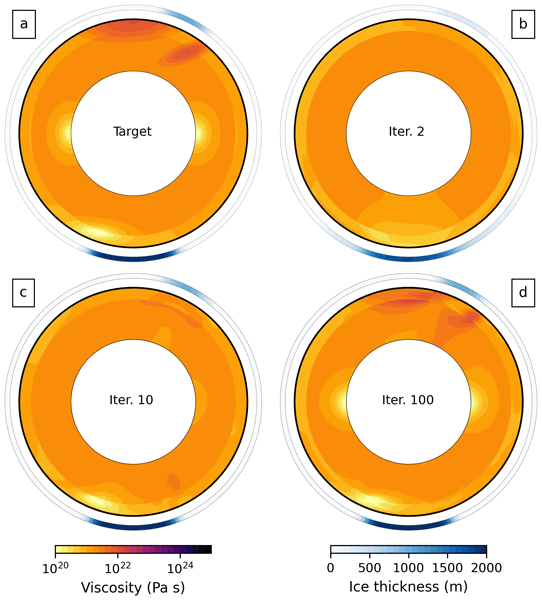
Melting ice sheets drive solid Earth deformation and sea-level change on timescales of decades to thousands of years. Here, we present G-ADOPT (Geoscientific Adjoint Optimisation Platform), which models movement of the solid Earth in response to surface loads. It has flexibility in domain geometry, deformation mechanism parameterisation, and is scalable on high performance computers. Automatic derivation of adjoint sensitivity kernels also provides a means to assimilate historical and modern observations into future sea-level forecasts.
Sia Ghelichkhan, Angus Gibson, D. Rhodri Davies, Stephan C. Kramer, and David A. Ham
Geosci. Model Dev., 17, 5057–5086, https://doi.org/10.5194/gmd-17-5057-2024, https://doi.org/10.5194/gmd-17-5057-2024, 2024
Short summary
Short summary
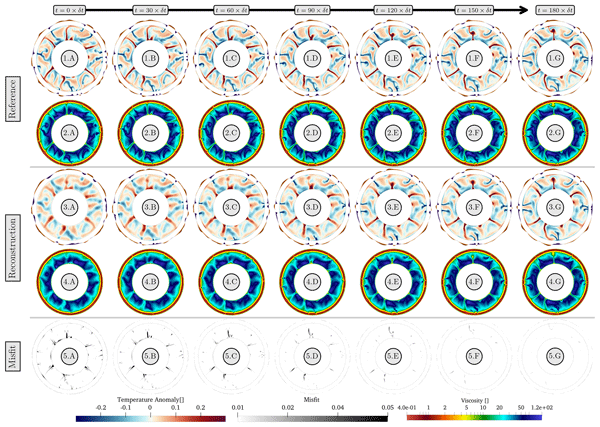
We introduce the Geoscientific ADjoint Optimisation PlaTform (G-ADOPT), designed for inverse modelling of Earth system processes, with an initial focus on mantle dynamics. G-ADOPT is built upon Firedrake, Dolfin-Adjoint and the Rapid Optimisation Library, which work together to optimise models using an adjoint method, aligning them with seismic and geologic datasets. We demonstrate G-ADOPT's ability to reconstruct mantle evolution and thus be a powerful tool in geosciences.
D. Rhodri Davies, Stephan C. Kramer, Sia Ghelichkhan, and Angus Gibson
Geosci. Model Dev., 15, 5127–5166, https://doi.org/10.5194/gmd-15-5127-2022, https://doi.org/10.5194/gmd-15-5127-2022, 2022
Short summary
Short summary
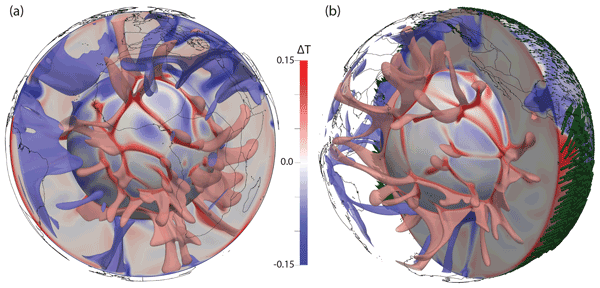
Firedrake is a state-of-the-art system that automatically generates highly optimised code for simulating finite-element (FE) problems in geophysical fluid dynamics. It creates a separation of concerns between employing the FE method and implementing it. Here, we demonstrate the applicability and benefits of Firedrake for simulating geodynamical flows, with a focus on the slow creeping motion of Earth's mantle over geological timescales, which is ultimately the engine driving our dynamic Earth.
Cited articles
Abercrombie, R. E. and Ekström, G.: Earthquake slip on oceanic transform faults, Nature, 410, 74–77, https://doi.org/10.1038/35065064, 2001. a, b, c
Agrusta, R., Tommasi, A., Arcay, D., Gonzalez, A., and Gerya, T.: How partial melting affects small-scale convection in a plume-fed sublithospheric layer beneath fast-moving plates, Geochem. Geophy. Geosy., 16, 3924–3945, https://doi.org/10.1002/2015GC005967, 2015. a
Allemand, P. and Brun, J.-P.: Width of continental rifts and rheological layering of the lithosphere, Tectonophysics, 188, 63–69, https://doi.org/10.1016/0040-1951(91)90314-I, 1991. a, b
Arcay, D., Abecassis, S., and Lallemand, S.: Subduction initiation at an oceanic transform fault experiencing compression: Role of the fault structure and of the brittle-ductile transition depth, Earth Planet. Sc. Lett., 618, 118272, https://doi.org/10.1016/j.epsl.2023.118272, 2023. a, b
Arnould, M., Rolf, T., and Manjón-Cabeza Córdoba, A.: Effects of Composite Rheology on Plate-Like Behavior in Global-Scale Mantle Convection, Geophys. Res. Lett., 50, e2023GL104146, https://doi.org/10.1029/2023GL104146, 2023. a, b
Asti, R., Saspiturry, N., and Angrand, P.: The Mesozoic Iberia-Eurasia diffuse plate boundary: A wide domain of distributed transtensional deformation progressively focusing along the North Pyrenean Zone, Earth-Sci. Rev., 230, 104040, https://doi.org/10.1016/j.earscirev.2022.104040, 2022. a
Bercovici, D.: A simple model of plate generation from mantle flow, Geophys. J. Int., 114, 635–650, https://doi.org/10.1111/j.1365-246X.1993.tb06993.x, 1993. a
Bercovici, D. and Ricard, Y.: Generation of plate tectonics with two-phase grain-damage and pinning: Source–sink model and toroidal flow, Earth Planet. Sc. Lett., 365, 275–288, https://doi.org/10.1016/j.epsl.2013.02.002, 2013. a, b
Bercovici, D., Tackley, P., and Ricard, Y.: 7.07-the generation of plate tectonics from mantle dynamics, Treatise on Geophysics. Elsevier, Oxford, 271–318, https://doi.org/10.1016/B978-0-444-53802-4.00135-4, 2015. a
Bialas, R. W., Buck, W. R., and Qin, R.: How much magma is required to rift a continent?, Earth Planet. Sc. Lett., 292, 68–78, https://doi.org/10.1016/j.epsl.2010.01.021, 2010. a, b
Billen, M. I. and Hirth, G.: Newtonian versus non-Newtonian upper mantle viscosity: Implications for subduction initiation, Geophys. Res. Lett. 32, L19304, https://doi.org/10.1029/2005GL023457, 2005. a
Brun, J. and Cobbold, P.: Strain heating and thermal softening in continental shear zones: a review, J. Struct. Geol., 2, 149–158, https://doi.org/10.1016/0191-8141(80)90045-0, 1980. a
Brune, S., Popov, A. A., and Sobolev, S. V.: Modeling suggests that oblique extension facilitates rifting and continental break-up, J. Geophys. Res.-Sol. Ea., 117, https://doi.org/10.1029/2011JB008860, 2012. a, b
Brune, S., Popov, A. A., and Sobolev, S. V.: Quantifying the thermo-mechanical impact of plume arrival on continental break-up, Tectonophysics, 604, 51–59, https://doi.org/10.1016/j.tecto.2013.02.009, 2013. a
Brune, S., Heine, C., Pérez-Gussinyé, M., and Sobolev, S. V.: Rift migration explains continental margin asymmetry and crustal hyper-extension, Nat. Commun., 5, 4014, https://doi.org/10.1038/ncomms5014, 2014. a
Brune, S., Williams, S. E., Butterworth, N. P., and Müller, R. D.: Abrupt plate accelerations shape rifted continental margins, Nature, 536, 201–204, https://doi.org/10.1038/nature18319, 2016. a, b, c
Brune, S., Kolawole, F., Olive, J.-A., Stamps, D. S., Buck, W. R., Buiter, S. J. H., Furman, T., and Shillington, D. J.: Geodynamics of continental rift initiation and evolution, Nat. Rev. Earth Environ., 4, 235–253, https://doi.org/10.1038/s43017-023-00391-3, 2023. a, b
Buck, W. R.: Modes of continental lithospheric extension, J. Geophys. Res.-Sol. Ea., 96, 20161–20178, https://doi.org/10.1029/91JB01485, 1991. a
Burov, E. and Watts, A.: The long-term strength of continental lithosphere: “jelly sandwich” or “crème brûlée”?, GSA Today, 16, 4 pp., https://doi.org/10.1130/1052-5173(2006)016<4:TLTSOC>2.0.CO;2, 2006. a, b
Burov, E. B.: Rheology and strength of the lithosphere, Mar. Petrol. Geol., 28, 1402–1443, https://doi.org/10.1016/j.marpetgeo.2011.05.008, 2011. a, b
Byerlee, J.: Friction of rocks, Pure Appl. Geophys., 116, 615–626, https://doi.org/10.1007/BF00876528, 1978. a, b, c
Chen, L., Liu, L., Capitanio, F. A., Gerya, T. V., and Li, Y.: The role of pre-existing weak zones in the formation of the Himalaya and Tibetan plateau: 3-D thermomechanical modelling, Geophys. J. Int., 221, 1971–1983, https://doi.org/10.1093/gji/ggaa125, 2020. a
Chenin, P., Schmalholz, S. M., Manatschal, G., and Karner, G. D.: Necking of the Lithosphere: A Reappraisal of Basic Concepts With Thermo-Mechanical Numerical Modeling, J. Geophys. Res.-Sol. Ea., 123, 5279–5299, https://doi.org/10.1029/2017JB014155, 2018. a, b
Čížková, H., van Hunen, J., van den Berg, A. P., and Vlaar, N. J.: The influence of rheological weakening and yield stress on the interaction of slabs with the 670 km discontinuity, Earth Planet. Sc. Lett., 199, 447–457, https://doi.org/10.1016/S0012-821X(02)00586-1, 2002. a
Coltice, N., Husson, L., Faccenna, C., and Arnould, M.: What drives tectonic plates?, Sci. Adv., 5, eaax4295, https://doi.org/10.1126/sciadv.aax4295, 2019. a, b, c, d
Conrad, C. P. and Lithgow-Bertelloni, C.: How Mantle Slabs Drive Plate Tectonics, Science, 298, 207–209, https://doi.org/10.1126/science.1074161, 2002. a
Crameri, F.: Geodynamic diagnostics, scientific visualisation and StagLab 3.0, Geosci. Model Dev., 11, 2541–2562, https://doi.org/10.5194/gmd-11-2541-2018, 2018. a
Crameri, F.: Scientific colour maps (8.0.1), Zenodo [code], https://doi.org/10.5281/zenodo.8409685, 2023. a
Crameri, F. and Tackley, P. J.: Spontaneous development of arcuate single-sided subduction in global 3-D mantle convection models with a free surface, J. Geophys. Res.-Sol. Ea., 119, 5921–5942, https://doi.org/10.1002/2014JB010939, 2014. a, b
Crameri, F., Tackley, P., Meilick, I., Gerya, T., and Kaus, B.: A free plate surface and weak oceanic crust produce single-sided subduction on Earth, Geophys. Res. Lett., 39, L03306, https://doi.org/10.1029/2011GL050046, 2012. a, b, c
Cross, A. J., Prior, D. J., Stipp, M., and Kidder, S.: The recrystallized grain size piezometer for quartz: An EBSD-based calibration, Geophys. Res. Lett., 44, 6667–6674, https://doi.org/10.1002/2017GL073836, 2017. a
Dannberg, J., Eilon, Z., Faul, U., Gassmöller, R., Moulik, P., and Myhill, R.: The importance of grain size to mantle dynamics and seismological observations, Geochem. Geophy. Geosy., 18, 3034–3061, https://doi.org/10.1002/2017GC006944, 2017. a
Dannberg, J., Eilon, Z., Russell, J. B., and Gassmöller, R.: Understanding Sub-Lithospheric Small-Scale Convection by Linking Models of Grain Size Evolution, Mantle Convection, and Seismic Tomography, Geochem. Geophy. Geosy., 26, e2025GC012289, https://doi.org/10.1029/2025GC012289, 2025. a
Davies, D. R., Wilson, C. R., and Kramer, S. C.: Fluidity: A fully unstructured anisotropic adaptive mesh computational modeling framework for geodynamics, Geochem. Geophy. Geosy., 12, https://doi.org/10.1029/2011GC003551, 2011. a
Demouchy, S., Tommasi, A., Ballaran, T. B., and Cordier, P.: Low strength of Earth's uppermost mantle inferred from tri-axial deformation experiments on dry olivine crystals, Phys. Earth Planet. In., 220, 37–49, https://doi.org/10.1016/j.pepi.2013.04.008, 2013. a, b
Demouchy, S., Wang, Q., and Tommasi, A.: Deforming the Upper Mantle – Olivine Mechanical Properties and Anisotropy, Elements, 19, 151–157, https://doi.org/10.2138/gselements.19.3.151, 2023. a, b
Doin, M.-P. and Henry, P.: Subduction initiation and continental crust recycling: the roles of rheology and eclogitization, Tectonophysics, 342, 163–191, https://doi.org/10.1016/S0040-1951(01)00161-5, 2001. a
Duclaux, G., Huismans, R. S., and May, D. A.: Rotation, narrowing, and preferential reactivation of brittle structures during oblique rifting, Earth Planet. Sc. Lett., 531, 115952, https://doi.org/10.1016/S0040-1951(01)00161-5, 2020. a
Duretz, T., de Borst, R., Yamato, P., and Le Pourhiet, L.: Toward robust and predictive geodynamic modeling: The way forward in frictional plasticity, Geophys. Res. Lett., 47, e2019GL086027, https://doi.org/10.1029/2019GL086027, 2020. a
Duretz, T., de Borst, R., and Yamato, P.: Modeling lithospheric deformation using a compressible visco-elasto-viscoplastic rheology and the effective viscosity approach, Geochem. Geophy. Geosy., 22, e2021GC009675, https://doi.org/10.1029/2021GC009675, 2021. a
Duretz, T., Schmalholz, S. M., Kulakov, R., Mohn, G., Tugend, J., Halter, W., and Bardroff, A.: Lithospheric deformation with mechanical anisotropy: A numerical model and application to continental rifting, Geochem. Geophy. Geosy., 26, e2025GC012409, https://doi.org/10.1029/2025GC012409, 2025. a
Duvernay, T., Davies, D. R., Mathews, C. R., Gibson, A. H., and Kramer, S. C.: Continental Magmatism: The Surface Manifestation of Dynamic Interactions Between Cratonic Lithosphere, Mantle Plumes and Edge-Driven Convection, Geochem. Geophy. Geosy., 23, e2022GC010363, https://doi.org/10.1029/2022GC010363, 2022. a
Engeln, J. F., Wiens, D. A., and Stein, S.: Mechanisms and depths of Atlantic transform earthquakes, J. Geophys. Res.-Sol. Ea., 91, 548–577, https://doi.org/10.1029/JB091iB01p00548, 1986. a, b, c
Evans, B. and Goetze, C.: The temperature variation of hardness of olivine and its implication for polycrystalline yield stress, J. Geophys. Res.-Sol. Ea., 84, 5505–5524, https://doi.org/10.1029/JB084iB10p05505, 1979. a
Fleitout, L. and Froidevaux, C.: Thermal and mechanical evolution of shear zones, J. Struct. Geol., 2, 159–164, https://doi.org/10.1016/0191-8141(80)90046-2, 1980. a, b
Foley, B. J. and Bercovici, D.: Scaling laws for convection with temperature-dependent viscosity and grain-damage, Geophys. J. Int., 199, 580–603, https://doi.org/10.1093/gji/ggu275, 2014. a
Frederiksen, S. and Braun, J.: Numerical modelling of strain localisation during extension of the continental lithosphere, Earth Planet. Sc. Lett., 188, 241–251, https://doi.org/10.1016/S0012-821X(01)00323-5, 2001. a
Frost, H. J. and Ashby, M. F.: Deformation mechanism maps: the plasticity and creep of metals and ceramics, Pergamon press, ISBN 0080293387, 1982. a
Fuchs, L. and Becker, T. W.: Deformation memory in the lithosphere: A comparison of damage-dependent weakening and grain-size sensitive rheologies, J. Geophys. Res.-Sol. Ea., 126, e2020JB020335, https://doi.org/10.1029/2020JB020335, 2021. a
Fuchs, L. and Becker, T. W.: On the Role of Rheological Memory for Convection-Driven Plate Reorganizations, Geophys. Res. Lett., 49, e2022GL099574, https://doi.org/10.1029/2022GL099574, 2022. a
Garel, F. and Thoraval, C.: Lithosphere as a constant-velocity plate: Chasing a dynamical LAB in a homogeneous mantle material, Phys. Earth Planet. In., 106710, https://doi.org/10.1016/j.pepi.2021.106710, 2021. a, b
Garel, F., Goes, S., Davies, D. R., Davies, J. H., Kramer, S. C., and Wilson, C. R.: Interaction of subducted slabs with the mantle transition-zone: A regime diagram from 2-D thermo-mechanical models with a mobile trench and an overriding plate, Geochem. Geophy. Geosy., 15, 1739–1765, https://doi.org/10.1002/2014GC005257, 2014. a, b
Gerya, T.: Large-scale-long-term Strength of the Lithosphere: New Theory and Applications, Petrology, 32, 128–141, https://doi.org/10.1134/S086959112401003X, 2024. a
Gouriet, K., Cordier, P., Garel, F., Thoraval, C., Demouchy, S., Tommasi, A., and Carrez, P.: Dislocation dynamics modelling of the power-law breakdown in olivine single crystals: Toward a unified creep law for the upper mantle, Earth Planet. Sc. Lett., 506, 282–291, https://doi.org/10.1016/j.epsl.2018.10.049, 2019. a, b, c, d, e, f
Gueydan, F. and Précigout, J.: Modes of continental rifting as a function of ductile strain localization in the lithospheric mantle, Tectonophysics, 612–613, 18–25, https://doi.org/10.1016/j.tecto.2013.11.029, 2014. a, b, c
Gueydan, F., Morency, C., and Brun, J.-P.: Continental rifting as a function of lithosphere mantle strength, Tectonophysics, 460, 83–93, https://doi.org/10.1016/j.tecto.2008.08.012, 2008. a, b
Gueydan, F., Précigout, J., and Montesi, L. G.: Strain weakening enables continental plate tectonics, Tectonophysics, 631, 189–196, https://doi.org/10.1016/j.tecto.2014.02.005, 2014. a
Gurnis, M., Hall, C., and Lavier, L.: Evolving force balance during incipient subduction, Geochem. Geophy. Geosy., 5, https://doi.org/10.1029/2003GC000681, 2004. a
Hansen, L. N., Kumamoto, K. M., Thom, C. A., Wallis, D., Durham, W. B., Goldsby, D. L., Breithaupt, T., Meyers, C. D., and Kohlstedt, D. L.: Low-temperature plasticity in olivine: Grain size, strain hardening, and the strength of the lithosphere, J. Geophys. Res.-Sol. Ea., 124, 5427–5449, https://doi.org/10.1029/2018JB016736, 2019. a
Heckenbach, E. L., Brune, S., Glerum, A. C., and Bott, J.: Is There a Speed Limit for the Thermal Steady-State Assumption in Continental Rifts?, Geochem. Geophy. Geosy., 22, e2020GC009577, https://doi.org/10.1029/2020GC009577, 2021. a
Heron, P. J., Pysklywec, R. N., and Stephenson, R.: Identifying mantle lithosphere inheritance in controlling intraplate orogenesis, J. Geophys. Res.-Sol. Ea., 121, 6966–6987, https://doi.org/10.1002/2016JB013460, 2016. a
Hirschmann, M. M.: Mantle solidus: Experimental constraints and the effects of peridotite composition, Geochem. Geophy. Geosy., 1, https://doi.org/10.1029/2000GC000070, 2000. a
Hirth, G. and Kohlstedt, D. L.: Experimental constraints on the dynamics of the partially molten upper mantle: Deformation in the diffusion creep regime, J. Geophys. Res.-Sol. Ea., 100, 1981–2001, https://doi.org/10.1029/94JB02128, 1995a. a
Hirth, G. and Kohlstedt, D. L.: Experimental constraints on the dynamics of the partially molten upper mantle: 2. Deformation in the dislocation creep regime, J. Geophys. Res.-Sol. Ea., 100, 15441–15449, https://doi.org/10.1029/95JB01292, 1995b. a
Huismans, R. S. and Beaumont, C.: Symmetric and asymmetric lithospheric extension: Relative effects of frictional-plastic and viscous strain softening, J. Geophys. Res.-Sol. Ea., 108, https://doi.org/10.1029/2002JB002026, 2003. a
Huismans, R. S. and Beaumont, C.: Effect of lithospheric stratification on extensional styles and rift basin geometry, in: Petroleum systems of divergent margin basins (vol. 25), edited by: the Society for Sedimentary Geology, https://doi.org/10.5724/gcs.05.25.0012, 2005. a, b
Iaffaldano, G., Davies, D. R., and DeMets, C.: Indian Ocean floor deformation induced by the Reunion plume rather than the Tibetan Plateau, Nat. Geosci., 11, 362–366, https://doi.org/10.1038/s41561-018-0110-z, 2018. a
Jain, C., Korenaga, J., and Karato, S.-i.: On the Yield Strength of Oceanic Lithosphere, Geophys. Res. Lett., 44, 9716–9722, https://doi.org/10.1002/2017GL075043, 2017. a, b, c
Janin, A., Coltice, N., Chamot-Rooke, N., and Tierny, J.: Geodynamics of a global plate reorganization from topological data analysis, Nat. Geosci., pp. 1–7, https://doi.org/10.1038/s41561-025-01772-7, 2025. a
Karato, S.-I.: Deformation of earth materials: an introduction to the rheology of solid earth, Cambridge University Press, https://doi.org/10.1017/S0016756809006323, 2008. a, b
Kaus, B. J. and Podladchikov, Y. Y.: Initiation of localized shear zones in viscoelastoplastic rocks, J. Geophys. Res.-Sol. Ea., 111, https://doi.org/10.1029/2005JB003652, 2006. a, b, c
Kiss, D., Podladchikov, Y., Duretz, T., and Schmalholz, S. M.: Spontaneous generation of ductile shear zones by thermal softening: Localization criterion, 1D to 3D modelling and application to the lithosphere, Earth Planet. Sc. Lett., 519, 284–296, https://doi.org/10.1016/j.epsl.2019.05.026, 2019. a, b
Kiss, D., Candioti, L. G., Duretz, T., and Schmalholz, S. M.: Thermal softening induced subduction initiation at a passive margin, Geophys. J. Int., 220, 2068–2073, https://doi.org/10.1093/gji/ggz572, 2020. a
Kohli, A., Wolfson-Schwehr, M., Prigent, C., and Warren, J. M.: Oceanic transform fault seismicity and slip mode influenced by seawater infiltration, Nat. Geosci., 14, 606–611, https://doi.org/10.1038/s41561-021-00778-1, 2021. a
Kohlstedt, D. L., Evans, B., and Mackwell, S. J.: Strength of the lithosphere: Constraints imposed by laboratory experiments, J. Geophys. Res.-Sol. Ea., 100, 17587–17602, https://doi.org/10.1029/95JB01460, 1995. a, b, c
Korenaga, J.: Scaling of plate tectonic convection with pseudoplastic rheology, J. Geophys. Res.-Sol. Ea., 115, https://doi.org/10.1029/2010JB007670, 2010. a, b, c
Kramer, S., Greaves, T., Funke, S. W., Wilson, C., Avdis, A., Davies, R., Lange, M., Chris, Candy, A., Cotter, C. J., Percival, J., Mouradian, S., Bhutani, G., Gibson, A., Gorman, G., Duvernay, T., Guo, X., Maddison, J. R., Rathgeber, F., Weiland, M., Nikiteas, I., Robinson, D., Goffin, M., Piggott, M., applet199, Dargaville, S., Everett, A., Jacobs, C. T., Cavendish, A. B., and Ham, D. A.: FluidityProject/fluidity: Zenodo Release, https://zenodo.org/records/5221157 (last access: 20 July 2026), 2021a. a
Kramer, S. C., Wilson, C. R., and Davies, D. R.: An implicit free surface algorithm for geodynamical simulations, Phys. Earth Planet. In., 194–195, 25–37, https://doi.org/10.1016/j.pepi.2012.01.001, 2012. a
Kramer, S. C., Davies, D. R., and Wilson, C. R.: Analytical solutions for mantle flow in cylindrical and spherical shells, Geosci. Model Dev., 14, 1899–1919, https://doi.org/10.5194/gmd-14-1899-2021, 2021b. a
Kreemer, C., Blewitt, G., and Klein, E. C.: A geodetic plate motion and Global Strain Rate Model, Geochem. Geophy. Geosy., 15, 3849–3889, https://doi.org/10.1002/2014GC005407, 2014. a
Lallemand, S. and Arcay, D.: Subduction initiation from the earliest stages to self-sustained subduction: Insights from the analysis of 70 Cenozoic sites, Earth-Sci. Rev., 221, 103779, https://doi.org/10.1016/j.earscirev.2021.103779, 2021. a
Lamb, S. and Watts, A.: The origin of mountains–implications for the behaviour of Earth's lithosphere, Curr. Sci., 1699–1718, http://www.jstor.org/stable/24073494 (last access: 21 July 2026), 2010. a
Le Pichon, X.: Sea-floor spreading and continental drift, J. Geophys. Res., 73, 3661–3697, https://doi.org/10.1029/JB073i012p03661, 1968. a
Le Voci, G., Davies, D. R., Goes, S., Kramer, S. C., and Wilson, C. R.: A systematic 2-D investigation into the mantle wedge's transient flow regime and thermal structure: complexities arising from buoyancy and a hydrated rheology, Geochem. Geophys. Geosys., 15.1, https://doi.org/10.1002/2013GC005022, 2014. a
Li, Y. and Gurnis, M.: Rapid shear zone weakening during subduction initiation, P. Natl. Acad. Sci. USA, 121, e2404939121, https://doi.org/10.1073/pnas.2404939121, 2024. a
Mallard, C., Coltice, N., Seton, M., Müller, R. D., and Tackley, P. J.: Subduction controls the distribution and fragmentation of Earth's tectonic plates, Nature, 535, 140–143, https://doi.org/10.1038/nature17992, 2016. a, b, c, d
Mameri, L., Tommasi, A., Signorelli, J., and Hassani, R.: Olivine-induced viscous anisotropy in fossil strike-slip mantle shear zones and associated strain localization in the crust, Geophys. J. Int., 224, 608–625, https://doi.org/10.1093/gji/ggaa400, 2021. a
Mazzotti, S. and Gueydan, F.: Control of tectonic inheritance on continental intraplate strain rate and seismicity, Tectonophysics, 746, 602–610, https://doi.org/10.1016/j.tecto.2017.12.014, 2018. a
McKenzie, D., Jackson, J., and Priestley, K.: Thermal structure of oceanic and continental lithosphere, Earth Planet. Sc. Lett., 233, 337–349, https://doi.org/10.1016/j.epsl.2005.02.005, 2005. a, b, c
Mei, S., Suzuki, A., Kohlstedt, D., Dixon, N., and Durham, W.: Experimental constraints on the strength of the lithospheric mantle, J. Geosphy. Res., 115, B08204, https://doi.org/10.1029/2009JB006873, 2010. a, b, c
Meyer, G. G., Brantut, N., Mitchell, T. M., and Meredith, P. G.: Fault reactivation and strain partitioning across the brittle-ductile transition, Geology, 47, 1127–1130, https://doi.org/10.1130/G46516.1, 2019. a
Meyer, S. E., Kaus, B. J. P., and Passchier, C.: Development of branching brittle and ductile shear zones: A numerical study, Geochem. Geophy. Geosy., 18, 2054–2075, https://doi.org/10.1002/2016GC006793, 2017. a
Montési, L. G.: Fabric development as the key for forming ductile shear zones and enabling plate tectonics, J. Struct. Geol., 50, 254–266, https://doi.org/10.1016/j.jsg.2012.12.011, 2013. a
Montési, L. G. J. and Zuber, M. T.: A unified description of localization for application to large-scale tectonics, J. Geophys. Res.-Sol. Ea., 107, ECV 1-1–ECV 1-21, https://doi.org/10.1029/2001JB000465, 2002. a, b
Morra, G., Seton, M., Quevedo, L., and Müller, R. D.: Organization of the tectonic plates in the last 200 Myr, Earth Planet. Sc. Lett., 373, 93–101, https://doi.org/10.1016/j.epsl.2013.04.020, 2013. a
Müller, R. D., Zahirovic, S., Williams, S. E., Cannon, J., Seton, M., Bower, D. J., Tetley, M. G., Heine, C., Le Breton, E., Liu, S., Russell, S. H. J., Yang, T., Leonard, J., and Gurnis, M.: A Global Plate Model Including Lithospheric Deformation Along Major Rifts and Orogens Since the Triassic, Tectonics, 38, 1884–1907, https://doi.org/10.1029/2018TC005462, 2019. a
Mulyukova, E. and Bercovici, D.: The generation of plate tectonics from grains to global scales: A brief review, Tectonics, 38, 4058–4076, https://doi.org/10.1029/2018TC005447, 2019. a
Nakagawa, T. and Iwamori, H.: Long-Term Stability of Plate-Like Behavior Caused by Hydrous Mantle Convection and Water Absorption in the Deep Mantle, J. Geophys. Res., 122, 8431–8445, https://doi.org/10.1002/2017JB014052, 2017. a, b, c, d
Olive, J.-A., Behn, M. D., Mittelstaedt, E., Ito, G., and Klein, B. Z.: The role of elasticity in simulating long-term tectonic extension, Geophys. J. Int., 205, 728–743, https://doi.org/10.1093/gji/ggw044, 2016. a
Parsons, B. and Richter, F. M.: A relation between the driving force and geoid anomaly associated with mid-ocean ridges, Earth Planet. Sc. Lett., 51, 445–450, https://doi.org/10.1016/0012-821X(80)90223-X, 1980. a, b
Patočka, V., Čížková, H., and Tackley, P.: Do elasticity and a free surface affect lithospheric stresses caused by upper-mantle convection?, Geophys. J. Int., 216, 1740–1760, https://doi.org/10.1093/gji/ggy513, 2019. a
Patočka, V., Čížková, H., and Pokorný, J.: Dynamic Component of the Asthenosphere: Lateral Viscosity Variations Due To Dislocation Creep at the Base of Oceanic Plates, Geophys. Res. Lett., 51, e2024GL109116, https://doi.org/10.1029/2024GL109116, 2024. a, b
Petit, L., Olive, J.-A., Schubnel, A., Le Pourhiet, L., and Bhat, H. S.: A brittle constitutive law for long-term tectonic modeling based on sub-critical crack growth, Geochem. Geophy. Geosy., 25, e2023GC011229, https://doi.org/10.1029/2023GC011229, 2024. a
Precigout, J., Gueydan, F., Gapais, D., Garrido, C. J., and Essaifi, A.: Strain localisation in the subcontinental mantle – a ductile alternative to the brittle mantle, Tectonophysics, 445, 318–336, https://doi.org/10.1016/j.tecto.2007.09.002, 2007. a
Raterron, P., Wu, Y., Weidner, D. J., and Chen, J.: Low-temperature olivine rheology at high pressure, Phys. Earth Planet. In., 145, 149–159, https://doi.org/10.1016/j.pepi.2004.03.007, 2004. a
Richards, M. A., Yang, W.-S., Baumgardner, J. R., and Bunge, H.-P.: Role of a low-viscosity zone in stabilizing plate tectonics: Implications for comparative terrestrial planetology, Geochem. Geophy. Geosy., 2, https://doi.org/10.1029/2000GC000115, 2001. a, b
Rolf, T. and Tackley, P. J.: Focussing of stress by continents in 3D spherical mantle convection with self-consistent plate tectonics, Geophys. Res. Lett., 38, https://doi.org/10.1029/2011GL048677, 2011. a
Rolf, T., Coltice, N., and Tackley, P. J.: Linking continental drift, plate tectonics and the thermal state of the Earth's mantle, Earth Planet. Sc. Lett., 351–352, 134–146, https://doi.org/10.1016/j.epsl.2012.07.011, 2012. a
Rosenbaum, G., Regenauer-Lieb, K., and Weinberg, R. F.: Interaction between mantle and crustal detachments: A nonlinear system controlling lithospheric extension, J. Geophys. Res.-Sol. Ea., 115, https://doi.org/10.1029/2009JB006696, 2010. a
Ruh, J. B., Tokle, L., and Behr, W. M.: Grain-size-evolution controls on lithospheric weakening during continental rifting, Nat. Geosci., 15, 585–590, https://doi.org/10.1038/s41561-022-00964-9, 2022. a
Schellart, W. P.: Quantifying the net slab pull force as a driving mechanism for plate tectonics, Geophys. Res. Lett., 31, https://doi.org/10.1029/2004GL019528, 2004. a
Schierjott, J. C., Thielmann, M., Rozel, A. B., Golabek, G. J., and Gerya, T. V.: Can grain size reduction initiate transform faults? – insights from a 3-D numerical study, Tectonics, 39, e2019TC005793, https://doi.org/10.1029/2019TC005793, 2020. a
Schmalholz, S. M. and Fletcher, R. C.: The exponential flow law applied to necking and folding of a ductile layer, Geophys. J. Int., 184, 83–89, https://doi.org/10.1111/j.1365-246X.2010.04846.x, 2011. a
Schmalholz, S. M., Medvedev, S., Lechmann, S. M., and Podladchikov, Y.: Relationship between tectonic overpressure, deviatoric stress, driving force, isostasy and gravitational potential energy, Geophys. J. Int., 197, 680–696, https://doi.org/10.1093/gji/ggu040, 2014. a
Sdrolias, M. and Müller, R. D.: Controls on back-arc basin formation, Geochem. Geophy. Geosy., 7, https://doi.org/10.1029/2005GC001090, 2006. a
Semple, A. G. and Lenardic, A.: Feedbacks between a non-Newtonian upper mantle, mantle viscosity structure and mantle dynamics, Geophys. J. Int., 224, 961–972, https://doi.org/10.1093/gji/ggaa495, 2021. a
Solomatov, V.: Scaling of temperature-and stress-dependent viscosity convection, Phys. Fluids, 7, 266–274, https://doi.org/10.1063/1.868624, 1995. a
Solomatov, V. S.: Initiation of subduction by small-scale convection, J. Geophys. Res.-Sol. Ea., 109, https://doi.org/10.1029/2003JB002628, 2004. a
Solomatov, V. S. and Moresi, L.-N.: Three regimes of mantle convection with non-Newtonian viscosity and stagnant lid convection on the terrestrial planets, Geophys. Res. Lett., 24, 1907–1910, https://doi.org/10.1029/97GL01682, 1997. a
Tackley, P. J.: Self-consistent generation of tectonic plates in three-dimensional mantle convection, Earth Planet. Sc. Lett., 157, 9–22, https://doi.org/10.1016/S0012-821X(98)00029-6, 1998. a
Tarayoun, A., Mazzotti, S., and Gueydan, F.: Quantitative impact of structural inheritance on present-day deformation and seismicity concentration in intraplate deformation zones, Earth Planet. Sc. Lett., 518, 160–171, https://doi.org/10.1016/j.epsl.2019.04.043, 2019. a
Tetreault, J. L. and Buiter, S. J. H.: The influence of extension rate and crustal rheology on the evolution of passive margins from rifting to break-up, Tectonophysics, 746, 155–172, https://doi.org/10.1016/j.tecto.2017.08.029, 2018. a
Thielmann, M. and Kaus, B. J.: Shear heating induced lithospheric-scale localization: Does it result in subduction?, Earth Planet. Sc. Lett., 359, 1–13, https://doi.org/10.1016/j.epsl.2012.10.002, 2012. a
Tommasi, A., Knoll, M., Vauchez, A., Signorelli, J. W., Thoraval, C., and Logé, R.: Structural reactivation in plate tectonics controlled by olivine crystal anisotropy, Nat. Geosci., 2, 423–427, https://doi.org/10.1038/ngeo528, 2009. a
Toth, J. and Gurnis, M.: Dynamics of subduction initiation at preexisting fault zones, J. Geophys. Res.-Sol. Ea., 103, 18053–18067, https://doi.org/10.1029/98JB01076, 1998. a
Trompert, R. and Hansen, U.: Mantle convection simulations with rheologies that generate plate-like behaviour, Nature, 395, 686–689, https://doi.org/10.1038/27185, 1998. a, b
Turcotte, D. L. and Schubert, G.: Geodynamics, 3rd edn., Cambridge University Press, New York, https://doi.org/10.1017/CBO9780511843877, 2002. a
Ueda, K., Gerya, T., and Sobolev, S. V.: Subduction initiation by thermal–chemical plumes: Numerical studies, Phys. Earth Planet. In., 171, 296–312, https://doi.org/10.1016/j.pepi.2008.06.032, 2008. a
Ulvrova, M. M., Brune, S., and Williams, S.: Breakup Without Borders: How Continents Speed Up and Slow Down During Rifting, Geophys. Res. Lett., 46, 1338–1347, https://doi.org/10.1029/2018GL080387, 2019. a
Van Broeck, E.: Data for the manuscript “From Strong Plates to Weak Boundaries: Strain Localization in the Lithospheric Mantle with Low- to High-Temperature Dislocation Creep” submitted to Solid Earth (2025) – by Van Broeck, Garel, Thoraval, Arcay and Davies, Zenodo [data set], https://doi.org/10.5281/zenodo.17606932, 2025. a
Van Heck, H. and Tackley, P.: Planforms of self-consistently generated plates in 3D spherical geometry, Geophys. Res. Lett., 35, https://doi.org/10.1029/2008GL035190, 2008. a, b
Wang, Q.: Homologous temperature of olivine: Implications for creep of the upper mantle and fabric transitions in olivine, Sci. China Earth Scie., 59, 1138–1156, https://doi.org/10.1007/s11430-016-5310-z, 2016. a
Wang, Z., Li, J., Feng, Z., Wang, L., and Liu, C.: Mechanism of Structure Variations at Rifted Margins in the Central Segment of South Atlantic: Insights from Numerical Modeling, Acta Geol. Sin.-Engl., 97, 1229–1242, https://doi.org/10.1111/1755-6724.15067, 2023. a
Warren, J. M. and Hansen, L. N.: Ductile deformation of the lithospheric mantle, Annu. Rev. Earth Pl. Sc., 51, 581–609, https://doi.org/10.1146/annurev-earth-031621-063756, 2023. a, b
Watremez, L., Burov, E., d'Acremont, E., Leroy, S., Huet, B., Le Pourhiet, L., and Bellahsen, N.: Buoyancy and localizing properties of continental mantle lithosphere: Insights from thermomechanical models of the eastern Gulf of Aden, Geochem. Geophy. Geosy., 14, 2800–2817, https://doi.org/10.1002/ggge.20179, 2013. a
Weinstein, S. A. and Olson, P. L.: Thermal convection with non-Newtonian plates, Geophys. J. Int., 111, 515–530, https://doi.org/10.1111/j.1365-246X.1992.tb02109.x, 1992. a
Whitney, D. L., Delph, J. R., Thomson, S. N., Beck, S. L., Brocard, G. Y., Cosca, M. A., Darin, M. H., Kaymakci, N., Meijers, M. J., Okay, A. I., Rojay, B., Teyssier, C. and Umhoefer, P. J.: Breaking plates: Creation of the East Anatolian fault, the Anatolian plate, and a tectonic escape system, Geology, 51, 673–677, https://doi.org/10.1130/G51211.1, 2023. a
Wu, B., Conrad, C. P., Heuret, A., Lithgow-Bertelloni, C., and Lallemand, S.: Reconciling strong slab pull and weak plate bending: The plate motion constraint on the strength of mantle slabs, Earth Planet. Sc. Lett., 272, 412–421, https://doi.org/10.1016/j.epsl.2008.05.009, 2008. a
Yuen, D. A. and Schubert, G.: On the stability of frictionally heated shear flows in the asthenosphere, Geophys. J. Int., 57, 189–207, https://doi.org/10.1111/j.1365-246X.1979.tb03780.x, 1979. a
Zhang, L., Zlotnik, S., and Li, C.-F.: Anomalous Subduction Initiation Young Under Old Oceanic Lithosphere, Geochem. Geophy. Geosy., 22, e2020GC009549, https://doi.org/10.1029/2020GC009549, 2021. a
Zhong, X. and Li, Z.-H.: Forced Subduction Initiation at Passive Continental Margins: Velocity-Driven Versus Stress-Driven, Geophys. Res. Lett., 46, 11054–11064, https://doi.org/10.1029/2019GL084022, 2019. a
Zhou, X., Li, Z.-H., Gerya, T. V., and Stern, R. J.: Lateral propagation–induced subduction initiation at passive continental margins controlled by preexisting lithospheric weakness, Sci. Adv., 6, eaaz1048, https://doi.org/10.1126/sciadv.aaz1048, 2020. a
Zwaan, F., Chenin, P., Erratt, D., Manatschal, G., and Schreurs, G.: Complex rift patterns, a result of interacting crustal and mantle weaknesses, or multiphase rifting? Insights from analogue models, Solid Earth, 12, 1473–1495, https://doi.org/10.5194/se-12-1473-2021, 2021. a
Zwaan, F., Erratt, D., Manatschal, G., Chenin, P., and Schreurs, G.: On the delayed expression of mantle inheritance–controlled strain localization during rifting, Geology, 52, 764–768, https://doi.org/10.1130/G52309.1, 2024. a
Short summary
Earth’s solid shell is made of stiff tectonic plates which can break apart to form new weak plate boundaries. We use numerical models of plate extension to investigate how mechanical properties control the concentration of deformation leading to such a boundary as hot mantle rises underneath. We highlight feedbacks, and quantify how and why, under various deformation mechanisms, the plate weakens as temperature and strain rate increase. We compare the model predictions to natural rifting cases.
Earth’s solid shell is made of stiff tectonic plates which can break apart to form new weak...


