
Articles | Volume 17, issue 8
https://doi.org/10.5194/se-17-991-2026
© Author(s) 2026. This work is distributed under
the Creative Commons Attribution 4.0 License.
the Creative Commons Attribution 4.0 License.
https://doi.org/10.5194/se-17-991-2026
© Author(s) 2026. This work is distributed under
the Creative Commons Attribution 4.0 License.
the Creative Commons Attribution 4.0 License.
Research article
| 
19 Aug 2026
Research article |
| 19 Aug 2026
| 19 Aug 2026
Structural controls on lithium-bearing fluid flow in Clayton Valley, Nevada

Southwest Research Institute, 6220 Culebra Rd., San Antonio, Texas, 78238, USA
Department of Earth and Environmental Sciences, Syracuse University, Syracuse, New York, USA
David A. Ferrill
Southwest Research Institute, 6220 Culebra Rd., San Antonio, Texas, 78238, USA
Isaac A. Rangel-Landeros
Department of Sustainable Earth Systems Sciences, The University of Texas at Dallas, Richardson, Texas 75080, USA
Kristina L. Butler
Department of Sustainable Earth Systems Sciences, The University of Texas at Dallas, Richardson, Texas 75080, USA
Department of Geoscience, University of Wisconsin–Madison,1215 West Dayton Street, Madison, Wisconsin 53706, USA
Daniel E. Ibarra
Department of Earth, Environmental and Planetary Sciences, Brown University, Providence, Rhode Island 02912, USA
Institute at Brown for Environment and Society, Brown University, Providence, Rhode Island 02912, USA
Zachary T. Sickmann
Department of Sustainable Earth Systems Sciences, The University of Texas at Dallas, Richardson, Texas 75080, USA
Madigan R. Blake
Department of Sustainable Earth Systems Sciences, The University of Texas at Dallas, Richardson, Texas 75080, USA
Brandon Swanson
Albemarle Corporation, NV-265, Silver Peak, Nevada, 89047, USA
Kevin J. Smart
Southwest Research Institute, 6220 Culebra Rd., San Antonio, Texas, 78238, USA
Lee Ann Munk
Department of Geosciences, University of Alaska Fairbanks, 308 Reichardt Bldg., 1930 Yukon Dr., Fairbanks, AK 99775, USA
Geophysical Institute, University of Alaska Fairbanks, 2156 Koyukuk Dr., Fairbanks, AK, 99775, USA
David F. Boutt
Department of Earth, Geographic, and Climate Sciences, University of Massachusetts Amherst, Amherst, Massachusetts 01003, USA
Lisa D. Stockli
Jackson School of Geosciences, University of Texas, Austin, TX, 78712-1722, USA
Daniel F. Stockli
Jackson School of Geosciences, University of Texas, Austin, TX, 78712-1722, USA
Catherine A. Gagnon
Department of Earth, Environmental and Planetary Sciences, Brown University, Providence, Rhode Island 02912, USA
Institute at Brown for Environment and Society, Brown University, Providence, Rhode Island 02912, USA
Related authors
Adam J. Cawood, David A. Ferrill, Kevin J. Smart, and Michael J. Hartnett
Solid Earth, 17, 225–247, https://doi.org/10.5194/se-17-225-2026, https://doi.org/10.5194/se-17-225-2026, 2026
Short summary
Short summary
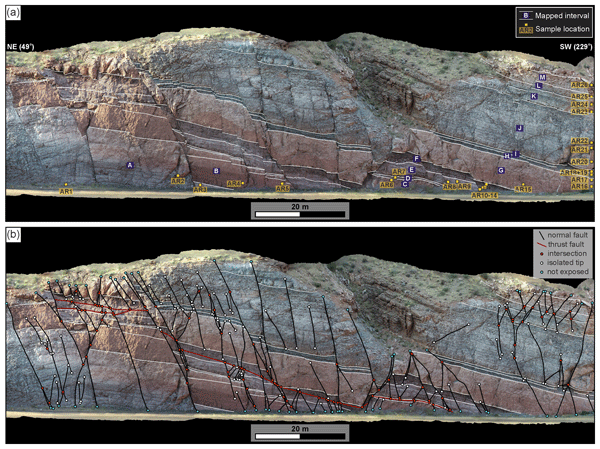
We studied faults in Utah to understand how rock type controls fault dimensions. Using photogrammetry, field mapping, and mineral data, we found faults grow differently in weak and strong rocks because of variable mineralogy. For equivalent displacements, faults tend to be shorter in clay-rich layers and taller in rocks containing strong minerals. We built a model to predict hidden fault height from mineralogy and applied it to seismic data, showing fault dimensions are often underestimated.
Adam J. Cawood, Hannah Watkins, Clare E. Bond, Marian J. Warren, and Mark A. Cooper
Solid Earth, 14, 1005–1030, https://doi.org/10.5194/se-14-1005-2023, https://doi.org/10.5194/se-14-1005-2023, 2023
Short summary
Short summary
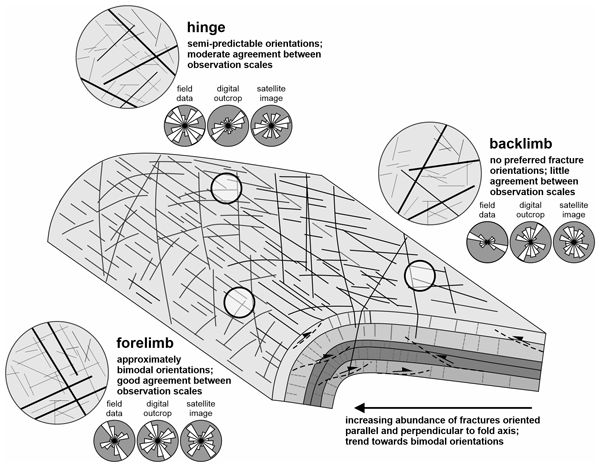
Here we test conceptual models of fracture development by investigating fractures across multiple scales. We find that most fractures increase in abundance towards the fold hinge, and we interpret these as being fold related. Other fractures at the site show inconsistent orientations and are unrelated to fold formation. Our results show that predicting fracture patterns requires the consideration of multiple geologic variables.
Maximilian K. Ehrenfels, Daniel F. Stockli, Richard A. Ketcham, Desmond B. Patterson, and Michael G. Prior
EGUsphere, https://doi.org/10.5194/egusphere-2026-4367, https://doi.org/10.5194/egusphere-2026-4367, 2026
Short summary
Short summary
Minerals can be dated by measuring helium produced by radioactive decay of uranium and thorium to reveal when rocks cooled. Extracting this helium from within mineral grains with a laser instead of dissolving whole crystals is faster and more versatile, but the ages scatter more than expected. Using machine learning on over 800 measurements with our improved workflow, we trace most of this scatter to uneven uranium hidden in a polished-away part of the crystal that future methods must capture.
Hamida Ngoma Nadoya, Clay R. Tabor, Ran Feng, Xiaoqing Liu, Daniel E. Ibarra, Tammo Reichgelt, and Amber Laskos
EGUsphere, https://doi.org/10.5194/egusphere-2026-899, https://doi.org/10.5194/egusphere-2026-899, 2026
Short summary
Short summary
The Miocene Climatic Optimum (MCO; ~17–14 Ma) may provide a window into the future of Earth’s climate. Our study employs the water isotope tracer version of CESM1 to simulate and evaluate climate during the MCO under three different CO2 concentrations. Our findings show warmer conditions during the MCO with increase in precipitation in the mid and high latitudes, southward shift of the intertropical convergence zone and enriched isotopes.
Adam J. Cawood, David A. Ferrill, Kevin J. Smart, and Michael J. Hartnett
Solid Earth, 17, 225–247, https://doi.org/10.5194/se-17-225-2026, https://doi.org/10.5194/se-17-225-2026, 2026
Short summary
Short summary
We studied faults in Utah to understand how rock type controls fault dimensions. Using photogrammetry, field mapping, and mineral data, we found faults grow differently in weak and strong rocks because of variable mineralogy. For equivalent displacements, faults tend to be shorter in clay-rich layers and taller in rocks containing strong minerals. We built a model to predict hidden fault height from mineralogy and applied it to seismic data, showing fault dimensions are often underestimated.
Kim Senger, Grace Shephard, Fenna Ammerlaan, Owen Anfinson, Pascal Audet, Bernard Coakley, Victoria Ershova, Jan Inge Faleide, Sten-Andreas Grundvåg, Rafael Kenji Horota, Karthik Iyer, Julian Janocha, Morgan Jones, Alexander Minakov, Margaret Odlum, Anna Sartell, Andrew Schaeffer, Daniel Stockli, Marie Annette Vander Kloet, and Carmen Gaina
Geosci. Commun., 7, 267–295, https://doi.org/10.5194/gc-7-267-2024, https://doi.org/10.5194/gc-7-267-2024, 2024
Short summary
Short summary
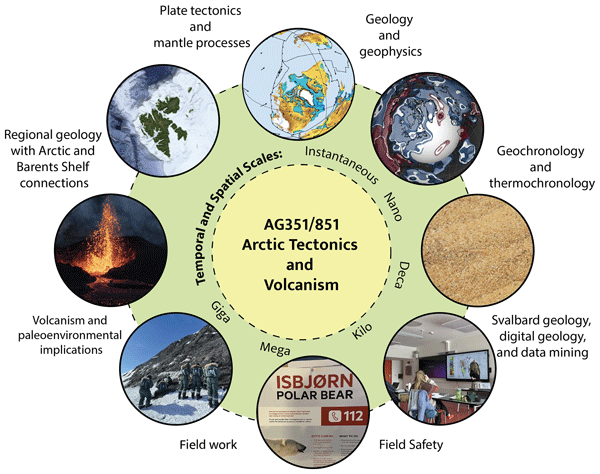
The article describes a course that we have developed at the University Centre in Svalbard that covers many aspects of Arctic geology. The students experience this course through a wide range of lecturers, focussing both on the small and larger scales and covering many geoscientific disciplines.
Tyler Kukla, Daniel E. Ibarra, Kimberly V. Lau, and Jeremy K. C. Rugenstein
Geosci. Model Dev., 16, 5515–5538, https://doi.org/10.5194/gmd-16-5515-2023, https://doi.org/10.5194/gmd-16-5515-2023, 2023
Short summary
Short summary
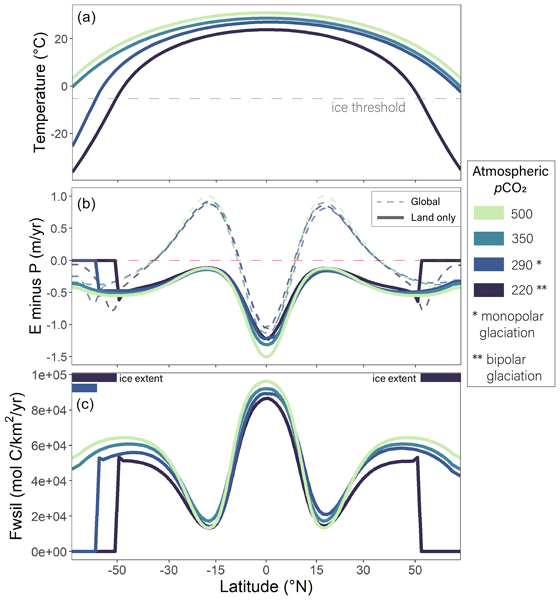
The CH2O-CHOO TRAIN model can simulate how climate and the long-term carbon cycle interact across millions of years on a standard PC. While efficient, the model accounts for many factors including the location of land masses, the spatial pattern of the water cycle, and fundamental climate feedbacks. The model is a powerful tool for investigating how short-term climate processes can affect long-term changes in the Earth system.
Adam J. Cawood, Hannah Watkins, Clare E. Bond, Marian J. Warren, and Mark A. Cooper
Solid Earth, 14, 1005–1030, https://doi.org/10.5194/se-14-1005-2023, https://doi.org/10.5194/se-14-1005-2023, 2023
Short summary
Short summary
Here we test conceptual models of fracture development by investigating fractures across multiple scales. We find that most fractures increase in abundance towards the fold hinge, and we interpret these as being fold related. Other fractures at the site show inconsistent orientations and are unrelated to fold formation. Our results show that predicting fracture patterns requires the consideration of multiple geologic variables.
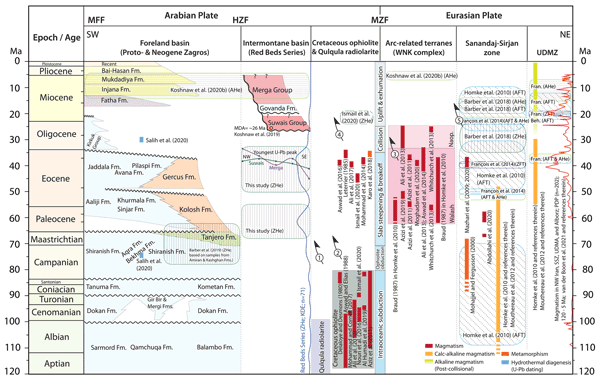
Renas I. Koshnaw, Fritz Schlunegger, and Daniel F. Stockli
Solid Earth, 12, 2479–2501, https://doi.org/10.5194/se-12-2479-2021, https://doi.org/10.5194/se-12-2479-2021, 2021
Short summary
Short summary
As continental plates collide, mountain belts grow. This study investigated the provenance of rocks from the northwestern segment of the Zagros mountain belt to unravel the convergence history of the Arabian and Eurasian plates. Provenance data synthesis and field relationships suggest that the Zagros Mountains developed as a result of the oceanic crust emplacement on the Arabian continental plate, followed by the Arabia–Eurasia collision and later uplift of the broader region.
Cited articles
Albers, J. P. and Stewart, J. H.: Geology and mineral deposits of Esmeralda County, Nevada, Nevada Bureau of Mines and Geology Bulletin, 78, 88 pp., 1972.
ALS: Geochemistry services – lithium, https://www.alsglobal.com/en/geochemistry/energy-minerals-analysis/lithium (last access: 12 February 2025), 2025.
Anderson, N. T., Kelson, J. R., Kele, S., Daëron, M., Bonifacie, M., Horita, J., Mackey, T. J., John, C. M., Kluge, T., Petschnig, P., and Jost, A. B.: A unified clumped isotope thermometer calibration (0.5–1100 °C) using carbonate-based standardization, Geophys. Res. Lett., 48, e2020GL092069, https://doi.org/10.1029/2020GL092069, 2021.
Bailly, P. A.: Geology of the southeastern part of Mineral Ridge, Esmeralda County, Nevada, PhD dissertation, Stanford University, Stanford, California, 1951.
Beaudoin, N. E., Lacombe, O., Hoareau, G., and Callot, J.-P.: How the geochemistry of syn-kinematic calcite cement depicts past fluid flow and assists structural interpretations: a review of concepts and applications in orogenic forelands, Geol. Mag., 159, 2157–2190, https://doi.org/10.1017/S0016756822001327, 2022.
Bense, V. F., Gleeson, T., Loveless, S. E., Bour, O., and Scibek, J.: Fault zone hydrogeology, Earth-Sci. Rev., 127, 171–192, https://doi.org/10.1016/j.earscirev.2013.09.008, 2013.
Benson, T. R., Coble, M. A., and Dilles, J. H.: Hydrothermal enrichment of lithium in intracaldera illite-bearing claystones, Sci. Adv., 9, eadh8183, https://doi.org/10.1126/sciadv.adh8183, 2023.
Bernasconi, S. M., Daëron, M., Bergmann, K. D., Bonifacie, M., Meckler, A. N., Affek, H. P., Anderson, N., Bajnai, D., Barkan, E., Beverly, E., and Blamart, D.: InterCarb: A community effort to improve interlaboratory standardization of the carbonate clumped isotope thermometer using carbonate standards, Geochem. Geophy. Geosy., 22, e2020GC009588, https://doi.org/10.1029/2020GC009588, 2021.
Bhattacharya, T., Brennan, P. R., Ibarra, D. E., Gagnon, C. A., Butler, K. L., Terrazas, A., Miller, S., Munk, L. A., Boutt, D. F., Feng, R., and Bullinger, S. N.: Pleistocene shifts in Great Basin hydroclimate seasonality govern the formation of lithium-rich paleolake deposits, Quaternary Sci. Rev., 335, 108747, https://doi.org/10.1016/j.quascirev.2024.108747, 2024.
Bons, P. D., Elburg, M. A., and Gomez-Rivas, E.: A review of the formation of tectonic veins and their microstructures, J. Struct. Geol., 43, 33–62, https://doi.org/10.1016/j.jsg.2012.07.005, 2012.
Bradley, D. C., Munk, L. A., Jochens, H., Hynek, S., and Labay, K. A.: A preliminary deposit model for lithium brines, U.S. Geological Survey Open-File Report 2013–1006, https://doi.org/10.3133/ofr20131006, 2013.
Bradley, D. C., Stillings, L. L., Jaskula, B. W., Munk, L., and McCauley, A. D.: Lithium, in: Critical Mineral Resources of the United States – Economic and Environmental Geology and Prospects for Future Supply, edited by: Shultz, K. J., DeYoung, J. H., Seal, R. R., and Bradley, D. C., U.S. Geological Survey Professional Paper 1802, K1–K21, https://doi.org/10.3133/pp1802K, 2017.
Brand, W. A., Assonov, S. S., and Coplen, T. B.: Correction for the 17O interference in δ13C measurements when analyzing CO2 with stable isotope mass spectrometry (IUPAC Technical Report), Pure Appl. Chem., 82, 1719–1733, https://doi.org/10.1351/PAC-REP-09-01-05, 2010.
Branson, O., Uchikawa, J., Bohlin, M. S., and Misra, S.: Controls on Li partitioning and isotopic fractionation in inorganic calcite, Geochim. Cosmochim. Acta, 382, 91–102, https://doi.org/10.1016/j.gca.2024.07.001, 2024.
Butler, K. L., Munk, L. A., Boutt, D. F., Morris, N., Kennedy, J., Saha, P., Blake, M. R., Custado, M. J., and Ibarra, D. E.: The origin and enrichment of sedimentary basin lithium brines: A case study from the Upper Devonian Leduc Formation, Alberta Basin, Canada, Econ. Geol., 120, 649–662, https://doi.org/10.5382/econgeo.5151, 2025.
Caine, J. S., Evans, J. P., and Forster, C. B.: Fault zone architecture and permeability structure, Geology, 24, 1025–1028, https://doi.org/10.1130/0091-7613(1996)024<1025:FZAAPS>2.3.CO;2, 1996.
Cawood, A. J.: Supplemental data for “Structural controls on lithium-bearing fluid flow in Clayton Valley, Nevada”, Zenodo [data set], https://doi.org/10.5281/zenodo.21343550, 2026.
Cawood, A. J., Ferrill, D. A., Morris, A. P., Norris, D., McCallum, D., Gillis, E., and Smart, K. J.: Tectonostratigraphic evolution of the Orphan Basin and Flemish Pass region – Part 1: Results from coupled kinematic restoration and crustal area balancing, Mar. Petrol. Geol., 128, 105042, https://doi.org/10.1016/j.marpetgeo.2021.105042, 2021.
Cawood, A., Ferrill, D., Rangel-Landeros, I., Butler, K., Sickmann, Z., Blake, M., Ibarra, D., Swanson, B., Munk, L., Boutt, D., Stockli, L., Stockli, D., and Gagnon, C.: Geochemical constraints on lithium transport in fault and fracture systems, Geological Society of America Abstracts with Programs, 57, 272-9, https://doi.org/10.1130/abs/2025AM-8723, 2025.
Chen, T. W., Smye, A., Lloyd, M., Fisher, D., and Hashimoto, Y.: Temperatures of vein formation associated with plate interface deformation constrained by oxygen and clumped isotope thermometry, Geochem. Geophy. Geosy., 25, e2024GC011516, https://doi.org/10.1029/2024GC011516, 2024.
Chew, D. M., Petrus, J. A., and Kamber, B. S.: U–Pb LA–ICP–MS dating using accessory mineral standards with variable common Pb, Chem. Geol., 363, 185–199, https://doi.org/10.1016/j.chemgeo.2013.11.006, 2014.
Coffey, D. M., Munk, L. A., Ibarra, D. E., Butler, K. L., Boutt, D. F., and Jenckes, J.: Lithium storage and release from lacustrine sediments: Implications for lithium enrichment and sustainability in continental brines, Geochem. Geophy. Geosy., 22, e2021GC009916, https://doi.org/10.1029/2021GC009916, 2021.
Daëron, M., Blamart, D., Peral, M., and Affek, H. P.: Absolute isotopic abundance ratios and the accuracy of Δ47 measurements, Chem. Geol., 442, 83–96, https://doi.org/10.1016/j.chemgeo.2016.08.014, 2016.
Darin, M. H., Harlaux, M., Ogilvie, I. A., Reynolds, J. T., and Chafetz, D. A.: Source-to-sink evolution of volcano-sedimentary Li–B deposits at Rhyolite Ridge, southwestern Nevada, Econ. Geol., 120, 1167–1190, https://doi.org/10.5382/econgeo.5152, 2025.
Davis, G. H., Bos Orent, E., Clinkscales, C., Ferroni, F. R., Gehrels, G. E., George, S. W. M., Guns, K. A., Hanagan, C. E., Hughes, A. N., Iriondo, A., Jepson, G., Kelty, C., Krantz, R. W., Levenstein, B. M., Lingrey, S. H., Miggins, D. P., Moore, T., Portnoy, S. E., Reeher, L. J., and Wang, J. W.: Structural analysis and chronologic constraints on progressive deformation within the Rincon Mountains, Arizona: Implications for development of metamorphic core complexes, Geol. Soc. Am. Mem., 222, 1–125, https://doi.org/10.1130/2023.1222(01), 2023.
Davis, J. R. and Vine, J. D.: Stratigraphic and tectonic setting of the lithium brine field, Clayton Valley, Nevada, Rocky Mountain Association of Geologists Basin and Range Symposium, 421–430, 1979.
Davis, J. R., Friedman, I., and Gleason, J. D.: Origin of the lithium-rich brine, Clayton Valley, Nevada, U.S. Geological Survey Bulletin, 1622, 131–138, 1986.
Diamond, D. and Ingersoll, R.: Structural and sedimentologic evolution of a Miocene supradetachment basin, Silver Peak Range and adjacent areas, west-central Nevada, Int. Geol. Rev., 44, 588–623, https://doi.org/10.2747/0020-6814.44.7.588, 2002.
Drake, H., Mathurin, F. A., Zack, T., Schäfer, T., Roberts, N. M., Whitehouse, M., Karlsson, A., Broman, C., and Åström, M. E.: Incorporation of metals into calcite in a deep anoxic granite aquifer, Environ. Sci. Technol., 52, 493–502, https://doi.org/10.1021/acs.est.7b05258, 2018.
Eaton, G. P.: The Basin and Range province: Origin and tectonic significance, Annu. Rev. Earth Pl. Sc., 10, 409–440, https://doi.org/10.1146/annurev.ea.10.050182.002205, 1982.
Ferrill, D. A., Morris, A. P., McGinnis, R. N., and Smart, K. J.: Myths about normal faulting, Geological Society, London, Special Publications, 439, 41–56, https://doi.org/10.1144/SP439.12, 2017.
Ferrill, D. A., Smart, K. J., Cawood, A. J., and Morris, A. P.: The fold-thrust belt stress cycle: Superposition of normal, strike-slip, and thrust faulting deformation regimes, J. Struct. Geol., 148, 104362, https://doi.org/10.1016/j.jsg.2021.104362, 2021.
Folk, R. L.: Practical petrographic classification of limestones, AAPG Bull., 43, 1–38, https://doi.org/10.1306/0BDA5C36-16BD-11D7-8645000102C1865D, 1959.
Folk, R. L.: Spectral subdivision of limestone types, in: Classification of Carbonate Rocks, edited by: Ham, W. E., AAPG Memoir., 1, 62–84, 1962.
Folk, R. L.: Some aspects of recrystallization in ancient limestones, in: Dolomitization and Limestone Diagenesis, edited by: Pray, L. C. and Murray, R. C., SEPM Spec. P., 13, 14–48, https://doi.org/10.2110/pec.65.07.0014, 1965.
Füger, A., Konrad, F., Leis, A., Dietzel, M., and Mavromatis, V.: Effect of growth rate and pH on lithium incorporation in calcite, Geochim. Cosmochim. Acta, 248, 14–24, https://doi.org/10.1016/j.gca.2018.12.040, 2019.
Fyfe, W. S., Price, N. J., and Thompson, A. B.: Fluids in the Earth's crust, Elsevier, Amsterdam, ISBN 9780444416360, 1978.
Gagnon, C. A., Butler, K. L., Gaviria, E., Terrazas, A., Gao, A., Bhattacharya, T., Boutt, D. F., Munk, L. A., and Ibarra, D. E.: Paleoclimate controls on lithium enrichment in Great Basin Pliocene–Pleistocene lacustrine clays, Geol. Soc. Am. Bull., 135, 3201–3212, 2023.
Ghosh, P., Adkins, J., Affek, H., Balta, B., Guo, W., Schauble, E. A., Schrag, D., and Eiler, J. M.: 13C–18O bonds in carbonate minerals: A new kind of paleothermometer, Geochim. Cosmochim. Ac., 70, 1439–1456, https://doi.org/10.1016/j.gca.2005.11.014, 2006.
Guillong, M., Samankassou, E., Müller, I. A., Szymanowski, D., Looser, N., Tavazzani, L., Merino-Tomé, Ó., Bahamonde, J. R., Buret, Y., and Ovtcharova, M.: Technical note: RA138 calcite U–Pb LA-ICP-MS primary reference material, Geochronology, 6, 465–474, https://doi.org/10.5194/gchron-6-465-2024, 2024.
Hancock, P. L.: Brittle microtectonics: Principles and practice, J. Struct. Geol., 7, 437–457, https://doi.org/10.1016/0191-8141(85)90048-3, 1985.
Heilweil, V. M. and Brooks, L. E. (Eds.): Conceptual model of the Great Basin carbonate and alluvial aquifer system, U.S. Geological Survey Scientific Investigations Report 2010–5193, 191 pp., https://doi.org/10.3133/sir20105193, 2011.
Hollocher, K. and Ruiz, J.: Major and trace element determinations on NIST glass standard reference materials by inductively coupled plasma mass spectrometry, Geostandard. Newslett., 19, 27–34, https://doi.org/10.1111/j.1751-908X.1995.tb00149.x, 1995.
Jochum, K. P., Willbold, M., Raczek, I., Stoll, B., and Herwig, K.: Chemical characterisation of USGS reference glasses using multiple techniques, Geostand. Geoanal. Res., 29, 285–302, https://doi.org/10.1111/j.1751-908X.2005.tb00901.x, 2005.
Kaiyun, C., Honglin, Y., Zhian, B., Chunlei, Z., and Mengning, D.: Precise in situ determination of lead isotope ratios using femtosecond laser ablation MC-ICP-MS, Geostand. Geoanal. Res., 38, 5–21, 2014.
Kim, S. T. and O'Neil, J. R.: Equilibrium and nonequilibrium oxygen isotope effects in synthetic carbonates, Geochim. Cosmochim. Ac., 61, 3461–3475, https://doi.org/10.1016/S0016-7037(97)00169-5, 1997.
Kunasz, I. A.: Lithium occurrence in the brines of Clayton Valley, Esmeralda County, Nevada, Proceedings of the Fourth Symposium on Salt, 57–66, 1974.
Marazuela, M. A., Ayora, C., Vázquez-Suñé, E., Olivella, S., and García-Gil, A.: Hydrogeological constraints for lithium enrichment in the Salar de Atacama, Sci. Total Environ., 739, 139959, https://doi.org/10.1016/j.scitotenv.2020.139959, 2020.
Munk, L., Jochens, H., Jennings, M., Bradley, D., Hynek, S., and Godfrey, L.: Geochemistry of lithium-rich brines in Clayton Valley, Nevada, Proceedings of the 11th SGA Biennial Meeting, 217–219, 2011.
Munk, L. A., Hynek, S. A., Bradley, D., Boutt, D. F., Labay, K., and Jochens, H.: Lithium brines: A global perspective, Rev. Econ. Geol., 18, 339–365, https://doi.org/10.5382/Rev.18.14, 2016.
Munk, L. A., Boutt, D., Butler, K., Russo, A., Jenckes, J., Moran, B., and Kirshen, A.: Lithium brines: Origin, characteristics, and global distribution, Econ. Geol., 120, 575–597, https://doi.org/10.5382/econgeo.5134, 2025.
Ogilvie, I., Darin, M. H., Reynolds, J. T., Chafetz, D. A., and Harlaux, M.: Geologic map of Rhyolite Ridge and the northern Silver Peak Range, Esmeralda County, Nevada, Nevada Bureau of Mines and Geology Open-File Report 2023-11, scale 1 : 24 000, 35 pp., 2023.
Ogilvie, I. A.: Structure, stratigraphy, and source of sediment-hosted lithium deposits at Rhyolite Ridge, Silver Peak Range, western Nevada, MSc thesis, University of Nevada-Reno, Reno, Nevada, 153 pp., 2023.
Oldow, J. S., Kohler, G., and Donelick, R. A.: Late Cenozoic extensional transfer in the Walker Lane strike-slip belt, Nevada, Geology, 22, 637–640, https://doi.org/10.1130/0091-7613(1994)022<0637:LCETIT>2.3.CO;2, 1994.
Oldow, J. S., Geissman, J. W., and Stockli, D. F.: Evolution of late Neogene transtension in structural stepovers linking the Walker Lane and Eastern California Shear Zone, Int. Geol. Rev., 50, 1–21, 2008.
Olson, J. C. and Hinrichs, E. N.: Beryl-bearing pegmatites in the Ruby Mountains and other areas in Nevada and northwestern Arizona, U.S. Geological Survey Bulletin, 1082-D, D135–D200, https://doi.org/10.3133/b1082D, 1960.
Palacios-García, N. B., Fitz-Díaz, E., Stockli, L. D., and Stockli, D. F.: U–Pb calcite dating of brittle deformation in Permian carbonates, J. Struct. Geol., 171, 104863, https://doi.org/10.1016/j.jsg.2023.104863, 2023.
Papke, K. G.: Evaporites and brines in Nevada playas, Nevada Bureau of Mines and Geology Bulletin, 87, 35 pp., 1976.
Paton, C., Hellstrom, J., Paul, B., Woodhead, J., and Hergt, J.: Iolite: Freeware for the visualisation and processing of mass spectrometric data, J. Anal. Atom. Spectrom., 26, 2508–2518, https://doi.org/10.1039/C1JA10172B, 2011.
Price, J. G., Lechler, P. J., Lear, M. B., and Giles, T. F.: Possible volcanic sources of lithium in Clayton Valley, Nevada, Geological Society of Nevada Symposium Proceedings, 241–248, 2000.
Putzolu, F., Armstrong, R. N., Benson, T. R., Boutt, D. F., Butler, K. L., Dolgopolova, A., Herrington, R. J., Ibarra, D. E., and Munk, L. A.: Volcano-sedimentary deposits: Overview of an emerging type of lithium resource, Econ. Geol., 120, 541–573, https://doi.org/10.5382/econgeo.5135, 2025.
Rangel, I., Cawood, A., Butler, K., Sickmann, Z., Blake, M., Swanson, B., Ibarra, D., Gagnon, C., Munk, L., Boutt, D., Ferrill, D., and Smart, K.: Revised tectonic framework for the Clayton Valley lithium deposits, Geological Society of America Abstracts with Programs, 57, 272-3, 2025.
Roberts, N. M. W. and Holdsworth, R. E.: Timescales of faulting through calcite geochronology: A review, J. Struct. Geol., 158, 104578, https://doi.org/10.1016/j.jsg.2022.104578, 2022.
Roberts, N. M. W. and Walker, R. J.: U–Pb geochronology of calcite-mineralized faults: Absolute timing of rift-related fault events on the northeast Atlantic margin, Geology, 44, 531–534, https://doi.org/10.1130/G37868.1, 2016.
Roberts, N. M., Rasbury, E. T., Parrish, R. R., Smith, C. J., Horstwood, M. S., and Condon, D. J.: A calcite reference material for LA-ICP-MS U–Pb geochronology, Geochem. Geophy. Geosy., 18, 2807–2814, https://doi.org/10.1002/2016GC006784, 2017.
Stewart, J. H.: Regional characteristics, tilt domains, and extensional history of the Basin and Range province, Geol. Soc. Am. Spec. Pap., 323, 47–74, 1998.
Stewart, J. H. and Diamond, D. S.: Changing patterns of extensional tectonics, Geol. Soc. Am. Mem., 176, 447–475, 1990.
Teng, F. Z., McDonough, W. F., Rudnick, R. L., Dalpé, C., Tomascak, P. B., Chappell, B. W., and Gao, S.: Lithium isotopic composition and concentration of the upper continental crust, Geochim. Cosmochim. Ac., 68, 4167–4178, https://doi.org/10.1016/j.gca.2004.03.031, 2004.
Tera, F. and Wasserburg, G. J.: U–Th–Pb systematics in lunar highland samples, Earth Planet. Sc. Lett., 17, 36–51, https://doi.org/10.1016/0012-821X(72)90257-9, 1972.
Thompson, A. L., Richardson, C. A., Gootee, B. F., Wilkins, J., and Fenerty, B.: Geology, geochemistry, and potential origins of the Basin volcano-sedimentary lithium deposit, Econ. Geol., 120, 663–688, https://doi.org/10.5382/econgeo.5138, 2025.
U.S. Geological Survey: Quaternary fault and fold database for the United States, https://www.usgs.gov/publications/quaternary-fault-and-fold-database-united-states (last access: 31 December 2024), 2024.
Vermeesch, P.: IsoplotR: A free and open toolbox for geochronology, Geosci. Front., 9, 1479–1493, https://doi.org/10.1016/j.gsf.2018.04.001, 2018.
Watts, K. E.: Lithium from magma to mine in an early Yellowstone hotspot caldera, Geology, 53, 592–596, https://doi.org/10.1130/G53140.1, 2025.
Short summary
Faults and fractures can act as long-lived pathways that move lithium through the Earth. By combining field observations, chemical analyses, and dating of minerals, we show that these structures repeatedly channel fluids over millions of years. This process controls where lithium accumulates and helps explain how valuable deposits form. Understanding these pathways improves our ability to identify and assess lithium resources.
Faults and fractures can act as long-lived pathways that move lithium through the Earth. By...


