
Articles | Volume 17, issue 10
https://doi.org/10.5194/se-17-1139-2026
© Author(s) 2026. This work is distributed under
the Creative Commons Attribution 4.0 License.
the Creative Commons Attribution 4.0 License.
https://doi.org/10.5194/se-17-1139-2026
© Author(s) 2026. This work is distributed under
the Creative Commons Attribution 4.0 License.
the Creative Commons Attribution 4.0 License.
Review article
| 
15 Oct 2026
Review article |
| 15 Oct 2026
| 15 Oct 2026
Understanding spatial and temporal evolution of progressive excavation damage zone in granitic rocks – development of a novel mine-by and laboratory experimental framework at the BedrettoLab

Chair of Engineering Geology and Hydrogeology, RWTH Aachen University, Aachen, Germany
Jonas Dickmann
Chair of Engineering Geology and Hydrogeology, RWTH Aachen University, Aachen, Germany
Michal Kruszewski
Chair of Engineering Geology and Hydrogeology, RWTH Aachen University, Aachen, Germany
Antonio Pio Rinaldi
Swiss Seismological Service, ETH Zurich, Zurich, Switzerland
Linus Villiger
Swiss Seismological Service, ETH Zurich, Zurich, Switzerland
Alexis Shakas
Department of Earth Sciences, ETH Zurich, Zurich, Switzerland
Mathew Perras
Trent School of the Environment, Trent University, Peterborough, Ontario, Canada
Navid Bahrani
Department of Civil and Resource Engineering, Dalhousie University, Halifax, Canada
Patrick Bianchi
Swiss Seismological Service, ETH Zurich, Zurich, Switzerland
Peter Achtziger-Zupančič
Fraunhofer Research Institution for Energy Infrastructures and Geotechnologies, IEG, Aachen, Germany
Steven Gaines
Natural Resources Canada, Ontario, Canada
Kai Bröker
Center for Hydrogeology and Geothermics, University of Neuchâtel, Neuchâtel, Switzerland
Xiaodong Ma
School of Earth and Space Sciences, University of Science and Technology of China, Hefei, China
Paul A. Selvadurai
Department of Earth Sciences, ETH Zurich, Zurich, Switzerland
Virginie Durand
Geoazur Laboratory, Valbonne, France
Kavan Khaledi
Fraunhofer Research Institution for Energy Infrastructures and Geotechnologies, IEG, Aachen, Germany
Mohammadreza Jalali
Chair of Engineering Geology and Hydrogeology, RWTH Aachen University, Aachen, Germany
Yousef Golabchi
Department of Civil Engineering, Lassonde School of Engineering, York University, Canada
Sam Harris
Trent School of the Environment, Trent University, Peterborough, Ontario, Canada
Alba Zappone
Department of Earth Sciences, ETH Zurich, Zurich, Switzerland
Mathilde Wimez
Department of Earth Sciences, ETH Zurich, Zurich, Switzerland
Marian Hertrich
Department of Earth Sciences, ETH Zurich, Zurich, Switzerland
Stefan Wiemer
Swiss Seismological Service, ETH Zurich, Zurich, Switzerland
Florian Amann
Chair of Engineering Geology and Hydrogeology, RWTH Aachen University, Aachen, Germany
Fraunhofer Research Institution for Energy Infrastructures and Geotechnologies, IEG, Aachen, Germany
Related authors
No articles found.
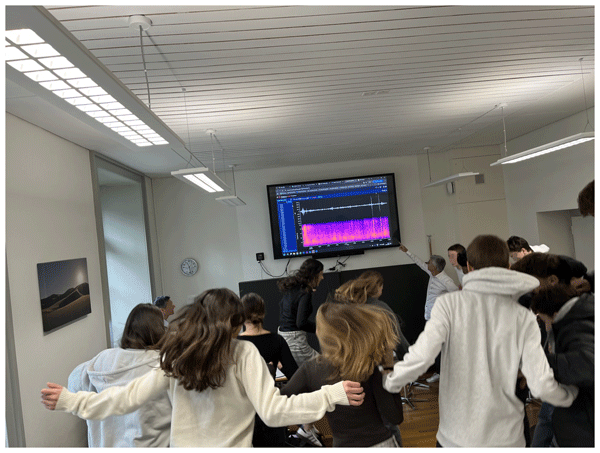
Maren Böse, Nadja Valenzuela, György Hetényi, Romain Roduit, Irina Dallo, Kerstin Bircher, John Clinton, Urs Fässler, Florian Haslinger, Tanja Jaeger, Michèle Marti, Roman Racine, Anne Sauron, Shiba Subedi, and Stefan Wiemer
Geosci. Commun., 9, 223–237, https://doi.org/10.5194/gc-9-223-2026, https://doi.org/10.5194/gc-9-223-2026, 2026
Short summary
Short summary
Although Switzerland faces moderate seismic hazard, earthquakes represent the natural risk with the greatest impact potential. As most residents have never experienced a damaging earthquake, education is critical for raising awareness and enhancing preparedness. In a recent project, we expanded the seismo@school program in Switzerland by developing new teaching materials in four languages, related classroom activities, and by installing Raspberry Shake seismometers in schools across the country.
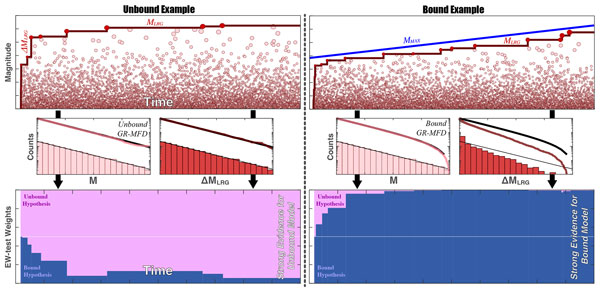
Ryan Schultz, Linus Villiger, Valentin Gischig, and Stefan Wiemer
Solid Earth, 17, 617–642, https://doi.org/10.5194/se-17-617-2026, https://doi.org/10.5194/se-17-617-2026, 2026
Short summary
Short summary
We use statistical tests to infer MMAX (maximum possible magnitude) from an earthquake catalogue and focus on data from three underground laboratories with controlled injection experiments. There, we find clear evidence for MMAX bounds and corroborate interpretations of fracture growth against other geophysical studies. Unbound sequences occur when stimulation is directed towards pre-existing faults. The validation of our methods against well-studied cases is encouraging and will help validate future interpretations.
Robert James Cuss, Jocelyn Gisiger, Antonio Pio Rinaldi, Elliot James Muir Bird, David Jaeggi, Matthijs Hendrik Nuus, Manuel Lorenzo Sentis, Bastian Johannes Graupner, Frédéric Bernier, Fabien Magri, and Jon Francis Harrington
Saf. Nucl. Waste Disposal Discuss., https://doi.org/10.5194/sand-2026-3, https://doi.org/10.5194/sand-2026-3, 2026
Preprint under review for SaND
Short summary
Short summary
Knowledge of how gas moves through clay-rich rocks and barrier systems in a radioactive waste disposal facility is important to give confidence to long-term containment of waste. The GT experiment was designed to determine the physics driving gas movement in Opalinus Clay, the candidate host rock in Switzerland. The way gas moved through the rock was seen to change based on the rate of gas pressurisation rate – by analogy, the rate of gas production in a geological disposal facility.
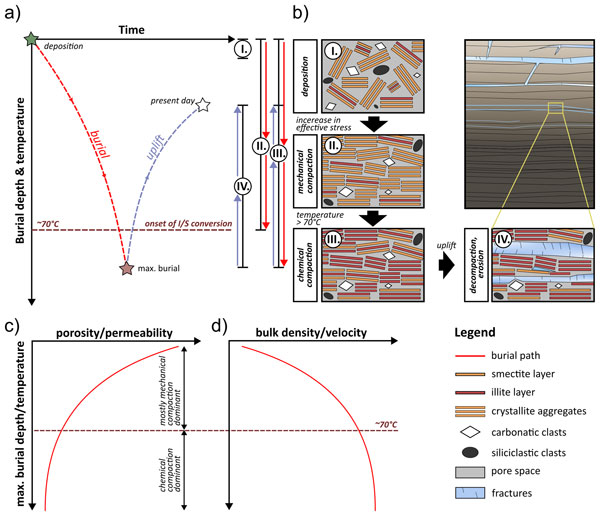
Raphael Burchartz, Timo Seemann, Garri Gaus, Lisa Winhausen, Mohammadreza Jalali, Brian Mutuma Mbui, Sebastian Grohmann, Linda Burnaz, Marlise Colling Cassel, Jochen Erbacher, Ralf Littke, and Florian Amann
Solid Earth, 17, 485–512, https://doi.org/10.5194/se-17-485-2026, https://doi.org/10.5194/se-17-485-2026, 2026
Short summary
Short summary
In Germany, claystones are studied for their suitability as host-rocks for the disposal of high-level radioactive waste. The MATURITY project systematically investigates how gradual burial affects physical properties in the Lower Jurassic Amaltheenton Formation of the Lower Saxony Basin (Germany). Understanding these changes helps assess claystone suitability for long-term waste isolation, improving site selection for deep geological repositories.
Raphael Burchartz, Brian Mutuma Mbui, Peter Achtziger-Zupančič, Garri Gaus, Timo Seemann, Lisa Winhausen, Yvonne Spychala, Mohammadreza Jalali, Ralf Littke, and Florian Amann
EGUsphere, https://doi.org/10.5194/egusphere-2026-964, https://doi.org/10.5194/egusphere-2026-964, 2026
Short summary
Short summary
We compile 782 hydraulic conductivity measurements from six European argillaceous formations relevant for high-level radioactive waste disposal. We show that maximum burial depth controls matrix-scale conductivity, while present-day depth, decompaction, fracturing, and self-sealing govern rock-mass behaviour, defining three depth-related evolutionary trends.
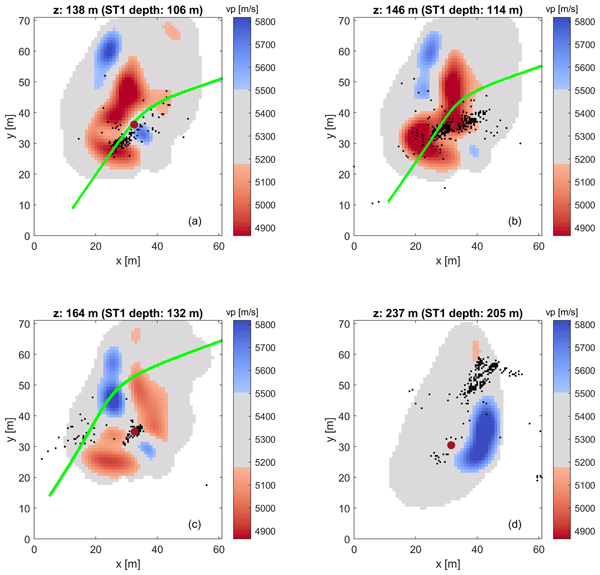
Miriam Larissa Schwarz, Hansruedi Maurer, Anne Christine Obermann, Paul Antony Selvadurai, Alexis Shakas, Stefan Wiemer, and Domenico Giardini
Solid Earth, 17, 347–368, https://doi.org/10.5194/se-17-347-2026, https://doi.org/10.5194/se-17-347-2026, 2026
Short summary
Short summary
We applied fat ray travel time tomography to image the geothermal testbed at the BedrettoLab (Switzerland). An active seismic crosshole survey provided a dataset of 41’881 manually picked first breaks. The complex major fault zone was identified by a 3D velocity model and validated with wireline logs and geological observations. Induced seismicity from hydraulic stimulation experiments preferentially occurs in intermediate-velocity regions, possibly due to the presence of stress gradients.
Tom Schaber, Mohammedreza Jalali, Alberto Ceccato, Alba Simona Zappone, Giacomo Pozzi, Valentin Gischig, Marian Hertrich, Men-Andrin Meier, Timo Seemann, Hannes Claes, Yves Guglielmi, Domenico Giardini, Stefan Wiemer, Massimo Cocco, and Florian Amann
Solid Earth, 17, 275–295, https://doi.org/10.5194/se-17-275-2026, https://doi.org/10.5194/se-17-275-2026, 2026
Short summary
Short summary
We studied a deep fault zone in Switzerland to gain a better understanding of how water moves through faults and how this affects earthquake activity. Using field and laboratory tests, we found that flow is strongly controlled by open fractures and permeability changes significantly with scale. Small samples underestimate flow compared to larger tests. Our results show that faults are heterogeneous, highlighting the need for site-specific studies when assessing risks or planning experiments.
Friedrich Carl, Jian Yang, Marlise Colling Cassel, Florian Wellmann, and Peter Achtziger-Zupančič
Solid Earth, 17, 155–178, https://doi.org/10.5194/se-17-155-2026, https://doi.org/10.5194/se-17-155-2026, 2026
Short summary
Short summary
A method for shape quantification based on geometrical parameters is proposed alongside a set of regular geometries established as geomodeling benchmarks. Dimensions, gradient and curvature data is obtained on cross-sections. Data analyses provide insight into the main geometrical characteristics of the benchmark models and visualizes geometrical dis-/similarities between bodies. The method and benchmarks are usable in geomodeling workflows and structural comparisons based on sparse data.
Laura Gabriel, Marian Hertrich, Christophe Ogier, Mike Müller-Petke, Raphael Moser, Hansruedi Maurer, and Daniel Farinotti
The Cryosphere, 19, 6261–6281, https://doi.org/10.5194/tc-19-6261-2025, https://doi.org/10.5194/tc-19-6261-2025, 2025
Short summary
Short summary
Surface nuclear magnetic resonance (SNMR) is a geophysical technique directly sensitive to liquid water. We expand the limited applications of SNMR on glaciers by detecting water within Rhonegletscher, Switzerland. By carefully processing the data to reduce noise, we identified signals indicating a water layer near the base of the glacier, surrounded by ice with low water content. Our findings, validated by radar measurements, show SNMR's potential and limitations in studying water in glaciers.
Valentin Samuel Gischig, Antonio Pio Rinaldi, Andres Alcolea, Falko Bethman, Marco Broccardo, Kai Bröker, Raymi Castilla, Federico Ciardo, Victor Clasen Repollés, Virginie Durand, Nima Gholizadeh Doonechaly, Marian Hertrich, Rebecca Hochreutener, Philipp Kästli, Dimitrios Karvounis, Xiaodong Ma, Men-Andrin Meier, Peter Meier, Maria Mesimeri, Arnaud Mignan, Anne Obermann, Katrin Plenkers, Martina Rosskopf, Francisco Serbeto, Paul Selvadurai, Alexis Shakas, Linus Villiger, Quinn Wenning, Alba Zappone, Jordan Aaron, Hansruedi Maurer, Domenico Giardini, and Stefan Wiemer
Solid Earth, 16, 1153–1180, https://doi.org/10.5194/se-16-1153-2025, https://doi.org/10.5194/se-16-1153-2025, 2025
Short summary
Short summary
Induced earthquakes present a major obstacle for developing geoenergy resources. These occur during hydraulic stimulations that enhance fluid pathways in the rock. In the Bedretto Underground Laboratory, hydraulic stimulations are investigated in a downscaled manner. A workflow to analyze the hazard posed by induced earthquakes is applied at different stages of the test program. The hazard estimates illustrate the difficulty in reducing the uncertainty due to the variable seismogenic responses.
Sandro Truttmann, Tobias Diehl, Marco Herwegh, and Stefan Wiemer
Solid Earth, 16, 641–662, https://doi.org/10.5194/se-16-641-2025, https://doi.org/10.5194/se-16-641-2025, 2025
Short summary
Short summary
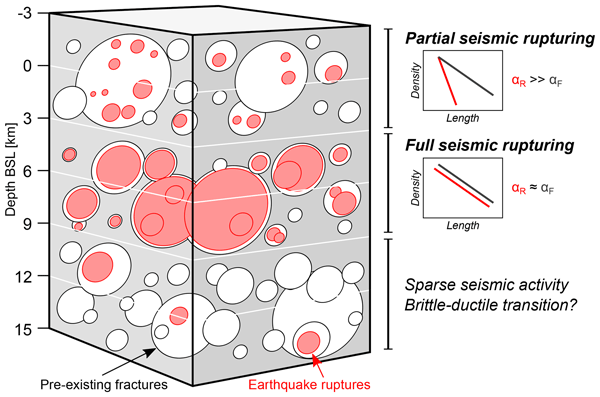
Our study investigates the statistical relationship between geological fractures and earthquakes in the southwestern Swiss Alps. We analyze how the fracture size and earthquake rupture are related and find differences in how fractures at different depths rupture seismically. While shallow fractures tend to rupture only partially, deeper fractures are more likely to rupture along their entire length, potentially resulting in larger earthquakes.
Kathrin Behnen, Marian Hertrich, Hansruedi Maurer, Alexis Shakas, Kai Bröker, Claire Epiney, María Blanch Jover, and Domenico Giardini
Solid Earth, 16, 333–350, https://doi.org/10.5194/se-16-333-2025, https://doi.org/10.5194/se-16-333-2025, 2025
Short summary
Short summary
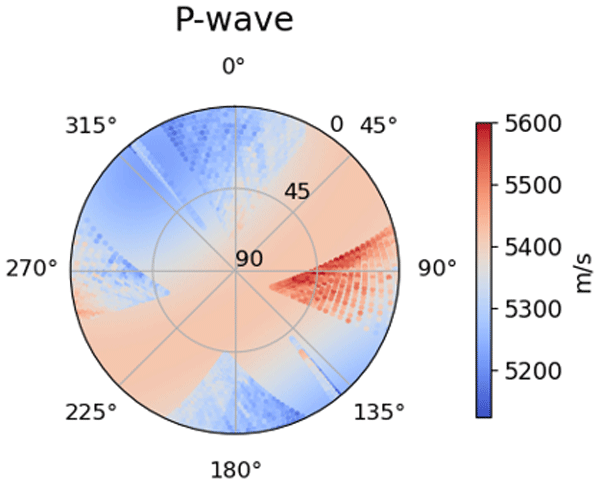
Several cross-hole seismic surveys in the undisturbed Rotondo granite are used to analyze the seismic anisotropy in the Bedretto Lab, Switzerland. The P and S1 waves show a clear trend of faster velocities in the NE–SW direction and slower velocities perpendicular to it, indicating a tilted transverse isotropic velocity model. The symmetry plane is mostly aligned with the direction of maximum stress, but also the orientation of fractures is expected to influence the velocities.
Marta Han, Leila Mizrahi, and Stefan Wiemer
Nat. Hazards Earth Syst. Sci., 25, 991–1012, https://doi.org/10.5194/nhess-25-991-2025, https://doi.org/10.5194/nhess-25-991-2025, 2025
Short summary
Short summary
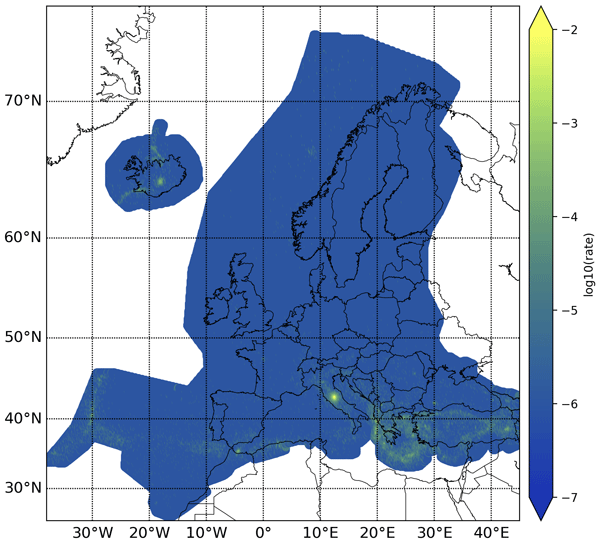
Relying on recent accomplishments of collecting and harmonizing data by the 2020 European Seismic Hazard Model (ESHM20) and leveraging advancements in state-of-the-art earthquake forecasting methods, we develop a harmonized earthquake forecasting model for Europe. We propose several model variants and test them on training data for consistency and on a 7-year testing period against each other, as well as against both a time-independent benchmark and a global time-dependent benchmark.
Athanasios N. Papadopoulos, Philippe Roth, Laurentiu Danciu, Paolo Bergamo, Francesco Panzera, Donat Fäh, Carlo Cauzzi, Blaise Duvernay, Alireza Khodaverdian, Pierino Lestuzzi, Ömer Odabaşi, Ettore Fagà, Paolo Bazzurro, Michèle Marti, Nadja Valenzuela, Irina Dallo, Nicolas Schmid, Philip Kästli, Florian Haslinger, and Stefan Wiemer
Nat. Hazards Earth Syst. Sci., 24, 3561–3578, https://doi.org/10.5194/nhess-24-3561-2024, https://doi.org/10.5194/nhess-24-3561-2024, 2024
Short summary
Short summary
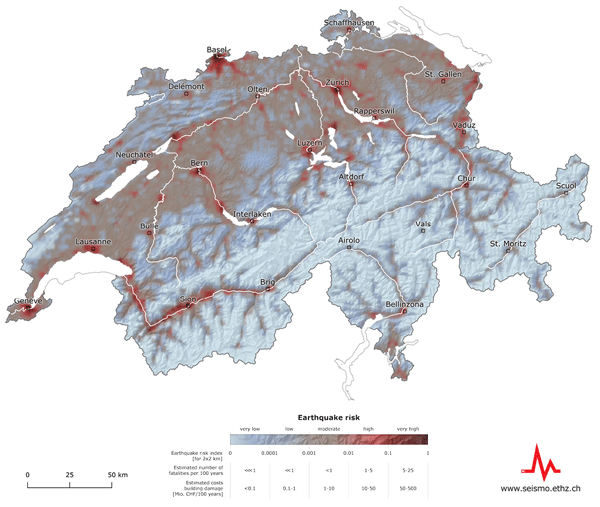
The Earthquake Risk Model of Switzerland (ERM-CH23), released in early 2023, is the culmination of a multidisciplinary effort aiming to achieve, for the first time, a comprehensive assessment of the potential consequences of earthquakes on the Swiss building stock and population. ERM-CH23 provides risk estimates for various impact metrics, ranging from economic loss as a result of damage to buildings and their contents to human losses, such as deaths, injuries, and displaced population.
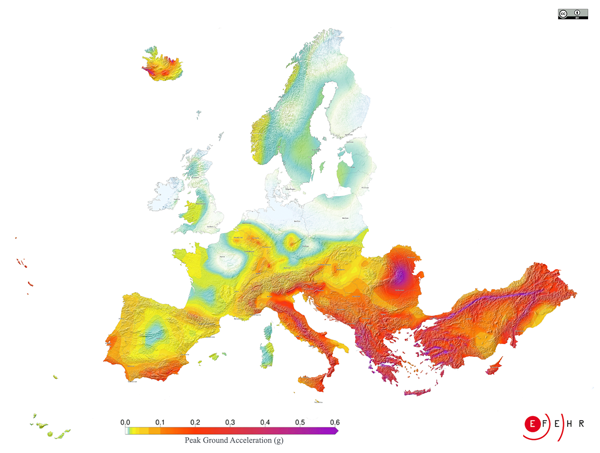
Laurentiu Danciu, Domenico Giardini, Graeme Weatherill, Roberto Basili, Shyam Nandan, Andrea Rovida, Céline Beauval, Pierre-Yves Bard, Marco Pagani, Celso G. Reyes, Karin Sesetyan, Susana Vilanova, Fabrice Cotton, and Stefan Wiemer
Nat. Hazards Earth Syst. Sci., 24, 3049–3073, https://doi.org/10.5194/nhess-24-3049-2024, https://doi.org/10.5194/nhess-24-3049-2024, 2024
Short summary
Short summary
The 2020 European Seismic Hazard Model (ESHM20) is the latest seismic hazard assessment update for the Euro-Mediterranean region. This state-of-the-art model delivers a broad range of hazard results, including hazard curves, maps, and uniform hazard spectra. ESHM20 provides two hazard maps as informative references in the next update of the European Seismic Design Code (CEN EC8), and it also provides a key input to the first earthquake risk model for Europe.
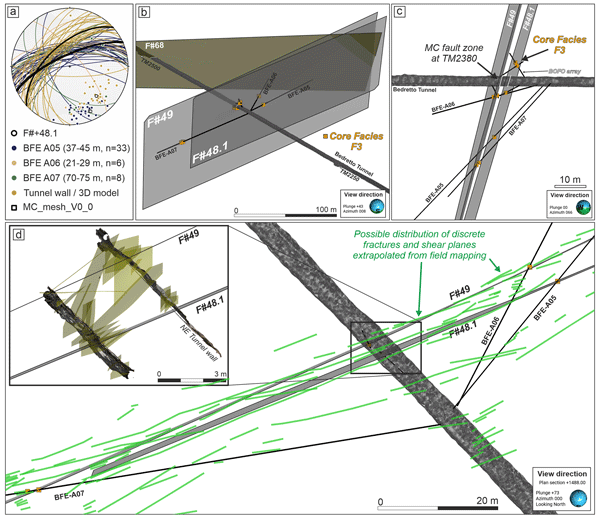
Peter Achtziger-Zupančič, Alberto Ceccato, Alba Simona Zappone, Giacomo Pozzi, Alexis Shakas, Florian Amann, Whitney Maria Behr, Daniel Escallon Botero, Domenico Giardini, Marian Hertrich, Mohammadreza Jalali, Xiaodong Ma, Men-Andrin Meier, Julian Osten, Stefan Wiemer, and Massimo Cocco
Solid Earth, 15, 1087–1112, https://doi.org/10.5194/se-15-1087-2024, https://doi.org/10.5194/se-15-1087-2024, 2024
Short summary
Short summary
We detail the selection and characterization of a fault zone for earthquake experiments in the Fault Activation and Earthquake Ruptures (FEAR) project at the Bedretto Lab. FEAR, which studies earthquake processes, overcame data collection challenges near faults. The fault zone in Rotondo granite was selected based on geometry, monitorability, and hydro-mechanical properties. Remote sensing, borehole logging, and geological mapping were used to create a 3D model for precise monitoring.
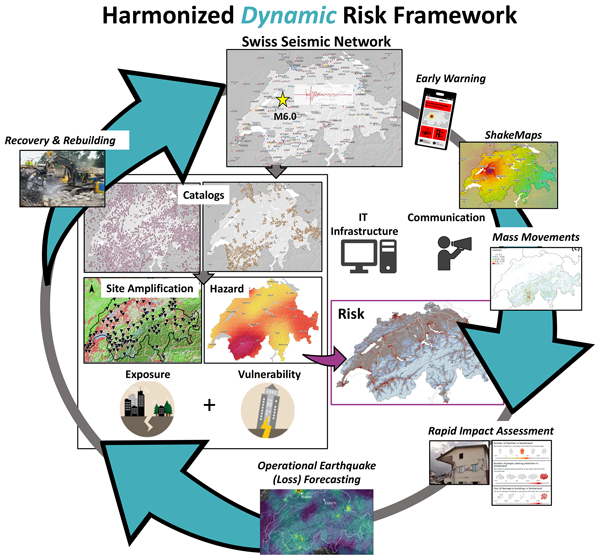
Maren Böse, Laurentiu Danciu, Athanasios Papadopoulos, John Clinton, Carlo Cauzzi, Irina Dallo, Leila Mizrahi, Tobias Diehl, Paolo Bergamo, Yves Reuland, Andreas Fichtner, Philippe Roth, Florian Haslinger, Frédérick Massin, Nadja Valenzuela, Nikola Blagojević, Lukas Bodenmann, Eleni Chatzi, Donat Fäh, Franziska Glueer, Marta Han, Lukas Heiniger, Paulina Janusz, Dario Jozinović, Philipp Kästli, Federica Lanza, Timothy Lee, Panagiotis Martakis, Michèle Marti, Men-Andrin Meier, Banu Mena Cabrera, Maria Mesimeri, Anne Obermann, Pilar Sanchez-Pastor, Luca Scarabello, Nicolas Schmid, Anastasiia Shynkarenko, Bozidar Stojadinović, Domenico Giardini, and Stefan Wiemer
Nat. Hazards Earth Syst. Sci., 24, 583–607, https://doi.org/10.5194/nhess-24-583-2024, https://doi.org/10.5194/nhess-24-583-2024, 2024
Short summary
Short summary
Seismic hazard and risk are time dependent as seismicity is clustered and exposure can change rapidly. We are developing an interdisciplinary dynamic earthquake risk framework for advancing earthquake risk mitigation in Switzerland. This includes various earthquake risk products and services, such as operational earthquake forecasting and early warning. Standardisation and harmonisation into seamless solutions that access the same databases, workflows, and software are a crucial component.
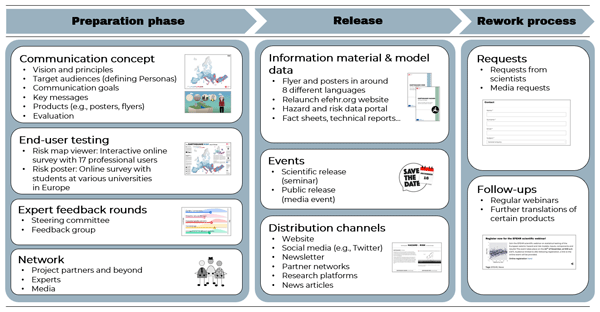
Irina Dallo, Michèle Marti, Nadja Valenzuela, Helen Crowley, Jamal Dabbeek, Laurentiu Danciu, Simone Zaugg, Fabrice Cotton, Domenico Giardini, Rui Pinho, John F. Schneider, Céline Beauval, António A. Correia, Olga-Joan Ktenidou, Päivi Mäntyniemi, Marco Pagani, Vitor Silva, Graeme Weatherill, and Stefan Wiemer
Nat. Hazards Earth Syst. Sci., 24, 291–307, https://doi.org/10.5194/nhess-24-291-2024, https://doi.org/10.5194/nhess-24-291-2024, 2024
Short summary
Short summary
For the release of cross-country harmonised hazard and risk models, a communication strategy co-defined by the model developers and communication experts is needed. The strategy should consist of a communication concept, user testing, expert feedback mechanisms, and the establishment of a network with outreach specialists. Here we present our approach for the release of the European Seismic Hazard Model and European Seismic Risk Model and provide practical recommendations for similar efforts.
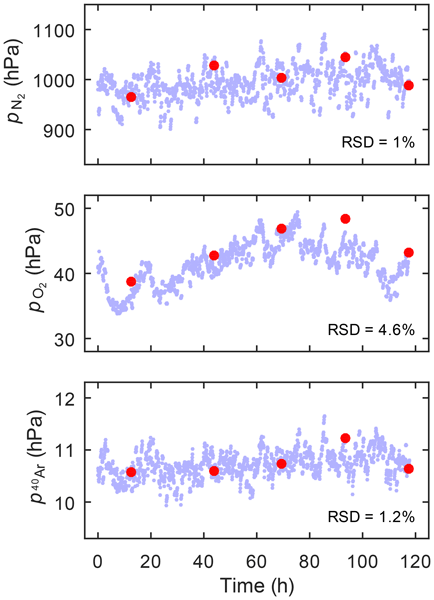
Matthias S. Brennwald, Antonio P. Rinaldi, Jocelyn Gisiger, Alba Zappone, and Rolf Kipfer
Geosci. Instrum. Method. Data Syst., 13, 1–8, https://doi.org/10.5194/gi-13-1-2024, https://doi.org/10.5194/gi-13-1-2024, 2024
Short summary
Short summary
The gas equilibrium membrane inlet mass spectrometry (GE-MIMS) method for dissolved-gas quantification was expanded to work in water at high pressures.
Michal Kruszewski, Alessandro Verdecchia, Oliver Heidbach, Rebecca M. Harrington, and David Healy
EGUsphere, https://doi.org/10.5194/egusphere-2023-1889, https://doi.org/10.5194/egusphere-2023-1889, 2023
Preprint archived
Short summary
Short summary
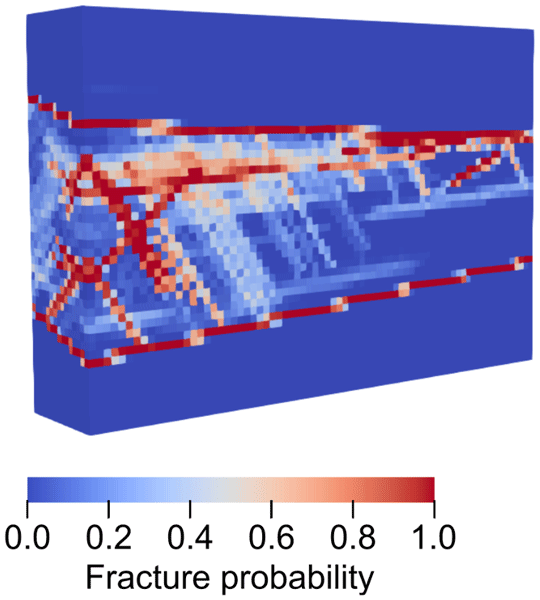
In this study, we investigate the evolution of fault reactivation potential in the greater Ruhr region (Germany) in respect to a future utilization of deep geothermal resources. We use analytical and numerical approaches to understand the initial stress conditions on faults as well as their evolution in space and time during geothermal fluid production. Using results from our analyses, we can localize areas more favorable for geothermal energy use based on fault reactivation potential.
Lisa Maria Ringel, Mohammadreza Jalali, and Peter Bayer
Hydrol. Earth Syst. Sci., 26, 6443–6455, https://doi.org/10.5194/hess-26-6443-2022, https://doi.org/10.5194/hess-26-6443-2022, 2022
Short summary
Short summary
Fractured rocks host a class of aquifers that serve as major freshwater resources worldwide. This work is dedicated to resolving the three-dimensional hydraulic and structural properties of fractured rock. For this purpose, hydraulic tomography experiments at the Grimsel Test Site in Switzerland are utilized, and the discrete fracture network is inverted. The comparison of the inversion results with independent findings from other studies demonstrates the validity of the approach.
Michal Kruszewski, Gerd Klee, Thomas Niederhuber, and Oliver Heidbach
Earth Syst. Sci. Data, 14, 5367–5385, https://doi.org/10.5194/essd-14-5367-2022, https://doi.org/10.5194/essd-14-5367-2022, 2022
Short summary
Short summary
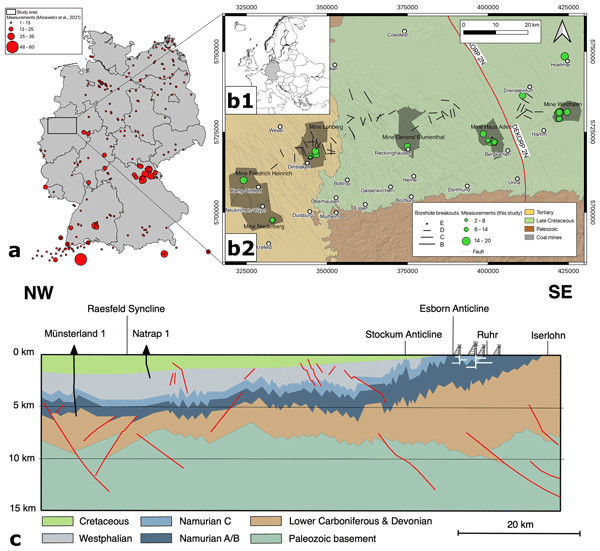
The authors assemble an in situ stress magnitude and orientation database based on 429 hydrofracturing tests that were carried out in six coal mines and two coal bed methane boreholes between 1986 and 1995 within the greater Ruhr region (Germany). Our study summarises the results of the extensive in situ stress test campaign and assigns quality to each data record using the established quality ranking schemes of the World Stress Map project.
Lisa Winhausen, Kavan Khaledi, Mohammadreza Jalali, Janos L. Urai, and Florian Amann
Solid Earth, 13, 901–915, https://doi.org/10.5194/se-13-901-2022, https://doi.org/10.5194/se-13-901-2022, 2022
Short summary
Short summary
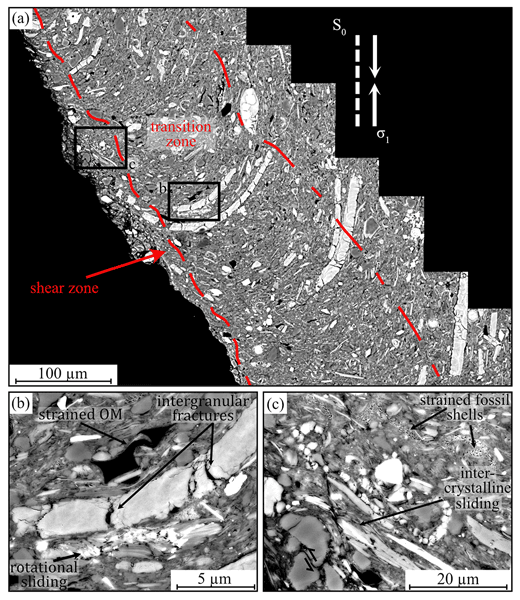
Triaxial compression tests at different effective stresses allow for analysing the deformation behaviour of Opalinus Clay, the potential host rock for nuclear waste in Switzerland. We conducted microstructural investigations of the deformed samples to relate the bulk hydro-mechanical behaviour to the processes on the microscale. Results show a transition from brittle- to more ductile-dominated deformation. We propose a non-linear failure envelop associated with the failure mode transition.
Xiaodong Ma, Marian Hertrich, Florian Amann, Kai Bröker, Nima Gholizadeh Doonechaly, Valentin Gischig, Rebecca Hochreutener, Philipp Kästli, Hannes Krietsch, Michèle Marti, Barbara Nägeli, Morteza Nejati, Anne Obermann, Katrin Plenkers, Antonio P. Rinaldi, Alexis Shakas, Linus Villiger, Quinn Wenning, Alba Zappone, Falko Bethmann, Raymi Castilla, Francisco Seberto, Peter Meier, Thomas Driesner, Simon Loew, Hansruedi Maurer, Martin O. Saar, Stefan Wiemer, and Domenico Giardini
Solid Earth, 13, 301–322, https://doi.org/10.5194/se-13-301-2022, https://doi.org/10.5194/se-13-301-2022, 2022
Short summary
Short summary
Questions on issues such as anthropogenic earthquakes and deep geothermal energy developments require a better understanding of the fractured rock. Experiments conducted at reduced scales but with higher-resolution observations can shed some light. To this end, the BedrettoLab was recently established in an existing tunnel in Ticino, Switzerland, with preliminary efforts to characterize realistic rock mass behavior at the hectometer scale.
Lisa Winhausen, Mohammadreza Jalali, and Florian Amann
Saf. Nucl. Waste Disposal, 1, 301–301, https://doi.org/10.5194/sand-1-301-2021, https://doi.org/10.5194/sand-1-301-2021, 2021
Cited articles
Achtziger-Zupančič, P., Ceccato, A., Zappone, A. S., Pozzi, G., Shakas, A., Amann, F., Behr, W. M., Escallon Botero, D., Giardini, D., Hertrich, M., Jalali, M., Ma, X., Meier, M.-A., Osten, J., Wiemer, S., and Cocco, M.: Selection and characterization of the target fault for fluid-induced activation and earthquake rupture experiments, Solid Earth, 15, 1087–1112, https://doi.org/10.5194/se-15-1087-2024, 2024.
Alcaino-Olivares, R., Paraskevopoulou, C., and Perras, M. A.: Assessing Long-Term Excavation Damage in Switzerland's Bedretto Adit: A Field Investigation in the Northern Section, Geotech. Geol. Eng., 42, 3401–3419, https://doi.org/10.1007/s10706-023-02735-8, 2024.
Amann, F., Button, E. A., Evans, K. F., Gischig, V. S., and Blümel, M.: Experimental Study of the Brittle Behavior of Clay shale in Rapid Unconfined Compression, Rock Mech. Rock Eng., 44, 415–430, https://doi.org/10.1007/s00603-011-0156-3, 2011.
Amberg, R.: Design and construction of the Furka base tunnel, Rock Mech. Rock Eng., 16, 215–231, https://doi.org/10.1007/BF01042358, 1983.
Andersson, J. C. and Martin, C. D.: The Äspö pillar stability experiment: Part I – Experiment design, Int. J. Rock Mech. Min., 46, 865–878, https://doi.org/10.1016/j.ijrmms.2009.02.010, 2009.
Andersson, J. C., Martin, C. D., and Stille, H.: The Äspö Pillar Stability Experiment: Part II–Rock mass response to coupled excavation-induced and thermal-induced stresses, Int. J. Rock Mech. Min., 46, 879–895, https://doi.org/10.1016/j.ijrmms.2009.03.002, 2009.
Atkinson, B. K.: Subcritical crack growth in geological materials, J. Geophys. Res.-Sol. Ea., 89, 4077–4114, https://doi.org/10.1029/JB089iB06p04077, 1984.
Bäckblom, G. and Martin, C. D.: Recent experiments in hard rocks to study the excavation response: Implications for the performance of a nuclear waste geological repository, Tunn. Undergr. Sp. Tech., 14, 377–394, https://doi.org/10.1016/S0886-7798(99)00053-X, 1999.
Bianchi, P., Selvadurai, P. A., Dal Zilio, L., Salazar Vásquez, A., Madonna, C., Gerya, T., and Wiemer, S.: Pre-Failure Strain Localization in Siliclastic Rocks: A Comparative Study of Laboratory and Numerical Approaches, Rock Mech. Rock Eng., 57, 5371–5395, https://doi.org/10.1007/s00603-024-04025-y, 2024.
Bieniawski, Z. T.: Mechanism of brittle fracture of rock: Part II–experimental studies, Int. J. Rock Mech. Min., 4, 407–423, https://doi.org/10.1016/0148-9062(67)90031-9, 1967a.
Bieniawski, Z. T.: Mechanism of brittle fracture of rock: Part I – theory of the fracture process, Int. J. Rock Mech. Min., 4, 395–406, https://doi.org/10.1016/0148-9062(67)90030-7, 1967b.
Blanchy, G., Saneiyan, S., Boyd, J., McLachlan, P., and Binley, A.: ResIPy, an intuitive open source software for complex geoelectrical inversion/modeling, Comput. Geosci., 137, 104423, https://doi.org/10.1016/j.cageo.2020.104423, 2020.
Bossart, P., Meier, P. M., Moeri, A., Trick, T., and Mayor, J.-C.: Geological and hydraulic characterisation of the excavation disturbed zone in the Opalinus Clay of the Mont Terri Rock Laboratory, Eng. Geol., 66, 19–38, https://doi.org/10.1016/S0013-7952(01)00140-5, 2002.
Bossart, P., Bernier, F., Birkholzer, J., Bruggeman, C., Connolly, P., Dewonck, S., Fukaya, M., Herfort, M., Jensen, M., Matray, J.-M., Mayor, J. C., Moeri, A., Oyama, T., Schuster, K., Shigeta, N., Vietor, T., and Wieczorek, K.: Mont Terri rock laboratory, 20 years of research: introduction, site characteristics and overview of experiments, Swiss J. Geosci., 110, 3–22, https://doi.org/10.1007/s00015-016-0236-1, 2017.
Brantut, N., Heap, M. J., Meredith, P. G., and Baud, P.: Time-dependent cracking and brittle creep in crustal rocks: A review, J. Struct. Geol., 52, 17–43, https://doi.org/10.1016/j.jsg.2013.03.007, 2013.
Bröker, K. and Ma, X.: Estimating the Least Principal Stress in a Granitic Rock Mass: Systematic Mini-Frac Tests and Elaborated Pressure Transient Analysis, Rock Mech. Rock Eng., 55, 1931–1954, https://doi.org/10.1007/s00603-021-02743-1, 2022.
Bröker, K., Ma, X., Zhang, S., Gholizadeh Doonechaly, N., Hertrich, M., Klee, G., Greenwood, A., Caspari, E., and Giardini, D.: Constraining the Stress Field and its Variability at the Bedrettolab: Elaborated Hydraulic Fracture Trace Analysis, Int. J. Rock Mech. Min., 178, 105739, https://doi.org/10.1016/j.ijrmms.2024.105739, 2024.
Cai, M., Kaiser, P. K., Tasaka, Y., Maejima, T., Morioka, H., and Minami, M.: Generalized crack initiation and crack damage stress thresholds of brittle rock masses near underground excavations, Int. J. Rock Mech. Min., 41, 833–847, https://doi.org/10.1016/j.ijrmms.2004.02.001, 2004.
Cappa, F. and Rutqvist, J.: Modeling of coupled deformation and permeability evolution during fault reactivation induced by deep underground injection of CO2, Int. J. Greenh. Gas Con., 5, 336–346, https://doi.org/10.1016/j.ijggc.2010.08.005, 2011.
Ceccato, A., Behr, W. M., Zappone, A. S., Tavazzani, L., and Giuliani, A.: Structural Evolution, Exhumation Rates, and Rheology of the European Crust During Alpine Collision: Constraints From the Rotondo Granite–Gotthard Nappe, Tectonics, 43, e2023TC008219, https://doi.org/10.1029/2023TC008219, 2024.
Ceccato, A., Hinshaw, E., Behr, W. M., Zappone, A. S., and Giardini, D.: 3D geologic modeling for digital twin applications: insights from the Bedretto Underground Laboratory, Swiss J. Geosci., 119, 33–48, https://doi.org/10.3897/sjg.119.181128, 2026.
Chen, H., Selvadurai, P. A., de Geus, T., Salazar Vásquez, A. F., Bianchi, P., Michail, S., Rast, M., Madonna, C., and Wiemer, S.: Investigating Criticality in Rock Failure Using Fiber-Optic Strain Sensing, Geophys. Res. Lett., 52, e2025GL115010, https://doi.org/10.1029/2025GL115010, 2025.
CloudCompare: CloudCompare 32.12 [GPL software], https://www.cloudcompare.org/ (last access: 15 August 2023), 2023.
Collins, D. S.: Excavation induced seismicity in granite rock: a case study at the underground research laboratory, Canada, PhD, University of Keele, https://ethos.bl.uk/concern/thesis_or_dissertations/389605?locale=en (last access: 12 October 2026), 1997.
Cook, N. G. W.: The failure of rock, Int. J. Rock Mech. Min., 2, 389–403, https://doi.org/10.1016/0148-9062(65)90004-5, 1965.
Damjanac, B. and Fairhurst, C.: Evidence for a Long-Term Strength Threshold in Crystalline Rock, Rock Mech. Rock Eng., 43, 513–531, https://doi.org/10.1007/s00603-010-0090-9, 2010.
David, C., Nejati, M., and Geremia, D.: On petrophysical and geomechanical properties of Bedretto Granite, ETH Zurich, https://doi.org/10.3929/ethz-b-000428267, 2020.
Diederichs, M.: Manuel Rocha Medal Recipient Rock Fracture and Collapse Under Low Confinement Conditions, Rock Mech. Rock Eng., 36, 339–381, https://doi.org/10.1007/s00603-003-0015-y, 2003.
Diederichs, M. S.: The 2003 Canadian Geotechnical Colloquium: Mechanistic interpretation and practical application of damage and spalling prediction criteria for deep tunnelling, Can. Geotech. J., 44, 1082–1116, https://doi.org/10.1139/T07-033, 2007.
Diederichs, M. S., Kaiser, P. K., and Eberhardt, E.: Damage initiation and propagation in hard rock during tunnelling and the influence of near-face stress rotation, Int. J. Rock Mech. Min., 41, 785–812, https://doi.org/10.1016/j.ijrmms.2004.02.003, 2004.
Dutler, N., Nejati, M., Valley, B., Amann, F., and Molinari, G.: On the link between fracture toughness, tensile strength, and fracture process zone in anisotropic rocks, Eng. Fract. Mech., 201, 56–79, https://doi.org/10.1016/j.engfracmech.2018.08.017, 2018.
Eberhardt, E.: Brittle rock fracture and progressive damage in uniaxial compression, PhD thesis, Department of Geological Sciences, University of Saskatchewan, Saskatoon, https://hdl.handle.net/10388/etd-10212004-001228 (last access: 12 October 2026), 1998.
Eberhardt, E., Stead, D., and Stimpson, B.: Quantifying progressive pre-peak brittle fracture damage in rock during uniaxial compression, Int. J. Rock Mech. Min., 36, 361–380, https://doi.org/10.1016/S0148-9062(99)00019-4, 1999.
Falls, S. D. and Young, R. P.: Acoustic emission and ultrasonic-velocity methods used to characterise the excavation disturbance associated with deep tunnels in hard rock, Tectonophysics, 289, 1–15, https://doi.org/10.1016/S0040-1951(97)00303-X, 1998.
Faulkner, D. R., Jackson, C. A. L., Lunn, R. J., Schlische, R. W., Shipton, Z. K., Wibberley, C. A. J., and Withjack, M. O.: A review of recent developments concerning the structure, mechanics and fluid flow properties of fault zones, J. Struct. Geol., 32, 1557–1575, https://doi.org/10.1016/j.jsg.2010.06.009, 2010.
Frieg, B., Albert, W., Blaser, P. C., Adams, J., Dollinger, H., Kuhlmann, U., and Lanyon, G. W.: Grimsel test site. Excavation disturbed zone experiment (EDZ), https://inis.iaea.org/records/689j4-0jm87 (last access: 12 October 2026), 2012.
Fu, Z., Zhang, Y., Ji, H., Zhang, C., Chen, D., and Qin, Y.: Characteristics of resistivity variation in deep granite and in-situ detection applications, Sci. Rep., 14, 6120, https://doi.org/10.1038/s41598-024-56695-x, 2024.
Hafner, S.: Petrographie des südwestlichen Gotthardmassivs zwischen St.Gotthardpass und Nufenenpass, Doctoral Thesis, ETH Zurich, https://doi.org/10.3929/ethz-a-000097546, 1958.
Hajiabdolmajid, V., Kaiser, P. K., and Martin, C. D.: Modelling brittle failure of rock, Int. J. Rock Mech. Min., 39, 731–741, https://doi.org/10.1016/S1365-1609(02)00051-5, 2002.
Hamdi, P.: High-Resolution Terrestrial Laser Scanning Point Clouds and Surface Meshes from the Bedretto Tunnel, ETH Zurich [data set], https://doi.org/10.3929/ethz-c-000801363, 2026.
Hamdi, P., Stead, D., and Elmo, D.: Characterizing the influence of stress-induced microcracks on the laboratory strength and fracture development in brittle rocks using a finite-discrete element method-micro discrete fracture network FDEM-µDFN approach, Journal of Rock Mechanics and Geotechnical Engineering, 7, 609–625, https://doi.org/10.1016/j.jrmge.2015.07.005, 2015.
Hamdi, P., Stead, D., and Elmo, D.: A Review of the Application of Numerical Modelling in the Prediction of Depth of Spalling Damage Around Underground Openings, 51st U.S. Rock Mechanics/Geomechanics Symposium, https://onepetro.org/ARMAUSRMS/proceedings/ARMA17/ARMA17/ARMA-2017-0778/124370 (last access: 12 October 2026), 2017.
Hamdi, P., Achtziger, P., Dickmann, J., Kruszewski, M., Rinaldi, A. P., Villiger, L., Shakas, A., Perras, M., Bahrani, N., Jiang, D., Amann, F., and Wiemer, S.: Progressive Excavation Disturbance Zone Evolution During and Post Mine-By Tunneling (PRECODE) – Insight into a New Underground Research Laboratory for Crystalline Rocks in the BedrettoLab, 58th U.S. Rock Mechanics/Geomechanics Symposium, https://doi.org/10.56952/ARMA-2024-0543, 2024.
Hamdi, P., Ufrecht, S., Achtziger-Zupančič, P., Bröker, K., Ma, X., and Amann, F.: Understanding the Regional Stress in Active Tectonic Regime Using 3D Numerical Modeling, Case Study of BedrettoLab, Switzerland, Rock Mech. Rock Eng., https://doi.org/10.1007/s00603-025-04740-0, 2025.
Hamdi, P., Herzog, A., Dickmann, J., Lemaire, E., Perras, L., and Amann, F.: Environmental Effects on Sub-Critical Crack Growth and Stress Corrosion in Rotondo Granite from BedrettoLab, Switzerland, 60th U.S. Rock Mechanics/Geomechanics Symposium, https://doi.org/10.56952/ARMA-2026-0040, 2026.
Hegger, S., Vlachopoulos, N., Poles, T., and Diederichs, M. S.: Measuring the Full-Field Strain Response of Uniaxial Compression Test Specimens Using Distributed Fiber Optic Sensing, Rock Mech. Rock Eng., 55, 2615–2630, https://doi.org/10.1007/s00603-021-02643-4, 2022.
Helmholtz-Centre Potsdam-GFZ German Research Centre For Geosciences and GEMPA GmbH: The SeisComP seismological software package, GFZ Data Services [software], https://doi.org/10.5880/GFZ.2.4.2020.003, 2008.
Hoek, E. and Bieniawski, Z. T.: Brittle fracture propagation in rock under compression, Int. J. Fract., 1, 137–155, https://doi.org/10.1007/BF00186851, 1965.
Horii, H. and Nemat-Nasser, S.: Compression-induced microcrack growth in brittle solids: Axial splitting and shear failure, J. Geophys. Res., 90, 3105–3125, https://doi.org/10.1029/JB090iB04p03105, 1985.
Huber, B.: Stress-induced Fractures in the Deep-seated Bedretto Tunnel: Their Geological and Geomechanical Reasons, Unpublished diploma's dissertation, ETH Zurich, 2004.
Jonsson, M., Baeckstroem, A., Feng, Q., Berglund, J., Johansson, M., Mas Ivars, D., and Olsson, M.: Äspö Hard Rock Laboratory. Studies of factors that affect and controls the Excavation Damaged/Disturbed Zone, https://skb.com/publication/1962158 (last access: 12 October 2026), 2009.
Jordan, D.: Geological Characterization of the Bedretto Underground Laboratory for Geoenergies, Master Thesis, ETH Zurich, Geological Institute, https://doi.org/10.3929/ethz-b-000379305, 2019.
Kaiser, P. K. and Kim, B. H.: Rock mechanics challenges in underground construction and mining, keynote lecture, Proceedings 1st SHIRMS, South Hemisphere International Rock Mechanics Symposium (Perth, Australia, September 2008), Vol. 1, 23–38, https://doi.org/10.36487/ACG_repo/808_83, 2008.
Kaiser, P. K., Amann, F., and Steiner, W.: How Highly Stressed Brittle Rock Failure Impacts Tunnel Design, ISRM International Symposium – EUROCK 2010, http://hdl.handle.net/20.500.11850/27029 (last access: 12 October 2026), 2010.
Keller, F. and Schneider, T. R.: Geologie und Geotechnik, Schweizer Ingenieur und Architekt, 100, 512, https://doi.org/10.5169/seals-74820, 1982.
Kelsall, P. C., Case, J. B., and Chabannes, C. R.: Evaluation of excavation-induced changes in rock permeability, Int. J. Rock Mech. Min., 21, 123–135, https://doi.org/10.1016/0148-9062(84)91530-4, 1984.
Kranz, R. L.: Microcracks in rocks: A review, Tectonophysics, 100, 449–480, https://doi.org/10.1016/0040-1951(83)90198-1, 1983.
Kruszewski, M., Hamdi, P., Dickmann, J., Amann, F., Villiger, L., Bianchi, P., Rinaldi, A. P., Wiemer, S., and Perras, M.: Crack Initiation of Rotondo Granite during the PRECODE Mine-by Experiment in the BedrettoLab, 60th U.S. Rock Mechanics/Geomechanics Symposium, https://doi.org/10.56952/ARMA-2026-0091, 2026.
Labhart, T.: Erläuterungen Zum Geologischen Atlas Des Schweiz 1:25 000, Val Bedretto, Atlasblatt 68, https://shop.swisstopo.admin.ch/de/karten/geologische-karten/erlaeuterungen-zum-geologischen-atlas-der-schweiz-25000 (last access: October 2026), 2005.
Li, M., Zuo, J., Hu, D., Shao, J., and Liu, D.: Experimental and numerical investigation of microstructure effect on the mechanical behavior and failure process of brittle rocks, Comput. Geotech., 125, 103639, https://doi.org/10.1016/j.compgeo.2020.103639, 2020.
Li, Y., Yang, J., and Gao, X.: Fault slip amplification mechanisms in deep mining due to heterogeneous geological layers, Eng. Failure Anal., 169, 109155, https://doi.org/10.1016/j.engfailanal.2024.109155, 2025.
Lisjak, A., Garitte, B., Grasselli, G., Müller, H. R., and Vietor, T.: The excavation of a circular tunnel in a bedded argillaceous rock (Opalinus Clay): Short-term rock mass response and FDEM numerical analysis, Tunn. Undergr. Sp. Tech., 45, 227–248, https://doi.org/10.1016/j.tust.2014.09.014, 2015.
Lockner, D. A., Byerlee, J. D., Kuksenko, V., Ponomarev, A., and Sidorin, A.: Quasi-static fault growth and shear fracture energy in granite, Nature, 350, 39–42, https://doi.org/10.1038/350039a0, 1991.
Lützenkirchen, V. and Loew, S.: Late Alpine brittle faulting in the Rotondo granite (Switzerland): deformation mechanisms and fault evolution, Swiss J. Geosci., 104, 31–54, https://doi.org/10.1007/s00015-010-0050-0, 2011.
Lützenkirchen, V. H.: Structural geology and hydrogeology of brittle fault zones in the central and eastern Gotthard massif, Switzerland, PhD Thesis, ETH Zurich, https://doi.org/10.3929/ethz-a-004522949, 2002.
Ma, X., Doonechaly, N. G., Hertrich, M., Gischig, V., and Klee, G.: Preliminary in situ stress and fracture characterization in the Bedretto Underground Laboratory, Swiss Alps: Implications on hydraulic stimulation, in: Rock Mechanics for Natural Resources and Infrastructure Development – Full Papers, CRC Press, http://hdl.handle.net/20.500.11850/379325 (last access: 12 October 2026), 2019.
Ma, X., Hertrich, M., Amann, F., Bröker, K., Gholizadeh Doonechaly, N., Gischig, V., Hochreutener, R., Kästli, P., Krietsch, H., Marti, M., Nägeli, B., Nejati, M., Obermann, A., Plenkers, K., Rinaldi, A. P., Shakas, A., Villiger, L., Wenning, Q., Zappone, A., Bethmann, F., Castilla, R., Seberto, F., Meier, P., Driesner, T., Loew, S., Maurer, H., Saar, M. O., Wiemer, S., and Giardini, D.: Multi-disciplinary characterizations of the BedrettoLab – a new underground geoscience research facility, Solid Earth, 13, 301–322, https://doi.org/10.5194/se-13-301-2022, 2022.
Martin, C. D.: The strength of massive Lac du Bonnet granite around underground openings, http://hdl.handle.net/1993/9785 (last access: 12 October 2026), 1993.
Martin, C. D.: Seventeenth Canadian Geotechnical Colloquium: The effect of cohesion loss and stress path on brittle rock strength, Can. Geotech. J., 34, 698–725, https://doi.org/10.1139/t97-030, 1997.
Martin, C. D. and Chandler, N. A.: The progressive fracture of Lac du Bonnet granite, Int. J. Rock Mech. Min., 31, 643–659, https://doi.org/10.1016/0148-9062(94)90005-1, 1994.
Martin, C. D. and Christiansson, R.: Estimating the potential for spalling around a deep nuclear waste repository in crystalline rock, Int. J. Rock Mech. Min., 46, 219–228, https://doi.org/10.1016/j.ijrmms.2008.03.001, 2009.
Martin, C. D., Read, R. S., and Martino, J. B.: Observations of brittle failure around a circular test tunnel, Int. J. Rock Mech. Min., 34, 1065–1073, https://doi.org/10.1016/S1365-1609(97)90200-8, 1997.
Martin, C. D., Kaiser, P. K., and McCreath, D. R.: Hoek-Brown Parameters for Predicting the Depth of Brittle Failure Around Tunnels, Can. Geotech. J., 36, 136–151, https://doi.org/10.1139/t98-072, 1999.
Martino, J. B., Dixon, D. A., Kozak, E. T., Gascoyne, M., Vignal, B., Sugita, Y., Fujita, T., and Masumoto, K.: The tunnel sealing experiment: An international study of full-scale seals, Phys. Chem. Earth, Pt. A/B/C, 32, 93–107, https://doi.org/10.1016/j.pce.2006.04.023, 2007.
Meier, M.-A., Selvadurai, P., Gischig, V., Hertrich, M., Tinti, E., Rinaldi, A. P., Jalali, M., Spagnuolo, E., Zappone, A., Zilio, L. D., Pozzi, G., Massin, F., Ceccato, A., Shakas, A., Achtziger-Zupančič, P., Aretusini, S., Becattini, V., Behnen, K., Bröker, K., Repollés, V. C., Clinton, J., Collettini, C., Cook, P., Cornelio, C., Cua, G., Dahmen, N., Dickmann, J., Dresler-Dorn, F., Durand, V., Edme, P., Doonechaly, N. G., Volpe, G., Guglielmi, Y., Graber, I., Haag, T., Hibbard, L., Hochreutener, R., Jiang, D., Kästli, P., Kövér, B., Kruszewski, M., Lambiase, A., Lanza, F., Laurenti, L., Lightfoot, A., Magnabosco, C., Marti, M., Maurer, H., Meyers, O., Mizrahi, L., Mosconi, F., Obermann, A., Palgunadi, K., Pezzulli, E., Plenkers, K., Poggiali, G., Hamdi, P., Rosskopf, M., Scarabello, L., Schaber, T., Schliwa, N., Schultz, R., Schwarz, M., Soom, F., Supino, M., Tian, L., Tuinstra, K., Meleza, L. V., Villiger, L., Wang, Z., Wimez, M., Ye, J., Zeller, S., Zimmermann, E., Amann, F., Cocco, M., Wiemer, S., and Giardini, D.: Activating a Natural Fault Zone in the Swiss Alps, Seismica, 5, https://doi.org/10.26443/seismica.v5i1.2065, 2026.
Mellanen, S., Lehtimaeki, T., Heikkinen, E., Mustonen, S., and Norokallio, J.: EDZ09 project and related EDZ studies in ONKALO 2008–2010, https://inis.iaea.org/records/zrykm-gth53 (last access: 12 October 2026), 2010.
Munjiza, A.: The Combined Finite-Discrete Element Method, Wiley, Chichester, West Sussex, Hoboken, 333 pp., http://onlinelibrary.wiley.com/book/10.1002/0470020180 (last access: 12 October 2026), 2004.
Nara, Y.: Effect of Anisotropy on the Long-Term Strength of Granite, Rock Mech. Rock Eng., 48, 959–969, https://doi.org/10.1007/s00603-014-0634-5, 2015.
Nara, Y. and Kaneko, K.: Sub-critical crack growth in anisotropic rock, Int. J. Rock Mech. Min., 43, 437–453, https://doi.org/10.1016/j.ijrmms.2005.07.008, 2006.
Nara, Y., Hiroyoshi, N., Yoneda, T., and Kaneko, K.: Effects of relative humidity and temperature on subcritical crack growth in igneous rock, Int. J. Rock Mech. Min., 47, 640–646, https://doi.org/10.1016/j.ijrmms.2010.04.009, 2010a.
Nara, Y., Takada, M., Mori, D., Owada, H., Yoneda, T., and Kaneko, K.: Subcritical crack growth and long-term strength in rock and cementitious material, Int. J. Fract., 164, 57–71, https://doi.org/10.1007/s10704-010-9455-z, 2010b.
Nara, Y., Yamanaka, H., Oe, Y., and Kaneko, K.: Influence of temperature and water on subcritical crack growth parameters and long-term strength for igneous rocks, Geophys. J. Int., 193, 47–60, https://doi.org/10.1093/gji/ggs116, 2013.
Nasseri, M. H. B., Mohanty, B., and Robin, P.-Y. F.: Characterization of microstructures and fracture toughness in five granitic rocks, Int. J. Rock Mech. Min., 42, 450–460, https://doi.org/10.1016/j.ijrmms.2004.11.007, 2005.
Olsson, M., Niklasson, B., Wilson, L., Andersson, C., and Christiansson, R.: Äspö HRL. Experiences of blasting of the TASQ tunnel, 1402–3091, Sweden, https://skb.com/publication/949215 (last access: October 2026), 2004.
Ortlepp, W. D.: Observation of mining-induced faults in an intact rock mass at depth, Int. J. Rock Mech. Min., 37, 423–436, https://doi.org/10.1016/S1365-1609(99)00117-3, 2000.
Paraskevopoulou, C., Perras, M., Diederichs, M., Amann, F., Loew, S., Lam, T., and Jensen, M.: The three stages of stress relaxation - Observations for the time-dependent behaviour of brittle rocks based on laboratory testing, Eng. Geol., 216, https://doi.org/10.1016/j.enggeo.2016.11.010, 2016.
Paraskevopoulou, C., Perras, M., Diederichs, M., Loew, S., Lam, T., and Jensen, M.: Time-Dependent Behaviour of Brittle Rocks Based on Static Load Laboratory Tests, Geotech. Geol. Eng., 36, 337–376, https://doi.org/10.1007/s10706-017-0331-8, 2018.
Parasnis, D. S.: Reciprocity theorems in geoelectric and geoelectromagnetic work, Geoexploration, 25, 177–198, https://doi.org/10.1016/0016-7142(88)90014-2, 1988.
Peng, S. and Johnson, A. M.: Crack growth and faulting in cylindrical specimens of chelmsford granite, Int. J. Rock Mech. Min., 9, 37–86, https://doi.org/10.1016/0148-9062(72)90050-2, 1972.
Peng, S. D.: Stresses within elastic circular cylinders loaded uniaxially and triaxially, Int. J. Rock Mech. Min., 8, 399–432, https://doi.org/10.1016/1365-1609(71)90009-8, 1971.
Perras, M. A. and Diederichs, M. S.: Predicting excavation damage zone depths in brittle rocks, Journal of Rock Mechanics and Geotechnical Engineering, 8, 60–74, https://doi.org/10.1016/j.jrmge.2015.11.004, 2016.
Perras, M. A., Golabchi, Y., Bahrani, N., Hamdi, P., and Amann, F.: Intact Rock Properties of the Rotondo Granite for the PRECODE Project in the BedrettoLab, 58th U.S. Rock Mechanics/Geomechanics Symposium, https://doi.org/10.56952/ARMA-2024-0438, 2024.
Potyondy, D. O. and Cundall, P. A.: A bonded-particle model for rock, Int. J. Rock Mech. Min., 41, 1329–1364, https://doi.org/10.1016/j.ijrmms.2004.09.011, 2004.
Potyondy, D. O. and Fu, W.: Simulating Spalling with Bonded-Particle Models, 60th U.S. Rock Mechanics/Geomechanics Symposium, https://doi.org/10.56952/ARMA-2026-0629, 2026.
Rasmussen, L. L. and Min, K.-B.: Hybrid lattice/discrete element analysis of spalling failure in rock tunnels, Tunn. Undergr. Sp. Tech., 153, 106034, https://doi.org/10.1016/j.tust.2024.106034, 2024.
Rast, M.: Geology, Geochronology and Rock Magnetics Along Bedretto Tunnel (Gotthard Massif, Central Alps) and Numerical Modelling of Quartz-Biotite Aggregates, Master Thesis, ETH Zurich, https://doi.org/10.3929/ethz-b-000454117, 2020.
Read, R. S.: 20 years of excavation response studies at AECL's Underground Research Laboratory, Int. J. Rock Mech. Min., 41, 1251–1275, https://doi.org/10.1016/j.ijrmms.2004.09.012, 2004.
Reches, Z. and Lockner, D. A.: Nucleation and growth of faults in brittle rocks, J. Geophys. Res.-Sol. Ea., 99, 18159–18173, https://doi.org/10.1029/94JB00115, 1994.
Renard, F., McBeck, J., Kandula, N., Cordonnier, B., Meakin, P., and Ben-Zion, Y.: Volumetric and shear processes in crystalline rock approaching faulting, P. Natl. Acad. Sci. USA, 116, 16234–16239, https://doi.org/10.1073/pnas.1902994116, 2019.
Rógenes, E., Gomes, A. dos S., Farias, M. M. de, Fávero Neto, A. H., Vinueza, G., and Rasmussen, L. L.: The impact of discontinuities on spalling failure in excavations under high-stress conditions, Comput. Geotech., 175, 106667, https://doi.org/10.1016/j.compgeo.2024.106667, 2024.
Rutqvist, J., Börgesson, L., Chijimatsu, M., Hernelind, J., Jing, L., Kobayashi, A., and Nguyen, S.: Modeling of damage, permeability changes and pressure responses during excavation of the TSX tunnel in granitic rock at URL, Canada, Environ. Geol., 57, 1263–1274, https://doi.org/10.1007/s00254-008-1515-6, 2009.
Salazar, A. V., Selvadurai, P. A., Niu, Z., Bianchi, P., Rabaiotti, C., Madonna, C., Wiemer, S., and Germanovich, L. N.: Insights into Triaxial Testing Using Coupled Acoustic Emission and Distributed Optical Fiber Strain Measurements, 56th U.S. Rock Mechanics/Geomechanics Symposium, https://doi.org/10.56952/ARMA-2022-0706, 2022.
Salazar Vásquez, A. F., Selvadurai, P. A., Bianchi, P., Madonna, C., Germanovich, L. N., Puzrin, A. M., Wiemer, S., Giardini, D., and Rabaiotti, C.: Aseismic strain localization prior to failure and associated seismicity in crystalline rock, Sci. Rep., 14, 29954, https://doi.org/10.1038/s41598-024-75942-9, 2024.
Sanipour, S.: Simulation of Brittle Rock Failure Using 2D Continuum-Based Voronoi Tessellated Models, https://DalSpace.library.dal.ca//handle/10222/80656 (last access: 12 October 2026), 2021.
Sanipour, S., Bahrani, N., and Corkum, A.: Simulation of Brittle Failure Around Canada's Mine-By Experiment Tunnel Using 2D Continuum-Based Voronoi Tessellated Models, Rock Mech. Rock Eng., 55, 6387–6408, https://doi.org/10.1007/s00603-022-02969-7, 2022.
Schmidtke, R. H. and Lajtai, E. Z.: The long-term strength of lac du bonnet granite, Int. J. Rock Mech. Min., 22, 461–465, https://doi.org/10.1016/0148-9062(85)90010-5, 1985.
Scholz, C. H.: Experimental study of the fracturing process in brittle rock, J. Geophys. Res., 73, 1447–1454, https://doi.org/10.1029/JB073i004p01447, 1968.
Shakas, A., Hertrich, M., Gischig, V., Giardini, D., Meier, M.-A., Wimez, M., Vargas Meleza, L., Kövér, B., Zappone, A. S., Hamdi, P., Pfammatter, P., Ceccato, A., and Hibbard, L.: FEAR borehole trajectories: Bedretto Lab Fault Activation and Earthquake Rupture project, http://hdl.handle.net/20.500.11850/797493 (last access: 12 October 2026), 2026.
Shin, S. W., Martin, C. D., Park, E. S., and Christiansson, R.: Methodology for estimation of excavation damaged zone around tunnels in hard rock, 1st Canada – U.S. Rock Mechanics Symposium, https://onepetro.org/ARMACUSRMS/proceedings/ARMA07/ARMA07/ARMA-07-060/116165 (last access: 12 October 2026), 2007.
Sibson, R. H.: Conditions for fault-valve behaviour, Geological Society, London, Special Publications, 54, 15–28, https://doi.org/10.1144/GSL.SP.1990.054.01.02, 1990.
Siren, T., Kantia, P., and Rinne, M.: Considerations and observations of stress-induced and construction-induced excavation damage zone in crystalline rock, Int. J. Rock Mech. Min., 73, 165–174, https://doi.org/10.1016/j.ijrmms.2014.11.001, 2015.
SKB Report: Long-term safety for the final repository for spent nuclear fuel at Forsmark. Main report of the SR-Site project. Updated 2015-05, https://www.skb.com/publication/2345580/ (last access: 29 January 2026), 2011.
Sue, C., Delacou, B., Champagnac, J.-D., Allanic, C., Tricart, P., and Burkhard, M.: Extensional neotectonics around the bend of the Western/Central Alps: an overview, Int. J. Earth Sci., 96, 1101–1129, https://doi.org/10.1007/s00531-007-0181-3, 2007.
Tapponnier, P. and Brace, W. F.: Development of stress-induced microcracks in Westerly Granite, Int. J. Rock Mech. Min., 13, 103–112, https://doi.org/10.1016/0148-9062(76)91937-9, 1976.
Terzaghi, K.: Stability of Steep Slopes on Hard Unweathered Rock, Geotechnique, 12, 251–270, https://doi.org/10.1680/geot.1962.12.4.251, 1962.
Torsello, G., Hamdi, P., Amann, F., Castelli, M., and Fidelibus, C.: The influence of porosity on the damage induced by freeze-thaw cycles on fracture toughness, Eng. Geol., 371, 108891, https://doi.org/10.1016/j.enggeo.2026.108891, 2026.
Tsang, C.-F., Bernier, F., and Davies, C.: Geohydromechanical processes in the Excavation Damaged Zone in crystalline rock, rock salt, and indurated and plastic clays–in the context of radioactive waste disposal, Int. J. Rock Mech. Min., 42, 109–125, https://doi.org/10.1016/j.ijrmms.2004.08.003, 2005.
Tso, C.-H. M., Kuras, O., Wilkinson, P. B., Uhlemann, S., Chambers, J. E., Meldrum, P. I., Graham, J., Sherlock, E. F., and Binley, A.: Improved characterisation and modelling of measurement errors in electrical resistivity tomography (ERT) surveys, J. Appl. Geophys., 146, 103–119, https://doi.org/10.1016/j.jappgeo.2017.09.009, 2017.
Vazaios, I., Vlachopoulos, N., and Diederichs, M. S.: Mechanical analysis and interpretation of excavation damage zone formation around deep tunnels within massive rock masses using hybrid finite–discrete element approach: case of Atomic Energy of Canada Limited (AECL) Underground Research Laboratory (URL) test tunnel, Can. Geotech. J., 56, 35–59, https://doi.org/10.1139/cgj-2017-0578, 2019.
Wang, C., Zhao, X., Liu, J., Zhang, H., Chen, L., Ma, H., and Wang, J.: Long-term creep of Beishan granite under uniaxial compression, International Journal of Mining Science and Technology, 36, 79–93, https://doi.org/10.1016/j.ijmst.2025.10.009, 2026.
Winhausen, L., Klaver, J., Schmatz, J., Desbois, G., Urai, J. L., Amann, F., and Nussbaum, C.: Micromechanisms leading to shear failure of Opalinus Clay in a triaxial test: a high-resolution BIB–SEM study, Solid Earth, 12, 2109–2126, https://doi.org/10.5194/se-12-2109-2021, 2021.
Wu, R., Selvadurai, P. A., Li, Y., Sun, Y., Leith, K., and Loew, S.: Laboratory acousto-mechanical study into moisture-induced changes of elastic properties in intact granite, Int. J. Rock Mech. Min., 170, 105511, https://doi.org/10.1016/j.ijrmms.2023.105511, 2023.
Yang, Z., Yehya, A., Iwalewa, T. M., and Rice, J. R.: Effect of Permeability Evolution in Fault Damage Zones on Earthquake Recurrence, J. Geophys. Res.-Sol. Ea., 126, e2021JB021787, https://doi.org/10.1029/2021JB021787, 2021.
Short summary
Deep geological repositories are considered one of the safest solutions for the long-term disposal of nuclear waste. This paper presents an overview of an experiment conducted at the BedrettoLab, Switzerland, where a new 100 m long tunnel was excavated in granite at a depth of 1300 m to investigate excavation-induced rock damage and its time-dependent evolution.
Deep geological repositories are considered one of the safest solutions for the long-term...


