
Articles | Volume 17, issue 1
https://doi.org/10.5194/se-17-55-2026
© Author(s) 2026. This work is distributed under
the Creative Commons Attribution 4.0 License.
the Creative Commons Attribution 4.0 License.
https://doi.org/10.5194/se-17-55-2026
© Author(s) 2026. This work is distributed under
the Creative Commons Attribution 4.0 License.
the Creative Commons Attribution 4.0 License.
Research article
| 
13 Jan 2026
Research article |
| 13 Jan 2026
| 13 Jan 2026
Primordial-material preservation and Earth lower mantle structure: the influence of recycled oceanic crust
Matteo Desiderio
CORRESPONDING AUTHOR
University College London, London, United Kingdom
Anna Johanna Pia Gülcher
University of Bern, Bern, Switzerland
Maxim Dionys Ballmer
University College London, London, United Kingdom
Related authors
No articles found.
Fengping Pang, Jie Liao, Maxim D. Ballmer, and Lun Li
Solid Earth, 14, 353–368, https://doi.org/10.5194/se-14-353-2023, https://doi.org/10.5194/se-14-353-2023, 2023
Short summary
Short summary
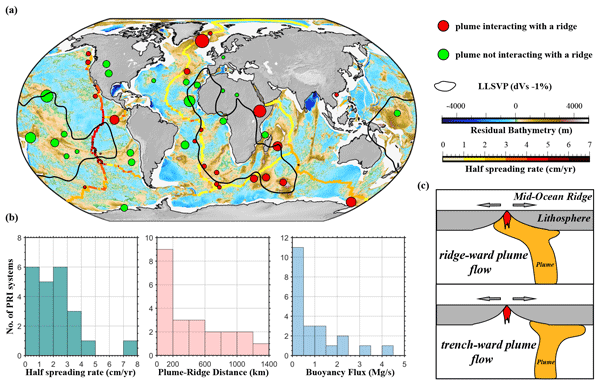
Plume–ridge interaction is an intriguing geological process in plate tectonics. In this paper, we address the respective role of ridgeward vs. plate-drag plume flow in 2D thermomechanical models and compare the results with a compilation of observations on Earth. From a geophysical and geochemical analysis of Earth plumes and in combination with the model results, we propose that the absence of plumes interacting with ridges in the Pacific is largely caused by the presence of plate drag.
Antonio Manjón-Cabeza Córdoba and Maxim D. Ballmer
Solid Earth, 13, 1585–1605, https://doi.org/10.5194/se-13-1585-2022, https://doi.org/10.5194/se-13-1585-2022, 2022
Short summary
Short summary
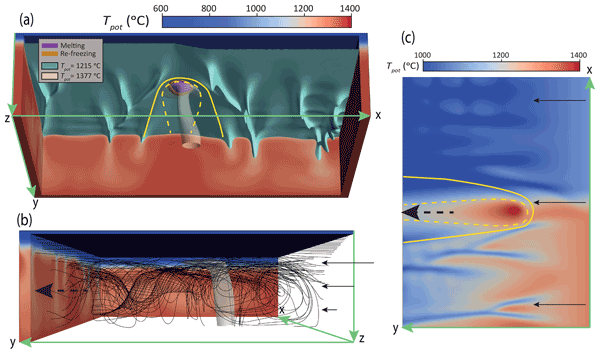
The origin of many volcanic archipelagos on the Earth remains uncertain. By using 3D modelling of mantle flow and melting, we investigate the interaction between the convective mantle near the continental–oceanic transition and rising hot plumes. We believe that this phenomenon is the origin behind some archipelagos, in particular the Canary Islands. Analysing our results, we reconcile observations that were previously enigmatic, such as the complex patterns of volcanism in the Canaries.
Anna Johanna Pia Gülcher, Maxim Dionys Ballmer, and Paul James Tackley
Solid Earth, 12, 2087–2107, https://doi.org/10.5194/se-12-2087-2021, https://doi.org/10.5194/se-12-2087-2021, 2021
Short summary
Short summary
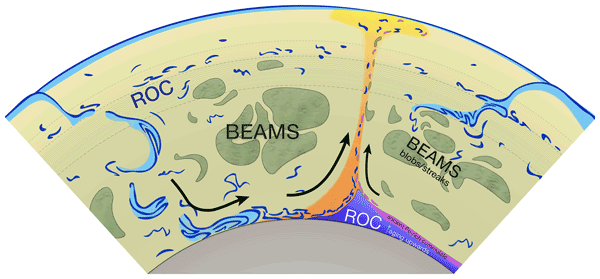
The lower mantle extends from 660–2890 km depth, making up > 50 % of the Earth’s volume. Its composition and structure, however, remain poorly understood. In this study, we investigate several hypotheses with computer simulations of mantle convection that include different materials: recycled, dense rocks and ancient, strong rocks. We propose a new integrated style of mantle convection including
piles,
blobs, and
streaksthat agrees with various observations of the deep Earth.
Cited articles
Allègre, C. J. and Turcotte, D. L.: Implications of a two-component marble-cake mantle, Nature, 323, 123–127, https://doi.org/10.1038/323123a0, 1986. a, b
An, Y., Gu, Y. J., and Sacchi, M. D.: Imaging mantle discontinuities using least squares Radon transform, Journal of Geophysical Research: Solid Earth, 112, https://doi.org/10.1029/2007JB005009, 2007. a, b
Ballmer, M. D., Lourenço, D. L., Hirose, K., Caracas, R., and Nomura, R.: Reconciling magma-ocean crystallization models with the present-day structure of the Earth's mantle, Geochemistry, Geophysics, Geosystems, 18, 2785–2806, https://doi.org/10.1002/2017GC006917, 2017b. a, b, c, d
Ballmer, M. D., Spaargaren, R. J., Mallik, A., Manjón-Cabeza Córdoba, A., Nakajima, M., and Vilella, K.: Present-day Earth mantle structure set up by crustal pollution of the basal magma ocean, Science Advances, 11, eadu2072, https://doi.org/10.1126/sciadv.adu2072, 2025. a
Becker, T. W., Kellogg, J. B., and O'Connell, R. J.: Thermal constraints on the survival of primitive blobs in the lower mantle, Earth and Planetary Science Letters, 171, 351–365, https://doi.org/10.1016/S0012-821X(99)00160-0, 1999. a, b, c, d
Boukaré, C.-É., Badro, J., and Samuel, H.: Solidification of Earth’s mantle led inevitably to a basal magma ocean, Nature, 640, 114–119, https://doi.org/10.1038/s41586-025-08701-z, 2025. a, b, c, d
Bower, D. J., Gurnis, M., and Seton, M.: Lower mantle structure from paleogeographically constrained dynamic Earth models, Geochemistry, Geophysics, Geosystems, 14, 44–63, https://doi.org/10.1029/2012GC004267, 2013. a
Boyet, M. and Carlson, R. W.: 142Nd Evidence for Early (>4.53 Ga) Global Differentiation of the Silicate Earth, science, https://doi.org/10.1126/science.1113634, 2005. a
Brandenburg, J. P. and Van Keken, P. E.: Deep storage of oceanic crust in a vigorously convecting mantle, Journal of Geophysical Research: Solid Earth, 112, 2006JB004813, https://doi.org/10.1029/2006JB004813, 2007. a, b, c, d
Burke, K., Steinberger, B., Torsvik, T. H., and Smethurst, M. A.: Plume Generation Zones at the margins of Large Low Shear Velocity Provinces on the core–mantle boundary, Earth and Planetary Science Letters, 265, 49–60, https://doi.org/10.1016/j.epsl.2007.09.042, 2008. a
Caracausi, A., Avice, G., Burnard, P. G., Füri, E., and Marty, B.: Chondritic xenon in the Earth’s mantle, Nature, 533, 82–85, https://doi.org/10.1038/nature17434, 2016. a, b
Citron, R. I., Lourenço, D. L., Wilson, A. J., Grima, A. G., Wipperfurth, S. A., Rudolph, M. L., Cottaar, S., and Montési, L. G. J.: Effects of Heat-Producing Elements on the Stability of Deep Mantle Thermochemical Piles, Geochemistry, Geophysics, Geosystems, 21, e2019GC008895, https://doi.org/10.1029/2019GC008895, 2020. a, b, c, d, e
Coltice, N. and Schmalzl, J.: Mixing times in the mantle of the early Earth derived from 2-D and 3-D numerical simulations of convection, Geophysical Research Letters, 33, 5–8, https://doi.org/10.1029/2006GL027707, 2006. a
Coltice, N., Moreira, M., Hernlund, J., and Labrosse, S.: Crystallization of a basal magma ocean recorded by helium and neon, Earth and Planetary Science Letters, 308, 193–199, https://doi.org/10.1016/j.epsl.2011.05.045, 2011. a, b
Connolly, J. A. D. and Petrini, K.: An automated strategy for calculation of phase diagram sections and retrieval of rock properties as a function of physical conditions, Journal of Metamorphic Geology, 20, 697–708, 2002. a
Corgne, A., Liebske, C., Wood, B. J., Rubie, D. C., and Frost, D. J.: Silicate perovskite-melt partitioning of trace elements and geochemical signature of a deep perovskitic reservoir, Geochimica et Cosmochimica Acta, 69, 485–496, https://doi.org/10.1016/j.gca.2004.06.041, 2005. a
Cottaar, S. and Lekic, V.: Morphology of seismically slow lower-mantle structures, Geophysical Journal International, 207, 1122–1136, https://doi.org/10.1093/gji/ggw324, 2016. a
Courtier, A. M. and Revenaugh, J.: Slabs and shear wave reflectors in the midmantle, Journal of Geophysical Research: Solid Earth, 113, https://doi.org/10.1029/2007JB005261, 2008. a
Crameri, F.: Scientific colour maps, Zenodo [data set], https://doi.org/10.5281/zenodo.8409685, 2023. a
Dannberg, J., Eilon, Z., Faul, U., Gassmöller, R., Moulik, P., and Myhill, R.: The importance of grain size to mantle dynamics and seismological observations, Geochemistry, Geophysics, Geosystems, 18, 3034–3061, https://doi.org/10.1002/2017GC006944, 2017. a
Dannberg, J., Chotalia, K., and Gassmöller, R.: How lowermost mantle viscosity controls the chemical structure of Earth’s deep interior, Communications Earth & Environment, 4, 493, https://doi.org/10.1038/s43247-023-01153-1, 2023. a
Davaille, A.: Simultaneous generation of hotspots and superswells by convection in a heterogeneous planetary mantle, Nature, 402, 756–760, https://doi.org/10.1038/45461, 1999. a
Davaille, A. and Romanowicz, B.: Deflating the LLSVPs: Bundles of Mantle Thermochemical Plumes Rather Than Thick Stagnant “Piles”, Tectonics, 39, e2020TC006265, https://doi.org/10.1029/2020TC006265, 2020. a
Davaille, A., Girard, F., and Le Bars, M.: How to anchor hotspots in a convecting mantle?, Earth and Planetary Science Letters, 203, 621–634, https://doi.org/10.1016/S0012-821X(02)00897-X, 2002. a
Delavault, H., Chauvel, C., Thomassot, E., Devey, C. W., and Dazas, B.: Sulfur and lead isotopic evidence of relic Archean sediments in the Pitcairn mantle plume, Proceedings of the National Academy of Sciences, 113, 12952–12956, https://doi.org/10.1073/pnas.1523805113, 2016. a
Deng, H., Ballmer, M. D., Reinhardt, C., Meier, M. M. M., Mayer, L., Stadel, J., and Benitez, F.: Primordial Earth Mantle Heterogeneity Caused by the Moon-forming Giant Impact?, The Astrophysical Journal, 887, 211, https://doi.org/10.3847/1538-4357/ab50b9, 2019. a
Deng, J. and Lee, K. K.: Viscosity jump in the lower mantle inferred from melting curves of ferropericlase, Nature communications, 8, 1–8, https://doi.org/10.1093/gji/ggx190, 2017. a
Deschamps, F., Cobden, L., and Tackley, P. J.: The primitive nature of large low shear-wave velocity provinces, Earth and Planetary Science Letters, 349, 198–208, https://doi.org/10.1016/j.epsl.2012.07.012, 2012. a
Desiderio, M.: Raw model output presented and analyzed in “The effects of recycled oceanic crust on the preservation of primordial heterogeneity and Earth's lower-mantle-structure”, Zenodo [data set], https://doi.org/10.5281/zenodo.17409379, 2025. a, b
Doubrovine, P. V., Steinberger, B., and Torsvik, T. H.: A failure to reject: Testing the correlation between large igneous provinces and deep mantle structures with EDF statistics, Geochemistry, Geophysics, Geosystems, 17, 1130–1163, https://doi.org/10.1002/2015GC006044, 2016. a
Dziewonski, A. M.: Mapping the lower mantle: Determination of lateral heterogeneity in P velocity up to degree and order 6, Journal of Geophysical Research: Solid Earth, 89, 5929–5952, https://doi.org/10.1029/JB089iB07p05929, 1984. a
Dziewonski, A. M. and Anderson, D. L.: Preliminary reference Earth model, Physics of the Earth and Planetary Interiors, 25, 297–356, https://doi.org/10.1016/0031-9201(81)90046-7, 1981. a
Elkins-Tanton, L. T.: Linked magma ocean solidification and atmospheric growth for Earth and Mars, Earth and Planetary Science Letters, 271, 181–191, https://doi.org/10.1016/j.epsl.2008.03.062, 2008. a, b
Faccenda, M. and Dal Zilio, L.: The role of solid–solid phase transitions in mantle convection, Lithos, 268, 198–224, 2017. a
Farnetani, C. G. and Richards, M. A.: Thermal entrainment and melting in mantle plumes, Earth and Planetary Science Letters, 136, 251–267, https://doi.org/10.1016/0012-821X(95)00158-9, 1995. a
Fei, H., Ballmer, M. D., Faul, U., Walte, N., Cao, W., and Katsura, T.: Variation in bridgmanite grain size accounts for the mid-mantle viscosity jump, Nature, 620, 794–799, https://doi.org/10.1038/s41586-023-06215-0, 2023. a
Ferrachat, S. and Ricard, Y.: Regular vs. chaotic mantle mixing, Earth and Planetary Science Letters, 155, 75–86, 1998. a
Fischer, R. A., Campbell, A. J., and Ciesla, F. J.: Sensitivities of Earth's core and mantle compositions to accretion and differentiation processes, Earth and Planetary Science Letters, 458, 252–262, https://doi.org/10.1016/j.epsl.2016.10.025, 2017. a
French, S. W. and Romanowicz, B.: Broad plumes rooted at the base of the Earth's mantle beneath major hotspots, Nature, 525, 95–99, https://doi.org/10.1038/nature14876, 2015. a, b
Fukao, Y. and Obayashi, M.: Subducted slabs stagnant above, penetrating through, and trapped below the 660 km discontinuity, Journal of Geophysical Research: Solid Earth, 118, 5920–5938, https://doi.org/10.1002/2013JB010466, 2013. a, b, c, d
Garnero, E. J., McNamara, A. K., and Shim, S.-H.: Continent-sized anomalous zones with low seismic velocity at the base of Earth's mantle, Nature Geoscience, 9, 481–489, https://doi.org/10.1038/ngeo2733, 2016. a
Girard, J., Amulele, G., Farla, R., Mohiuddin, A., and Karato, S.-i.: Shear deformation of bridgmanite and magnesiowüstite aggregates at lower mantle conditions, Science, 351, 144–147, https://doi.org/10.1126/science.aad3113, 2016. a, b
Grand, S. P.: Mantle shear structure beneath the Americas and surrounding oceans, Journal of Geophysical Research: Solid Earth, 99, 11591–11621, https://doi.org/10.1029/94JB00042, 1994. a
Gréaux, S., Irifune, T., Higo, Y., Tange, Y., Arimoto, T., Liu, Z., and Yamada, A.: Sound velocity of CaSiO3 perovskite suggests the presence of basaltic crust in the Earth’s lower mantle, Nature, 565, 218–221, https://doi.org/10.1038/s41586-018-0816-5, 2019. a
Guerrero, J. M., Deschamps, F., Hsieh, W.-P., and Tackley, P. J.: The combined effect of heterogeneous thermal conductivity, chemical density contrast, and heat-producing element enrichment on the stability of primordial reservoirs above the core-mantle boundary, Earth and Planetary Science Letters, 637, 118699, https://doi.org/10.1016/j.epsl.2024.118699, 2024. a
Gülcher, A. J. P., Ballmer, M. D., and Tackley, P. J.: Coupled dynamics and evolution of primordial and recycled heterogeneity in Earth's lower mantle, Solid Earth, 12, 2087–2107, https://doi.org/10.5194/se-12-2087-2021, 2021. a, b, c, d, e, f, g, h, i, j, k, l, m, n, o, p, q, r, s, t, u, v, w, x, y, z, aa, ab, ac, ad, ae, af, ag, ah, ai, aj, ak, al
Gülcher, A. J., Gebhardt, D. J., Ballmer, M. D., and Tackley, P. J.: Variable dynamic styles of primordial heterogeneity preservation in the Earth's lower mantle, Earth and Planetary Science Letters, 536, 116160, https://doi.org/10.1016/j.epsl.2020.116160, 2020. a, b, c, d
Gülcher, J. P.: Shaping Earth's interior evolution through chemical and rheological heterogeneity in the lower mantle. Insights from geodynamic modelling, Doctoral Thesis, ETH Zurich, Zurich, https://doi.org/10.3929/ethz-b-000589863, 2022. a
Heyn, B. H., Conrad, C. P., and Trønnes, R. G.: Stabilizing Effect of Compositional Viscosity Contrasts on Thermochemical Piles, Geophysical Research Letters, 45, 7523–7532, https://doi.org/10.1029/2018GL078799, 2018. a, b, c
Heyn, B. H., Conrad, C. P., and Trønnes, R. G.: How Thermochemical Piles Can (Periodically) Generate Plumes at Their Edges, Journal of Geophysical Research: Solid Earth, 125, e2019JB018726, https://doi.org/10.1029/2019JB018726, 2020. a
Hirose, K., Takafuji, N., Sata, N., and Ohishi, Y.: Phase transition and density of subducted MORB crust in the lower mantle, Earth and Planetary Science Letters, 237, 239–251, https://doi.org/10.1016/j.epsl.2005.06.035, 2005. a, b
Hirose, K., Morard, G., Sinmyo, R., Umemoto, K., Hernlund, J., Helffrich, G., and Labrosse, S.: Crystallization of silicon dioxide and compositional evolution of the Earth’s core, Nature, 543, 99–102, https://doi.org/10.1038/nature21367, 2017. a
Hofmann, A. W.: Mantle geochemistry: the message from oceanic volcanism, Nature, 385, 219–229, https://doi.org/10.1038/385218a0, 1997. a, b
Houser, C., Masters, G., Shearer, P., and Laske, G.: Shear and compressional velocity models of the mantle from cluster analysis of long-period waveforms, Geophysical Journal International, 174, 195–212, https://doi.org/10.1111/j.1365-246X.2008.03763.x, 2008. a
Houser, C., Hernlund, J. W., Valencia-Cardona, J., and Wentzcovitch, R. M.: Discriminating lower mantle composition, Physics of the Earth and Planetary Interiors, 308, 106552, https://doi.org/10.1016/j.pepi.2020.106552, 2020. a, b, c
Hunter, J. D.: Matplotlib: A 2D graphics environment, Computing in Science & Engineering, 9, 90–95, https://doi.org/10.1109/MCSE.2007.55, 2007. a
Immoor, J., Miyagi, L., Liermann, H.-P., Speziale, S., Schulze, K., Buchen, J., Kurnosov, A., and Marquardt, H.: Weak cubic CaSiO3 perovskite in the Earth’s mantle, Nature, 603, 276–279, https://doi.org/10.1038/s41586-021-04378-2, 2022. a, b
Jackson, C. R., Williams, C. D., Du, Z., Bennett, N. R., Mukhopadhyay, S., and Fei, Y.: Incompatibility of argon during magma ocean crystallization, Earth and Planetary Science Letters, 553, 116598, https://doi.org/10.1016/j.epsl.2020.116598, 2021. a, b, c
Jackson, M. G., Konter, J. G., and Becker, T. W.: Primordial helium entrained by the hottest mantle plumes, Nature, 542, 340–343, https://doi.org/10.1038/nature21023, 2017. a, b
Johnson, T. E., Brown, M., Kaus, B. J. P., and VanTongeren, J. A.: Delamination and recycling of Archaean crust caused by gravitational instabilities, Nature Geoscience, 7, 47–52, https://doi.org/10.1038/ngeo2019, 2014. a
Jones, T. D., Maguire, R. R., van Keken, P. E., Ritsema, J., and Koelemeijer, P.: Subducted oceanic crust as the origin of seismically slow lower-mantle structures, Progress in Earth and Planetary Science, 7, 17, https://doi.org/10.1186/s40645-020-00327-1, 2020. a, b
Karato, S.-I.: Physical basis of trace element partitioning: A review, American Mineralogist, 101, 2577–2593, https://doi.org/10.2138/am-2016-5665, 2016. a
Kumagai, I., Davaille, A., Kurita, K., and Stutzmann, E.: Mantle plumes: Thin, fat, successful, or failing? Constraints to explain hot spot volcanism through time and space, Geophysical Research Letters, 35, L16301, https://doi.org/10.1029/2008GL035079, 2008. a
Lau, H. C. P., Mitrovica, J. X., Davis, J. L., Tromp, J., Yang, H.-Y., and Al-Attar, D.: Tidal tomography constrains Earth’s deep-mantle buoyancy, Nature, 551, 321–326, https://doi.org/10.1038/nature24452, 2017. a
Le Bars, M. and Davaille, A.: Whole layer convection in a heterogeneous planetary mantle, Journal of Geophysical Research: Solid Earth, 109, 2003JB002617, https://doi.org/10.1029/2003JB002617, 2004. a
Li, M. and McNamara, A. K.: The influence of deep mantle compositional heterogeneity on Earth's thermal evolution, Earth and Planetary Science Letters, 500, 86–96, https://doi.org/10.1016/j.epsl.2018.08.009, 2018. a, b, c
Li, M., McNamara, A. K., and Garnero, E. J.: Chemical complexity of hotspots caused by cycling oceanic crust through mantle reservoirs, Nature Geoscience, 7, 366–370, https://doi.org/10.1038/ngeo2120, 2014a. a
Li, R., Dannberg, J., Gassmöller, R., Lithgow-Bertelloni, C., and Stixrude, L.: How Phase Transitions Impact Changes in Mantle Convection Style Throughout Earth's History: From Stalled Plumes to Surface Dynamics, Geochemistry, Geophysics, Geosystems, 26, e2024GC011600, https://doi.org/10.1029/2024GC011600, 2025. a
Li, Y., Deschamps, F., and Tackley, P. J.: The stability and structure of primordial reservoirs in the lower mantle: insights from models of thermochemical convection in three-dimensional spherical geometry, Geophysical Journal International, 199, 914–930, https://doi.org/10.1093/gji/ggu295, 2014b. a, b, c
Li, Y., Vočadlo, L., Ballentine, C., and Brodholt, J. P.: Primitive noble gases sampled from ocean island basalts cannot be from the Earth’s core, Nature Communications, 13, 3770, https://doi.org/10.1038/s41467-022-31588-7, 2022. a
Liebske, C., Corgne, A., Frost, D. J., Rubie, D. C., and Wood, B. J.: Compositional effects on element partitioning between Mg-silicate perovskite and silicate melts, Contributions to Mineralogy and Petrology, 149, 113–128, https://doi.org/10.1007/s00410-004-0641-8, 2005. a
Limare, A., Jaupart, C., Kaminski, E., Fourel, L., and Farnetani, C. G.: Convection in an internally heated stratified heterogeneous reservoir, Journal of Fluid Mechanics, 870, 67–105, https://doi.org/10.1017/jfm.2019.243, 2019. a
Lin, S.-C. and van Keken, P. E.: Dynamics of thermochemical plumes: 1. Plume formation and entrainment of a dense layer, Geochemistry, Geophysics, Geosystems, 7, https://doi.org/10.1029/2005GC001071, 2006. a
Manga, M.: Mixing of heterogeneities in the mantle: Effect of viscosity differences, Geophysical Research Letters, 23, 403–406, https://doi.org/10.1029/96GL00242, 1996. a, b, c
Marquardt, H. and Miyagi, L.: Slab stagnation in the shallow lower mantle linked to an increase in mantle viscosity, Nature Geoscience, 8, 311–314, https://doi.org/10.1038/ngeo2393, 2015. a
Marquardt, H. and Thomson, A. R.: Experimental elasticity of Earth’s deep mantle, Nature Reviews Earth & Environment, 1, 455–469, https://doi.org/10.1038/s43017-020-0077-3, 2020. a, b, c
McNamara, A. K.: A review of large low shear velocity provinces and ultra low velocity zones, Tectonophysics, 760, 199–220, https://doi.org/10.1016/j.tecto.2018.04.015, 2019. a
McNamara, A. K. and Zhong, S.: Thermochemical structures within a spherical mantle: Superplumes or piles?, Journal of Geophysical Research: Solid Earth, 109, https://doi.org/10.1029/2003JB002847, 2004. a
Merveilleux du Vignaux, N. and Fleitout, L.: Stretching and mixing of viscous blobs in Earth's mantle, Journal of Geophysical Research: Solid Earth, 106, 30893–30908, https://doi.org/10.1029/2001jb000304, 2001. a
Miyagi, L., Merkel, S., Yagi, T., Sata, N., Ohishi, Y., and Wenk, H.-R.: Diamond anvil cell deformation of CaSiO3 perovskite up to 49GPa, Physics of the Earth and Planetary Interiors, 174, 159–164, https://doi.org/10.1016/j.pepi.2008.05.018, 2009. a
Miyazaki, Y. and Korenaga, J.: On the Timescale of Magma Ocean Solidification and Its Chemical Consequences: 1. Thermodynamic Database for Liquid at High Pressures, Journal of Geophysical Research: Solid Earth, 124, 3382–3398, https://doi.org/10.1029/2018JB016932, 2019. a, b, c
Moore, W. B. and Webb, A. A. G.: Heat-pipe Earth, Nature, 501, 501–505, https://doi.org/10.1038/nature12473, 2013. a
Moreira, M.: Noble gas constraints on the origin and evolution of Earth’s volatiles, Geochemical Perspectives, 2, 229–403, https://doi.org/10.7185/geochempersp.2.2, 2013. a, b
Morison, A., Ulvrova, M., Labrosse, S., B4rsh, theofatou, and tfrass49: StagPython/StagPy: v0.19.0, Zenodo [code], https://doi.org/10.5281/zenodo.10969122, 2024. a
Mosenfelder, J. L., Asimow, P. D., Frost, D. J., Rubie, D. C., and Ahrens, T. J.: The MgSiO3 system at high pressure: Thermodynamic properties of perovskite, postperovskite, and melt from global inversion of shock and static compression data, Journal of Geophysical Research: Solid Earth, 114, https://doi.org/10.1029/2008JB005900, 2009. a
Moulik, P. and Ekström, G.: The relationships between large-scale variations in shear velocity, density, and compressional velocity in the Earth's mantle, Journal of Geophysical Research: Solid Earth, 121, 2737–2771, https://doi.org/10.1002/2015JB012679, 2016. a
Mukhopadhyay, S.: Early differentiation and volatile accretion recorded in deep-mantle neon and xenon, Nature, 486, 101–104, https://doi.org/10.1038/nature11141, 2012. a, b, c
Mulyukova, E., Steinberger, B., Dabrowski, M., and Sobolev, S. V.: Survival of LLSVPs for billions of years in a vigorously convecting mantle: Replenishment and destruction of chemical anomaly, Journal of Geophysical Research: Solid Earth, 120, 3824–3847, https://doi.org/10.1002/2014JB011688, 2015. a, b, c, d
Mundl, A., Touboul, M., Jackson, M. G., Day, J. M. D., Kurz, M. D., Lekic, V., Helz, R. T., and Walker, R. J.: Tungsten-182 heterogeneity in modern ocean island basalts, Science, 356, 66–69, https://doi.org/10.1126/science.aal4179, 2017. a, b
Murakami, M., Khan, A., Sossi, P. A., Ballmer, M. D., and Saha, P.: The Composition of Earth's Lower Mantle, Annual Review of Earth and Planetary Sciences, 52, 605–638, https://doi.org/10.1146/annurev-earth-031621-075657, 2024. a, b, c
Nabiei, F., Badro, J., Boukareé, C., Hébert, C., Cantoni, M., Borensztajn, S., Wehr, N., and Gillet, P.: Investigating Magma Ocean Solidification on Earth Through Laser-Heated Diamond Anvil Cell Experiments, Geophysical Research Letters, 48, e2021GL092446, https://doi.org/10.1029/2021GL092446, 2021. a, b, c, d, e
Nakagawa, T. and Tackley, P. J.: Effects of low-viscosity post-perovskite on thermo-chemical mantle convection in a 3-D spherical shell, Geophysical Research Letters, 38, https://doi.org/10.1029/2010GL046494, 2011. a
Nakagawa, T., Tackley, P. J., Deschamps, F., and Connolly, J. A.: The influence of MORB and harzburgite composition on thermo-chemical mantle convection in a 3-D spherical shell with self-consistently calculated mineral physics, Earth and Planetary Science Letters, 296, 403–412, https://doi.org/10.1016/j.epsl.2010.05.026, 2010. a, b
Nakajima, M. and Stevenson, D. J.: Melting and mixing states of the Earth's mantle after the Moon-forming impact, Earth and Planetary Science Letters, 427, 286–295, https://doi.org/10.1016/j.epsl.2015.06.023, 2015. a
Okamoto, A. and Hiraga, T.: A Common Diffusional Mechanism for Creep and Grain Growth in Polymineralic Rocks: Application to Lower Mantle Viscosity Estimates, Journal of Geophysical Research: Solid Earth, 129, https://doi.org/10.1029/2023JB027803, 2024. a, b, c, d
O'Neill, C. and Zhang, S.: Lateral Mixing Processes in the Hadean, Journal of Geophysical Research: Solid Earth, 123, 7074–7089, https://doi.org/10.1029/2018JB015698, 2018. a
Ozgurel, O. and Caracas, R.: The magma ocean was a huge helium reservoir in the early Earth, Geochemical Perspectives Letters, 25, 46–50, https://doi.org/10.7185/geochemlet.2314, 2023. a
Palme, H. and O'Neill, H.: Cosmochemical Estimates of Mantle Composition, in: Treatise on Geochemistry, Elsevier, 1–39, ISBN 978-0-08-098300-4, https://doi.org/10.1016/B978-0-08-095975-7.00201-1, 2014. a
Panton, J., Davies, J. H., and Myhill, R.: The Stability of Dense Oceanic Crust Near the Core-Mantle Boundary, Journal of Geophysical Research: Solid Earth, 128, e2022JB025610, https://doi.org/10.1029/2022JB025610, 2023. a, b, c, d
Richards, F. D., Hoggard, M. J., Ghelichkhan, S., Koelemeijer, P., and Lau, H. C. P.: Geodynamic, geodetic, and seismic constraints favour deflated and dense-cored LLVPs, Earth and Planetary Science Letters, 602, 117964, https://doi.org/10.1016/j.epsl.2022.117964, 2023. a, b
Ricolleau, A., Perrillat, J.-P., Fiquet, G., Daniel, I., Matas, J., Addad, A., Menguy, N., Cardon, H., Mezouar, M., and Guignot, N.: Phase relations and equation of state of a natural MORB: Implications for the density profile of subducted oceanic crust in the Earth's lower mantle, Journal of Geophysical Research: Solid Earth, 115, https://doi.org/10.1029/2009JB006709, 2010. a, b, c
Ritsema, J., McNamara, A. K., and Bull, A. L.: Tomographic filtering of geodynamic models: Implications for model interpretation and large-scale mantle structure, Journal of Geophysical Research: Solid Earth, 112, https://doi.org/10.1029/2006JB004566, 2007. a
Rizo, H., Walker, R. J., Carlson, R. W., Horan, M. F., Mukhopadhyay, S., Manthos, V., Francis, D., and Jackson, M. G.: Preservation of Earth-forming events in the tungsten isotopic composition of modern flood basalts, Science, 352, 809–812, https://doi.org/10.1126/science.aad8563, 2016. a, b, c
Rudolph, M. L., Lekić, V., and Lithgow-Bertelloni, C.: Viscosity jump in Earth’s mid-mantle, Science, 350, 1349–1352, https://doi.org/10.1126/science.aad1929, 2015. a
Saki, M., Thomas, C., and Abreu, R.: Detection and modelling of strong topography of mid-mantle structures beneath the North Atlantic, Geophysical Journal International, 229, 219–234, https://doi.org/10.1093/gji/ggab465, 2022. a
Schierjott, J., Rozel, A., and Tackley, P.: On the self-regulating effect of grain size evolution in mantle convection models: application to thermochemical piles, Solid Earth, 11, 959–982, https://doi.org/10.5194/se-11-959-2020, 2020. a
Schouten, T. L. A., Gebraad, L., Noe, S., Gülcher, A. J. P., Thrastarson, S., van Herwaarden, D.-P., and Fichtner, A.: Full-waveform inversion reveals diverse origins of lower mantle positive wave speed anomalies, Scientific Reports, 14, 26708, https://doi.org/10.1038/s41598-024-77399-2, 2024. a, b
Schubert, G., Turcotte, D. L., and Olson, P.: Mantle convection in the Earth and planets, Cambridge University Press, ISBN 9780511612879, https://doi.org/10.1017/CBO9780511612879, 2001. a
Shcheka, S. S. and Keppler, H.: The origin of the terrestrial noble-gas signature, Nature, 490, 531–534, https://doi.org/10.1038/nature11506, 2012. a
Shephard, G. E., Matthews, K. J., Hosseini, K., and Domeier, M.: On the consistency of seismically imaged lower mantle slabs, Scientific Reports, 7, 10976, https://doi.org/10.1038/s41598-017-11039-w, 2017. a
Shephard, G. E., Houser, C., Hernlund, J. W., Valencia-Cardona, J. J., Trønnes, R. G., and Wentzcovitch, R. M.: Seismological expression of the iron spin crossover in ferropericlase in the Earth’s lower mantle, Nature Communications, 12, 5905, https://doi.org/10.1038/s41467-021-26115-z, 2021. a, b
Solomatov, V.: Magma Oceans and Primordial Mantle Differentiation, in: Treatise on Geophysics, Elsevier, 81–104, ISBN 978-0-444-53803-1, https://doi.org/10.1016/B978-0-444-53802-4.00155-X, 2015. a, b
Solomatov, V. S.: Can hotter mantle have a larger viscosity?, Geophysical Research Letters, 23, 937–940, https://doi.org/10.1029/96GL00724, 1996. a
Starkey, N. A., Stuart, F. M., Ellam, R. M., Fitton, J. G., Basu, S., and Larsen, L. M.: Helium isotopes in early Iceland plume picrites: Constraints on the composition of high 3He/4He mantle, Earth and Planetary Science Letters, 277, 91–100, 2009. a
Stixrude, L. and Lithgow-Bertelloni, C.: Thermodynamics of mantle minerals – II. Phase equilibria, Geophysical Journal International, 184, 1180–1213, https://doi.org/10.1111/j.1365-246X.2010.04890.x, 2011. a
Stixrude, L. and Lithgow-Bertelloni, C.: Thermodynamics of mantle minerals – III: the role of iron, Geophysical Journal International, 237, 1699–1733, https://doi.org/10.1093/gji/ggae126, 2024. a
Stixrude, L., De Koker, N., Sun, N., Mookherjee, M., and Karki, B. B.: Thermodynamics of silicate liquids in the deep Earth, Earth and Planetary Science Letters, 278, 226–232, https://doi.org/10.1016/j.epsl.2008.12.006, 2009. a
Sun, S., Ricard, Y., Durand, S., and Debayle, E.: A high attenuation layer around 1000 km depth, Earth and Planetary Science Letters, 669, 119577, https://doi.org/10.1016/j.epsl.2025.119577, 2025. a
Tackley, P. J.: Strong heterogeneity caused by deep mantle layering, Geochemistry, Geophysics, Geosystems, 3, 1–22, https://doi.org/10.1029/2001GC000167, 2002. a
Tackley, P. J.: Modelling compressible mantle convection with large viscosity contrasts in a three-dimensional spherical shell using the yin-yang grid, Physics of the Earth and Planetary Interiors, 171, 7–18, https://doi.org/10.1016/j.pepi.2008.08.005, 2008. a, b
Tackley, P. J.: Living dead slabs in 3-D: The dynamics of compositionally-stratified slabs entering a “slab graveyard” above the core-mantle boundary, Physics of the Earth and Planetary Interiors, 188, 150–162, https://doi.org/10.1016/j.pepi.2011.04.013, 2011. a, b, c, d
Tackley, P. J.: Dynamics and evolution of the deep mantle resulting from thermal, chemical, phase and melting effects, Earth-Science Reviews, 110, 1–25, https://doi.org/10.1016/j.earscirev.2011.10.001, 2012. a, b
Tackley, P. J., Ammann, M., Brodholt, J. P., Dobson, D. P., and Valencia, D.: Mantle dynamics in super-Earths: Post-perovskite rheology and self-regulation of viscosity, Icarus, 225, 50–61, https://doi.org/10.1016/j.icarus.2013.03.013, 2013. a
Talavera-Soza, S., Cobden, L., Faul, U. H., and Deuss, A.: Global 3D model of mantle attenuation using seismic normal modes, Nature, 637, 1131–1135, https://doi.org/10.1038/s41586-024-08322-y, 2025. a, b
Tan, E. and Gurnis, M.: Compressible thermochemical convection and application to lower mantle structures, Journal of Geophysical Research: Solid Earth, 112, https://doi.org/10.1029/2006JB004505, 2007. a
Thielmann, M., Golabek, G. J., and Marquardt, H.: Ferropericlase control of lower mantle rheology: Impact of phase morphology, Geochemistry, Geophysics, Geosystems, 21, e2019GC008688, https://doi.org/10.1029/2019GC008688, 2020. a
Thomson, A., Crichton, W., Brodholt, J., Wood, I., Siersch, N., Muir, J., Dobson, D., and Hunt, S. A.: Seismic velocities of CaSiO3 perovskite can explain LLSVPs in Earth’s lower mantle, Nature, 572, 643–647, https://doi.org/10.1038/s41586-019-1483-x, 2019. a
Thrastarson, S., van Herwaarden, D., Noe, S., Schiller, C. J., and Fichtner, A.: REVEAL: A Global Full‐Waveform Inversion Model, Bulletin of the Seismological Society of America, 114, 1392–1406, https://doi.org/10.1785/0120230273, 2024. a
Tolstikhin, I. and Hofmann, A. W.: Early crust on top of the Earth's core, Physics of the Earth and Planetary Interiors, 148, 109–130, 2005. a
Touboul, M., Puchtel, I. S., and Walker, R. J.: 182 W Evidence for Long-Term Preservation of Early Mantle Differentiation Products, Science, 335, 1065–1069, https://doi.org/10.1126/science.1216351, 2012. a
Trautner, V. E., Stackhouse, S., Turner, A. R., Koelemeijer, P., Davies, D. R., Méndez, A. S. J., Satta, N., Kurnosov, A., Liermann, H.-P., and Marquardt, H.: Compressibility of ferropericlase at high-temperature: Evidence for the iron spin crossover in seismic tomography, Earth and Planetary Science Letters, 618, 118296, https://doi.org/10.1016/j.epsl.2023.118296, 2023. a
Tschauner, O., Huang, S., Yang, S., Humayun, M., Liu, W., Corder, S. N. G., Bechtel, H. A., Tischler, J., and Rossman, G. R.: Discovery of davemaoite, CaSiO3-perovskite, as a mineral from the lower mantle, Science, 374, 891–894, https://doi.org/10.1126/science.abl8568, 2021. a
Tsuchiya, T.: Elasticity of subducted basaltic crust at the lower mantle pressures: Insights on the nature of deep mantle heterogeneity, Physics of the Earth and Planetary Interiors, 188, 142–149, https://doi.org/10.1016/j.pepi.2011.06.018, 2011. a
Tsujino, N., Yamazaki, D., Nishihara, Y., Yoshino, T., Higo, Y., and Tange, Y.: Viscosity of bridgmanite determined by in situ stress and strain measurements in uniaxial deformation experiments, Science Advances, 8, eabm1821, https://doi.org/10.1126/sciadv.abm1821, 2022. a, b, c
Tucker, J. M. and Mukhopadhyay, S.: Evidence for multiple magma ocean outgassing and atmospheric loss episodes from mantle noble gases, Earth and Planetary Science Letters, 393, 254–265, 2014. a
van Der Hilst, R. D., Widiyantoro, S., and Engdahl, E. R.: Evidence for deep mantle circulation from global tomography, Nature, 386, 578–584, https://doi.org/10.1038/386578a0, 1997. a
van der Meer, D. G., Spakman, W., van Hinsbergen, D. J. J., Amaru, M. L., and Torsvik, T. H.: Towards absolute plate motions constrained by lower-mantle slab remnants, Nature Geoscience, 3, 36–40, https://doi.org/10.1038/ngeo708, 2010. a
van der Wiel, E., Thieulot, C., and van Hinsbergen, D. J. J.: Quantifying mantle mixing through configurational entropy, Solid Earth, 15, 861–875, https://doi.org/10.5194/se-15-861-2024, 2024. a
Vilella, K., Bodin, T., Boukaré, C.-E., Deschamps, F., Badro, J., Ballmer, M. D., and Li, Y.: Constraints on the composition and temperature of LLSVPs from seismic properties of lower mantle minerals, Earth and Planetary Science Letters, 554, 116685, https://doi.org/10.1016/j.epsl.2020.116685, 2021. a
Vinnik, L. P., Oreshin, S. I., Speziale, S., and Weber, M.: Mid-mantle layering from SKS receiver functions, Geophysical Research Letters, 37, https://doi.org/10.1029/2010GL045323, 2010. a
Waszek, L., Schmerr, N. C., and Ballmer, M. D.: Global observations of reflectors in the mid-mantle with implications for mantle structure and dynamics, Nature communications, 9, 1–13, https://doi.org/10.1038/s41467-017-02709-4, 2018. a, b, c
Waszek, L., Tauzin, B., Schmerr, N. C., Ballmer, M. D., and Afonso, J. C.: A poorly mixed mantle transition zone and its thermal state inferred from seismic waves, Nature Geoscience, 14, 949–955, https://doi.org/10.1038/s41561-021-00850-w, 2021. a, b
Xie, L., Yoneda, A., Yamazaki, D., Manthilake, G., Higo, Y., Tange, Y., Guignot, N., King, A., Scheel, M., and Andrault, D.: Formation of bridgmanite-enriched layer at the top lower-mantle during magma ocean solidification, Nature Communications, 11, 548, https://doi.org/10.1038/s41467-019-14071-8, 2020. a
Xu, F., Yamazaki, D., Sakamoto, N., Sun, W., Fei, H., and Yurimoto, H.: Silicon and oxygen self-diffusion in stishovite: Implications for stability of SiO2-rich seismic reflectors in the mid-mantle, Earth and Planetary Science Letters, 459, 332–339, https://doi.org/10.1016/j.epsl.2016.11.044, 2017. a
Yamazaki, D. and Karato, S.-I.: Some mineral physics constraints on the rheology and geothermal structure of Earth’s lower mantle, American Mineralogist, 86, 385–391, https://doi.org/10.2138/am-2001-0401, 2001. a
Yuan, Y., Sun, D., Leng, W., and Wu, Z.: Southeastward dipping mid-mantle heterogeneities beneath the sea of Okhotsk, Earth and Planetary Science Letters, 573, 117151, https://doi.org/10.1016/j.epsl.2021.117151, 2021. a
Zhang, Z., Irving, J. C. E., Simons, F. J., and Alkhalifah, T.: Seismic evidence for a 1000 km mantle discontinuity under the Pacific, Nature Communications, 14, 1714, https://doi.org/10.1038/s41467-023-37067-x, 2023. a
Zindler, A. and Hart, S.: Chemical geodynamics, IN: Annual review of earth and planetary sciences. Volume 14 (A87-13190 03-46). Palo Alto, CA, Annual Reviews, Inc., 14, 493–571, https://doi.org/10.1146/annurev.ea.14.050186.002425, 1986. a
Short summary
Lava samples and seismic signals show that Earth's lower mantle is not well-mixed, but how this heterogeneity relates to the mantle's long-term history remains unclear. We study this with computer simulations of secular movements of masses in the mantle, with various materials to represent recycled and ancient rocks with different properties. We find that deep strong piles of recycled rock can help large ancient blobs survive, linking current deep-Earth observations to Earth's earliest infancy.
Lava samples and seismic signals show that Earth's lower mantle is not well-mixed, but how this...


