
Articles | Volume 17, issue 1
https://doi.org/10.5194/se-17-85-2026
© Author(s) 2026. This work is distributed under
the Creative Commons Attribution 4.0 License.
the Creative Commons Attribution 4.0 License.
Special issue:
https://doi.org/10.5194/se-17-85-2026
© Author(s) 2026. This work is distributed under
the Creative Commons Attribution 4.0 License.
the Creative Commons Attribution 4.0 License.
Research article
| 
15 Jan 2026
Research article |
| 15 Jan 2026
| 15 Jan 2026
Deep crustal structure of the southern Baltic Sea in the light of seismic and potential field data
Małgorzata Ponikowska
CORRESPONDING AUTHOR

Institute of Geological Sciences, Polish Academy of Sciences, Warsaw, Poland
Sergiy Stovba
Institute of Geological Sciences, Polish Academy of Sciences, Warsaw, Poland
S.I. Subbotin Institute of Geophysics,National Academy of Sciences of Ukraine, Kyiv, Ukraine
Michał Malinowski
Institute of Geophysics, Polish Academy of Sciences, Warsaw, Poland
Geological Survey of Finland, Espoo, Finland
Quang Nguyen
Institute of Geophysics, Polish Academy of Sciences, Warsaw, Poland
Stanisław Mazur
Institute of Geological Sciences, Polish Academy of Sciences, Warsaw, Poland
Related authors
Quang Nguyen, Michal Malinowski, Stanisław Mazur, Sergiy Stovba, Małgorzata Ponikowska, and Christian Hübscher
Solid Earth, 15, 1029–1046, https://doi.org/10.5194/se-15-1029-2024, https://doi.org/10.5194/se-15-1029-2024, 2024
Short summary
Short summary
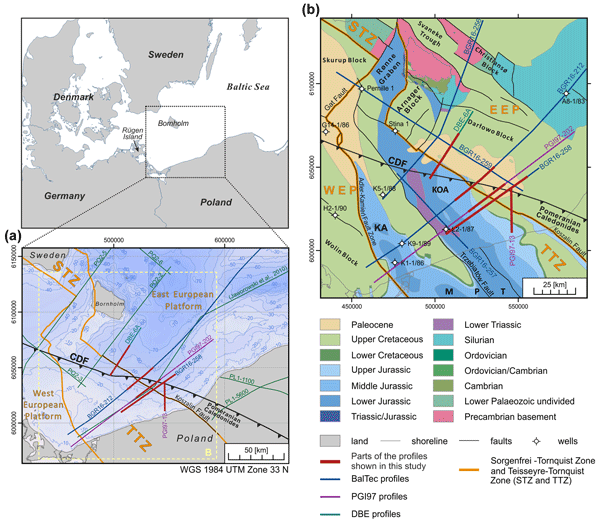
Our work demonstrates the following: (1) an efficient seismic data-processing strategy focused on suppressing shallow-water multiple reflections. (2) An improvement in the quality of legacy marine seismic data. (3) A seismic interpretation of sedimentary successions overlying the basement in the transition zone from the Precambrian to Paleozoic platforms. (4) The tectonic evolution of the Koszalin Fault and its relation to the Caledonian Deformation Front offshore Poland.
Christina Tsarsitalidou, Valtteri Hopiavuori, Kauri Kolehmainen, Gregor Hillers, Yang Lu, Suvi Heinonen, Michal Malinowski, Pierre Boué, Bruno Giammarinaro, Laurent Stehly, and Kari Komminaho
EGUsphere, https://doi.org/10.5194/egusphere-2026-4298, https://doi.org/10.5194/egusphere-2026-4298, 2026
Short summary
Short summary
The continuing energy transition in the European Union calls for the development of new methods that efficiently and sustainably characterize the subsurface for critical raw materials. In this study, we apply the focal spot imaging to the Kylylahti mine area, to demonstrate its applicability in a mineral exploration context. The resulting images are consistent with previous studies, which demonstrates the potential of focal spot imaging as a valuable complementary tool for mineral exploration.
Brij Singh, Andrzej Górszczyk, Michał Malinowski, and Tuomo Karinen
EGUsphere, https://doi.org/10.5194/egusphere-2026-3292, https://doi.org/10.5194/egusphere-2026-3292, 2026
This preprint is open for discussion and under review for Solid Earth (SE).
Short summary
Short summary
Advanced seismic imaging is applied to study the highly prospective Koillismaa Deep Intrusion in northern Finland. An integrated multi-geophysics approach, including seismic, gravity, magnetic, electromagnetic and borehole data, was used for a comprehensive interpretation. A previously unrecognized more laterally extensive top of the KDI was imaged. A new hypothesis on the magma emplacement responsible for the observed shift in gravity and magnetic highs in the KDI area is proposed.
Michał Malinowski, Tuomo Karinen, Uula Autio, Suvi Heinonen, Brij Singh, Andrzej Górszczyk, Łukasz Sito, and the SEEMS DEEP Working Group
Solid Earth, 16, 1437–1452, https://doi.org/10.5194/se-16-1437-2025, https://doi.org/10.5194/se-16-1437-2025, 2025
Short summary
Short summary
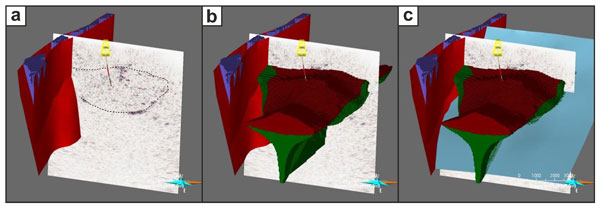
We acquired and processed novel 3D seismic data to reveal the hidden structure of a deep rock formation in northeastern Finland. This study uncovered a complex, layered system rather than a simple magma channel, and identified a major fault that may influence mineral deposits. Our findings offer new tools and insights for exploring valuable underground resources in hard rock environments.
Brij Singh, Andrzej Górszczyk, Michał Malinowski, Suvi Heinonen, Uula Autio, Tuomo Karinen, Marek Wojdyła, and the SEEMS DEEP Working Group
Solid Earth, 16, 1137–1151, https://doi.org/10.5194/se-16-1137-2025, https://doi.org/10.5194/se-16-1137-2025, 2025
Short summary
Short summary
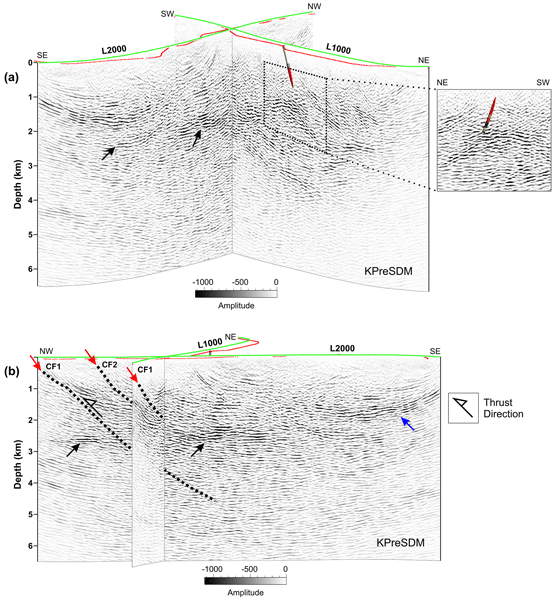
Two regional reflection seismic profiles were acquired to map the geometrical architecture of the Koillismaa Layered Igneous Complex (KLIC) in north-eastern Finland. Reflectivity up to a depth of ~5–6 km is delineated. The magma conduit associated with the KLIC was successfully revealed and the associated mineralization potential was established. A regional fault system associated with the magma emplacement was mapped for the first time.
Quang Nguyen, Michal Malinowski, Stanisław Mazur, Sergiy Stovba, Małgorzata Ponikowska, and Christian Hübscher
Solid Earth, 15, 1029–1046, https://doi.org/10.5194/se-15-1029-2024, https://doi.org/10.5194/se-15-1029-2024, 2024
Short summary
Short summary
Our work demonstrates the following: (1) an efficient seismic data-processing strategy focused on suppressing shallow-water multiple reflections. (2) An improvement in the quality of legacy marine seismic data. (3) A seismic interpretation of sedimentary successions overlying the basement in the transition zone from the Precambrian to Paleozoic platforms. (4) The tectonic evolution of the Koszalin Fault and its relation to the Caledonian Deformation Front offshore Poland.
Brij Singh, Michał Malinowski, Andrzej Górszczyk, Alireza Malehmir, Stefan Buske, Łukasz Sito, and Paul Marsden
Solid Earth, 13, 1065–1085, https://doi.org/10.5194/se-13-1065-2022, https://doi.org/10.5194/se-13-1065-2022, 2022
Short summary
Short summary
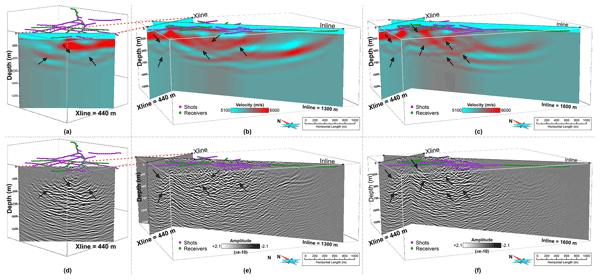
Fast depletion of shallower deposits is pushing the mining industry to look for cutting-edge technologies for deep mineral targeting. We demonstrated a joint workflow including two state-of-the-art technologies: full-waveform inversion and reverse time migration. We produced Earth images with significant details which can help with better estimation of areas with high mineralisation, better mine planning and safety measures.
Felix Hloušek, Michal Malinowski, Lena Bräunig, Stefan Buske, Alireza Malehmir, Magdalena Markovic, Lukasz Sito, Paul Marsden, and Emma Bäckström
Solid Earth, 13, 917–934, https://doi.org/10.5194/se-13-917-2022, https://doi.org/10.5194/se-13-917-2022, 2022
Short summary
Short summary
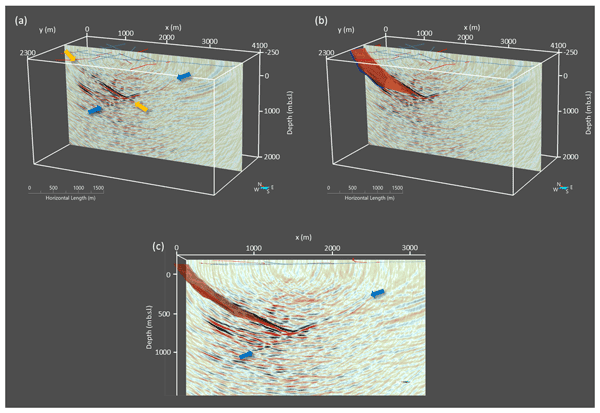
Methods for mineral exploration play an important role within the EU. Exploration must be environmentally friendly, cost effective, and feasible in populated areas. Seismic methods have the potential to deliver detailed images of mineral deposits but suffer from these demands. We show the results for a sparse 3D seismic dataset acquired in Sweden. The 3D depth image allows us to track the known mineralizations beyond the known extent and gives new insights into the geometry of the deposit.
Michal Chamarczuk, Michal Malinowski, Deyan Draganov, Emilia Koivisto, Suvi Heinonen, and Sanna Rötsä
Solid Earth, 13, 705–723, https://doi.org/10.5194/se-13-705-2022, https://doi.org/10.5194/se-13-705-2022, 2022
Short summary
Short summary
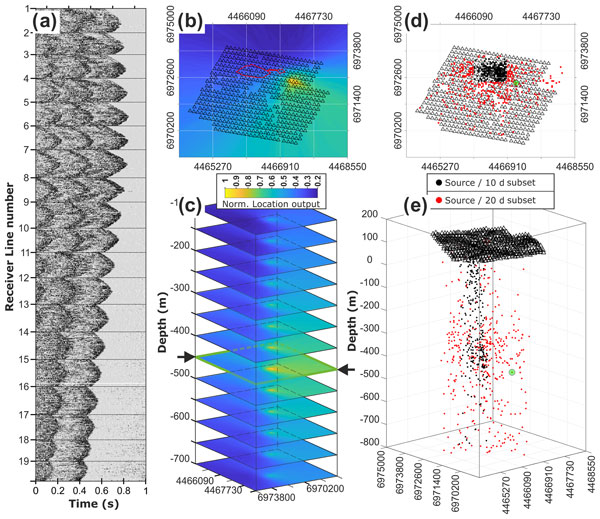
In passive seismic measurement, all noise sources from the environment, such as traffic, vibrations caused by distant excavation, and explosive work from underground mines, are utilized. In the Kylylahti experiment, receivers recorded ambient noise sources for 30 d. These recordings were subjected to data analysis and processing using novel methodology developed in our study and used for imaging the subsurface geology of the Kylylahti mine area.
Piotr Krzywiec, Mateusz Kufrasa, Paweł Poprawa, Stanisław Mazur, Małgorzata Koperska, and Piotr Ślemp
Solid Earth, 13, 639–658, https://doi.org/10.5194/se-13-639-2022, https://doi.org/10.5194/se-13-639-2022, 2022
Short summary
Short summary
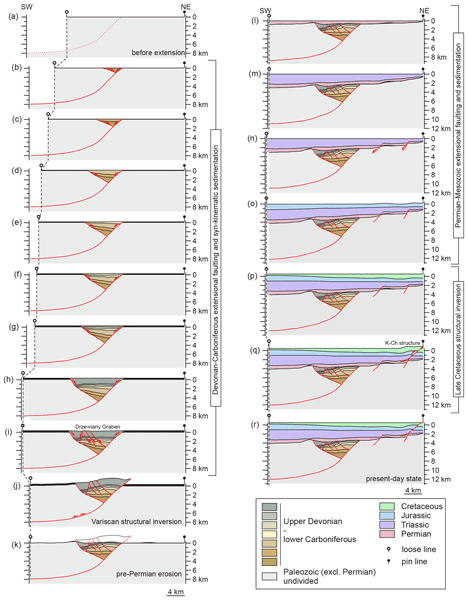
Legacy 2-D seismic data with newly acquired 3-D seismic data were used to construct a new model of geological evolution of NW Poland over last 400 Myr. It illustrates how the destruction of the Caledonian orogen in the Late Devonian–early Carboniferous led to half-graben formation, how they were inverted in the late Carboniferous, how the study area evolved during the formation of the Permo-Mesozoic Polish Basin and how supra-evaporitic structures were inverted in the Late Cretaceous–Paleogene.
Cited articles
Aichroth, B., Prodehl, C., and Thybo, H.: Crustal structure along the central segment of the EGT from seismic-refraction studies, Tectonophysics, 207, 43–64, https://doi.org/10.1016/0040-1951(92)90471-H, 1992.
Al Hseinat, M. and Hübscher, C.: Late Cretaceous to recent tectonic evolution of the North German Basin and the transition zone to the Baltic Shield/southwest Baltic Sea, Tectonophysics, 708, 28–55, https://doi.org/10.1016/j.tecto.2017.04.021, 2017.
ARK CLS Ltd.: XField modelling package [software], https://arkcls.com/software/xfield, last access: 29 May 2025.
BABEL Working Group: Deep seismic survey images the structure of the Tornquist Zone beneath the Southern Baltic Sea, Geophys. Res. Lett., 18, 1091–1094, https://doi.org/10.1029/91GL00847, 1991.
BABEL Working Group: Deep seismic reflection/refraction interpretation of critical structure along BABEL profiles A and B in the southern Baltic Sea, Geophys. J. Int., 112, 325–343, https://doi.org/10.1111/j.1365-246X.1993.tb01173.x, 1993.
Babuška, V. and Plomerová, J.: The Sorgenfrei–Tornquist Zone as the mantle edge of Baltica lithosphere: new evidence from three-dimensional seismic anisotropy, Terra Nova, 16, 243–249, https://doi.org/10.1111/j.1365-3121.2004.00558.x, 2004.
Bayer, U., Grad, M., Pharaoh, T. C., Thybo, H., Guterch, A., Banka, D., Lamarche, J., Lassen, A., Lewerenz, B., Scheck, M., and Marotta, A. M.: The southern margin of the east European Craton: new results from seismic sounding and potential fields between the North Sea and Poland, Tectonophysics, 360, 301–314, https://doi.org/10.1016/S0040-1951(02)00359-1, 2002.
Berthelsen, A.: Mobile Europe, in: The European Geotraverse: A Continent Revealed, edited by: Blundell, D., Freeman, R., and Mueller, S., Cambridge University Press, Cambridge, 153–164, ISBN-13 978-0-521-42948-1, 1992.
Berthelsen, A.: The Tornquist Zone northwest of the Carpathians: an intraplate pseudosuture, GFF, 120, 223–230, https://doi.org/10.1080/11035899801202223, 1998.
Bleibinhaus, F., Beilecke, T., Bram, K., and Gebrande, H.: A seismic velocity model for the SW Baltic Sea derived from BASIN'96 refraction seismic data, Tectonophysics, 314, 269–283, https://doi.org/10.1016/S0040-1951(99)00248-6, 1999.
Bogdanova, S. V., Bingen, B., Gorbatschev, R., Kheraskova, T. N., Kozlov, V. I., Puchkov, V. N., and Volozh, Y. A.: The East European Craton (Baltica) before and during the assembly of Rodinia, Precambrian Res., 160, 23–45, https://doi.org/10.1016/j.precamres.2007.04.024, 2008.
Botor, D., Mazur, S., Anczkiewicz, A. A., Dunkl, I., and Golonka, J.: Thermal history of the East European Platform margin in Poland based on apatite and zircon low-temperature thermochronology, Solid Earth, 12, 1899–1930, https://doi.org/10.5194/se-12-1899-2021, 2021.
Brocher, T. M.: Empirical relations between elastic wave speeds and density in the Earth's crust, Bull. Seismol. Soc. Am., 95, 2081–2092, https://doi.org/10.1785/0120050077, 2005.
Central Geological Database: Polish Geological Institute, http://baza.pgi.gov.pl/ (last access: 30 May 2025), 2022.
Cocks, L. R. M. and Fortey, R. A.: Avalonia: a long-lived terrane in the Lower Palaeozoic?, in: Early Palaeozoic Peri-Gondwana Terranes: New Insights from Tectonics and Biogeography, edited by: Bassett, M. G., Geol. Soc., London, Spec. Publ., 325, 141–156, https://doi.org/10.1144/SP325.7, 2009.
Cordell, L. and Henderson, R.: Iterative three-dimensional solution of gravity anomaly data using a digital computer, Geophysics, 33, 596–601, https://doi.org/10.1190/1.1439955, 1968.
Cotte, N., Pedersen, H. A., and TOR Working Group: Sharp contrast in lithospheric structure across the Sorgenfrei–Tornquist Zone as inferred by Rayleigh wave analysis of TOR1 project data, Tectonophysics, 360, 75–88, https://doi.org/10.1016/S0040-1951(02)00348-7, 2002.
Dadlez, R.: Pre-Cainozoic tectonics of the southern Baltic Sea, Geol. Quart., 37, 431–450, 1993.
Dadlez, R., Kowalczewski, Z., and Znosko, J.: Some key problems of the pre-Permian tectonics of Poland, Geol. Quart., 38, 169–189, 1994.
Dadlez, R., Grad, M., and Guterch, A.: Crustal structure below the Polish Basin: is it composed of proximal terranes derived from Baltica?, Tectonophysics, 411, 111–128, https://doi.org/10.1016/j.tecto.2005.09.004, 2005.
Dallmeyer, R. D., Giese, U., Glasmacher, U., and Pickel, W.: First 40Ar/39Ar age constraints for the Caledonian evolution of the Trans–European Suture Zone in NE Germany, J. Geol. Soc., 156, 279–290, https://doi.org/10.1144/gsjgs.156.2.0279, 1999.
Deeks, N. R. and Thomas, S. A.: Basin inversion in strike-slip regime, the Tornquist Zone, Southern Baltic Sea, in: Basin Inversion, edited by: Buchanan, J. G. and Buchanan, P. G., Geol. Soc. Spec. Publ., 88, 319–338, https://doi.org/10.1144/GSL.SP.1995.088.01.18, 1995.
DEKORP-BASIN Research Group: Survey provides seismic insights into an old suture zone, EOS, 79, 151–159, https://doi.org/10.1029/98EO00113, 1998.
DEKORP-BASIN Research Group: Deep crustal structure of the Northeast German basin: New DEKORP-BASIN '96 deep profiling results, Geology, 27, 55–58, https://doi.org/10.1130/0091-7613(1999)027<0055:DCSOTN>2.3.CO;2, 1999.
Erlström, M., Thomas, S. A., Deeks, N., and Sivhed, U.: Structure and tectonic evolution of the Tornquist Zone and adjacent sedimentary basins in Scania and the southern Baltic Sea area, Tectonophysics, 271, 191–215, https://doi.org/10.1016/S0040-1951(96)00247-8, 1997.
Esri: ArcGIS platform (version 10.3) [software], https://www.esri.com/en‐us/home (last access: 27 February 2025), 2025.
EUGENO-S Working Group: Crustal structure and tectonic evaluation of the transition between the Baltic Shield and the North German Caledonides (The EUGENO-S Project), Tectonophysics, 150, 253–348, https://doi.org/10.1016/0040-1951(88)90073-X, 1988.
Fletcher, K. M. U., Fairhead, J. D., Salem, A., Lei, K., Ayala, C., and Cabanillas, P. L. M.: Building a higher resolution magnetic database for Europe for resource evaluation, First Break, 29, 41–47, https://doi.org/10.3997/1365-2397.29.4.49508, 2011.
Franke, D.: The Caledonian terranes along the south-western border of the East European Platform – Evidence, speculation and open questions, Stud. Geophys. Geod., 39, 241–256, https://doi.org/10.1007/BF02295815, 1995.
Getech Group plc.: Getech's Multi‐Sat satellite altimetry‐derived gravity product and Getech's Baltic Sea magnetic data compilation, Services & Support [data set], https://getech.com/getech‐explore/services‐support, last access: 30 May 2024.
Gossler, J., Kind, R., Sobolev, S. V., Kämpf, H., Wylegalla, K., Stiller, M., and TOR Working Group: Major crustal features between the Harz Mountains and the Baltic Shield derived from receiver functions, Tectonophysics, 314, 321–333, https://doi.org/10.1016/S0040-1951(99)00251-6, 1999.
Grad, M. and Polkowski, M.: Seismic basement in Poland, Int. J. Earth Sci., 105, 1199–1214, https://doi.org/10.1007/s00531-015-1233-8, 2016.
Graversen, O.: Upper Triassic–Cretaceous stratigraphy and structural inversion offshore SW Bornholm, Tornquist Zone, Denmark, Bull. Geol. Soc. Denmark, 51, 111–136, https://doi.org/10.37570/bgsd-2004-51-08, 2004.
Guterch, A. and Grad, M.: Lithospheric structure of the TESZ in Poland based on modern seismic experiments, Geol. Quart., 50, 23–32, 2006.
Guterch, A., Wybraniec, S., Grad, M., Chadwick, R. A., Krawczyk, C. M., Ziegler, P. A., Thybo, H., and De Vos, W.: Crustal structure and structural framework, in: Petroleum Geological Atlas of the Southern Permian Basin Area, edited by: Doornenbal, J. C. and Stevenson, A. G., EAGE Publications, Houten, 11–23, ISBN 978-90-73781-61-0, 2010.
GVERSE GeoGraphix: GVERSE geophysics [software], https://www.gverse.com/ProductPackages/geophysics (last access: on 29 May 2024), 2024.
Hansen, D. L., Nielsen, S. B., and Lykke-Andersen, H.: The post-Triassic evolution of the Sorgenfrei–Tornquist Zone – results from thermo-mechanical modelling, Tectonophysics, 328, 245–267, https://doi.org/10.1016/S0040-1951(00)00216-X, 2000.
Hansen, M. and Poulsen, V.: Geologi på Bornholm, Ekskursionsfører nr. 1, VARV, Copenhagen, 96 pp., ISBN 87-87624-05-2, 1977.
Hübscher, C., Ahlrichs, H., Allum, G., Behrens, T., Bülow, J., Krawczyk, C., Damm, V., Demir, Ü., Engels, M., Frahm, L., Grzyb, G., Hahn, B., Heyde, I., Juhlin, C., Knevels, K., Lange, G., Bruun Lydersen, I., Malinowski, M., Noack, V., Preine, J., Rampersad, K., Schnabel, M., Seidel, E., Sopher, D., Stakemann, Jo., and Stakemann, Ja.: BalTec – Cruise No. MSM52 – March 1 – March 28, 2016 – Rostock (Germany) – Kiel (Germany), MARIA S. MERIAN-Berichte, MSM52, DFG Senatskommission für Ozeanographie, 46 pp., https://doi.org/10.2312/cr_msm52, 2017.
Janik, T., Wójcik, D., Ponikowska, M., Mazur, S., Skrzynik, T., Malinowski, M., and Hübscher, C.: Crustal structure across the Teisseyre-Tornquist Zone offshore Poland based on a new refraction/wide-angle reflection profile and potential field modelling, Tectonophysics, 828, 229271, https://doi.org/10.1016/j.tecto.2022.229271, 2022.
Janutyte, I., Majdanski, M., Voss, P. H., Kozlovskaya, E., and PASSEQ Working Group: Upper mantle structure around the Trans-European Suture Zone obtained by teleseismic tomography, Solid Earth, 6, 73–91, https://doi.org/10.5194/se-6-73-2015, 2015.
Jaworowski, K., Wagner, R., Modliński, Z., Pokorski, J., Sokołowski, J., and Sokołowski, A.: Marine ecogeology in semi-closed basin: Case study on a threat of geogenic pollution of the southern Baltic Sea (Polish Exclusive Economic Zone), Geol. Q., 54, 267–288, 2010.
Jóźwiak, W., Nowożyński, K., Mazur, S., and Jeż, M.: Deep Electrical Resistivity Structure of the European Lithosphere in Poland Derived from 3-D Inversion of Magnetotelluric Data, Surv. Geophys., 43, 1563–1586, https://doi.org/10.1007/s10712-022-09716-1, 2022.
Katzung, G., Giese, U., Walter, R., and Von Winterfeld, C.: The Rügen Caledonides, northeast Germany, Geol. Mag., 130, 725–730, https://doi.org/10.1017/S0016756800021038, 1993.
Kind, R., Yuan, X. and Schiffer, C.: Seismic images of the collision of Central European Terranes, Geophysical Journal International, 242, ggaf150, https://doi.org/10.1093/gji/ggaf150, 2025.
Knapmeyer-Endrun, B., Krüger, F., Geissler, W. H., and PASSEQ Working Group: Upper mantle structure across the Trans-European Suture Zone imaged by S-receiver functions. Earth and Planetary Science Letters, 458, 429–441, https://doi.org/10.1016/j.epsl.2016.11.011, 2017.
Kramarska, R., Krzywiec, P., Dadlez, R., Jegliński, W., Papiernik, B., Przezdziecki, P., and Zientara, P.: Geological map of the Baltic Sea bottom without Quaternary deposits, scale 1 : 500 000, Państwowy Instytut Geologiczny, Warsaw, 1999.
Krawczyk, C. M., Stiller, M., and DEKORP-BASIN Research Group: Reflection seismic constraints on Paleozoic crustal structure and Moho beneath the NE German Basin, Tectonophysics, 314, 241–253, https://doi.org/10.1016/S0040-1951(99)00246-2, 1999.
Krawczyk, C. M., Eilts, F., Lassen, A., and Thybo, H.: Seismic evidence of Caledonian deformed crust and uppermost mantle structures in the northern part of the Trans-European Suture Zone, SW Baltic Sea, Tectonophysics, 360, 215–244, https://doi.org/10.1016/S0040-1951(02)00355-4, 2002.
Krzemińska, E., Krzemiński, L., Petecki, W. Z., Wiszniewska, J., Salwa, S., Żaba, J. M., Gaidzik, K., Williams, I. S., Rosowiecka, O., Taran, L., Johansson, A., Pecskay, Z., Demaiffe, D., Grabowski, J., and Zieliński, G.: Geological map of the crystalline basement of the Polish part of the East European Platform, scale 1 : 1 000 000, sheet and explanatory notes, Polish Geological Institute – National Research Institute, Warsaw, ISBN 978-83-7863-775-2, 2017.
Krzywiec, P.: Mid-Polish Trough inversion – seismic examples, main mechanisms, and its relationship to the Alpine-Carpathian collision, Stephan Mueller Spec. Publ. Ser., 1, 151–165, https://doi.org/10.5194/smsps-1-151-2002, 2002.
Krzywiec, P., Kramarska, R., and Zientara, P.: Strike-slip tectonics within the SW Baltic Sea and its relationship to the inversion of the Mid-Polish Trough – evidence from high-resolution seismic data, Tectonophysics, 373, 93–105, https://doi.org/10.1016/S0040-1951(03)00286-5, 2003.
Krzywiec, P., Kufrasa, M., Poprawa, P., Mazur, S., Koperska, M., and Ślemp, P.: Together but separate: decoupled Variscan (late Carboniferous) and Alpine (Late Cretaceous–Paleogene) inversion tectonics in NW Poland, Solid Earth, 13, 639–658, https://doi.org/10.5194/se-13-639-2022, 2022.
Lassen, N. A., Thybo, H., and Berthelsen, A.: Reflection seismic evidence for Caledonian deformed sediments above Sveconorwegian basement in the southwestern Baltic Sea, Tectonics, 20, 268–276, https://doi.org/10.1029/2000TC900028, 2001.
Liboriussen, J., Ashton, P., and Tygesen, T.: The tectonic evolution of the Fennoscandian Border Zone in Denmark, Tectonophysics, 137, 21–29, https://doi.org/10.1016/0040-1951(87)90310-6, 1987.
Ludwig, W. J., Nafe, J. E., and Drake, C. L.: Seismic refraction, in: The Sea, Volume 4A: New Concepts of Sea Floor Evolution (Part 1), edited by: Maxwell, A. E., John Wiley & Sons / Interscience, New York, ISBN-13 978-0674017313, 53–84 pp., 1970.
MacLeod, I. N., Jones, K., and Dai, T. F.: 3-D analytic signal in the interpretation of total magnetic field data at low magnetic latitudes, Explor. Geophys., 24, 679–691, https://doi.org/10.1071/EG993679, 1993.
Makris, J. and Wang, S.-R.: Crustal structure at the Tornquist-Teisseyre zone in the Southern Baltic Sea, Z. Geol. Wiss., 22, 47–54, 1994.
Maystrenko, Y., Bayer, U., Brink, H.-J., and Littke, R.: The central European Basin System – An Overview, in: Dynamics of Complex Sedimentary Basins. The Example of the Central European Basin System, edited by: Littke, R., Bayer, U., Gajewski, D., and Nelskamp, S., Springer-Verlag, Berlin-Heidelberg, 15–34, https://doi.org/10.1007/978-3-540-85085-4_2, 2008.
Maystrenko, Y. P. and Scheck-Wenderoth, M.: 3D lithosphere-scale density model of the central European Basin System and adjacent areas, Tectonophysics, 601, 53–77, https://doi.org/10.1016/j.tecto.2013.04.023, 2013.
Mazur, S., Mikolajczak, M., Krzywiec, P., Malinowski, M., Buffenmyer, V., and Lewandowski, M.: Is the Teisseyre-Tornquist Zone an ancient plate boundary of Baltica?, Tectonics, 34, 2465–2477, https://doi.org/10.1002/2015TC003934, 2015.
Mazur, S., Mikołajczak, M., Krzywiec, P., Malinowski, M., Buffenmyer, V., and Lewandowski, M.: Reply to Comment by M. Narkiewicz and Z. Petecki on “Is the Teisseyre-Tornquist Zone an ancient plate boundary of Baltica?”, Tectonics, 35, 1600–1607, https://doi.org/10.1002/2016TC004127, 2016a.
Mazur, S., Mikolajczak, M., Krzywiec, P., Malinowski, M., Lewandowski, M., and Buffenmyer, V.: Pomeranian Caledonides, NW Poland – a collisional suture or thin-skinned fold-and-thrust belt?, Tectonophysics, 692, 29–43, https://doi.org/10.1016/j.tecto.2016.06.017, 2016b.
Mazur, S., Porębski, S. J., Kędzior, A., Paszkowski, M., Podhalańska, T., and Poprawa, P.: Refined timing and kinematics for Baltica–Avalonia convergence based on the sedimentary record of a foreland basin, Terra Nova, 30, 8–16, https://doi.org/10.1111/ter.12302, 2018.
Mazur, S., Malinowski, M., Maystrenko, Y. P., and Gągała, Ł.: Pre-existing lithospheric weak zone and its impact on continental rifting – the Mid-Polish Trough, Central European Basin System, Global Planetary Change, 198, 103417, https://doi.org/10.1016/j.gloplacha.2021.103417, 2021.
Mazur, S., Jóźwiak, W., Nowożyński, K., and Oryński, S.: Magnetotelluric evidence for long-lasting crustal memory in an intraplate setting–the Grójec Fault and Mid-Polish Trough in central Poland, Tectonophysics, 873, 230213, https://doi.org/10.1016/j.tecto.2024.230213, 2024.
Mazur, S., Schiffer, C., Majka, J., and Stephenson, R.: The German-Polish Caledonides Revisited: Insights from the Potential Field Data, in: Structure and Evolution of Laurussian Orogens in Europe and North America from Geophysical Investigations, edited by: Ben-Mansour, W., Schiffer, C., and Gradmann, S., Geological Society, London, Special Publications, 557, https://doi.org/10.1144/SP557-2025-4, 2026.
Meissner, R. and Krawczyk, C. M.: Caledonian and Proterozoic terrane accretion in the South-West Baltic Sea, Tectonophysics, 314, 255–267, https://doi.org/10.1016/S0040-1951(99)00247-4, 1999.
Mikołajczak, M., Mazur, S., and Gągała, Ł.: Depth-to-basement for the east European Craton and Teisseyre-Tornquist Zone in Poland based on potential field data, Int. J. Earth Sci., 108, 547–567, https://doi.org/10.1007/s00531-018-1668-9, 2019.
Modliński, Z. and Podhalańska, T.: Outline of the lithology and depositional features of the lower Paleozoic strata in the Polish part of the Baltic region, Geol. Quart., 54, 109–121, 2010.
Mogensen, T. E.: Palaeozoic structural development along the Tornquist Zone, Kattegat area, Denmark, Tectonophysics, 240, 191–214, https://doi.org/10.1016/0040-1951(94)90272-0, 1994.
Narkiewicz, M., Maksym, A., Malinowski, M., Grad, M., Guterch, A., Petecki, Z., Probulski, J., Janik, T., Majdański, M., Środa, P., Czuba, W., Gaczyński, E., and Jankowski, L.: Transcurrent nature of the Teisseyre–Tornquist Zone in Central Europe: results of the POLCRUST-01 deep reflection seismic profile, Int. J. Earth Sci., 104, 775–796, https://doi.org/10.1007/s00531-014-1116-4, 2015.
Nguyen, Q., Malinowski, M., Mazur, S., Stovba, S., Ponikowska, M., and Hübscher, C.: Post-Caledonian tectonic evolution of the Precambrian and Paleozoic platform boundary zone offshore Poland based on the new and vintage multi-channel reflection seismic data, Solid Earth, 15, 1029–1046, https://doi.org/10.5194/se-15-1029-2024, 2024.
Pan, Y., Seidel, E., Juhlin, C., Hübscher, C., and Sopher, D.: Inversion tectonics in the Sorgenfrei–Tornquist Zone: insight from new marine seismic data at the Bornholm Gat, SW Baltic Sea, GFF, 144, 71–88, https://doi.org/10.1080/11035897.2022.2071335, 2022.
Petecki, Z.: Gravity and magnetic modelling along the seismic LT-7 profile, Prz. Geol., 50, 630–633, 2002 (in Polish, English summary).
Pharaoh, T. C.: Palaeozoic terranes and their lithospheric boundaries within the Trans-European Suture Zone (TESZ): a review, Tectonophysics, 314, 17–41, https://doi.org/10.1016/S0040-1951(99)00235-8, 1999.
Piske, J., Rasch, H.-J., Neumann, E., and Zagora, K.: Geologischer Bau und Entwicklung des Präperms der Insel Rügen und des angrenzenden Seegebietes, Z. Dt. Ges. Geowiss., 22, 212–226, 1994.
Pokorski, J.: Geological section through the lower Paleozoic strata of the Polish part of the Baltic region, Geol. Q., 54, 123–130, 2010.
Ponikowska, M., Stovba, S. M., Mazur, S., Malinowski, M., Krzywiec, P., Nguyen, Q., and Hübscher, C.: Crustal-scale pop-up structure at the junction of two continental-scale deformation zones in the southern Baltic Sea, Tectonics, 43, e2023TC008066, https://doi.org/10.1029/2023TC008066, 2024.
Poprawa, P., Šliaupa, S., Stephenson, R., and Lazauskienė, J.: Late Vendian–Early Palaeozoic tectonic evolution of the Baltic Basin: regional tectonic implications from subsidence analysis, Tectonophysics, 314, 219–239, https://doi.org/10.1016/S0040-1951(99)00245-0, 1999.
Schlüter, D., Jürgens, D., Best, G., Binot, F., and Stamme, H.: Analyse geologischer und geophysikalischer Daten aus der südlichen Ostsee – Strukturatlas südliche Ostsee (SASO; engl: Analysis of geological and geophysical data from the southern Baltic Sea – Structural Atlas of the Southern Baltic Sea), Berlin, Hannover, Germany, 1997.
Seequent: Oasis montaj – geophysical modelling and analysis [software], https://www.seequent.com/products-solutions/geosoft-oasis-montaj/ (last access: 30 May 2025), 2024.
Seidel, E., Meschede, M., and Obst, K.: The Wiek Fault System east of Rügen Island: Origin, tectonic phases and its relationship to the Trans-European Suture Zone, in: Mesozoic Resource Potential in the Southern Permian Basin, edited by: Kilhams, B., Kukla, P. A., Mazur, S., McKie, T., Mijnlieff, H. F., and van Ojik, K., Geol. Soc. Lond., Spec. Publ., 469, 59–82, https://doi.org/10.1144/SP469.10, 2018.
Shomali, Z. H., Roberts, R. G., Pedersen, L. B., and TOR Working Group: Lithospheric structure of the Tornquist Zone resolved by nonlinear P and S teleseismic tomography along the TOR array, Tectonophysics, 416, 133–149, https://doi.org/10.1016/j.tecto.2005.11.019, 2006.
Smit, J., van Wees, J. D., and Cloetingh, S.: The Thor suture zone: from subduction to intraplate basin setting, Geology, 44, 707–710, https://doi.org/10.1130/G37958.1, 2016.
Smit, J., van Wees, J. D., and Cloetingh, S.: Early Carboniferous extension in East Avalonia: 350 my record of lithospheric memory, Mar. Pet. Geol., 92, 1010–1027, https://doi.org/10.1016/j.marpetgeo.2018.01.004, 2018.
Sopher, D., Erlström, M., Bell, N., and Juhlin, C.: The structure and stratigraphy of the sedimentary succession in the Swedish sector of the Baltic Basin: new insights from vintage 2D marine seismic data, Tectonophysics, 676, 90–111, https://doi.org/10.1016/j.tecto.2016.03.012, 2016.
Stephenson, R., Schiffer, C., Peace, A., Nielsen, S. B., and Jess, S.: Late Cretaceous-Cenozoic basin inversion and palaeostress fields in the North Atlantic-western Alpine-Tethys realm: implications for intraplate tectonics, Earth-Science Reviews, 210, 103252, https://doi.org/10.1016/j.earscirev.2020.103252, 2020.
Talwani, M., Worzel, J. L., and Landisman, M.: Rapid gravity computations for two-dimensional bodies with application to the Mendocino submarine fracture zone, J. Geophys. Res., 64, 49–59, https://doi.org/10.1029/JZ064i001p00049, 1959.
Tanner, B. and Meissner, R.: Caledonian deformation upon southwest Baltica and its tectonic implications: alternatives and consequences, Tectonics, 15, 803–812, https://doi.org/10.1029/95TC03686, 1996.
Thybo, H.: Crustal structure and tectonic evolution of the Tornquist Fan region as revealed by geophysical methods, Bull. Geol. Soc. Denmark, 46, 145–160, 2000.
Thybo, H.: Crustal structure along the EGT profile across the Tornquist Fan interpreted from seismic, gravity and magnetic data, Tectonophysics, 334, 155–190, https://doi.org/10.1016/S0040-1951(01)00055-5, 2001.
Thybo, H., Abramovitz, T., Lassen, A., and Schjøth, F.: Deep structure of the Sorgenfrei-Tornquist zone interpreted from BABEL seismic data, Z. Geol. Wiss., 22, 3–17, 1994.
Torsvik, T. H. and Rehnström, E. F.: The Tornquist Sea and Baltica–Avalonia docking, Tectonophysics, 362, 67–82, https://doi.org/10.1016/S0040-1951(02)00631-5, 2003.
van Wees, J. D., Stephenson, R. A., Ziegler, P. A., Bayer, U., McCann, T., Dadlez, R., Gaupp, R., Narkiewicz, M., Bitzer, F., and Scheck, M.: On the origin of the Southern Permian Basin, Central Europe, Mar. Pet. Geol., 17, 43–59, https://doi.org/10.1016/S0264-8172(99)00052-5, 2000.
Vecsey, L., Plomerová, J., and Babuška, V.: Mantle lithosphere transition from the East European Craton to the Variscan Bohemian Massif imaged by shear-wave splitting, Solid Earth, 5, 779–792, https://doi.org/10.5194/se-5-779-2014, 2014.
Vejbæk, O. V., Stouge, S., and Poulsen, K. D.: Palaeozoic tectonic and sedimentary evolution and hydrocarbon prospectivity in the Bomholm area, Danmarks Geol. Undersøgelse, A34, 1–23, 1994.
Wernicke, B.: Uniform-sense normal simple shear of the continental lithosphere, Can. J. Earth Sci., 22, 108–125, https://doi.org/10.1139/e85-009, 1985.
Yang, H., Chemia, Z., Artemieva, I. M., and Thybo, H.: Control on off-rift magmatism: a case study of the Baikal Rift Zone, Earth Planet. Sci. Lett., 482, 501–509, https://doi.org/10.1016/j.epsl.2017.11.040, 2018.
Zhu, H., Bozdăg, E., and Tromp, J.: Seismic structure of the European upper mantle based on adjoint tomography, Geophys. J. Int., 201, 18–52, https://doi.org/10.1093/gji/ggu492, 2015.
Short summary
Transition zone between the Precambrian East European Craton and the Palaeozoic Platform, by integrating seismic interpretation with two-dimensional gravity and magnetic modelling. The combined data provide new insights into the complex tectonic evolution of the region.
Transition zone between the Precambrian East European Craton and the Palaeozoic Platform, by...


Special issue