
Articles | Volume 17, issue 2
https://doi.org/10.5194/se-17-347-2026
© Author(s) 2026. This work is distributed under
the Creative Commons Attribution 4.0 License.
the Creative Commons Attribution 4.0 License.
Special issue:
https://doi.org/10.5194/se-17-347-2026
© Author(s) 2026. This work is distributed under
the Creative Commons Attribution 4.0 License.
the Creative Commons Attribution 4.0 License.
Research article
| 
26 Feb 2026
Research article |
| 26 Feb 2026
| 26 Feb 2026
New insights on the fault structure of Bedretto geothermal testbed and the associated seismicity based on active seismic crosshole tomography
Miriam Larissa Schwarz
CORRESPONDING AUTHOR

Swiss Seismological Service, ETH Zürich, Sonneggstrasse 5, 8092 Zürich, Switzerland
Hansruedi Maurer
Institute of Geophysics, ETH Zürich, Sonneggstrasse 5, 8092 Zürich, Switzerland
Anne Christine Obermann
Swiss Seismological Service, ETH Zürich, Sonneggstrasse 5, 8092 Zürich, Switzerland
Institute of Geophysics, ETH Zürich, Sonneggstrasse 5, 8092 Zürich, Switzerland
Paul Antony Selvadurai
Swiss Seismological Service, ETH Zürich, Sonneggstrasse 5, 8092 Zürich, Switzerland
Alexis Shakas
Institute of Geophysics, ETH Zürich, Sonneggstrasse 5, 8092 Zürich, Switzerland
Stefan Wiemer
Swiss Seismological Service, ETH Zürich, Sonneggstrasse 5, 8092 Zürich, Switzerland
Domenico Giardini
Institute of Geophysics, ETH Zürich, Sonneggstrasse 5, 8092 Zürich, Switzerland
Related authors
No articles found.
Pooya Hamdi, Jonas Dickmann, Michal Kruszewski, Antonio Pio Rinaldi, Linus Villiger, Alexis Shakas, Mathew Perras, Navid Bahrani, Patrick Bianchi, Peter Achtziger-Zupancic, Steven Gaines, Kai Bröker, Xiaodong Ma, Paul Antony Selvadurai, Virginie Durand, Kavan Khaledi, Mohammadreza Jalali, Yousef Golabchi, Sam Harris, Alba Simona Zappone, Mathilde Wimez, Marian Hertrich, Stefan Wiemer, and Florian Amann
EGUsphere, https://doi.org/10.5194/egusphere-2026-3474, https://doi.org/10.5194/egusphere-2026-3474, 2026
Short summary
Short summary
Deep geological repositories are considered one of the safest solutions for the long-term disposal of nuclear waste. This paper presents the PRECODE experiment at BedrettoLab, Switzerland, where a new 100 m long tunnel was excavated in granite at a depth of 1300 m to investigate excavation-induced rock damage and its time-dependent evolution.
Ilaria Santin, Huw J. Horgan, Raphael Moser, Nanna Bjørnholt Karlsson, Faezeh M. Nick, Andreas Vieli, Anja Rutishauser, Hansruedi Maurer, and Daniel Farinotti
The Cryosphere, 20, 3435–3441, https://doi.org/10.5194/tc-20-3435-2026, https://doi.org/10.5194/tc-20-3435-2026, 2026
Short summary
Short summary
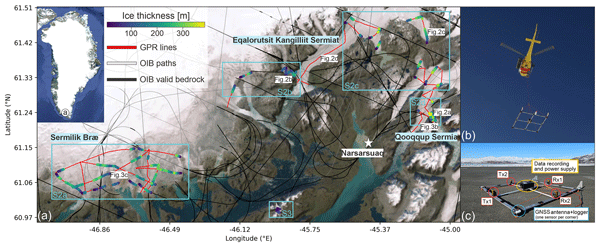
Ice thickness near Greenland’s coast is still poorly measured, yet it is vital for predicting sea level rise. We flew a helicopter ice-penetrating radar over three outlet glaciers in southern Greenland and mapped the glacier bed where basal reflections were clear. We measured ice up to about 340 meters thick, with reliable penetration typically to about 300 meters, providing new constraints that can improve regional bed maps.
Maren Böse, Nadja Valenzuela, György Hetényi, Romain Roduit, Irina Dallo, Kerstin Bircher, John Clinton, Urs Fässler, Florian Haslinger, Tanja Jaeger, Michèle Marti, Roman Racine, Anne Sauron, Shiba Subedi, and Stefan Wiemer
Geosci. Commun., 9, 223–237, https://doi.org/10.5194/gc-9-223-2026, https://doi.org/10.5194/gc-9-223-2026, 2026
Short summary
Short summary
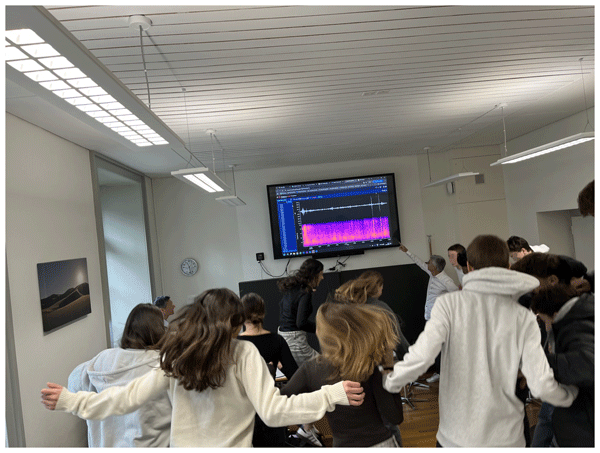
Although Switzerland faces moderate seismic hazard, earthquakes represent the natural risk with the greatest impact potential. As most residents have never experienced a damaging earthquake, education is critical for raising awareness and enhancing preparedness. In a recent project, we expanded the seismo@school program in Switzerland by developing new teaching materials in four languages, related classroom activities, and by installing Raspberry Shake seismometers in schools across the country.
Ryan Schultz, Linus Villiger, Valentin Gischig, and Stefan Wiemer
Solid Earth, 17, 617–642, https://doi.org/10.5194/se-17-617-2026, https://doi.org/10.5194/se-17-617-2026, 2026
Short summary
Short summary
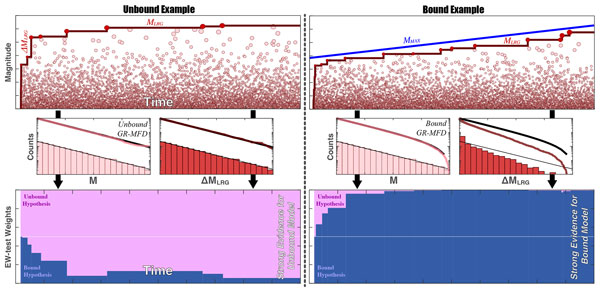
We use statistical tests to infer MMAX (maximum possible magnitude) from an earthquake catalogue and focus on data from three underground laboratories with controlled injection experiments. There, we find clear evidence for MMAX bounds and corroborate interpretations of fracture growth against other geophysical studies. Unbound sequences occur when stimulation is directed towards pre-existing faults. The validation of our methods against well-studied cases is encouraging and will help validate future interpretations.
Tom Schaber, Mohammedreza Jalali, Alberto Ceccato, Alba Simona Zappone, Giacomo Pozzi, Valentin Gischig, Marian Hertrich, Men-Andrin Meier, Timo Seemann, Hannes Claes, Yves Guglielmi, Domenico Giardini, Stefan Wiemer, Massimo Cocco, and Florian Amann
Solid Earth, 17, 275–295, https://doi.org/10.5194/se-17-275-2026, https://doi.org/10.5194/se-17-275-2026, 2026
Short summary
Short summary
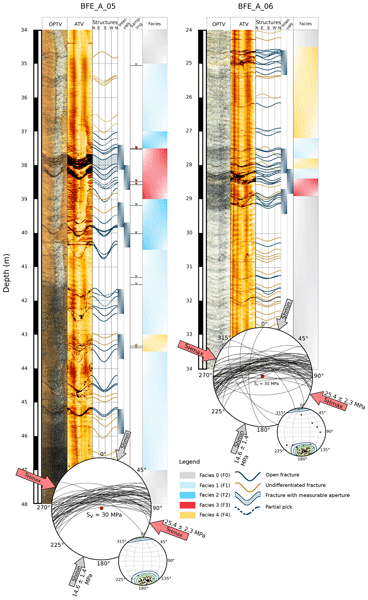
We studied a deep fault zone in Switzerland to gain a better understanding of how water moves through faults and how this affects earthquake activity. Using field and laboratory tests, we found that flow is strongly controlled by open fractures and permeability changes significantly with scale. Small samples underestimate flow compared to larger tests. Our results show that faults are heterogeneous, highlighting the need for site-specific studies when assessing risks or planning experiments.
Laura Gabriel, Marian Hertrich, Christophe Ogier, Mike Müller-Petke, Raphael Moser, Hansruedi Maurer, and Daniel Farinotti
The Cryosphere, 19, 6261–6281, https://doi.org/10.5194/tc-19-6261-2025, https://doi.org/10.5194/tc-19-6261-2025, 2025
Short summary
Short summary
Surface nuclear magnetic resonance (SNMR) is a geophysical technique directly sensitive to liquid water. We expand the limited applications of SNMR on glaciers by detecting water within Rhonegletscher, Switzerland. By carefully processing the data to reduce noise, we identified signals indicating a water layer near the base of the glacier, surrounded by ice with low water content. Our findings, validated by radar measurements, show SNMR's potential and limitations in studying water in glaciers.
Valentin Samuel Gischig, Antonio Pio Rinaldi, Andres Alcolea, Falko Bethman, Marco Broccardo, Kai Bröker, Raymi Castilla, Federico Ciardo, Victor Clasen Repollés, Virginie Durand, Nima Gholizadeh Doonechaly, Marian Hertrich, Rebecca Hochreutener, Philipp Kästli, Dimitrios Karvounis, Xiaodong Ma, Men-Andrin Meier, Peter Meier, Maria Mesimeri, Arnaud Mignan, Anne Obermann, Katrin Plenkers, Martina Rosskopf, Francisco Serbeto, Paul Selvadurai, Alexis Shakas, Linus Villiger, Quinn Wenning, Alba Zappone, Jordan Aaron, Hansruedi Maurer, Domenico Giardini, and Stefan Wiemer
Solid Earth, 16, 1153–1180, https://doi.org/10.5194/se-16-1153-2025, https://doi.org/10.5194/se-16-1153-2025, 2025
Short summary
Short summary
Induced earthquakes present a major obstacle for developing geoenergy resources. These occur during hydraulic stimulations that enhance fluid pathways in the rock. In the Bedretto Underground Laboratory, hydraulic stimulations are investigated in a downscaled manner. A workflow to analyze the hazard posed by induced earthquakes is applied at different stages of the test program. The hazard estimates illustrate the difficulty in reducing the uncertainty due to the variable seismogenic responses.
Sandro Truttmann, Tobias Diehl, Marco Herwegh, and Stefan Wiemer
Solid Earth, 16, 641–662, https://doi.org/10.5194/se-16-641-2025, https://doi.org/10.5194/se-16-641-2025, 2025
Short summary
Short summary
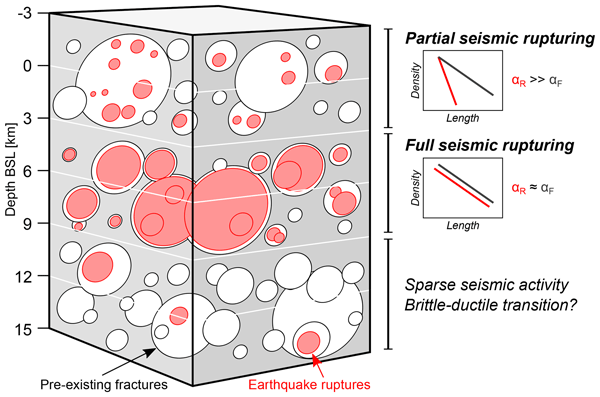
Our study investigates the statistical relationship between geological fractures and earthquakes in the southwestern Swiss Alps. We analyze how the fracture size and earthquake rupture are related and find differences in how fractures at different depths rupture seismically. While shallow fractures tend to rupture only partially, deeper fractures are more likely to rupture along their entire length, potentially resulting in larger earthquakes.
Kathrin Behnen, Marian Hertrich, Hansruedi Maurer, Alexis Shakas, Kai Bröker, Claire Epiney, María Blanch Jover, and Domenico Giardini
Solid Earth, 16, 333–350, https://doi.org/10.5194/se-16-333-2025, https://doi.org/10.5194/se-16-333-2025, 2025
Short summary
Short summary
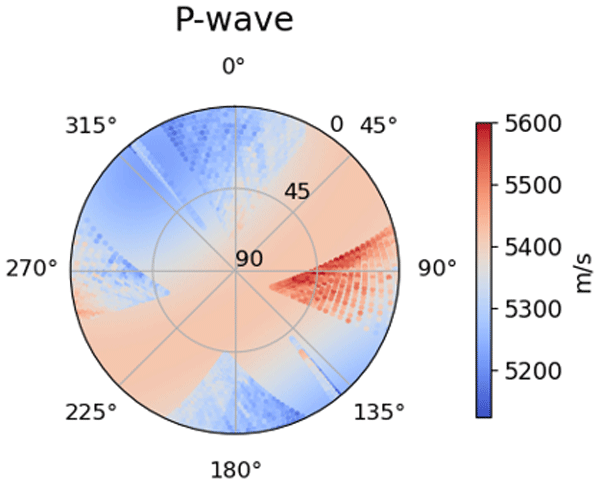
Several cross-hole seismic surveys in the undisturbed Rotondo granite are used to analyze the seismic anisotropy in the Bedretto Lab, Switzerland. The P and S1 waves show a clear trend of faster velocities in the NE–SW direction and slower velocities perpendicular to it, indicating a tilted transverse isotropic velocity model. The symmetry plane is mostly aligned with the direction of maximum stress, but also the orientation of fractures is expected to influence the velocities.
Marta Han, Leila Mizrahi, and Stefan Wiemer
Nat. Hazards Earth Syst. Sci., 25, 991–1012, https://doi.org/10.5194/nhess-25-991-2025, https://doi.org/10.5194/nhess-25-991-2025, 2025
Short summary
Short summary
Relying on recent accomplishments of collecting and harmonizing data by the 2020 European Seismic Hazard Model (ESHM20) and leveraging advancements in state-of-the-art earthquake forecasting methods, we develop a harmonized earthquake forecasting model for Europe. We propose several model variants and test them on training data for consistency and on a 7-year testing period against each other, as well as against both a time-independent benchmark and a global time-dependent benchmark.
Athanasios N. Papadopoulos, Philippe Roth, Laurentiu Danciu, Paolo Bergamo, Francesco Panzera, Donat Fäh, Carlo Cauzzi, Blaise Duvernay, Alireza Khodaverdian, Pierino Lestuzzi, Ömer Odabaşi, Ettore Fagà, Paolo Bazzurro, Michèle Marti, Nadja Valenzuela, Irina Dallo, Nicolas Schmid, Philip Kästli, Florian Haslinger, and Stefan Wiemer
Nat. Hazards Earth Syst. Sci., 24, 3561–3578, https://doi.org/10.5194/nhess-24-3561-2024, https://doi.org/10.5194/nhess-24-3561-2024, 2024
Short summary
Short summary
The Earthquake Risk Model of Switzerland (ERM-CH23), released in early 2023, is the culmination of a multidisciplinary effort aiming to achieve, for the first time, a comprehensive assessment of the potential consequences of earthquakes on the Swiss building stock and population. ERM-CH23 provides risk estimates for various impact metrics, ranging from economic loss as a result of damage to buildings and their contents to human losses, such as deaths, injuries, and displaced population.
Laurentiu Danciu, Domenico Giardini, Graeme Weatherill, Roberto Basili, Shyam Nandan, Andrea Rovida, Céline Beauval, Pierre-Yves Bard, Marco Pagani, Celso G. Reyes, Karin Sesetyan, Susana Vilanova, Fabrice Cotton, and Stefan Wiemer
Nat. Hazards Earth Syst. Sci., 24, 3049–3073, https://doi.org/10.5194/nhess-24-3049-2024, https://doi.org/10.5194/nhess-24-3049-2024, 2024
Short summary
Short summary
The 2020 European Seismic Hazard Model (ESHM20) is the latest seismic hazard assessment update for the Euro-Mediterranean region. This state-of-the-art model delivers a broad range of hazard results, including hazard curves, maps, and uniform hazard spectra. ESHM20 provides two hazard maps as informative references in the next update of the European Seismic Design Code (CEN EC8), and it also provides a key input to the first earthquake risk model for Europe.
Peter Achtziger-Zupančič, Alberto Ceccato, Alba Simona Zappone, Giacomo Pozzi, Alexis Shakas, Florian Amann, Whitney Maria Behr, Daniel Escallon Botero, Domenico Giardini, Marian Hertrich, Mohammadreza Jalali, Xiaodong Ma, Men-Andrin Meier, Julian Osten, Stefan Wiemer, and Massimo Cocco
Solid Earth, 15, 1087–1112, https://doi.org/10.5194/se-15-1087-2024, https://doi.org/10.5194/se-15-1087-2024, 2024
Short summary
Short summary
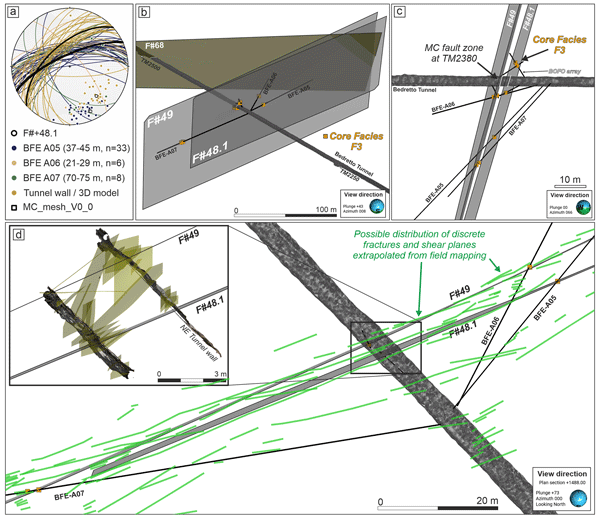
We detail the selection and characterization of a fault zone for earthquake experiments in the Fault Activation and Earthquake Ruptures (FEAR) project at the Bedretto Lab. FEAR, which studies earthquake processes, overcame data collection challenges near faults. The fault zone in Rotondo granite was selected based on geometry, monitorability, and hydro-mechanical properties. Remote sensing, borehole logging, and geological mapping were used to create a 3D model for precise monitoring.
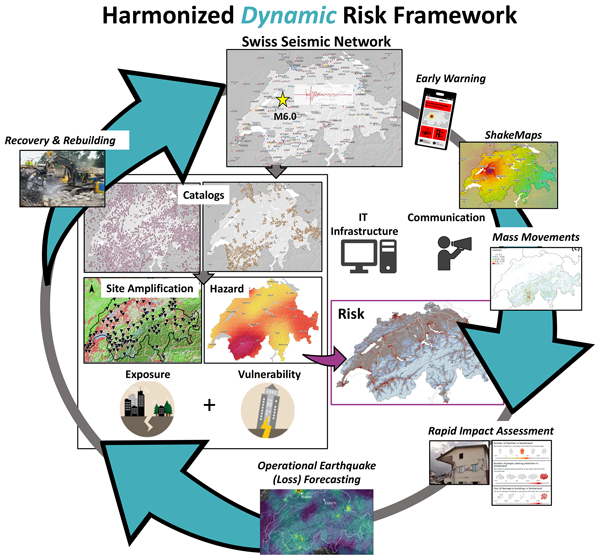
Maren Böse, Laurentiu Danciu, Athanasios Papadopoulos, John Clinton, Carlo Cauzzi, Irina Dallo, Leila Mizrahi, Tobias Diehl, Paolo Bergamo, Yves Reuland, Andreas Fichtner, Philippe Roth, Florian Haslinger, Frédérick Massin, Nadja Valenzuela, Nikola Blagojević, Lukas Bodenmann, Eleni Chatzi, Donat Fäh, Franziska Glueer, Marta Han, Lukas Heiniger, Paulina Janusz, Dario Jozinović, Philipp Kästli, Federica Lanza, Timothy Lee, Panagiotis Martakis, Michèle Marti, Men-Andrin Meier, Banu Mena Cabrera, Maria Mesimeri, Anne Obermann, Pilar Sanchez-Pastor, Luca Scarabello, Nicolas Schmid, Anastasiia Shynkarenko, Bozidar Stojadinović, Domenico Giardini, and Stefan Wiemer
Nat. Hazards Earth Syst. Sci., 24, 583–607, https://doi.org/10.5194/nhess-24-583-2024, https://doi.org/10.5194/nhess-24-583-2024, 2024
Short summary
Short summary
Seismic hazard and risk are time dependent as seismicity is clustered and exposure can change rapidly. We are developing an interdisciplinary dynamic earthquake risk framework for advancing earthquake risk mitigation in Switzerland. This includes various earthquake risk products and services, such as operational earthquake forecasting and early warning. Standardisation and harmonisation into seamless solutions that access the same databases, workflows, and software are a crucial component.
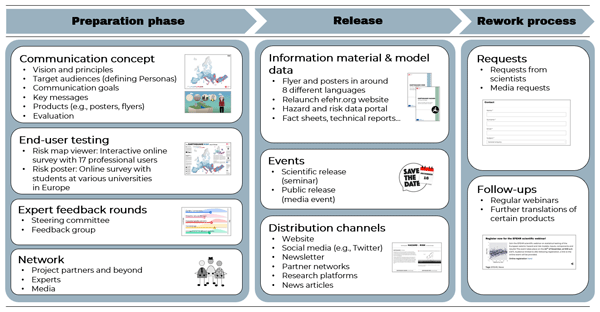
Irina Dallo, Michèle Marti, Nadja Valenzuela, Helen Crowley, Jamal Dabbeek, Laurentiu Danciu, Simone Zaugg, Fabrice Cotton, Domenico Giardini, Rui Pinho, John F. Schneider, Céline Beauval, António A. Correia, Olga-Joan Ktenidou, Päivi Mäntyniemi, Marco Pagani, Vitor Silva, Graeme Weatherill, and Stefan Wiemer
Nat. Hazards Earth Syst. Sci., 24, 291–307, https://doi.org/10.5194/nhess-24-291-2024, https://doi.org/10.5194/nhess-24-291-2024, 2024
Short summary
Short summary
For the release of cross-country harmonised hazard and risk models, a communication strategy co-defined by the model developers and communication experts is needed. The strategy should consist of a communication concept, user testing, expert feedback mechanisms, and the establishment of a network with outreach specialists. Here we present our approach for the release of the European Seismic Hazard Model and European Seismic Risk Model and provide practical recommendations for similar efforts.
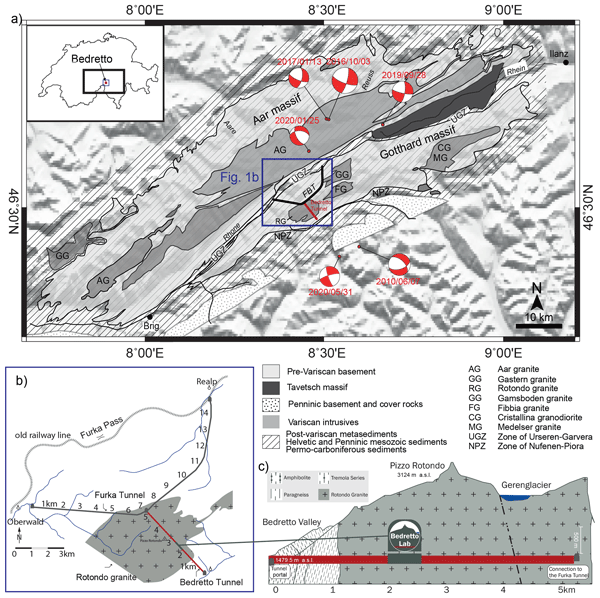
Xiaodong Ma, Marian Hertrich, Florian Amann, Kai Bröker, Nima Gholizadeh Doonechaly, Valentin Gischig, Rebecca Hochreutener, Philipp Kästli, Hannes Krietsch, Michèle Marti, Barbara Nägeli, Morteza Nejati, Anne Obermann, Katrin Plenkers, Antonio P. Rinaldi, Alexis Shakas, Linus Villiger, Quinn Wenning, Alba Zappone, Falko Bethmann, Raymi Castilla, Francisco Seberto, Peter Meier, Thomas Driesner, Simon Loew, Hansruedi Maurer, Martin O. Saar, Stefan Wiemer, and Domenico Giardini
Solid Earth, 13, 301–322, https://doi.org/10.5194/se-13-301-2022, https://doi.org/10.5194/se-13-301-2022, 2022
Short summary
Short summary
Questions on issues such as anthropogenic earthquakes and deep geothermal energy developments require a better understanding of the fractured rock. Experiments conducted at reduced scales but with higher-resolution observations can shed some light. To this end, the BedrettoLab was recently established in an existing tunnel in Ticino, Switzerland, with preliminary efforts to characterize realistic rock mass behavior at the hectometer scale.
Cited articles
Amann, F., Gischig, V., Evans, K., Doetsch, J., Jalali, R., Valley, B., Krietsch, H., Dutler, N., Villiger, L., Brixel, B., Klepikova, M., Kittilä, A., Madonna, C., Wiemer, S., Saar, M. O., Loew, S., Driesner, T., Maurer, H., and Giardini, D.: The seismo-hydromechanical behavior during deep geothermal reservoir stimulations: open questions tackled in a decameter-scale in situ stimulation experiment, Solid Earth, 9, 115–137, https://doi.org/10.5194/se-9-115-2018, 2018. a, b
Barton, N.: Rock Quality, Seismic Velocity, Attenuation and Anisotropy, CRC Press, ISBN 9781134160136, https://doi.org/10.1201/9780203964453, 2006. a
Behnen, K., Hertrich, M., Maurer, H., Shakas, A., Bröker, K., Epiney, C., Blanch Jover, M., and Giardini, D.: Understanding seismic anisotropy in the Rotondo granite: investigating stress as a potential source, Solid Earth, 16, 333–350, https://doi.org/10.5194/se-16-333-2025, 2025. a
Block, L. V., Cheng, C. H., Fehler, M. C., and Phillips, W. S.: Seismic imaging using microearthquakes induced by hydraulic fracturing, Geophysics, 59, 102–112, https://doi.org/10.1190/geo1992-0156, 1994. a
Bröker, K., Ma, X., Gholizadeh Doonechaly, N., Rosskopf, M., Obermann, A., Rinaldi, A. P., Hertrich, M., Serbeto, F., Maurer, H., Wiemer, S., and Giardini, D.: Hydromechanical characterization of a fractured crystalline rock volume during multi-stage hydraulic stimulations at the BedrettoLab, Geothermics, 124, https://doi.org/10.1016/j.geothermics.2024.103126, 2024a. a, b, c, d, e, f, g
Bröker, K., Ma, X., Zhang, S., Doonechaly, N. G., Hertrich, M., Klee, G., Greenwood, A., Caspari, E., and Giardini, D.: Constraining the stress field and its variability at the BedrettoLab: Elaborated hydraulic fracture trace analysis, International Journal of Rock Mechanics and Mining Sciences, 178, 105739, https://doi.org/10.1016/j.ijrmms.2024.105739, 2024b. a
Ceccato, A., Behr, W. M., Zappone, A. S., Tavazzani, L., and Giuliani, A.: Structural Evolution, Exhumation Rates, and Rheology of the European Crust During Alpine Collision: Constraints From the Rotondo Granite–Gotthard Nappe, Tectonics, 43, https://doi.org/10.1029/2023TC008219, 2024. a
Červený, V. and Soares, J. E. P.: Fresnel volume ray tracing, Geophysics, 57, 902–915, https://doi.org/10.1190/1.1443303, 1992. a
Charléty, J., Cuenot, N., Dorbath, C., and Dorbath, L.: Tomographic study of the seismic velocity at the Soultz-sous-Forêts EGS/HDR site, Geothermics, 35, 532–543, https://doi.org/10.1016/j.geothermics.2006.10.002, 2006. a
David, C., Nejati, M., and Geremia, D.: On petrophysical and geomechanical properties of Bedretto Granite, ETH Zurich, https://doi.org/10.3929/ethz-b-000428267, 2020. a, b
Deere, D. U. and Deere, D. W.: The Rock Quality Designation (RQD) in Practice, Rock Classification Systems for Engineering Purposes, ASTM STP 984, 91–101, 1988. a
Deere, D. U. and Miller, R. P.: Engineering classification and index properties for intact rock, https://api.semanticscholar.org/CorpusID:129485360 (last access: 11 February 2026), 1966. a
Diehl, T., Cauzzi, C., Clinton, J., Kraft, T., Kästli, P., Massin, F., Lanza, F., Simon, V., Grigoli, F., Hobiger, M., Roth, P., Haslinger, F., Fäh, D., and Wiemer, S.: Earthquakes in Switzerland and surrounding regions during 2019 and 2020, Swiss Journal of Geosciences, 118, https://doi.org/10.1186/s00015-025-00489-4, 2025. a
Doonechaly, N. G., Bröker, K., Hertrich, M., Rosskopf, M., Obermann, A., Durand, V., Serbeto, F., Shakas, A., Ma, X., Rinaldi, A. P., Repollés, V. C., Villiger, L., Meier, M.-A., Gischig, V., Plenkers, K., Maurer, H., Wiemer, S., and Giardini, D.: Insights from Subsurface Monitoring for Engineering of the Stimulation Pattern in Fractured Reservoirs, Rock Mechanics and Rock Engineering, 58, 8973–9000, https://doi.org/10.1007/s00603-025-04525-5, 2025. a
Edwards, B., Kraft, T., Cauzzi, C., Kästli, P., and Wiemer, S.: Seismic monitoring and analysis of deep geothermal projects in st Gallen and Basel, Switzerland, Geophysical Journal International, 201, 1022–1039, https://doi.org/10.1093/gji/ggv059, 2015. a
Ellsworth, W. L., Giardini, D., Townend, J., Ge, S., and Shimamoto, T.: Triggering of the Pohang, Korea, Earthquake (Mw 5.5) by Enhanced Geothermal System Stimulation, 90, 1844–1858, https://doi.org/10.1785/0220190102, 2019. a
Escallon, D., Shakas, A., and Maurer, H.: Modelling and inferring fracture curvature from borehole GPR data: A case study from the Bedretto Laboratory, Switzerland, Near Surface Geophysics, 22, 235–254, https://doi.org/10.1002/nsg.12286, 2024. a, b, c
Faulkner, D., Jackson, C., Lunn, R., Schlische, R., Shipton, Z., Wibberley, C., and Withjack, M.: A review of recent developments concerning the structure, mechanics and fluid flow properties of fault zones, Journal of Structural Geology, 32, 1557–1575, https://doi.org/10.1016/j.jsg.2010.06.009, 2010. a
Gischig, V. S., Giardini, D., Amann, F., Hertrich, M., Krietsch, H., Loew, S., Maurer, H., Villiger, L., Wiemer, S., Bethmann, F., Brixel, B., Doetsch, J., Doonechaly, N. G., Driesner, T., Dutler, N., Evans, K. F., Jalali, M., Jordan, D., Kittilä, A., Ma, X., Meier, P., Nejati, M., Obermann, A., Plenkers, K., Saar, M. O., Shakas, A., and Valley, B.: Hydraulic stimulation and fluid circulation experiments in underground laboratories: Stepping up the scale towards engineered geothermal systems, Geomechanics for Energy and the Environment, 24, https://doi.org/10.1016/j.gete.2019.100175, 2020. a, b
Heidbach, O., Rajabi, M., Cui, X., Fuchs, K., Müller, B., Reinecker, J., Reiter, K., Tingay, M., Wenzel, F., Xie, F., Ziegler, M. O., Zoback, M.-L., and Zoback, M.: The World Stress Map database release 2016: Crustal stress pattern across scales, Tectonophysics, 744, 484–498, https://doi.org/10.1016/j.tecto.2018.07.007, 2018. a
Heincke, B., Maurer, H., Green, A. G., Willenberg, H., Spillmann, T., and Burlini, L.: Characterizing an unstable mountain slope using shallow 2D and 3D seismic tomography, Geophysics, 71, https://doi.org/10.1190/1.2338823, 2006. a
Hirschberg, S., Wiemer, S., and Burgherr, P.: Energy from the earth Deep geothermal as a resource for the future?, TA-SWISS, 2015, https://doi.org/10.3929/ethz-a-010277690, 2015. a
Holliger, K., Musil, M., and Maurer, H. R.: Ray-based amplitude tomography for crosshole georadar data: a numerical assessment, Tech. rep., https://doi.org/10.1016/S0926-9851(01)00072-6, 2001. a
Husen, S. and Kissling, E.: Local earthquake tomography between rays and waves: fat ray tomography, Tech. rep., ISBN 00319201/01, 2001. a
Jordan, D.: Geological Characterization of the Bedretto Underground Laboratory for Geoenergies, ETH Zurich Research Collection, https://doi.org/10.3929/ethz-b-000379305, 2019. a
Jordi, C., Schmelzbach, C., and Greenhalgh, S.: Frequency-dependent traveltime tomography using fat rays: application to near-surface seismic imaging, Journal of Applied Geophysics, 131, 202–213, https://doi.org/10.1016/j.jappgeo.2016.06.002, 2016. a, b
Kneafsey, T., Dobson, P., Blankenship, D., Schwering, P., White, M., Morris, J. P., Huang, L., Johnson, T., Burghardt, J., Mattson, E., Neupane, G., Strickland, C., Knox, H., Vermuel, V., Ajo-Franklin, J., Fu, P., Roggenthen, W., Doe, T., Schoenball, M., Hopp, C., Tribaldos, V. R., Ingraham, M., Guglielmi, Y., Ulrich, C., Wood, T., Frash, L., Pyatina, T., Vandine, G., Smith, M., Horne, R., McClure, M., Singh, A., Weers, J., and Robertson, M.: The EGS Collab project: Outcomes and lessons learned from hydraulic fracture stimulations in crystalline rock at 1.25 and 1.5 km depth, Geothermics, 126, https://doi.org/10.1016/j.geothermics.2024.103178, 2025. a
Lanz, E., Maurer, H., and Green, A. G.: Refraction tomography over a buried waste disposal site, Geophysics, 63, 1414–1433, https://doi.org/10.1190/1.1444443, 1998. a, b
Leveque, J.-J., Rivera, L., and Wittlinger, G.: On the use of the checker-board test to assess the resolution of tomographic inversions, https://doi.org/10.1111/j.1365-246X.1993.tb05605.x, 1993. a
Li, B., Ding, L., Hu, D., and Zheng, S.: Backtracking Algorithm-based Disassembly Sequence Planning, in: Procedia CIRP, vol. 69, Elsevier B.V., 932–937, https://doi.org/10.1016/j.procir.2017.12.007, 2018. a
Lützenkirchen, V. and Loew, S.: Late Alpine brittle faulting in the Rotondo granite (Switzerland): Deformation mechanisms and fault evolution, Swiss Journal of Geosciences, 104, 31–54, https://doi.org/10.1007/s00015-010-0050-0, 2011. a, b
Ma, X., Hertrich, M., Amann, F., Bröker, K., Gholizadeh Doonechaly, N., Gischig, V., Hochreutener, R., Kästli, P., Krietsch, H., Marti, M., Nägeli, B., Nejati, M., Obermann, A., Plenkers, K., Rinaldi, A. P., Shakas, A., Villiger, L., Wenning, Q., Zappone, A., Bethmann, F., Castilla, R., Seberto, F., Meier, P., Driesner, T., Loew, S., Maurer, H., Saar, M. O., Wiemer, S., and Giardini, D.: Multi-disciplinary characterizations of the BedrettoLab – a new underground geoscience research facility, Solid Earth, 13, 301–322, https://doi.org/10.5194/se-13-301-2022, 2022. a, b, c, d, e, f, g
Maurer, H. and Schwarz, M. L.: Data collection to: New insights on the fault structure of a geothermal testbed and the associated seismicity based on active seismic tomography, ETH Zurich Research Collection [data set and video], https://doi.org/10.3929/ETHZ-B-000725491, 2025. a, b
Maurer, H., Holliger, K., and Boerner, D. E.: Stochastic regularization: Smoothness or similarity?, Geophysical Research Letters, 25, 2889–2892, https://doi.org/10.1029/98GL02183, 1998. a, b
Mavko, G., Mukerji, T., and Dvorkin, J.: The Rock Physics Handbook, Cambridge University Press, 2nd edn., ISBN 9780521861366, https://doi.org/10.1017/CBO9780511626753, 2009. a
Meier, M.: Geological characterisation of an underground research facility in the Bedretto tunnel, ETH Zurich Research Collection, https://doi.org/10.3929/ethz-b-000334001, 2017. a
Menke, W.: Geophysical Data Analysis: Discrete Inverse Theory, Elsevier, ISBN 9780124909205, https://doi.org/10.1016/B978-0-12-490920-5.X5001-7, 1984. a
Moser, T. J., Van Eck, T., and Nolet, G.: Hypocenter determination in strongly heterogeneous Earth models using the shortest path method, Journal of Geophysical Research, 97, 6563–6572, https://doi.org/10.1029/91JB03176, 1992. a
Nakagome, O., Uchida, T., and Horikoshi, T.: Seismic reflection and VSP in the kakkonda geothermal field, japan: fractured reservoir characterization, Geothermics, 27, 535–552, https://doi.org/10.1016/S0375-6505(98)00032-7, 1998. a
Nakata, N., Vasco, D. W., Shi, P., Bai, T., Lanza, F., Dyer, B., Chen, C., Park, S.-E., and Qiu, H.: Elastic Characterization at Utah FORGE: P-wave Tomography and VSP Subsurface Imaging, Proceedings of the 48th Workshop on Geothermal Reservoir Engineering SGP-TR-224, Stanford University, Stanford, California, https://pangea.stanford.edu/ERE/db/IGAstandard/record_detail.php?id=35644 (last acess: 11 February 2026), 2023. a
Nolet, G.: Seismic Tomography, Springer Netherlands, Dordrecht, ISBN 978-90-277-2583-7, https://doi.org/10.1007/978-94-009-3899-1, 1987. a
Obermann, A. and Hillers, G.: Seismic time-lapse interferometry across scales, in: Advances in Geophysics, vol. 60, Academic Press Inc., 65–143, ISBN 9780128175484, https://doi.org/10.1016/bs.agph.2019.06.001, 2019. a
Obermann, A., Wu, S. M., Ágústsdóttir, T., Duran, A., Diehl, T., Sánchez-Pastor, P., Kristjansdóttir, S., Hjörleifsdóttir, V., Wiemer, S., and Hersir, G. P.: Seismicity and 3-D body-wave velocity models across the Hengill geothermal area, SW Iceland, Frontiers in Earth Science, 10, https://doi.org/10.3389/feart.2022.969836, 2022. a
Obermann, A., Rosskopf, M., Plenkers, K., Broeker, K., Rinaldi, A., Doonechaly, N., Gischig, V., Zappone, A., Amann, F., Cocco, M., Hertrich, M., Jalali, M., Junker, J., Kästli, P., Ma, X., Maurer, H., Meier, M.-A., Schwarz, M., Selvadurai, P., and Giardini, D.: Seismic response of hectometer-scale fracture systems to hydraulic stimulation in the Bedretto Underground laboratory, Switzerland, Journal of Geophysical Research: Solid Earth, https://doi.org/10.1029/2024JB029836, 2024. a, b, c
Olasolo, P., Juárez, M., Morales, M., D´Amico, S., and Liarte, I.: Enhanced geothermal systems (EGS): A review, Renewable and Sustainable Energy Reviews, 56, 133–144, https://doi.org/10.1016/j.rser.2015.11.031, 2016. a
Paige, C. C. and Saunders, M. A.: LSQR: An Algorithm for Sparse Linear Equations and Sparse Least Squares, AMC Transaction on Mathematical Software, 8, 43–71, 1982. a
Paterson, M. S. and Wong, T.-f.: Experimental Rock Deformation – The Brittle Field, second edn., Springer-Verlag Berlin Heidelberg 2005, ISBN 978-3-540-24023-5, 2005. a
Place, J., Sausse, J., Marthelot, J. M., Diraison, M., Géraud, Y., and Naville, C.: 3-D mapping of permeable structures affecting a deep granite basement using isotropic 3C VSP data, Geophysical Journal International, 186, 245–263, https://doi.org/10.1111/j.1365-246X.2011.05012.x, 2011. a
Plenkers, K., Manthei, G., and Kwiatek, G.: Underground In-situ Acoustic Emission in Study of Rock Stability and Earthquake Physics, in: Springer Tracts in Civil Engineering, pp. 403–476, Springer Science and Business Media Deutschland GmbH, https://doi.org/10.1007/978-3-030-67936-1_16, 2022. a, b
Podvin, P. and Lecomte, I.: Finite difference computation of traveltimes in very contrasted velocity models: a massively parallel approach and its associated tools, Geophysical Journal International, 105, 271–284, https://doi.org/10.1111/j.1365-246X.1991.tb03461.x, 1991. a, b, c
Pratt, R. G. and Worthington, M. H.: The application of diffraction tomography to cross-hole seismic data, Geophysics, 53, 1284–1294, https://doi.org/10.1190/1.1442406, 1988. a
Rast, M., Galli, A., Ruh, J. B., Guillong, M., and Madonna, C.: Geology along the Bedretto tunnel: kinematic and geochronological constraints on the evolution of the Gotthard Massif (Central Alps), Swiss Journal of Geosciences, 115, https://doi.org/10.1186/s00015-022-00409-w, 2022. a
Rawlinson, N. and Spakman, W.: On the use of sensitivity tests in seismic tomography, Geophysical Journal International, 205, 1221–1243, https://doi.org/10.1093/gji/ggw084, 2016. a
Rosskopf, M., Durand, V., Villiger, L., Doetsch, J., Obermann, A., and Krischer, L.: DUGseis: A Python package for real-time and post-processing of picoseismicity, Journal of Open Source Software, 9, 6768, https://doi.org/10.21105/joss.06768, 2024. a
Rosskopf, M., Durand, V., Plenkers, K., Villiger, L., Giardini, D., and Obermann, A.: Accuracy of Picoseismic Catalogs in Hectometer‐Scale In Situ Experiments, Seismological Research Letters, 96, 3814–3836, https://doi.org/10.1785/0220240399, 2025. a, b, c
Salazar Vásquez, A. F., Selvadurai, P. A., Bianchi, P., Madonna, C., Germanovich, L. N., Puzrin, A. M., Wiemer, S., Giardini, D., and Rabaiotti, C.: Aseismic strain localization prior to failure and associated seismicity in crystalline rock, Scientific Reports, 14, https://doi.org/10.1038/s41598-024-75942-9, 2024. a, b
Sergeev, S. A., Meier, M., and Steiger, R. H.: Improving the resolution of single-grain U/Pb dating by use of zircon extracted from feldspar: Application to the Variscan magmatic cycle in the central Alps, Earth and Planetary Science Letters, 134, 37–51, https://doi.org/10.1016/0012-821X(95)00105-L, 1995. a
Shakas, A.: Borehole Logging Data from Characterization Boreholes in Bedretto Underground Lab for Geoenergies, ETH Research Collection [data set], https://doi.org/10.3929/ethz-b-000443521, 2019. a
Stanchits, S., Mayr, S., Shapiro, S., and Dresen, G.: Fracturing of porous rock induced by fluid injection, Tectonophysics, 503, 129–145, https://doi.org/10.1016/j.tecto.2010.09.022, 2011. a
Townend, J. and Zoback, M. D.: How faulting keeps the crust strong, Geology, 28, 399–402, https://doi.org/10.1130/0091-7613(2000)28<399:HFKTCS>2.0.CO;2, 2000. a
Williamson, P. R. and Worthington, M. H.: Resolution limits in ray tomography due to wave behavior: numerical experiments, Geophysics, 58, 727–735, https://doi.org/10.1190/1.1443457, 1993. a
Woodward, M. J.: Wave-equation tomography, Geophysics, 57, 15–26, https://doi.org/10.1190/1.1443179, 1992. a, b, c
Zang, A., Niemz, P., von Specht, S., Zimmermann, G., Milkereit, C., Plenkers, K., and Klee, G.: Comprehensive data set of in situ hydraulic stimulation experiments for geothermal purposes at the Äspö Hard Rock Laboratory (Sweden), Earth Syst. Sci. Data, 16, 295–310, https://doi.org/10.5194/essd-16-295-2024, 2024. a
Zelt, C. A. and Barton, P. J.: Three-dimensional seismic refraction tomography: A comparison of two methods applied to data from the Faeroe Basin, Journal of Geophysical Research: Solid Earth, 103, 7187–7210, https://doi.org/10.1029/97JB03536, 1998. a, b
Short summary
We applied fat ray travel time tomography to image the geothermal testbed at the BedrettoLab (Switzerland). An active seismic crosshole survey provided a dataset of 41’881 manually picked first breaks. The complex major fault zone was identified by a 3D velocity model and validated with wireline logs and geological observations. Induced seismicity from hydraulic stimulation experiments preferentially occurs in intermediate-velocity regions, possibly due to the presence of stress gradients.
We applied fat ray travel time tomography to image the geothermal testbed at the BedrettoLab...


Special issue